- Company Articles
- Products and Technology
- Product knowledge
- 40 Aluminum Roller Track Yellow: Common Myths vs. Facts

40 Aluminum Roller Track Yellow: Common Myths vs. Facts
Related Product
40 Aluminum Roller Track Yellow
Durable and smooth-running modular roller rails. The system is fully assembled. The roller rail profile contains plastic rollers mounted on steel axles. Aluminum frame with plastic wheel make it anti corrosion,and material convey more smooth.
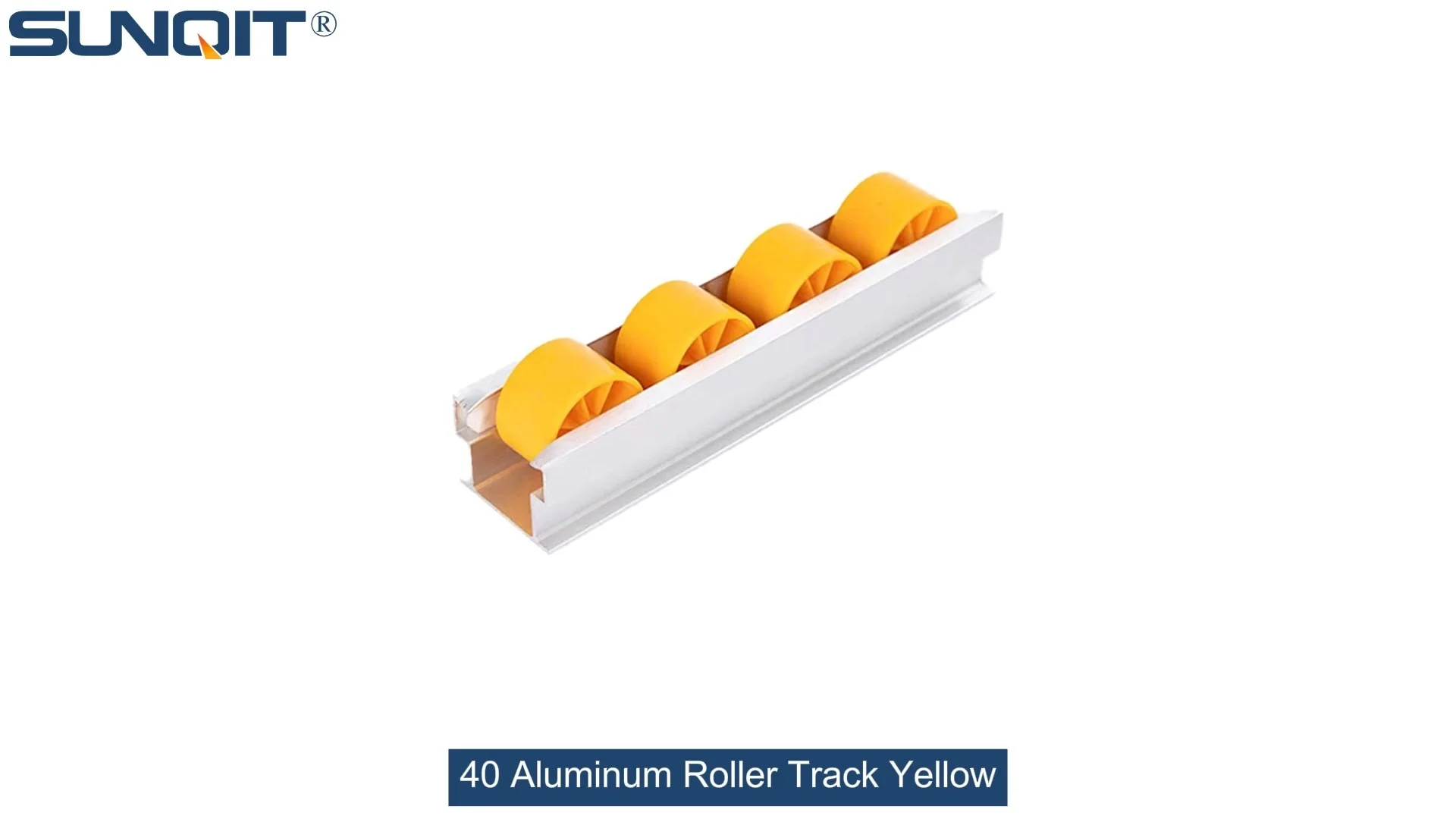
Roller tracks are the backbone of efficient material handling in manufacturing and logistics, quietly powering the movement of parts across assembly lines, warehouses, and distribution centers. Among the diverse range of roller tracks available, the 40 Aluminum Roller Track Yellow stands out for its distinct color and widespread use. Yet, like many industrial components, it's surrounded by misconceptions that can lead businesses to make suboptimal choices. Let's dive deep into the most common myths about this product and separate fact from fiction, drawing on insights from leading lean system providers and real-world manufacturing scenarios.
Myth 1: Yellow Roller Tracks Are Just for Aesthetics—No Functional Difference From Other Colors
Many people assume that the bright yellow hue of these roller tracks is purely a cosmetic choice, designed to break up the monotony of industrial gray and steel without any practical purpose. They argue that whether a track is yellow, grey, or black, its ability to move materials remains identical.
The Fact
Color coding in manufacturing is a strategic tool, not a decorative afterthought. The yellow 40 Aluminum Roller Track serves two key functional purposes: workflow organization and material differentiation. In busy warehouses or assembly lines, color-coded tracks help workers quickly identify which components go where—for example, yellow tracks might be reserved for raw materials, while other colors handle finished goods or ESD-sensitive parts. This reduces errors and speeds up processes, aligning with lean manufacturing principles of waste reduction.
Beyond organization, the yellow roller tracks from reputable suppliers like szsunqit are crafted from high-quality, wear-resistant plastic that minimizes friction and ensures smooth movement. This material is specifically chosen for its durability in high-traffic environments, such as those found in and automotive manufacturing. These tracks are integral to flow rack systems—like Material Rack B (a 3-row, 3-floor rack from the product list)—where they enable the first-in-first-out (FIFO) inventory management that's critical for reducing stock waste and improving order fulfillment. The yellow color in these racks isn't just for show; it's part of a system that keeps operations running like a well-oiled machine.
Myth 2: 40 Aluminum Roller Tracks Are Only Compatible With Specific Systems, Limiting Flexibility
A common fear among businesses is that these roller tracks are proprietary, meaning they can only be used with the manufacturer's own lean pipe systems or workstations. This would restrict companies from mixing and matching components to create custom solutions tailored to their unique workflows.
The Fact
Flexibility is the cornerstone of lean manufacturing, and the 40 Aluminum Roller Track Yellow is engineered to integrate seamlessly with a wide range of modular systems. Suppliers like szsunqit offer a comprehensive suite of accessories that bridge compatibility gaps: roller track placon mounts for rail connections, brackets for attaching to aluminum profiles, and end supports with stops to secure tracks in place. These accessories mean that the yellow tracks can be paired with everything from basic aluminum tubes to EU standard 4040 or 3030 profiles, making them adaptable to any lean workstation or flow rack setup.
For example, if a business wants to add a new section to their existing conveyor system, they can easily install yellow roller tracks using placon mounts that fit their current aluminum profiles. This modularity aligns with the "sustainable improvement" ethos of lean solutions—allowing businesses to adjust their systems as their needs evolve without starting from scratch. Whether you're building a new Material Rack B or upgrading an old conveyor line, these tracks are designed to fit right in, no matter the existing setup.

Myth 3: Aluminum Roller Tracks Are Not Durable Enough for Heavy Loads
Some manufacturers hesitate to use aluminum roller tracks because they believe aluminum is too lightweight to handle the heavy loads common in industrial settings. They opt for steel tracks instead, assuming they're the only durable option.
The Fact
High-quality aluminum extrusion profiles—like the EU standard ones offered by szsunqit—are far more durable than many people realize. The extrusion process creates a dense, uniform structure that delivers strength comparable to steel in many applications, but with the added benefits of being corrosion-resistant and lighter. The 40 Aluminum Roller Track Yellow is built from these robust profiles, making it capable of supporting significant weights.
To put this into perspective, a properly installed 40 aluminum roller track can handle up to 300 kilograms per meter—more than enough for most automotive parts, medical device components, or consumer electronics. These tracks are used in conveyor systems for heavy-duty applications like moving engine parts or large containers, proving their durability in real-world use cases. The supplier's lean solution approach also includes customizing load capacities: if your workflow requires heavier support, they can recommend reinforced track variants or additional brackets to ensure stability. Aluminum tracks aren't just a lightweight alternative; they're a reliable choice for heavy-load environments.

Myth 4: ESD Safety Isn't a Concern With Aluminum Roller Tracks
Since aluminum is a conductive material, two opposite myths persist: some think all aluminum tracks automatically provide ESD protection, while others believe non-ESD tracks (like the yellow ones) are unsafe in any electronic manufacturing setting.
The Fact
ESD protection depends on intentional design, not just the base material. The yellow 40 Aluminum Roller Track is a non-ESD variant, meaning it doesn't dissipate electrostatic charges. This makes it ideal for components that aren't sensitive to static—like plastic parts for or metal brackets for mechanical systems—but it's not suitable for 3C assembly or medical device manufacturing where ESD safety is critical.
For ESD-sensitive applications, suppliers offer black ESD roller tracks that are coated with a static-dissipative material. These tracks work in tandem with ESD workstations to prevent electrostatic discharge from damaging sensitive electronics like smartphones or medical sensors. The key takeaway is that businesses need to match the track type to their workflow: yellow tracks for general manufacturing, ESD tracks for sensitive components. Both are part of a comprehensive lean solution that addresses the unique needs of different industries, ensuring safety and efficiency across the board.

Myth 5: Buying Roller Tracks Individually Is More Cost-Effective Than a Complete Lean Solution
Many small businesses try to cut costs by purchasing roller tracks separately and assembling their own systems, thinking this approach saves money compared to investing in a complete lean solution from a supplier.
The Fact
While individual components might seem cheaper upfront, they often lead to hidden costs: incompatible parts that require rework, incorrect installation that causes downtime, and a lack of optimization that reduces productivity. A complete lean solution from a supplier like szsunqit includes more than just roller tracks—it includes design expertise, compatible accessories, and integration support to ensure your system works seamlessly from day one.
For example, if you're setting up a new flow rack system, the supplier's design team will assess your warehouse layout, material types, and workflow to recommend the optimal number of yellow roller tracks, the right brackets, and the best arrangement for maximum efficiency. They'll also provide wholesale pricing for bulk purchases, which can reduce costs by up to 20% compared to buying individual parts. The long-term benefits—improved productivity, reduced errors, and easier maintenance—far outweigh the initial cost difference. Investing in a complete lean solution isn't just about buying parts; it's about investing in a system that grows with your business.
Conclusion: Making Informed Choices for Your Lean Manufacturing Setup
The 40 Aluminum Roller Track Yellow is more than just a component—it's a versatile tool that plays a critical role in optimizing workflows, reducing waste, and improving efficiency. By debunking these common myths, we've seen that this track offers functional benefits beyond its color, integrates seamlessly with modular systems, handles heavy loads with ease, and can be tailored to meet specific ESD requirements.
When choosing roller tracks for your business, it's important to look beyond the surface. Consider your workflow needs, load capacities, and ESD requirements, and partner with a supplier that offers comprehensive lean solutions—from individual components to custom-designed systems. The yellow 40 Aluminum Roller Track is a reliable choice for many industries, but it's just one piece of the puzzle. A well-designed lean system, with the right components and expert support, can transform your manufacturing or logistics operations, helping you stay competitive in today's fast-paced market.
Whether you're in 3C assembly, medical device manufacturing, or, the right roller track choice can make all the difference. So next time you see a yellow roller track, remember: it's not just a color—it's a strategic decision that can boost your bottom line.