- Company Articles
- Products and Technology
- Product knowledge
- 40 Aluminum Roller Track Yellow Custom Lengths: Tailoring to Your Production Line Needs

40 Aluminum Roller Track Yellow Custom Lengths: Tailoring to Your Production Line Needs
Related Product
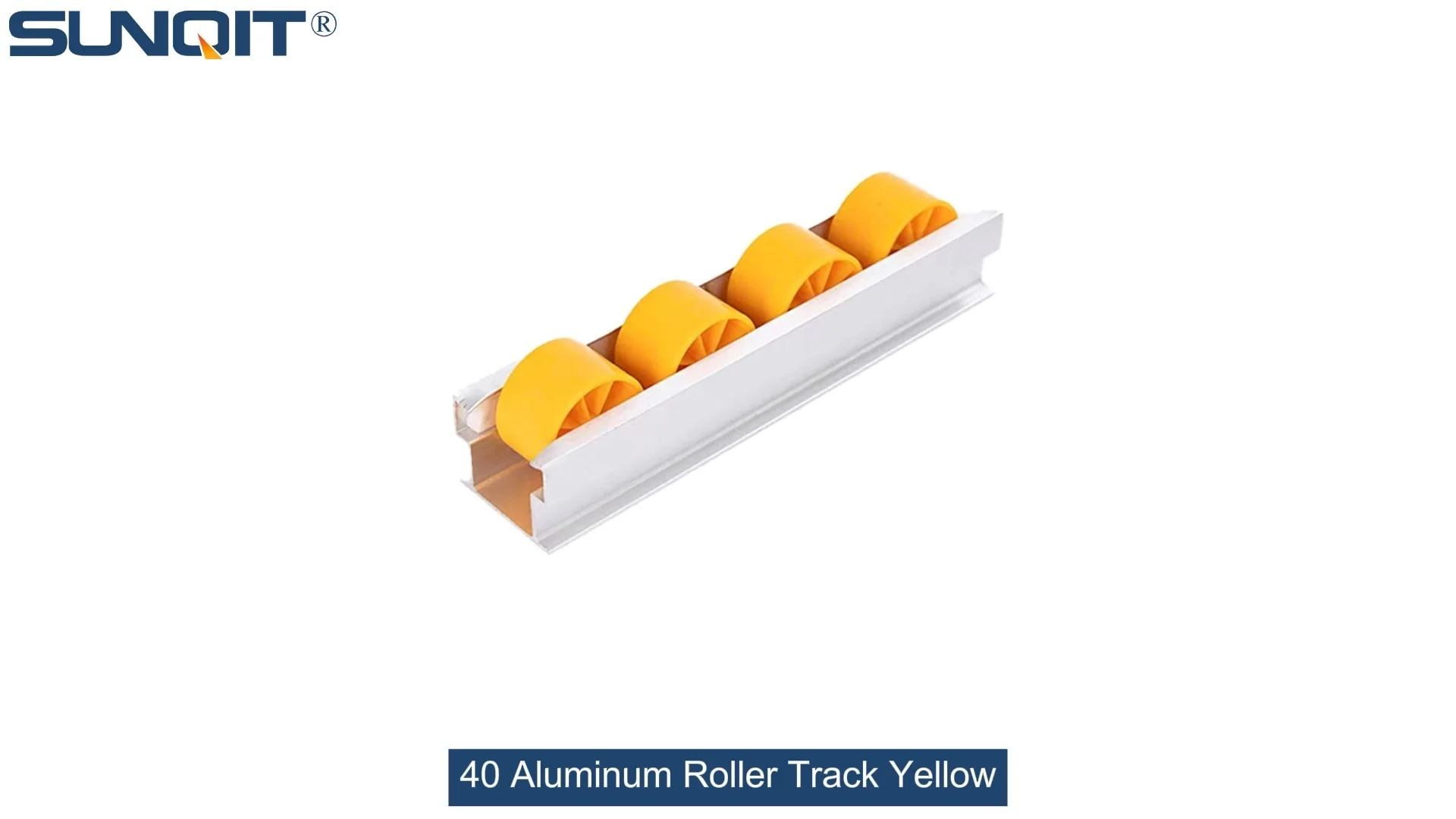
40 Aluminum Roller Track Yellow
Durable and smooth-running modular roller rails. The system is fully assembled. The roller rail profile contains plastic rollers mounted on steel axles. Aluminum frame with plastic wheel make it anti corrosion,and material convey more smooth.
The Hidden Cost of "One-Size-Fits-All" in Production Lines
Let's face it: Every production floor has its own rhythm. What works for a small electronics assembly line might throw a automotive parts facility into chaos. Yet, for years, many businesses have settled for standard, off-the-shelf equipment—especially when it comes to material handling components like roller tracks. Here's the thing: Those "one-size-fits-all" solutions often come with hidden costs. Maybe you're cutting tracks to fit, wasting material and labor. Or perhaps you're working around awkward lengths, creating bottlenecks where parts pile up instead of flowing smoothly. Sound familiar? If so, it might be time to rethink how you approach the backbone of your material flow: the roller track.
Enter the 40 aluminum roller track yellow with custom lengths. This isn't just another piece of hardware; it's a tool designed to fit your line, not the other way around. Whether you're running a lean system in a tight electronics workshop or managing a high-volume automotive plant, the right roller track can turn a frustrating, stop-and-start workflow into a seamless dance of efficiency. Let's dive into why custom lengths matter, what makes aluminum the material of choice, and how this track becomes the unsung hero of your production floor.
Why Aluminum? The Unsung Benefits of the 40 Aluminum Roller Track Yellow
First, let's talk about the material: aluminum. You might be thinking, "Why not steel? It's stronger, right?" While steel has its place, aluminum brings a unique set of advantages that make it ideal for roller tracks—especially in dynamic production environments. For starters, it's lightweight. That might not sound like a big deal until you're installing a 20-foot track or need to reconfigure your line six months down the road. Lighter materials mean easier installation, fewer injuries, and more flexibility to adapt as your needs change.
Then there's corrosion resistance. Production floors aren't always the cleanest places—oils, coolants, and even humidity can take a toll on metal over time. Aluminum's natural resistance to rust means your track stays smooth and functional longer, reducing replacement costs. And let's not forget the color: yellow isn't just for visibility (though that's a bonus in busy areas). The vibrant hue makes it easy to identify workflow paths, keeping operators focused and reducing errors. It's the little details, right?
But what really sets the 40 aluminum roller track yellow apart is its precision. The "40" refers to the track width, a sweet spot that balances stability (to handle medium-weight parts) with agility (to keep materials moving without jamming). Pair that with high-quality plastic yellow wheels—designed to reduce friction and noise—and you've got a track that doesn't just move parts; it glides them. No more parts getting stuck, no more operators stopping to nudge a jammed bin. Just consistent, reliable flow.

Custom Lengths: The Game-Changer for Lean Systems
Now, let's get to the heart of the matter: custom lengths. If you're familiar with lean manufacturing, you know the goal is to eliminate waste—whether it's time, material, or effort. Standard roller tracks, with their fixed 4-foot or 6-foot lengths, are a hidden source of waste. Think about it: If your workbench is 5 feet 3 inches from your flow rack, a 6-foot track leaves 9 inches of overhang. That's not just unsightly; it's a tripping hazard, a space waster, and a prime spot for dust and debris to collect. Or worse, you might cut a 4-foot track to fit, but now you've got a jagged edge that could damage parts or injure someone. Not exactly lean, is it?
Custom lengths solve this by letting you order exactly what you need. Need a 7.2-foot track to bridge between two conveyors? Done. A 3.8-foot section to fit under a low workbench? No problem. This precision eliminates waste in three key ways: material (no more cutting down tracks), labor (no extra time spent modifying), and space (tracks fit perfectly, maximizing your floor plan). It's the kind of small change that adds up to big savings over time—both in dollars and operator frustration.
| Feature | Standard Lengths | Custom Lengths |
|---|---|---|
| Material Waste | High (often require cutting) | Low (exact fit, no excess) |
| Installation Time | Longer (modifications needed) | Shorter (ready to install out of the box) |
| Space Efficiency | Poor (overhangs or gaps) | Excellent (perfect fit for available space) |
| Adaptability | Limited (fits only standard layouts) | High (tailored to unique line configurations) |
But custom lengths aren't just about avoiding waste—they're about enabling innovation. Maybe you've been dreaming of a U-shaped flow path to reduce operator movement, but standard tracks couldn't make the tight turns. With custom lengths, you can design that U-shape with precision, ensuring every inch of track works toward a smoother workflow. Or perhaps you need a track that slopes gently to feed parts into a conveyor at just the right angle. Custom lengths let you dial in that slope without compromising on stability. It's about giving your team the tools to think creatively about how work gets done.

Beyond the Track: Integrating with Your Existing Workflow
A roller track doesn't exist in a vacuum. It's part of a larger ecosystem that includes workbenches, flow racks, conveyors, and even turnover trolleys. The best 40 aluminum roller track yellow isn't just a standalone component—it's designed to play well with others. Let's say you've got a workbench where operators assemble circuit boards. To the left, a flow rack holds components; to the right, a conveyor carries finished boards to testing. A custom-length roller track can connect the flow rack to the workbench, bringing parts exactly to the operator's reach, then another track from the workbench to the conveyor, sending completed boards on their way—no walking, no reaching, no wasted steps.
This integration is key to building a truly lean system. When every piece of equipment talks to the next, you create a continuous flow that minimizes downtime. And because the 40 aluminum roller track yellow is compatible with standard aluminum profile accessories—like roller track placon mounts for rail connections or aluminum guide rails—you don't have to overhaul your entire setup. You can start small: replace a problematic standard track with a custom one, see the difference, then expand from there. It's a low-risk way to test the waters before committing to a full line upgrade.

Real-World Impact: How Custom Tracks Transform Production Lines
Let's ground this in reality with a quick example. A mid-sized electronics manufacturer I worked with recently was struggling with their assembly line. Their workbenches were spaced 8 feet apart, but their standard 6-foot roller tracks left a 2-foot gap. To bridge it, they'd placed a small table, which quickly became a catch-all for tools, half-assembled parts, and coffee cups. Operators were constantly stepping over the gap, slowing down production and increasing the risk of spills or dropped components. Morale was low, and error rates were creeping up.
We suggested replacing the 6-foot tracks with custom 8-foot 40 aluminum roller track yellow sections. The change was dramatic. Overnight, the gap disappeared. Parts flowed directly from the flow rack to the workbench, and finished assemblies moved smoothly to the next station. The catch-all table was removed, freeing up space. Within a month, the line was producing 15% more units per shift, and operator feedback was glowing: "It's like the line finally makes sense now," one said. That's the power of a tool that fits your space, not the other way around.
Another example: an automotive parts supplier using conveyors to move heavy metal components. Their standard 10-foot tracks were causing bottlenecks at corners, where parts would slow down or get stuck. By switching to custom curved tracks (yes, custom lengths can include curves!) with the 40 aluminum roller track yellow, they reduced jams by 90%. The yellow color also made the track more visible to operators, cutting down on near-misses with forklifts. Small changes, big results.
Choosing the Right Supplier: More Than Just a Track
Of course, none of this matters if you don't partner with the right supplier. When shopping for custom 40 aluminum roller track yellow, look beyond the price tag. You need a supplier who understands your industry, your workflow, and your unique challenges. A good supplier won't just take your order; they'll ask questions: What's the weight of the parts you're moving? What's the distance between stations? Do you need ESD (electrostatic discharge) protection for sensitive electronics? These details ensure you get a track that works for you, not against you.
Also, check for quality. The best tracks use high-grade aluminum extrusion profiles, precision-machined wheels, and durable connectors. You don't want wheels that crack after a few months or tracks that bend under load. Ask for samples or case studies—reputable suppliers will be happy to share them. And don't forget about accessories: roller track connectors, end supports, and mounting brackets should be just as customizable as the track itself. After all, a perfect track is useless if it can't attach to your existing flow rack or workbench.
Final Thoughts: Your Production Line Deserves a Custom Fit
At the end of the day, your production line is more than just machines and parts—it's a team of people working together to create something. The tools they use should support their effort, not hinder it. The 40 aluminum roller track yellow with custom lengths is more than a piece of equipment; it's a statement that you value their time, their safety, and their ability to do their best work.
So, if you're still using standard tracks and feeling the frustration of ill-fitting equipment, take the first step. Measure your space, map your workflow, and reach out to a supplier who specializes in custom solutions. You might be surprised at how a small change—like a track that fits exactly where it needs to—can transform your entire operation. After all, in manufacturing, the difference between good and great often comes down to the details. And when it comes to details, custom lengths are where the magic happens.