- Company Articles
- Products and Technology
- Product knowledge
- 40 Aluminum Roller Track Yellow for Flexible Production Lines: Lean Manufacturing Essential

40 Aluminum Roller Track Yellow for Flexible Production Lines: Lean Manufacturing Essential
Related Product
40 Aluminum Roller Track Yellow
Durable and smooth-running modular roller rails. The system is fully assembled. The roller rail profile contains plastic rollers mounted on steel axles. Aluminum frame with plastic wheel make it anti corrosion,and material convey more smooth.
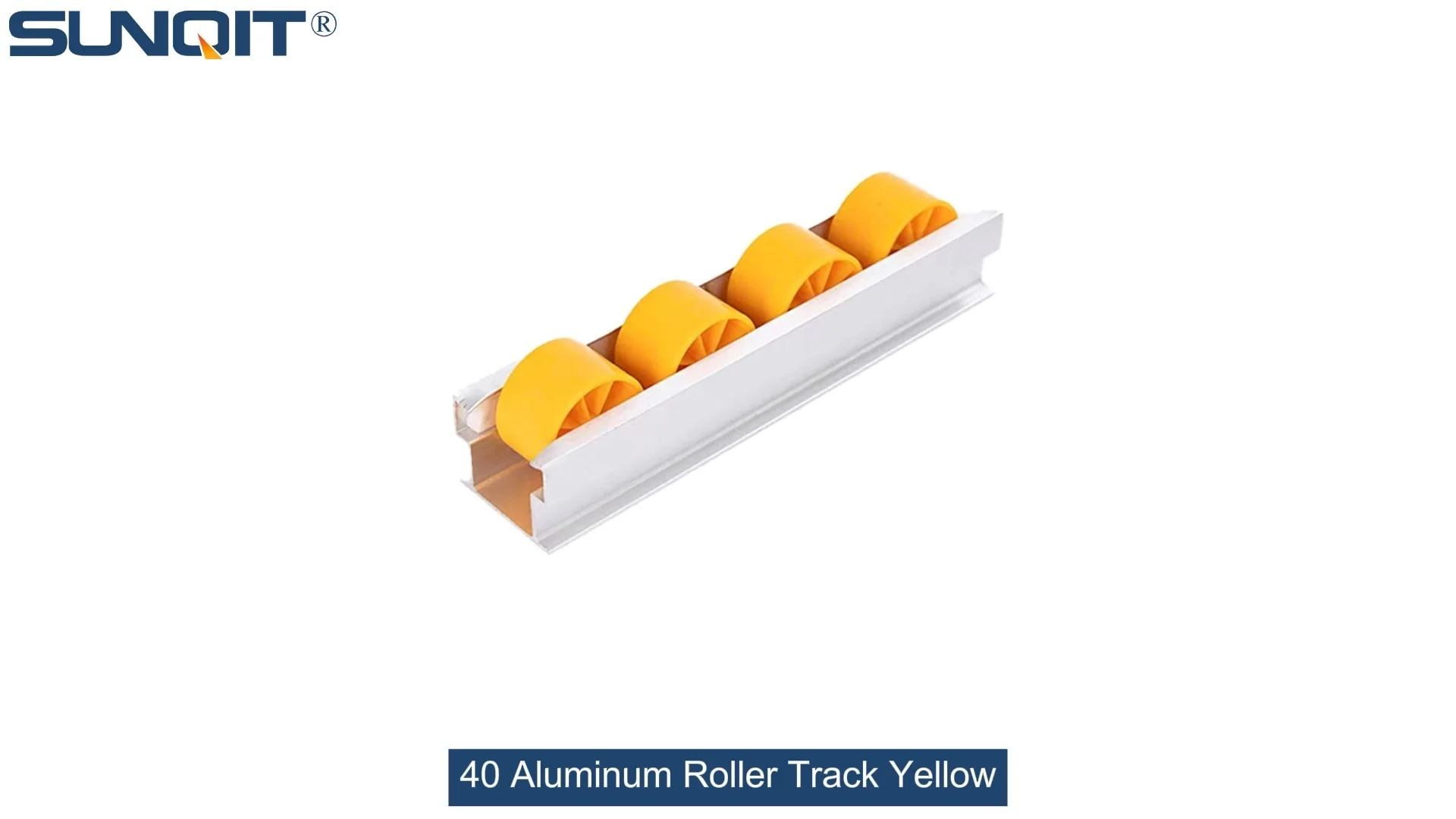
40 Aluminum Roller Track Yellow for Flexible Production Lines: Lean Manufacturing Essential
Introduction: Breaking Free from Rigid Production Chains
For anyone who's ever stood on a factory floor or managed a production line, the frustration of rigid systems is all too familiar. Imagine a line where parts get stuck on inflexible belts, or changing layouts for a new product takes days instead of hours. These bottlenecks don't just slow down output—they drain morale, waste resources, and make it hard to keep up with market demands. But what if there was a component that could turn those rigid lines into flexible, adaptive systems? That's exactly what the 40 Aluminum Roller Track Yellow brings to the table. It's not just a piece of hardware; it's a cornerstone of lean manufacturing, designed to make production lines smarter, faster, and more responsive.
In this article, we'll dive deep into what makes this roller track so special, how it aligns with lean principles, and how it integrates with other key components to create efficient, sustainable production systems. We'll also look at real-world applications across industries and share a case study that shows its impact on bottom-line results.
What Is the 40 Aluminum Roller Track Yellow?
Let's start with the basics. The 40 Aluminum Roller Track Yellow is a modular, high-quality component made from extruded aluminum—known for its strength, light weight, and corrosion resistance. The "40" refers to its standard 40mm width, which fits seamlessly with most lean system components. The bright yellow rollers aren't just for show; they're highly visible, helping workers quickly spot flow paths and reduce accidents. Each roller is precision-engineered to roll smoothly, even under heavy loads, ensuring parts move consistently from one station to the next.
One of its key features is modularity. You can cut the track to any length to fit your space, and it's easy to attach to frames using simple connectors. This means you don't have to invest in custom-made systems every time your production needs change. Whether you're building a small flow rack for parts storage or a full conveyor system for assembly, this roller track adapts to your needs.
Durability is another big plus. Unlike plastic roller tracks that crack under heavy loads or steel tracks that rust over time, aluminum stands up to industrial environments. It's easy to clean, making it ideal for industries like medical device manufacturing where hygiene is critical. And since it's reusable, you can reconfigure it again and again—no need to throw it away when your line changes. That's good for your budget and the planet.
How It Aligns with Lean Manufacturing Principles
Lean manufacturing is all about eliminating waste, improving flow, and enabling continuous improvement. The 40 Aluminum Roller Track Yellow checks all these boxes—and more. Let's break down how it supports each core lean principle:
1. Eliminate Waste (Muda)
Waste comes in many forms: waiting time, excess inventory, unnecessary motion, and more. The roller track reduces waiting time by ensuring parts flow smoothly from one station to the next—no more bottlenecks where parts pile up. It also cuts down on motion waste: workers don't have to reach far or carry heavy parts, since the track brings components right to their hands. For example, in a 3C assembly line, small parts like phone screens can glide along the track to each worker, reducing the time spent picking up and moving items.
2. Build Flexibility (Heijunka)
Heijunka, or leveled production, requires systems that can adapt to changing product volumes and types. The 40 Aluminum Roller Track Yellow is perfect for this. You can reconfigure it in hours to fit new product sizes or production lines. For instance, if a company switches from assembling laptops to tablets, they can adjust the track layout to accommodate the smaller size—no need to replace the entire system. This flexibility means you can respond quickly to market demands without wasting time or money.
3. Continuous Improvement (Kaizen)
Kaizen is about making small, incremental changes to improve processes over time. The roller track supports this by being easy to modify as you identify areas for improvement. Maybe you notice parts are falling off the end of the track—add an aluminum profile accessory like an end cap to fix it. Or perhaps you need to adjust the angle of the track to make parts flow faster—use a connector to tilt it slightly. These small changes add up to big improvements in efficiency.
4. Sustain Sustainability (Mura)
Mura refers to unevenness in production, which leads to waste. The roller track helps create a smooth, consistent flow of parts, reducing unevenness. Additionally, since it's reusable, it reduces the need for new materials—aligning with sustainable manufacturing practices. Many companies are now prioritizing sustainability, and the roller track helps them meet their goals by cutting down on waste and reducing their carbon footprint.
Integration with Key Lean Components
The 40 Aluminum Roller Track Yellow doesn't work in isolation—it's part of a larger ecosystem of lean components. Let's look at how it integrates with some of the most common ones:
Lean Pipe System
Lean pipe systems are the backbone of many flexible production lines. The 40 Aluminum Roller Track Yellow connects seamlessly with lean pipes and joints to build custom frames for flow racks, conveyors, and workstations. For example, you can use lean pipes to create a frame for a flow rack, then attach the roller track to the shelves. This combination lets materials slide down to the picking station, following the first-in-first-out (FIFO) principle—critical for reducing inventory waste.
Flow racks are essential for efficient material handling. The roller track is a key component here. By attaching it to the shelves of a flow rack, you create a system where materials move from the back to the front as they're used. This reduces the time workers spend retrieving parts and ensures older inventory is used first. For warehouses, this means faster order fulfillment and less waste from expired or obsolete parts.
Conveyor System
Conveyors are used to move parts along assembly lines. The 40 Aluminum Roller Track Yellow can be integrated into conveyor systems to create smooth, reliable movement. For automotive production lines, this means heavy parts like engine components can move along the track to each worker, reducing fatigue and increasing efficiency. The track's durability ensures it can handle the weight without breaking or wearing out quickly.
Aluminum profile accessories like end caps, connectors, and side guards enhance the functionality of the roller track. End caps prevent parts from falling off the track, connectors secure it to frames, and side guards keep parts aligned. These accessories are easy to install and reuse, making them a cost-effective way to improve the track's performance.
Real-World Applications Across Industries
The 40 Aluminum Roller Track Yellow is used in a wide range of industries, from 3C assembly to medical device manufacturing. Let's look at some specific examples:
| Industry | Key Needs | How the Roller Track Addresses Needs | Additional Lean Components Used |
|---|---|---|---|
| 3C Assembly | Quick line changes, handling small parts | Flexible reconfiguration, smooth movement of small components | Lean pipe system, flow rack |
| Medical Device Manufacturing | Sanitizable, durable, compliance with regulations | Aluminum material (easy to clean), corrosion-resistant | Aluminum profile accessories, conveyor |
| Automotive Production | Heavy load capacity, adaptability to part sizes | Strong aluminum construction, adjustable layout | Lean pipe system, conveyor |
| Warehousing & Logistics | FIFO flow, fast retrieval of parts | FIFO support, reduced handling time | Flow rack, aluminum profile accessories |
| Consumer Electronics | High-volume production, quick model changes | Consistent flow, easy reconfiguration | Conveyor, lean pipe system |
Let's take a closer look at one of these industries: 3C assembly. Companies like smartphone manufacturers often have to switch between models every few months. The 40 Aluminum Roller Track Yellow lets them adjust their lines quickly. For example, if a company launches a new phone model with a larger screen, they can widen the track to accommodate the bigger size. This flexibility means they can keep up with the fast pace of the 3C industry without falling behind.
For medical device manufacturing, hygiene is non-negotiable. The aluminum track is easy to sanitize, which is critical for compliance with FDA and other regulatory standards. It also resists corrosion, so it doesn't rust when cleaned with harsh chemicals. This makes it ideal for producing items like surgical instruments or diagnostic equipment.
Case Study: Transforming a 3C Assembly Line
XYZ Electronics: Reducing Changeover Time by 75%
XYZ Electronics is a leading 3C assembly company that produces smartphones and tablets. They were facing two major challenges: their old production line had rigid conveyor belts that often got stuck, and changing the line for new models took 2 days. This was costing them time and money, and they were struggling to keep up with market demands.
They decided to switch to the 40 Aluminum Roller Track Yellow in their flow racks and conveyors. The results were remarkable:
- Line changeover time dropped from 2 days to 4 hours—a 75% reduction.
- Throughput increased by 25% because parts flowed smoothly without bottlenecks.
- Worker complaints about heavy lifting decreased by 30% since parts were delivered directly to their stations.
- They saved 15% on material costs by reusing components instead of buying new ones.
The company's lean solution goals were fully met, and they continue to use the roller track to adapt to new product launches. This case study shows how a single component can transform an entire production line.
Why Choose the 40 Aluminum Roller Track Yellow Over Alternatives?
There are other roller tracks on the market, but the 40 Aluminum Roller Track Yellow stands out for several reasons:
Durability
Plastic roller tracks are cheap but break easily under heavy loads. Steel tracks are strong but rust over time. Aluminum tracks are the perfect balance—they're strong enough to handle heavy parts and resist corrosion, making them ideal for industrial environments.
Flexibility
Unlike rigid conveyor belts, the roller track is modular and easy to reconfigure. This means you can adjust it to fit your changing needs without replacing the entire system.
Safety
The bright yellow rollers are highly visible, so workers can easily spot flow paths and avoid accidents. This reduces the risk of injuries and improves overall workplace safety.
Cost-Effectiveness
While aluminum tracks may cost more upfront than plastic ones, they last longer and are reusable. This means you save money in the long run by not having to replace them frequently. Additionally, the flexibility of the track reduces the need for custom-made systems, which are often expensive.
Conclusion: The Future of Flexible Production
The 40 Aluminum Roller Track Yellow is more than just a component—it's a key to building lean, flexible, and sustainable production lines. It aligns with all core lean principles, integrates seamlessly with other components, and delivers real results across industries. Whether you're in 3C assembly, medical device manufacturing, or automotive production, this roller track can help you eliminate waste, improve efficiency, and adapt to changing market demands.
As manufacturing continues to evolve, flexibility and efficiency will become even more important. The 40 Aluminum Roller Track Yellow is a tool that can help you stay ahead of the curve. It's not just an investment in your production line—it's an investment in your company's future.