- Company Articles
- Products and Technology
- Product knowledge
- 40 Aluminum Roller Track Yellow: Heat Resistance for High-Temperature Manufacturing

40 Aluminum Roller Track Yellow: Heat Resistance for High-Temperature Manufacturing
Related Product
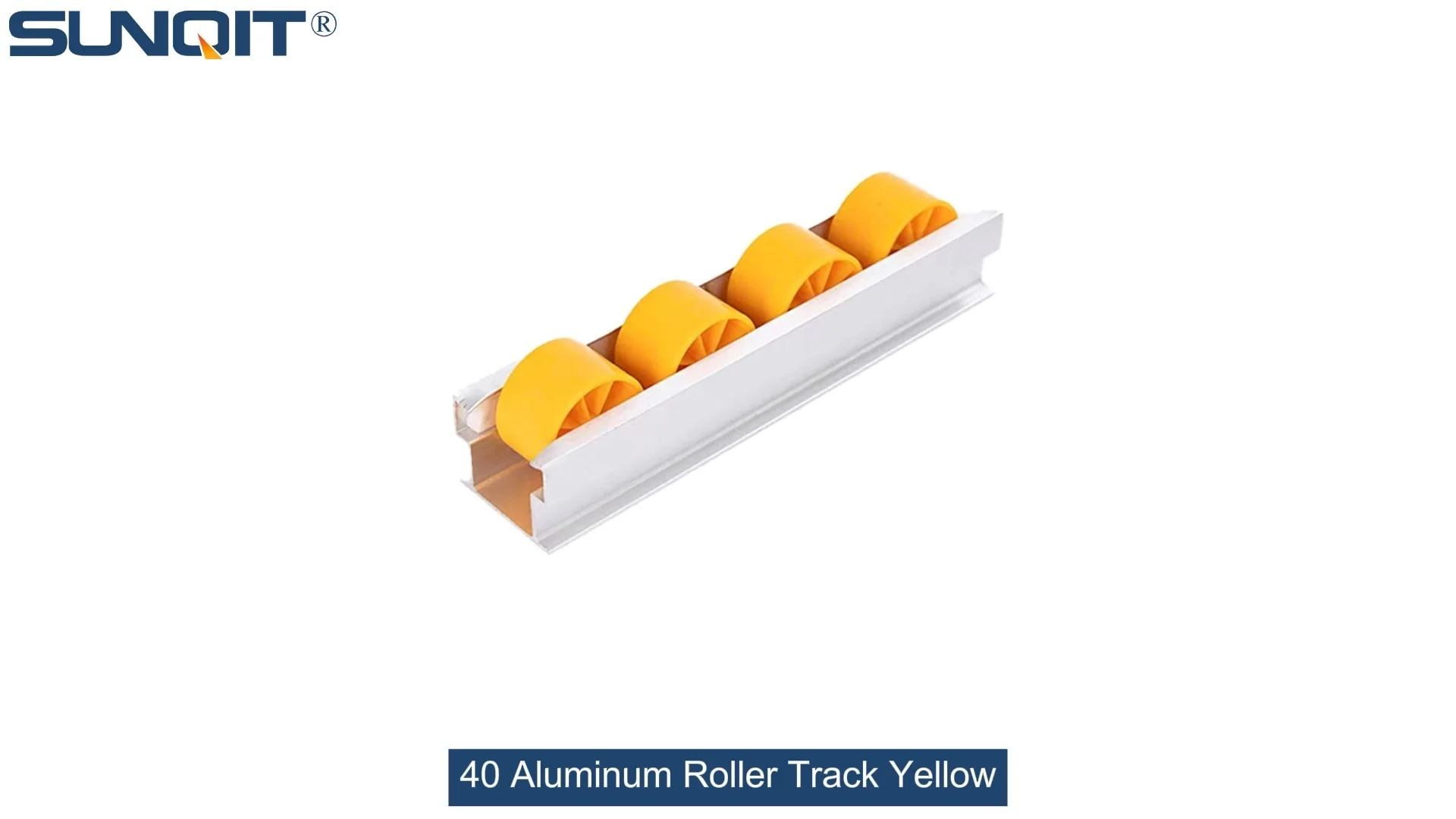
40 Aluminum Roller Track Yellow
Durable and smooth-running modular roller rails. The system is fully assembled. The roller rail profile contains plastic rollers mounted on steel axles. Aluminum frame with plastic wheel make it anti corrosion,and material convey more smooth.
How a Simple Tool Transforms Material Flow in the Hottest Corners of Your Factory
The Burn of High-Temperature Manufacturing—And the Solution That Stays Cool
Walk into any high-temperature manufacturing environment—an automotive paint shop where freshly painted car bodies glide through curing ovens, an electronics plant's circuit board soldering line, or a food processing facility's baking zone—and you'll feel the heat before you see the action. The air shimmers, metal surfaces to the touch, and every piece of equipment is pushed to its limit. In these spaces, material handling isn't just about moving parts from A to B; it's about doing so reliably, safely, and efficiently when the mercury soars. That's where the 40 Aluminum Roller Track Yellow comes in—a-looking tool that's quietly revolutionizing how factories handle heat.
For years, manufacturers in these hot zones have grappled with a frustrating cycle: equipment that warps, jams, or fails entirely under high temperatures. Plastic roller tracks melt. Steel tracks rust when exposed to heat and humidity, then seize up. Even stainless steel, while durable, is heavy and rigid, making it hard to reconfigure as production needs change. But what if there was a roller track that could handle the heat, stay smooth, and adapt to your workflow? Enter the 40 Aluminum Roller Track Yellow—built from high-grade aluminum extrusion profile, designed for the extremes, and colored a bright, visible yellow to keep safety front and center.
Why Aluminum? The Science Behind the Heat Resistance
At first glance, aluminum might seem like an unlikely hero in high heat. After all, it's lightweight, often associated with soda cans and window frames, not industrial furnaces. But dig deeper, and you'll realize aluminum extrusion profile is a material science marvel—especially when crafted into a precision-engineered roller track like the 40 series.
Aluminum's secret lies in its physical properties. Pure aluminum has a melting point of 660°C (1220°F), far higher than the typical operating temperatures of most manufacturing heat zones (which usually top out around 200–300°C). Even when heated, aluminum retains its structural integrity; it doesn't warp or soften until temperatures approach 300°C, and even then, it deforms gradually, giving operators time to address issues before catastrophic failure. Compare that to plastic roller tracks, which start to soften at 80–100°C, or low-grade steel, which loses tensile strength above 250°C, and the advantage is clear.
But it's not just about melting points. The 40 Aluminum Roller Track Yellow is made from aluminum extrusion profile —a process where aluminum alloy is forced through a die to create uniform, consistent shapes. This method ensures the track's walls are thick where strength is needed and thin where weight can be saved, balancing durability and portability. The extrusion also creates a smooth, seamless surface that resists cracks and corrosion—critical in environments where oils, coolants, or cleaning chemicals might splash onto the track.
And then there's the color: that bright yellow hue isn't just for show. In busy factories, visibility is safety. The yellow track stands out against dark machinery and cluttered floors, reducing the risk of trips, collisions, or misaligned materials. It's a small detail, but in high-stress, high-heat zones, small details save time—and lives.

Features That Make the 40 Aluminum Roller Track Yellow a Workhorse
Heat resistance is the star here, but the 40 Aluminum Roller Track Yellow isn't a one-trick pony. Its design is a masterclass in industrial practicality, with features that solve real-world problems for factory managers and line workers alike.
1. Heat Resistance That Goes the Distance
Let's get specific: this track is rated to operate continuously at temperatures up to 250°C (482°F) without losing performance. Even in short bursts of up to 300°C (572°F)—common in processes like powder coating curing or metal heat treatment—it maintains its shape and smooth roller action. The aluminum alloy used (6063-T5, a staple in industrial extrusion) is heat-treated to strength, so it won't bend under the weight of heavy parts, even when hot. And unlike plastic or steel, it won't develop stress cracks from repeated heating and cooling cycles—a problem that turns lesser tracks into maintenance headaches.
2. Smooth Rollers, Even When the Heat's On
What good is a heat-resistant track if the rollers seize up? The 40 Aluminum Roller Track Yellow uses precision-machined steel rollers with high-temperature lubricant (rated to 300°C) sealed inside. Even when the track itself is hot to the touch, the rollers spin freely, ensuring parts glide along without jams. This is a game-changer for processes like automotive engine assembly, where heavy cylinder heads need to move smoothly through pre-heating stations.
3. Modular Design—Because Your Factory Doesn't Stand Still
High-temperature manufacturing lines aren't static. New products, updated processes, or seasonal demand spikes mean reconfiguring workflows on the fly. The 40 Aluminum Roller Track Yellow is built for change. Its modular design lets you connect sections using roller track connectors —simple, durable brackets that lock tracks together securely, even under heat. Need to extend a line by 10 feet? Add a few sections. Want to create a 90-degree turn? Swap in a corner connector. And because aluminum is lightweight (about 1/3 the weight of steel), reconfiguring takes two workers instead of four, saving labor hours and downtime.
4. Corrosion Resistance for the Messy Reality of Manufacturing
Heat isn't the only enemy in these environments. Oils, coolants, cleaning agents, and even humidity can turn a track into a rusted, corroded mess. Aluminum's natural oxide layer acts as a shield, preventing rust and corrosion. The yellow coating (a specialized thermoset powder coat) adds an extra layer of protection, repelling chemicals and making cleanup a breeze—just wipe with a damp cloth, and it's ready for the next shift. In food processing, where sanitation is non-negotiable, this means the track meets FDA standards for incidental food contact, too.

Where It Shines: Real-World Applications in High-Temp Manufacturing
Talk is cheap—so let's look at how the 40 Aluminum Roller Track Yellow performs in the gritty, hot corners of real factories. Here are four industries where it's making a measurable difference:
Automotive Manufacturing: Paint Curing and Engine Assembly
Automotive paint shops are brutal on equipment. After a car body is painted, it enters a curing oven where temperatures hit 180–200°C for 20–30 minutes. Before the 40 Aluminum Roller Track Yellow, many plants used steel tracks here. But steel conducts heat, so the tracks themselves would reach 150°C+, and any moisture in the air (from pressure washing the line) would cause rust. The result? Rollers that stuck, requiring frequent shutdowns to clean and lubricate. A mid-sized auto plant in Michigan switched to the 40 Aluminum Track in 2023 and reported a 70% drop in unplanned downtime in their paint curing line. "We used to have to stop the line every 2 hours to free up stuck rollers," says the plant's maintenance manager. "Now, we check it once a shift, and that's it."
Over in engine assembly, where cylinder blocks and heads are pre-heated to 120°C before machining, the track's lightweight design shines. Workers can easily reposition short track sections to feed parts to different machining stations, reducing the time spent moving heavy steel tracks around. "It's like night and day," one line worker notes. "I can carry a 5-foot section by myself now. Before, I needed a coworker and a dolly."
Electronics: Circuit Board Soldering and Component Testing
Electronics manufacturing often involves precision work in hot environments. Circuit boards, for example, pass through infrared soldering machines where localized temperatures reach 260°C. The 40 Aluminum Track here is used to feed boards into the soldering machine and out the other side to cooling stations. Its heat resistance ensures the track doesn't warp, keeping the boards aligned perfectly—critical for avoiding soldering defects. And because aluminum doesn't conduct electricity, there's no risk of static discharge damaging sensitive components, unlike steel tracks (which often require grounding).
Food Processing: Baking and Drying Lines
In food plants, hygiene is as important as heat resistance. A bakery in California uses the 40 Aluminum Track to move trays of cookies through convection ovens (temperatures around 180°C). The yellow color makes it easy to spot crumbs or spills, and the corrosion-resistant aluminum means daily washdowns with hot, soapy water don't cause rust. "We used plastic tracks before, but they'd start to melt around the oven exit," says the plant's operations director. "These aluminum tracks? They've been through 18 months of daily baking, and they look brand new."
Aerospace: Heat-Treated Parts Handling
Aerospace components like turbine blades undergo rigorous heat treatment—heating to 1000°C+ in furnaces, then quenching in oil. After quenching, the parts are still hot (200–300°C) and need to cool slowly on racks. The 40 Aluminum Track, paired with workbench setups, creates temporary cooling stations that can be moved near the furnace. The track's heat resistance ensures it doesn't transfer excess heat to the workbench, and its modularity lets workers adjust the layout based on the day's production run.

Why Not Steel? Or Plastic? The Case for Aluminum
You might be wondering: "Steel is strong, plastic is cheap—why bother with aluminum?" Let's break it down. Steel roller tracks are durable, but they're heavy (a 10-foot section of steel track weighs 45 lbs; aluminum? 15 lbs). That weight makes them hard to move, and in high heat, steel expands more than aluminum, leading to warping and misalignment. Plus, steel rusts—even stainless steel can corrode in humid, hot environments with chemicals. Plastic tracks are light and cheap, but they start to soften at 80°C and melt at 150°C—useless in most high-temp processes. They also degrade over time from UV exposure (common near oven windows) and can't handle heavy loads.
Aluminum hits the sweet spot: lightweight for easy reconfiguration, heat-resistant enough for 250°C+ environments, corrosion-proof, and strong enough to carry 50–100 lbs per linear foot (more than enough for most industrial parts). It's not the cheapest option upfront, but when you factor in lower maintenance, less downtime, and longer lifespan (10+ years vs. 2–3 for plastic), it's a no-brainer for cost-conscious managers.
Accessories That Turn a Track Into a System
The 40 Aluminum Roller Track Yellow is powerful on its own, but it truly shines when paired with the right accessories. Think of it as a Lego set for industrial material handling—mix and match parts to build exactly what your line needs. Here's a look at the most popular add-ons, and how they enhance performance:
| Accessory | Function | Benefit in High-Temp Environments |
|---|---|---|
| Roller Track Connectors | Join track sections end-to-end or at angles (90°, 45°) | Secure, heat-resistant joints that don't loosen under thermal expansion |
| End Support with Stop | Anchors track ends to the floor or workbench; includes a rubber stop to prevent parts from sliding off | Prevents track movement in high-traffic areas; stop protects parts from falling into hot machinery |
| Aluminum Profile Accessories (e.g., Brackets, Clamps) | Mount tracks to walls, workbenches, or overhead structures | Flexible mounting options for tight spaces; compatible with standard aluminum extrusion profiles |
| Swivel Caster Wheels | Add mobility to track sections (paired with a frame) | Move tracks to where heat is highest; casters have heat-resistant bearings |
| Aluminum Guide Rail A | Side rails that keep parts centered on the track | Prevents jams in high-speed, high-heat lines where precision is critical |
Take the roller track connectors, for example. Made from the same 6063-T5 aluminum as the track, they lock sections together with a simple bolt-and-nut system. Even when heated, they maintain a tight grip—no need to retighten them constantly like you would with steel bolts, which loosen as metal expands and contracts. And because they're aluminum, they won't corrode, so you won't find yourself wrestling with rusted nuts during reconfigurations.
Or consider the swivel caster wheels. Attach them to a frame under the track, and suddenly you have a mobile material handling system. In a food processing plant, this means you can roll the track directly to the oven door, load it with hot trays, then roll it to the cooling area—no need to carry heavy, hot parts by hand. The casters use high-temp grease, so they won't seize up when the track is warm.
Case Study: A Tier 1 Auto Supplier Cuts Downtime by 65% with Aluminum Tracks
A Tier 1 automotive supplier in Ohio makes suspension components—parts that undergo heat treatment (170°C for 1 hour) to durability. Before 2022, their heat treatment line used steel roller tracks to move parts from the oven to the cooling station. The problem? The steel tracks would rust from the water-based cooling spray, and the rollers would jam every 3–4 hours, forcing the line to stop for cleaning. "We were losing 2–3 hours of production per day," says the plant manager. "And replacing the steel tracks every 6 months cost $15,000 a pop."
In early 2022, they switched to 40 Aluminum Roller Track Yellow, paired with roller track connectors and end supports. The results were immediate: jams dropped from 4–5 per day to 1 per week. The aluminum tracks didn't rust, so cleaning time went from 30 minutes per shift to 5 minutes. After a year, the plant had saved $45,000 in downtime and avoided two track replacements. "It's one of those upgrades where you wonder why you didn't do it sooner," the manager laughs. "Now, we're rolling it out to our other heat treatment lines."
Maintenance Made Easy—Because You've Got Better Things to Do Than Fix Tracks
High-temperature manufacturing is busy enough without adding "fix roller tracks" to your to-do list. The 40 Aluminum Roller Track Yellow is designed to be low-maintenance, so you can focus on production, not repairs.
Daily care is simple: wipe the track with a damp cloth to remove dust, oil, or debris. Once a month, check the rollers for debris buildup (a quick spray with compressed air does the trick) and inspect the connectors to ensure they're tight (though thermal expansion rarely loosens them). If a roller does wear out (after 5–7 years of heavy use), you can replace it in 5 minutes with a wrench—no need to take the entire track apart. And because the track is modular, you can swap out a damaged section without shutting down the entire line.
Compare that to steel tracks, which require regular painting to prevent rust, or plastic tracks, which often need full replacement when damaged. The 40 Aluminum Track is built to be forgotten—until you need it to perform, and then it's there, reliable as ever.
Final Thoughts: Heat Resistance Isn't a Luxury—It's a Necessity
High-temperature manufacturing is unforgiving. The heat tests every piece of equipment, every process, and every worker. In these environments, material handling equipment can't be an afterthought—it's the backbone of production. The 40 Aluminum Roller Track Yellow isn't flashy, but it's a workhorse that solves a critical problem: how to move parts smoothly, safely, and reliably when the heat is on.
Its aluminum extrusion profile construction delivers heat resistance up to 250°C, its modular design adapts to changing workflows, and its low-maintenance nature keeps downtime to a minimum. Paired with roller track connectors, aluminum profile accessories, and casters, it becomes a flexible system that grows with your factory.
So the next time you're in a hot manufacturing zone, take a look at the roller tracks. If they're warped, rusted, or constantly jamming, it might be time to make the switch. The 40 Aluminum Roller Track Yellow won't just handle the heat—it'll make you forget it was ever a problem.