- Company Articles
- Products and Technology
- Product knowledge
- 40 Aluminum Roller Track Yellow: How It Integrates with Conveyor Systems

40 Aluminum Roller Track Yellow: How It Integrates with Conveyor Systems
Related Product
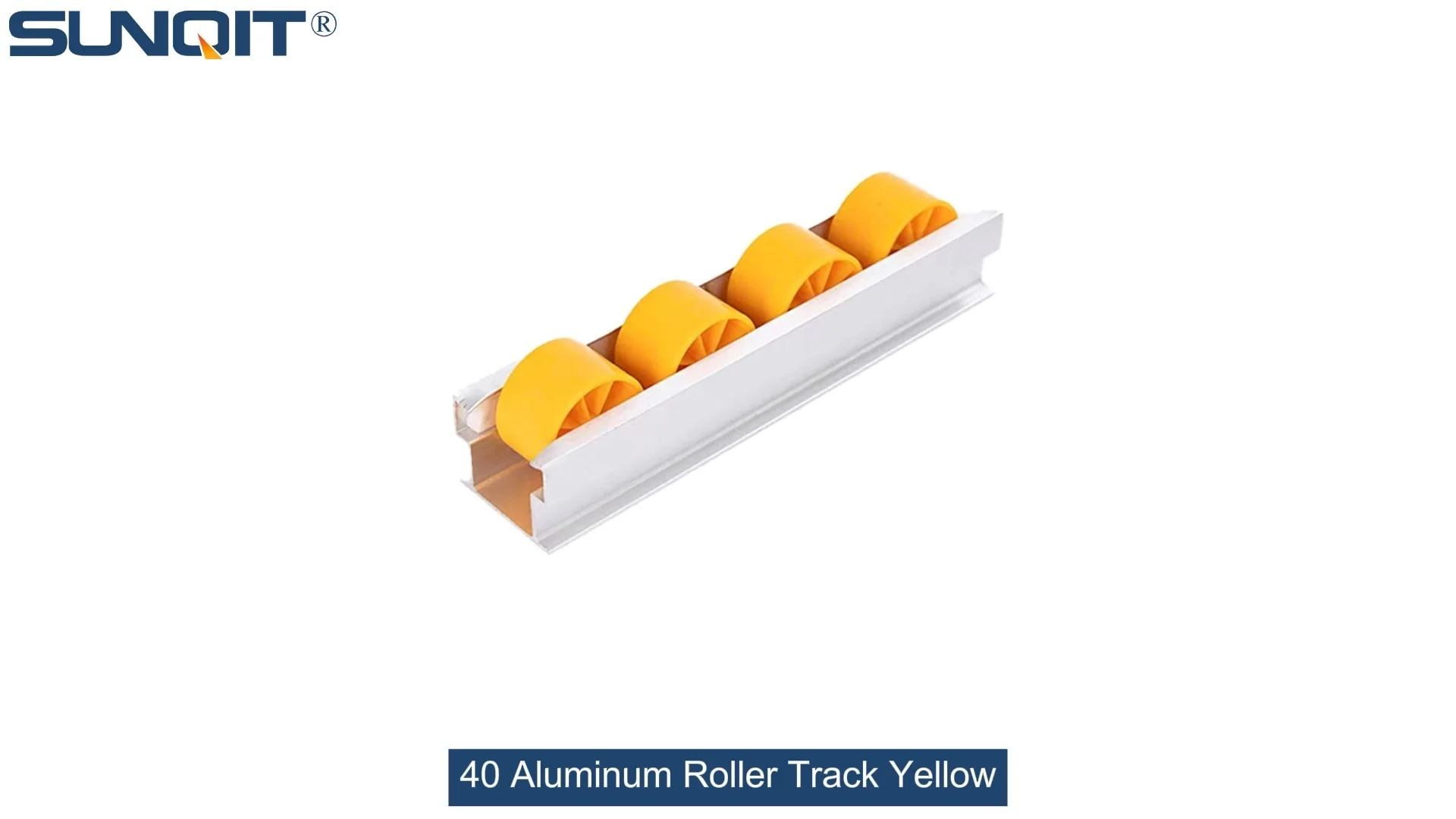
40 Aluminum Roller Track Yellow
Durable and smooth-running modular roller rails. The system is fully assembled. The roller rail profile contains plastic rollers mounted on steel axles. Aluminum frame with plastic wheel make it anti corrosion,and material convey more smooth.
Walk through any high-performing manufacturing plant, distribution center, or assembly facility, and you'll quickly spot the unsung heroes of operational efficiency: conveyor systems. These networks of belts, rollers, and tracks keep materials moving, reduce manual labor, and ensure that production lines hum along without costly bottlenecks. But not all conveyor components are created equal. Among the most versatile and impactful is the 40 Aluminum Roller Track Yellow—a component that's quietly transforming how businesses design, build, and optimize their material handling workflows. In this article, we'll dive deep into what makes this roller track stand out, how it integrates seamlessly with various conveyor systems, and why it's become a go-to choice for teams aiming to build lean, responsive operations.
Understanding the Basics: What is 40 Aluminum Roller Track Yellow?
Before we explore integration, let's start with the fundamentals. The 40 Aluminum Roller Track Yellow is a specialized material handling component designed to facilitate the smooth, controlled movement of goods. At its core, it consists of a sturdy aluminum frame (the "40" refers to its standard width, typically 40mm) fitted with rotating rollers, all finished in a bright yellow color. But its simplicity is deceptive—every element, from the aluminum extrusion to the roller spacing, is engineered for precision and reliability.
Aluminum is the material of choice here for good reason. Unlike steel, it's lightweight, making the track easy to install, reconfigure, and transport. Yet it's surprisingly durable, resistant to corrosion, and requires minimal maintenance—critical traits in busy industrial environments where equipment is subject to constant use. The yellow color isn't just for aesthetics, either. It enhances visibility, helping workers quickly identify workflow paths, avoid collisions, and maintain awareness of moving parts—an important safety feature in fast-paced settings.
The rollers themselves are typically made of high-quality plastic or rubber, designed to minimize friction and noise while supporting varying load capacities. Depending on the model, they may be fixed or swivel, but in the case of the 40 Aluminum Roller Track Yellow, the focus is on consistent, linear movement—perfect for transporting boxes, bins, and components along a set path.
Key Features That Make It Integration-Ready
What sets the 40 Aluminum Roller Track Yellow apart from generic roller tracks? Its design prioritizes compatibility, flexibility, and performance—three qualities that make it a natural fit for integration with conveyor systems. Let's break down its most integration-friendly features:
1. Modular Design and Standardized Sizing
One of the biggest hurdles in conveyor system integration is ensuring components from different manufacturers (or even different product lines) work together. The 40 Aluminum Roller Track Yellow solves this with a modular design built around standardized sizing. Its 40mm width aligns with common industry standards for aluminum profiles and conveyor accessories, meaning it can easily connect with everything from aluminum profile workbenches to roller track connectors without the need for custom adapters.
This modularity also makes it easy to extend or modify conveyor lines. Need to add a 5-meter section to reach a new workbench? Simply attach additional 40 Aluminum Roller Track Yellow segments using compatible roller track placon mounts or center support brackets. No reengineering, no downtime—just plug-and-play flexibility.
2. Compatibility with Aluminum Profile Systems
Modern conveyor systems rarely exist in isolation; they're part of larger workstations that include workbenches, material racks, and storage solutions—many of which are built using aluminum profiles. The 40 Aluminum Roller Track Yellow is engineered to work seamlessly with these systems. Its aluminum frame can be mounted directly to aluminum profile accessories like aluminum guide rails (both Type A and Type B) or secured to aluminum extrusion profiles using roller track placon mounts for aluminum profile flat or high connections.
For example, imagine a workstation where a 40 Aluminum Roller Track Yellow feeds components directly to a workbench. The track can be bolted to the same aluminum profile frame that supports the workbench, creating a unified, stable setup. This integration eliminates gaps between the track and the work surface, reducing the risk of items getting stuck or damaged during transfer.
3. Versatile Connection Options
Conveyor systems aren't linear—they often include turns, merges, and elevation changes. The 40 Aluminum Roller Track Yellow adapts to these complexities thanks to a wide range of compatible connectors and accessories. Roller track placon mount connectors, for instance, allow for smooth 90-degree turns or T-junctions, while end supports with stops or wheels let the track transition between different heights (e.g., from a higher conveyor line down to a lower workbench).
Even better, these connections are tool-free or require minimal tools, making on-the-fly adjustments possible. A maintenance technician or floor supervisor can reconfigure the track layout in minutes, responding quickly to changes in production needs—like shifting from batch processing to just-in-time delivery.
4. Load Capacity and Durability
Integration isn't just about physical connection—it's about performance. The 40 Aluminum Roller Track Yellow is rated to handle loads ranging from light (5-10kg per linear meter) to medium-heavy (up to 50kg per linear meter), depending on roller spacing and support. This makes it suitable for a wide range of applications, from transporting small electronic components to heavier items like automotive parts or bulk packaging.
Its aluminum construction resists dents, scratches, and rust, even in environments with temperature fluctuations or exposure to oils and coolants. This durability ensures that once integrated into a conveyor system, it remains reliable for years, reducing the need for frequent replacements and keeping total cost of ownership low.

Integrating 40 Aluminum Roller Track Yellow with Common Conveyor Systems
Now that we understand its features, let's explore how the 40 Aluminum Roller Track Yellow integrates with the most common types of conveyor systems. Whether you're using belt conveyors, roller conveyors, or even automated guided vehicle (AGV) systems, this track can bridge gaps, extend lines, and enhance overall efficiency.
1. Integration with Belt Conveyors
Belt conveyors are workhorses for moving bulk materials or irregularly shaped items, but they have limitations—namely, they're not ideal for manual sorting or temporary storage. This is where the 40 Aluminum Roller Track Yellow shines. By integrating it at the end of a belt conveyor, you create a "buffer zone" where workers can inspect, sort, or stage items before they move to the next step.
For example, in a e-commerce fulfillment center, a belt conveyor might transport packages from the sorting area to a packing station. At the end of the belt, a 40 Aluminum Roller Track Yellow can be angled downward slightly (using adjustable end supports) to let packages glide gently onto a packing workbench. The rollers allow workers to easily slide packages into position without lifting, reducing fatigue and speeding up packing times.
Connection is straightforward: Use roller track placon mount brackets to secure the track to the belt conveyor's frame, ensuring a smooth transition between the belt and the rollers. For added stability, pair the track with aluminum profile accessories like side guides to keep packages centered as they move from belt to roller.
2. Integration with Roller Conveyors
Roller conveyors are already built around the principle of roller-based movement, so integrating 40 Aluminum Roller Track Yellow with them is often seamless. In fact, many facilities use the 40 Aluminum track to extend existing roller conveyor lines, create branch lines, or add flexibility to fixed systems.
Consider an automotive parts plant where a main roller conveyor transports engine components to various assembly stations. One station might need a short to feed parts to a specialized workbench. Instead of installing a full-length steel roller conveyor (which is heavy and expensive), the plant can add a 40 Aluminum Roller Track Yellow segment connected via a 90-degree roller track connector. The aluminum track is lightweight enough to mount directly to the existing conveyor's aluminum profile frame, and its yellow color clearly marks it as a secondary line, preventing confusion.
Another common use case is merging multiple roller lines into one. For instance, two 40 Aluminum Roller Track Yellow lines (each feeding parts from different machining stations) can merge into a single main roller conveyor using a Y-shaped connector. The aluminum track's modular design makes it easy to adjust the angle of the merge, ensuring parts flow smoothly without jamming.
3. Integration with Lean Systems and Workstations
Lean manufacturing principles—focused on minimizing waste, maximizing value, and continuous improvement—have revolutionized how facilities design their workflows. The 40 Aluminum Roller Track Yellow is a natural fit for lean systems, as it supports key practices like 5S (sort, set in order, shine, standardize, sustain) and just-in-time (JIT) production.
Imagine a lean workstation built around a workbench, where operators assemble small electronics. To maintain a "set in order" workspace, tools and components should be within easy reach, and finished products should move out quickly. A 40 Aluminum Roller Track Yellow can be mounted along the back of the workbench to deliver components from a nearby material rack, and another track along the front can carry finished products to the next station.
Because the track is lightweight and modular, it can be reconfigured as workflows change—say, if the assembly process is updated to include a new component. This adaptability aligns with lean's emphasis on flexibility, ensuring the workstation evolves with the business rather than becoming a fixed, outdated asset.
What's more, the track's integration with aluminum profile workbenches and material racks (like Material Rack B, a 3-row, 3-floor design) creates a closed-loop system where materials flow in, are processed, and flow out—minimizing the "transport" waste that plagues many traditional setups.

A Practical Guide: Step-by-Step Integration
Integrating 40 Aluminum Roller Track Yellow into your conveyor system doesn't have to be complicated. With the right tools, accessories, and planning, even small teams can tackle basic installations. Here's a simplified step-by-step guide to get you started:
Step 1: Assess Your Needs and Layout
Start by mapping your current workflow. Where are the bottlenecks? Do materials get stuck during transfers? Is there a need for a buffer zone or a line? Sketching a layout (even roughly) will help you determine the length of track needed, the number of connectors, and any special accessories (like end stops or side guides).
Step 2: Gather Components
Along with the 40 Aluminum Roller Track Yellow segments, you'll need compatible accessories. Common items include:
- Roller track connectors (for joining segments or creating turns)
- Placon mounts (to attach the track to aluminum profiles or frames)
- End supports (with stops or wheels, depending on elevation needs)
- Side guides (to keep items centered)
- Casters (if you need the track to be mobile)
Most suppliers offer kits with these components, but it's always best to double-check compatibility—look for accessories labeled for "40mm aluminum roller track" or "aluminum profile systems."
Step 3: Prepare the Installation Area
Clear the space where the track will be installed, ensuring the floor is level (use a spirit level for accuracy). If mounting to an existing conveyor or aluminum profile frame, clean the mounting surfaces to remove dust, grease, or debris—this ensures a secure connection.
Step 4: Assemble and Mount the Track
Connect the track segments using roller track connectors. Most connectors use bolts or clips, so hand-tighten them first (you can fully tighten after alignment). Next, mount the track to your support structure (conveyor frame, aluminum profile, or standalone stands) using placon mounts. For overhead or elevated installations, use center support brackets to prevent sagging.
Step 5: Test and Adjust
Once installed, test the track with sample items of varying weights. Check for smooth movement—rollers should spin freely, and items should glide without sticking. If items veer off course, adjust the side guides. If movement is too slow, check for debris in the rollers or adjust the track's angle slightly (a 1-2 degree incline often helps with gravity-fed systems).

Real-World Impact: Case Studies in Integration
To truly understand the value of integrating 40 Aluminum Roller Track Yellow, let's look at two real-world examples where it transformed operations.
Case Study 1: Electronics Manufacturing Facility
A mid-sized electronics manufacturer was struggling with bottlenecks in its circuit board assembly line. Components were delivered to workstations via manual carts, leading to delays and errors as workers waited for materials. The team decided to integrate 40 Aluminum Roller Track Yellow into their existing lean system, connecting a central material rack to each assembly workbench.
The results were striking: By replacing manual cart transport with gravity-fed roller tracks, the facility reduced material delivery time by 45%. Workers no longer had to leave their stations to fetch components, and the yellow track's visibility reduced misplaced items by 30%. Plus, the aluminum track's modular design made it easy to reconfigure when the production line shifted to a new circuit board model—no need for costly retooling.
Case Study 2: Food Distribution Center
A food distributor handling frozen goods needed a way to move boxes from a refrigerated storage area to a packing line without exposing workers to cold temperatures for extended periods. They integrated 40 Aluminum Roller Track Yellow with their existing belt conveyor system, creating a "bridge" between the freezer and the packing floor.
The aluminum track's corrosion resistance stood up to the cold, humid environment, and the plastic rollers prevented freezing (unlike steel rollers, which often seized up). The yellow color made the track visible even in low-light freezer conditions, improving safety. Most importantly, the system reduced manual handling by 60%, cutting down on worker fatigue and lowering the risk of product damage.
Comparing Roller Track Options: A Quick Reference
Not sure if 40 Aluminum Roller Track Yellow is right for your needs? Here's how it stacks up against other common roller track types:
| Track Type | Material | Best For | Load Capacity | Integration Ease | Maintenance Needs |
|---|---|---|---|---|---|
| 40 Aluminum Roller Track Yellow | Aluminum frame, plastic/rubber rollers | General manufacturing, distribution, lean systems | 5-50kg/m | High (compatible with aluminum profiles, conveyor systems) | Low (occasional cleaning, roller lubrication) |
| 38 Aluminum Roller Track Black ESD | Aluminum frame, ESD-safe rollers | Electronics manufacturing (static-sensitive parts) | 3-30kg/m | High (similar to 40mm, but ESD-focused) | Medium (requires ESD testing) |
| 60 Steel Roller Track Green | Steel frame, steel rollers | Heavy-duty applications (auto parts, machinery) | 50-200kg/m | Medium (heavier, requires more support) | High (prone to rust, needs regular painting) |
| Plastic Roller Track (Grey/Yellow) | Plastic frame, plastic rollers | Light loads, clean environments (pharmaceuticals, food) | 1-10kg/m | Medium (limited compatibility with metal systems) | Low (but less durable than aluminum) |
As the table shows, the 40 Aluminum Roller Track Yellow strikes a balance between load capacity, integration flexibility, and maintenance—making it a versatile choice for most general applications.
Maintenance Tips to Maximize Longevity
Like any equipment, the 40 Aluminum Roller Track Yellow performs best with regular maintenance. Fortunately, its design keeps upkeep simple. Here are a few tips to ensure it stays in top condition:
- Clean rollers monthly: Use a soft brush or compressed air to remove dust, debris, or product residue from rollers. For sticky substances (like oil or adhesive), wipe rollers with a damp cloth and mild detergent.
- Lubricate moving parts quarterly: Apply a small amount of silicone-based lubricant to roller axles and connectors to keep movement smooth. Avoid oil-based lubricants, which can attract dust.
- Check for loose connections: Tighten bolts and connectors every six months (or more often in high-vibration areas) to prevent wobbling or misalignment.
- Inspect for wear: replace rollers that are cracked, chipped, or no longer spin freely. Check the aluminum frame for dents or bends—minor damage can often be bent back, but severe damage may require replacing the segment.
- Protect from extreme conditions: While aluminum resists corrosion, prolonged exposure to saltwater, chemicals, or extreme temperatures can degrade it. Use protective covers or coatings if needed.
Conclusion: Building Leaner, More Connected Systems
The 40 Aluminum Roller Track Yellow is more than just a conveyor component—it's a building block for lean, integrated material handling systems. Its lightweight aluminum design, modularity, and compatibility with everything from belt conveyors to aluminum profile workbenches make it a versatile solution for businesses looking to boost efficiency, reduce waste, and adapt to changing needs.
Whether you're a small workshop upgrading from manual cart transport or a large manufacturer redesigning an entire production line, this roller track offers a path to smoother workflows, happier workers, and bottom-line results. By integrating it thoughtfully—pairing it with the right connectors, accessories, and conveyor systems—you're not just moving materials; you're building a foundation for operational excellence.
So the next time you walk through your facility, take a closer look at your conveyor system. Could a 40 Aluminum Roller Track Yellow bridge a gap, eliminate a bottleneck, or make a workstation more efficient? Chances are, the answer is yes—and the benefits will extend far beyond the track itself.