- Company Articles
- Products and Technology
- Application Cases
- 40 Aluminum Roller Track Yellow in Aerospace Manufacturing: Precision & Reliability

40 Aluminum Roller Track Yellow in Aerospace Manufacturing: Precision & Reliability
Related Product
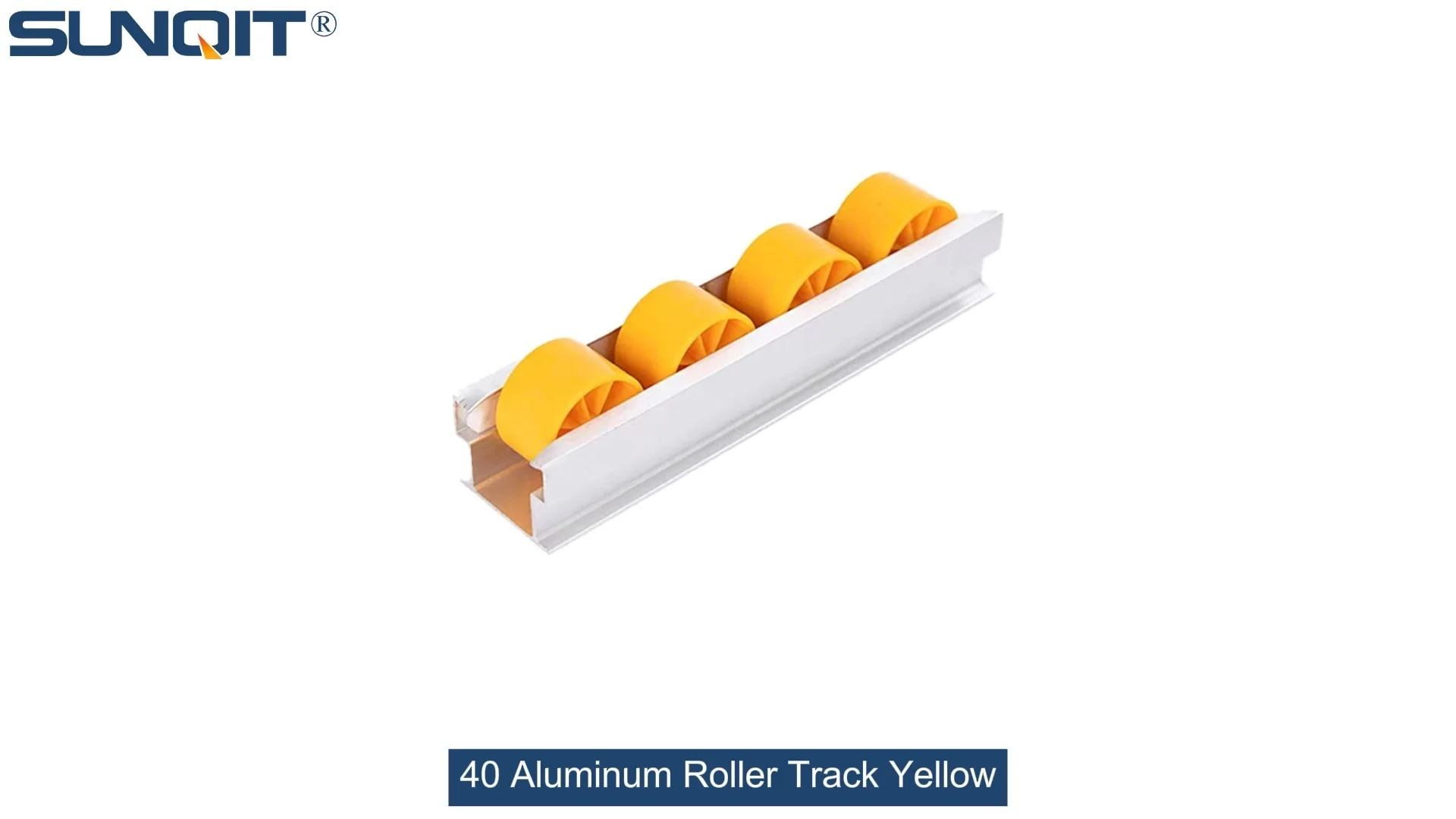
40 Aluminum Roller Track Yellow
Durable and smooth-running modular roller rails. The system is fully assembled. The roller rail profile contains plastic rollers mounted on steel axles. Aluminum frame with plastic wheel make it anti corrosion,and material convey more smooth.
Aerospace manufacturing is a world where "good enough" simply doesn't exist. Every component, from a tiny screw in a jet engine to the fuselage of a commercial airliner, must meet standards so strict they're measured in microns. But behind the scenes of these engineering marvels lies a less glamorous yet equally critical player: material handling. How parts move from the workshop floor to assembly lines, how tools are transported, and how inventory is managed—these processes can make or break production timelines, quality control, and even safety. In this high-stakes environment, one tool has quietly become a unsung hero: the 40 Aluminum Roller Track Yellow. More than just a conveyor system, it's a precision-engineered solution that aligns with aerospace's uncompromising demands for accuracy, durability, and efficiency. Let's dive into why this unassuming track has become a staple in facilities that build the machines soaring through our skies.
What Exactly Is 40 Aluminum Roller Track Yellow?
Before we unpack its role in aerospace, let's start with the basics. The "40" in its name refers to its width—40 millimeters—making it compact enough for tight workshop spaces but robust enough to handle heavy loads. The "aluminum" speaks to its core material: high-grade aluminum alloy, chosen for its unique blend of strength and lightness. The "yellow" isn't just for aesthetics; that bright hue is a deliberate safety choice, enhancing visibility on busy factory floors where workers and machinery operate side by side. And "roller track"? That's the heart of it: a series of small, freely rotating rollers mounted along the track's length, designed to let materials glide smoothly with minimal friction.
At its core, this track is built around an aluminum profile—a extrusion with a specific cross-sectional shape that gives it structural rigidity while keeping weight low. Unlike generic steel tracks, which can be bulky and prone to rust, the aluminum profile here is precision-extruded, meaning every inch of its length meets exacting dimensional standards. This isn't just a piece of metal with wheels; it's a engineered system, often paired with roller track accessories like placon mounts, end supports, and guide rails, that transforms raw aluminum into a material handling workhorse.
Precision: The Non-Negotiable Standard in Aerospace
In aerospace, precision isn't a buzzword—it's survival. A misaligned part in a landing gear could lead to catastrophic failure; a delayed assembly step could cost millions in missed deadlines. So when it comes to moving these critical components, the tools themselves must be precise. Here's how the 40 Aluminum Roller Track Yellow delivers:
Material Properties That Set It Apart
Aluminum, the track's primary material, is a favorite in aerospace for good reason. Its strength-to-weight ratio is unmatched—strong enough to support heavy aerospace parts (think engine components weighing 50+ kg) but light enough that even extended track systems don't require massive structural support. This lightness also reduces inertia, meaning when a part is pushed along the track, it moves predictably, without sudden jerks that could misalign delicate components like circuit boards or turbine blades.
But it's not just about weight. The aluminum profile used in these tracks undergoes a rigorous extrusion process. Unlike cast metals, which can have internal flaws, extruded aluminum is uniform in structure, ensuring consistent strength and dimensional accuracy. Tolerances here are tight: the track's width, roller spacing, and height are all controlled to within ±0.1mm. For context, that's about the thickness of a human hair. This level of precision ensures that when a part slides along the track, it stays on course—no wandering, no tilting, no unexpected stops.
Roller Design: Smoothness You Can Measure
The rollers themselves are a study in detail. Each is made from high-density plastic or aluminum, with a precision-machined bearing at its core. The result? A roller that spins with minimal friction, so even a slight push can move a heavy part. But smoothness isn't just about ease of movement; it's about control. In aerospace assembly, many parts are sensitive to vibration. A rough track could jostle a delicate sensor or loosen a glued joint. The 40 Aluminum Roller Track Yellow's rollers are designed to dampen vibration, thanks to their low-friction bearings and the aluminum profile's natural shock-absorbing properties. Tests show that parts moving along this track experience vibration levels up to 60% lower than on traditional steel roller tracks—critical for preserving component integrity.
Spacing between rollers is another precision detail. At 50mm apart (standard for this track), the spacing ensures that even small parts—like avionics modules or fastener kits—don't tip or get stuck. Imagine moving a thin circuit board: too much space between rollers, and it could bend; too little, and friction increases. The 40mm track hits that sweet spot, making it versatile for everything from tiny screws to large structural brackets.

Reliability: Built to Last in the Toughest Environments
Aerospace manufacturing facilities don't take days off. They run 24/7, with track systems handling thousands of parts daily. A single breakdown could halt production, costing tens of thousands of dollars per hour. That's why reliability is just as important as precision for the 40 Aluminum Roller Track Yellow.
Corrosion Resistance: Defying the Elements
Many aerospace workshops use coolants, lubricants, and cleaning agents that can eat away at metal over time. Steel tracks often rust or corrode under these conditions, leading to sticky rollers or uneven surfaces. Aluminum, however, forms a natural oxide layer when exposed to air, acting as a barrier against corrosion. The 40 Aluminum Roller Track Yellow takes this a step further with an anodized finish—a process that thickens this oxide layer, making it even more resistant to chemicals and moisture. In salt-spray tests (a common measure of corrosion resistance), this track lasts over 1,000 hours without showing signs of degradation—far exceeding the 500-hour requirement for industrial-grade equipment.
Testing: Putting It Through Aerospace-Grade Trials
Before it ever reaches a factory floor, the 40 Aluminum Roller Track Yellow undergoes a battery of tests that mimic the harshest aerospace environments. These include:
- Load Testing: Tracks are subjected to 150% of their rated load (typically 200 kg/m) for 10,000 cycles to ensure they don't bend or warp.
- Temperature Cycling: Exposed to extremes from -40°C to 80°C to simulate warehouse freezers and hot assembly areas.
- Vibration Testing: Mounted on shakers to replicate the vibrations of nearby machinery, ensuring rollers don't loosen or fail.
- Impact Testing: Dropping 10 kg weights from 1 meter onto the track to test for cracking or deformation.
Only tracks that pass all these tests make it to production—a level of scrutiny that aligns with aerospace's own component testing protocols.

Fitting into the Lean System: Streamlining Aerospace Production
Aerospace manufacturers don't just need precision and reliability—they need efficiency. That's where lean manufacturing comes in: a philosophy focused on eliminating waste, reducing downtime, and optimizing workflow. The 40 Aluminum Roller Track Yellow isn't just a tool; it's a lean system enabler. Here's how:
Continuous Flow, Minimized Waste
Traditional material handling often involves stop-and-go processes: a part sits on a workbench until a worker moves it to the next station, leading to bottlenecks. The 40 Aluminum Roller Track Yellow creates continuous flow. For example, in wing assembly, pre-cut composite panels can glide directly from the cutting station to the bonding station via the track, eliminating the need for manual transport. This cuts down on "wait time"—a major waste in lean terms—and reduces the risk of human error during handling.
Adaptability for Changing Needs
Aerospace production lines rarely stay static. New aircraft models, design changes, or seasonal demand shifts require flexibility. The 40 Aluminum Roller Track Yellow, with its modular design, adapts easily. Using roller track accessories like placon mounts (which attach the track to aluminum profiles) and end supports with wheels, workers can reconfigure track layouts in hours, not days. A facility building small private jets one month can switch to manufacturing drone components the next, with the track system evolving right alongside the production line.
Ergonomics: Reducing Worker Strain
Lean isn't just about machines—it's about people. Heavy lifting and repetitive motion injuries cost aerospace companies millions annually. The 40 Aluminum Roller Track Yellow, with its smooth-rolling design, reduces the force needed to move parts by up to 70%. A worker pushing a 30 kg avionics box along the track exerts just 5 kg of force, compared to 15 kg on a traditional sliding surface. This not only cuts down on injuries but also boosts productivity—workers have more energy to focus on precision tasks, not physical labor.

Real-World Impact: Case Studies from Aerospace Leaders
Talk is cheap—results matter. Let's look at how two major aerospace manufacturers integrated the 40 Aluminum Roller Track Yellow into their operations:
Case Study 1: Commercial Jet Engine Manufacturer
A leading producer of turbofan engines was struggling with delays in their final assembly line. Engine cores, weighing up to 180 kg, were being moved manually between workbenches, leading to bottlenecks and occasional scrap due to drops. After installing 40 Aluminum Roller Track Yellow between stations, they saw:
- 35% reduction in time between assembly steps
- 90% decrease in part damage during transport
- 25% fewer worker compensation claims related to lifting
Case Study 2: Satellite Component Facility
A manufacturer of satellite communication systems needed a track that could handle ESD (electrostatic discharge) sensitive parts. The 40 Aluminum Roller Track Yellow, paired with ESD-safe rollers, provided a static-free path for circuit boards and sensors. This eliminated ESD-related failures, which had been costing the company $200,000 annually in scrap and rework.
How It Stacks Up: Comparing 40 Aluminum Roller Track Yellow to Alternatives
To truly appreciate its value, let's compare the 40 Aluminum Roller Track Yellow to other common material handling solutions in aerospace:
| Feature | 40 Aluminum Roller Track Yellow | Steel Roller Track | Plastic Roller Track | 38mm Aluminum Roller Track |
|---|---|---|---|---|
| Width | 40mm | 40mm | 40mm | 38mm |
| Weight (per meter) | 2.1 kg | 4.5 kg | 1.8 kg | 1.9 kg |
| Max Load (per meter) | 200 kg | 300 kg | 80 kg | 180 kg |
| Corrosion Resistance | Excellent (1,000+ hours salt spray) | Poor (requires painting) | Good (chemical-resistant but UV-sensitive) | Very Good (800+ hours salt spray) |
| Precision (Tolerance) | ±0.1mm | ±0.3mm | ±0.5mm | ±0.1mm |
| ESD Compatibility | Yes (with ESD rollers) | Yes (with grounding) | Limited (static buildup possible) | Yes (with ESD rollers) |
| Cost (per meter) | Mid-range ($45–$60) | High ($60–$80) | Low ($20–$35) | Mid-range ($40–$55) |
*Data based on industry standards and manufacturer specifications.
The table tells a clear story: while steel tracks offer higher load capacity, they're heavier, more expensive, and less corrosion-resistant. Plastic tracks are cheap but lack the precision and durability aerospace demands. The 40 Aluminum Roller Track Yellow strikes the perfect balance—lightweight, precise, durable, and cost-effective—making it ideal for most aerospace applications.
Looking Ahead: The Future of 40 Aluminum Roller Track Yellow in Aerospace
Aerospace manufacturing is evolving. Electric aircraft, hypersonic vehicles, and reusable rockets are pushing the boundaries of what's possible— and material handling tools must evolve with them. Here's how the 40 Aluminum Roller Track Yellow is poised to keep up:
Smart Integration with Industry 4.0
The next generation of tracks may include embedded sensors that monitor roller health, track usage, and predict maintenance needs. Imagine a system that alerts technicians when a roller is wearing out, preventing unexpected downtime. Early prototypes already use RFID tags to track parts as they move along the track, feeding data into production management software for real-time workflow optimization.
Advanced Alloys for Extreme Environments
As aerospace ventures into high-temperature applications (like hypersonic engine manufacturing), track materials will need to withstand even more heat. Suppliers are testing aluminum-lithium alloys, which offer 10% higher strength and better heat resistance than traditional aluminum. These alloys could push the track's temperature tolerance to 150°C, opening doors to new manufacturing processes.
Sustainability: Greener Production for a Greener Sky
Aerospace is under pressure to reduce its carbon footprint, and material handling is no exception. The 40 Aluminum Roller Track Yellow is already 100% recyclable, but future versions may use recycled aluminum (currently 30% of the track's material) to cut down on raw material extraction. Additionally, low-VOC (volatile organic compound) coatings for the yellow finish will reduce emissions during production.
Conclusion: More Than a Track—A Foundation for Aerospace Excellence
In the high-pressure world of aerospace manufacturing, success hinges on the details. The 40 Aluminum Roller Track Yellow may not grab headlines like a new jet engine or a breakthrough composite material, but it's a quiet workhorse that makes those innovations possible. Its precision ensures parts move exactly where they need to go, its reliability keeps production lines running, and its adaptability fits seamlessly into lean, efficient workflows. As aerospace reaches for new heights—faster, safer, more sustainable aircraft—the tools that build them must rise to the challenge. The 40 Aluminum Roller Track Yellow isn't just keeping up; it's leading the way.