- Company Articles
- Products and Technology
- Product knowledge
- 40 Aluminum Roller Track Yellow: Top Brands vs. Custom Solutions

40 Aluminum Roller Track Yellow: Top Brands vs. Custom Solutions
Related Product
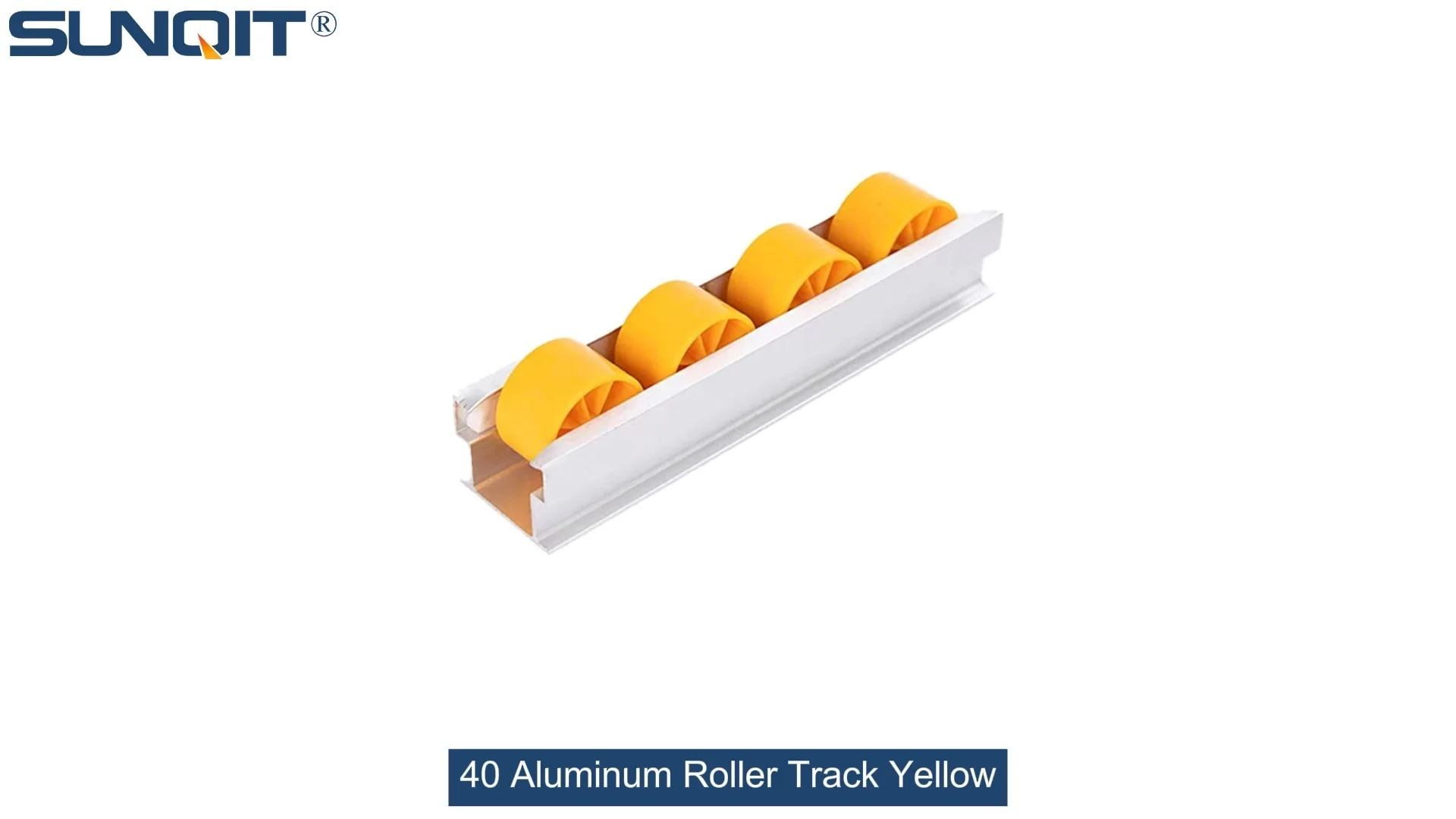
40 Aluminum Roller Track Yellow
Durable and smooth-running modular roller rails. The system is fully assembled. The roller rail profile contains plastic rollers mounted on steel axles. Aluminum frame with plastic wheel make it anti corrosion,and material convey more smooth.
Walk into any busy manufacturing plant, and you'll notice a silent hero keeping operations moving: the roller track. From assembly lines where circuit boards glide toward testing stations to warehouses where bins of components flow seamlessly between workbenches, these unassuming systems are the backbone of efficient material handling. Among the many options available, the 40 Aluminum Roller Track Yellow stands out for its unique blend of durability, visibility, and adaptability. But when it comes to choosing the right one for your facility, the decision often boils down to two paths: sticking with established top brands or investing in a custom solution tailored to your specific needs. Let's dive into what makes this track so vital, how top brands stack up, and when a custom approach might be the smarter bet.
Understanding the 40 Aluminum Roller Track Yellow
First, let's break down what "40 Aluminum Roller Track Yellow" actually means. The "40" refers to the track width—40mm—making it a versatile middle-ground option, neither too narrow for bulky items nor too wide for tight spaces. "Aluminum" highlights the material: lightweight yet strong, resistant to rust, and easy to clean, which matters in environments where hygiene or corrosion resistance is key (think food processing or electronics manufacturing). The "Yellow" isn't just for aesthetics; that bright hue is intentional. In busy workplaces, high-visibility colors reduce the risk of collisions, make the track easy to spot during maintenance, and even boost worker morale by adding a pop of color to otherwise industrial settings.
But what really sets this track apart is its design. Most models feature precision-engineered wheels—often made of durable plastics like nylon or polyurethane—that glide smoothly, even under heavy loads. They're compatible with a range of roller track accessories , from end stops that prevent items from sliding off to connectors that link multiple track sections into a continuous flow system. And because it's aluminum, it pairs naturally with aluminum profiles —those modular, T-slot frames that form the basis of workbenches, flow racks, and material carts in lean manufacturing setups. This compatibility is a game-changer; it means you can build an entire material handling ecosystem around a single track system.
To put its utility in perspective, consider a small electronics manufacturer I worked with last year. They were using a generic steel roller track that kept jamming, causing workers to stop production and manually push bins. Switching to a 40 Aluminum Roller Track Yellow didn't just fix the jams—the aluminum's lightweight design made it easier to reconfigure when they rearranged their assembly line, and the yellow color reduced the time workers spent searching for the track amid cluttered workspaces. "It's like upgrading from a bicycle to a car," one supervisor told me. "You don't realize how much time you were wasting until you make the switch."
Top Brands: Reliability with Trade-Offs
When businesses start shopping for roller tracks, top brands are often the first stop. Names like FlexQube, Modular Concepts, or Bosch Rexroth (to name a few) have built reputations for consistency, quality control, and readily available parts. For many facilities, especially those with standard workflows, these off-the-shelf solutions make perfect sense. Let's look at what they do well—and where they might fall short.
Pros of Top Brands:
1. Proven Performance: Top brands have spent years refining their designs. Their 40 Aluminum Roller Track Yellow models undergo rigorous testing for load capacity, wheel durability, and corrosion resistance. You can trust that a track rated for 50kg per linear meter will actually handle that weight day in and day out, without unexpected failures.
2. Fast Delivery: Since these are mass-produced, lead times are often short—sometimes as little as a week. If you need to replace a damaged track or expand a line quickly, this speed can be critical. I once helped a client in the automotive industry that had a sudden spike in orders; their supplier delivered 20 meters of track in three days, keeping their production on track.
3. Standardized Parts: Need a replacement wheel or a connector? Top brands stock roller track accessories in bulk, so you won't be left waiting for a custom part. This is a huge plus for maintenance teams—no more scavenging for off-brand alternatives that might not fit.
The Catch: One Size Doesn't Fit All
For all their benefits, top brands have a limitation: they're designed for "average" workflows. If your facility has unique needs, you might find yourself compromising. For example, a medical device manufacturer I consulted with needed a track that could handle frequent sterilization cycles. The top-brand track they initially bought corroded after a few months because its plastic wheels weren't rated for high-temperature cleaning. Another client, a furniture maker, struggled with the standard track's fixed angle—their curved assembly line required a custom bend that no off-the-shelf option could provide.
Cost can also be a hidden issue. While top brands offer reliability, they often charge a premium for their name. A 5-meter section of 40 Aluminum Roller Track Yellow from a leading brand might cost 30-40% more than a similar (but unbranded) version. For small businesses on tight budgets, that markup can add up quickly—especially when you factor in roller track accessories like specialized brackets or ESD-safe wheels.
"We went with a top brand because we thought it was the 'safe' choice," a plant manager at a packaging company told me. "But six months in, we're still using zip ties to rig the track to our aluminum profile workbench because the brand's connectors don't align. It works, but it's not the seamless system we expected."

Custom Solutions: Tailored to Your Workflow
When off-the-shelf tracks feel like trying to fit a square peg into a round hole, custom solutions step in. These are designed from the ground up by lean system suppliers who collaborate with your team to understand your unique challenges: awkward facility layouts, unusual load sizes, specialized environmental conditions, or integration with existing equipment. The result? A track system that works with your workflow, not against it.
Why Custom Might Be Right for You:
1. Perfect Fit for Unique Spaces: Many older factories or repurposed warehouses have uneven floors, low ceilings, or odd-shaped rooms. A custom 40 Aluminum Roller Track Yellow can be adjusted for slope (to account for floor tilts), curved to navigate around pillars, or even mounted overhead to save floor space. A automotive parts supplier I worked with had a narrow corridor between two assembly lines; a custom track with a 90-degree bend and compact wheels allowed them to move parts through that space without disrupting either line.
2. Specialized Features: Need ESD (electrostatic discharge) protection for sensitive electronics? A custom track can include conductive wheels and aluminum profiles grounded to prevent static buildup. Working with heavy loads? The wheels can be upgraded to steel-reinforced polyurethane, and the frame reinforced with thicker aluminum. One client in aerospace manufacturing required a track that could handle 150kg loads while maintaining a near-silent operation; a custom solution with precision ball bearings achieved just that.
3. Integration with Existing Systems: If your facility already uses a hodgepodge of equipment—say, a mix of old steel workbenches and new aluminum profile carts—a lean system supplier can design a track that connects them all. For example, a beverage bottling plant I advised had a legacy conveyor belt feeding into a modern sorting station; a custom 40 Aluminum Roller Track Yellow with adjustable height brackets bridged the 12-inch gap between the two systems, eliminating the need for workers to manually transfer bottles.
The Trade-Offs of Custom:
Custom solutions aren't without drawbacks. The biggest is upfront cost: designing, prototyping, and manufacturing a custom track can cost 50-100% more than a top-brand off-the-shelf model. Lead times are also longer—sometimes 4-6 weeks vs. a few days for standard tracks. And if you ever need to replace a part, you'll likely have to go back to the original supplier, which can be a hassle if they're small or overseas.
There's also the risk of miscommunication. Without a clear understanding of your needs, even the best lean system supplier might deliver a track that misses the mark. That's why thorough planning is critical. I always recommend clients create a "day in the life" video of their workflow, measure every inch of the installation space, and test a small prototype before committing to a full system.

Top Brands vs. Custom: A Side-by-Side Comparison
| Factor | Top Brands | Custom Solutions |
|---|---|---|
| Cost | Lower upfront cost; premium for brand name | Higher upfront cost; potential long-term savings from efficiency gains |
| Lead Time | Fast (1-2 weeks for standard models) | Slow (4-6 weeks for design, prototyping, and manufacturing) |
| Customization | Limited (pre-set lengths, wheel types, and accessories) | Unlimited (bends, special materials, unique load capacities) |
| Compatibility | Works best with the brand's own aluminum profiles and accessories | Can integrate with any existing equipment or aluminum profiles |
| Reliability | Proven designs with consistent quality control | Depends on the supplier; requires thorough testing of prototypes |
| Best For | Standard workflows, small to medium loads, quick installations | Unique spaces, heavy/unusual loads, specialized environments |

How to Decide: Questions to Ask Your Team
Choosing between top brands and custom solutions isn't about which is "better"—it's about which aligns with your priorities. Before making a decision, gather your team (floor supervisors, maintenance technicians, and operators) and ask these key questions:
1. What are our biggest pain points with current material handling? If it's "the track jams occasionally," a top brand with better wheel design might solve the problem. If it's "we can't fit the track around our new robot arm," custom is likely needed.
2. How static is our workflow? If your production line hasn't changed in 5 years and isn't likely to, a standard track will serve you well. If you frequently reconfigure for new products, a modular custom system (with adjustable bends or removable sections) might be more flexible.
3. What's our budget—short-term and long-term? Custom systems cost more upfront, but if they save 10 hours of labor per week, they'll pay for themselves in months. Crunch the numbers: How much does inefficiency cost you now? How much could a better track save?
4. Do we need specialized features? ESD protection, high-temperature resistance, or compatibility with non-standard aluminum profiles all point toward custom. If you just need a basic track for boxes under 30kg, a top brand will work.
A good lean system supplier can help with this assessment. Many offer free consultations where they walk your facility, observe workflows, and provide recommendations—even if that recommendation is "stick with a top brand." Their goal is to find the best solution for you, not upsell you on custom.
Real-World Success Stories
To illustrate how these choices play out, let's look at two case studies:
Case Study 1: Small Electronics Manufacturer Chooses Top Brand
A startup making smart home sensors had a tight budget and a simple workflow: components arrive in bins, move along a straight track to assembly stations, then to testing. They opted for a top-brand 40 Aluminum Roller Track Yellow. The system cost $1,200 for 10 meters, including basic accessories. Installation took a day, and it's been running smoothly for 18 months. "We didn't need anything fancy," the operations manager said. "The brand's track was plug-and-play, and that's exactly what we needed to get up and running fast."
Case Study 2: Large Automotive Plant Goes Custom
A major auto parts plant needed to move heavy engine blocks (150kg each) from machining to assembly. Their facility had a 3-degree floor slope and a low ceiling that made overhead tracks impossible. A
lean system supplier
designed a custom 40 Aluminum Roller Track Yellow with reinforced aluminum profiles, steel-core wheels, and adjustable legs to compensate for the slope. The total cost was $8,000 for 15 meters, but it eliminated the need for forklifts in that area, reducing labor costs by $3,000 per month. "It was a big investment, but we'll recoup it in under three months," the plant director noted.
Final Thoughts: The Right Track for Your Journey
The 40 Aluminum Roller Track Yellow might not be the most glamorous piece of equipment in your facility, but it's one of the most critical. Whether you choose a top brand for its reliability and speed or a custom solution for its tailored fit, the key is to align your choice with your workflow, budget, and long-term goals. Remember, the best track system is the one that fades into the background—allowing your team to focus on what they do best, not on fighting with material handling.
So, take the time to assess your needs, consult with your team, and don't hesitate to reach out to a lean system supplier for guidance. After all, a track that works with your process isn't just a tool—it's a partner in your success.