- Company Articles
- Products and Technology
- Product knowledge
- 40 Aluminum Roller Track Yellow vs. Galvanized Steel: Weight, Cost & Lifespan Comparison

40 Aluminum Roller Track Yellow vs. Galvanized Steel: Weight, Cost & Lifespan Comparison
Related Product
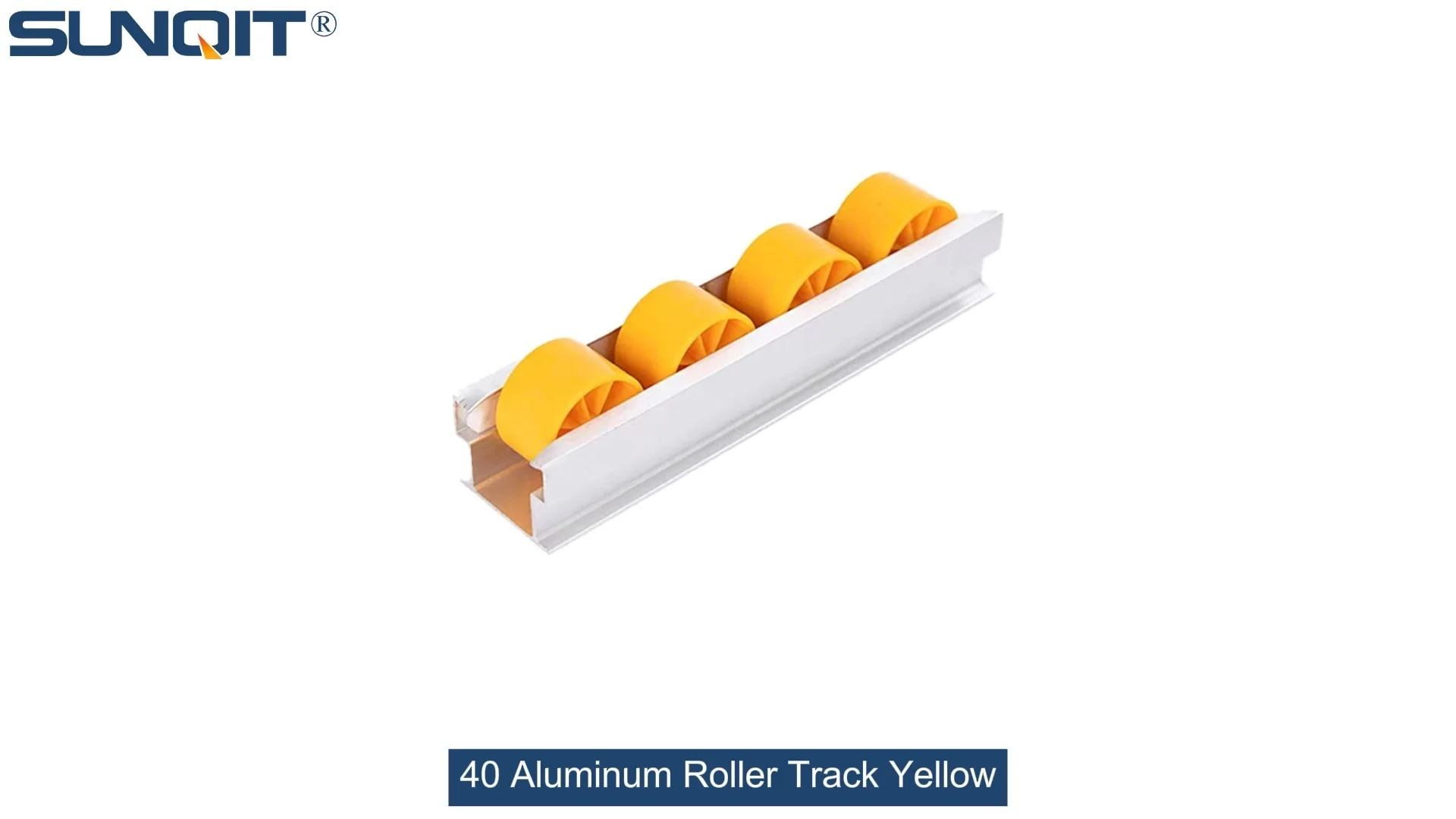
40 Aluminum Roller Track Yellow
Durable and smooth-running modular roller rails. The system is fully assembled. The roller rail profile contains plastic rollers mounted on steel axles. Aluminum frame with plastic wheel make it anti corrosion,and material convey more smooth.
If you've ever stood on a busy production floor, you know the rhythm of it—the hum of machinery, the clink of parts being passed along, the steady movement of materials from one station to the next. It's a symphony of efficiency, but every symphony needs the right instruments. And when it comes to keeping that rhythm steady, few tools are as critical as roller tracks. They're the silent workhorses, moving components, products, and packages where they need to go, exactly when they need to be there. But here's the thing: not all roller tracks are created equal. Choose the wrong one, and you're not just looking at a minor hiccup—you're risking slower workflows, higher costs, and even downtime that can derail your entire operation.
Today, we're diving into a showdown that's been keeping plant managers, warehouse supervisors, and lean system enthusiasts up at night: 40 Aluminum Roller Track Yellow versus Galvanized Steel Roller Tracks . These two materials dominate the market, each with its own loyal fans and vocal critics. But which one truly delivers when it comes to the metrics that matter most: weight, cost, and lifespan? Let's cut through the marketing jargon, look at real-world performance, and help you decide which track deserves a spot in your production line.
First, Let's Meet the Contenders
Before we start comparing, let's get to know our two competitors. They might both be roller tracks, but their DNA is wildly different—and that's where the magic (or the headaches) happen.
40 Aluminum Roller Track Yellow: The Lightweight Contender
Aluminum roller tracks, especially the 40mm yellow variant, have been gaining traction (pun intended) in modern facilities. Why yellow? It's not just for aesthetics—those bright yellow rails are easy to spot on the factory floor, reducing the risk of tripping or misalignment during setup. But the real star here is the aluminum itself. Lightweight, corrosion-resistant, and surprisingly strong, aluminum tracks are designed for flexibility. They're often used in lean systems where quick adjustments, frequent reconfigurations, and smooth material flow are priorities. Think electronics assembly lines, pharmaceutical packaging, or any environment where precision and speed go hand in hand.
Galvanized Steel Roller Tracks: The Heavyweight Champ
Galvanized steel, on the other hand, is the old reliable. For decades, it's been the go-to for heavy-duty applications. Galvanization—coating steel with a layer of zinc—gives it a tough outer shell that resists rust and wear. These tracks are built to handle brute force: think automotive parts, construction materials, or anything that's bulky, sharp, or just plain heavy. If you've ever walked through a steel mill or a large-scale distribution center, chances are you've seen galvanized steel tracks hard at work, carrying loads that would make lighter materials buckle.
Weight: When Every Gram Counts
Let's start with weight because it's the first thing you'll notice when you unload a pallet of tracks or try to reposition a section of your workflow. In a world where every second of downtime costs money, the weight of your roller tracks can make or break your team's efficiency.
Aluminum: Light on Its Feet
Aluminum is famously lightweight, and the 40 Aluminum Roller Track Yellow is no exception. On average, a meter of this track weighs in at around 1.8–2.2 kg. To put that in perspective, that's about the same weight as a small backpack. Why does that matter? Let's say you run a mid-sized electronics plant, and you need to reconfigure your assembly line to accommodate a new product launch. With aluminum tracks, two workers can easily lift and reposition a 5-meter section in under 10 minutes. No need for forklifts, no need to shut down the entire line for hours—just quick, nimble adjustments that keep production rolling.
But the benefits go beyond installation. Lighter tracks mean less stress on the frames and supports they're mounted to. If you're using these tracks on a workbench or a mobile flow rack, the reduced weight makes the entire structure more stable and easier to move. Imagine a team of workers pushing a mobile trolley loaded with circuit boards—with aluminum tracks, the trolley glides smoothly, even when fully loaded. With heavier steel tracks? That same trolley might feel clunky, requiring more effort and increasing the risk of worker fatigue (and let's not forget, fatigued workers are more prone to mistakes).
Galvanized Steel: Built for Brawn, Not Speed
Galvanized steel, by contrast, is a heavyweight. A meter of standard galvanized steel roller track can weigh 4.5–5.5 kg—more than double the weight of aluminum. That heft is a double-edged sword. On one hand, it makes steel tracks incredibly stable for heavy loads. If you're moving engine blocks or metal sheets that weigh 50+ kg each, steel's rigidity ensures the track won't flex or warp under pressure. But on the other hand, that weight becomes a liability when flexibility is key.
Take a scenario where your warehouse needs to shift its layout seasonally to handle holiday inventory. With steel tracks, reconfiguring even a small section could require a crew of four and a pallet jack, taking up hours of valuable time. And if you're using tracks on a raised conveyor system, the extra weight adds stress to the support beams and motors, potentially leading to more frequent repairs. One plant manager I spoke with recently put it bluntly: "We used steel tracks for years, but the day we switched to aluminum, our setup time for new lines dropped by 40%. It's not just about the weight—it's about how much time we're not wasting moving heavy metal around."
| Metric | 40 Aluminum Roller Track Yellow | Galvanized Steel Roller Track |
|---|---|---|
| Weight (per meter) | 1.8–2.2 kg | 4.5–5.5 kg |
| Typical Installation Time (5m section) | 10–15 minutes (2 workers) | 30–45 minutes (4 workers + equipment) |
| Max Load Capacity (per meter) | 150–200 kg | 300–400 kg |
| Best For | Light-to-medium loads, frequent reconfigurations | Heavy loads, stationary setups |
*Load capacities vary by manufacturer and track design; always consult product specs for your specific needs.

Cost: The Upfront Price Tag vs. the Long Game
Cost is where most decision-makers get stuck. It's easy to look at the upfront price of steel tracks—often 30–40% cheaper than aluminum—and think, "That's the obvious choice." But here's the problem: cost isn't just about what you pay on day one. It's about installation, maintenance, energy use, and replacement over time. Let's break it down.
Initial Cost: Steel Has the Edge—At First
There's no denying it: galvanized steel roller tracks are cheaper to buy upfront. A meter of standard steel track might cost $25–$35, while the 40 Aluminum Roller Track Yellow rings in at $40–$55 per meter. For a large facility needing 100 meters of track, that's a difference of $1,500–$2,000 upfront. If you're working with a tight budget or a one-time project, that gap can feel significant.
Installation Costs: Aluminum Fights Back
But then there's installation. As we discussed earlier, steel tracks are heavy, which means you'll need more labor and possibly equipment (like forklifts or hoists) to get them in place. Let's say your team charges $30/hour. Installing 100 meters of steel tracks might take 8 hours with 4 workers (total: $960). Aluminum tracks, meanwhile, could be installed in 4 hours with 2 workers (total: $240). Suddenly, that $2,000 upfront savings on steel shrinks to $1,280.
Maintenance: The Hidden Cost of Steel
Now, let's fast-forward five years. Galvanized steel is durable, but its zinc coating can scratch or chip over time, especially if you're moving sharp or abrasive materials. Once that coating is compromised, rust starts to set in. And rust isn't just unsightly—it gums up the rollers, slows down material flow, and eventually weakens the track itself. You'll need to sand, repaint, or replace sections every 2–3 years. A single repair job on a rusted 10-meter section could cost $150–$200 (materials + labor). Over 10 years, that's $500–$800 in maintenance for steel.
Aluminum, on the other hand, is naturally corrosion-resistant. It forms a thin oxide layer when exposed to air, which acts as a protective barrier against rust. Even if you scratch the surface, that oxide layer reforms quickly. Unless you're using the track in an extremely harsh environment (think saltwater or heavy chemicals), aluminum requires almost no maintenance beyond occasional cleaning. Over 10 years, you might spend $50–$100 on lubricating rollers and tightening joints. That's a savings of $450–$700 compared to steel.
Energy Costs: Lighter Tracks Mean Lower Bills
Here's a cost factor many people overlook: energy. If your roller tracks are part of a powered conveyor system, the weight of the tracks affects how hard the motors have to work. Heavier steel tracks require more energy to move, which adds up on your utility bills. A study by the Material Handling Industry Association found that switching from steel to aluminum tracks in a 20-meter powered conveyor system reduced energy consumption by 18–22% annually. For a facility running 24/7, that could mean savings of $300–$500 per year.
Total Cost Over 10 Years: Aluminum Takes the Lead
Let's crunch the numbers for 100 meters of track over 10 years:
- Galvanized Steel: $3,500 (initial) + $960 (installation) + $800 (maintenance) + $5,000 (energy, assuming $500/year) = $10,260
- 40 Aluminum Roller Track Yellow: $5,500 (initial) + $240 (installation) + $100 (maintenance) + $3,900 (energy, 20% savings) = $9,740
Yes, you read that right: over 10 years, aluminum ends up being cheaper. It's a classic case of "pay more now, save later."

Lifespan: How Long Will They Last?
Durability is non-negotiable when you're investing in equipment that's critical to your workflow. You want tracks that can handle years of daily use without failing. So, how do aluminum and steel stack up here?
Aluminum: The Slow Burn of Longevity
Aluminum tracks are like the tortoise in the race—they might not be the toughest out of the gate, but they keep going and going. In a typical indoor environment (think a dry, climate-controlled warehouse or assembly plant), the 40 Aluminum Roller Track Yellow can last 15–20 years with minimal maintenance. The key here is aluminum's resistance to corrosion and its ability to withstand light-to-medium impacts without deforming.
What if you're working in a harsher environment? Let's say you run a food processing facility with high humidity and frequent washdowns. Steel tracks would rust quickly, even with a galvanized coating. Aluminum, though, thrives here. I visited a bakery in Chicago last year that had been using aluminum tracks for 12 years—they were still moving dough trays and packaging materials smoothly, with only minor wear on the rollers.
Steel: Tough but Not Invincible
Galvanized steel tracks, in ideal conditions (dry, low-traffic, minimal impact), can last 10–15 years. But "ideal conditions" are rare in most facilities. If you're moving heavy loads daily or dealing with abrasive materials, that lifespan drops to 7–10 years. And as we mentioned earlier, once rust sets in, it's a downward spiral—weakened tracks, stuck rollers, and eventually, the need for replacement.
There's also the issue of flexibility. Steel is rigid, which is great for heavy loads but bad for vibrations. In a busy automotive plant, for example, the constant pounding of machinery can cause steel tracks to develop stress cracks over time. Aluminum, being more malleable, absorbs some of that vibration, reducing the risk of structural damage.

Real-World Performance: How They Play in Lean Systems
At the end of the day, roller tracks don't exist in a vacuum—they're part of a larger lean system, designed to eliminate waste, boost efficiency, and keep your workflow humming. Let's see how both materials perform in the scenarios that matter most.
Workbenches: Precision Meets Comfort
Workbenches are where the magic happens—where workers assemble products, inspect parts, and keep the line moving. The roller tracks here need to be smooth, reliable, and easy to adjust. Aluminum tracks shine here because they're lightweight enough to integrate into modular workbench designs, allowing you to add or remove sections as needed. Plus, their smooth surface reduces friction, so parts glide effortlessly from one worker to the next. I visited a medical device manufacturer last month that had swapped steel tracks for aluminum on their assembly workbenches. Their team reported a 15% reduction in "reach time" (the time it takes to grab a part from the track), which added up to hundreds of extra units produced per week.
Flow Racks: Keeping Materials Moving
Flow racks are all about first-in, first-out (FIFO) inventory management, and they rely on gravity to move materials from the back to the front. Here, weight and friction are critical. Aluminum tracks have lower friction than steel, which means materials flow more consistently, even with lighter loads. A warehouse manager I spoke with in Texas switched to aluminum tracks in their flow racks and saw a 20% reduction in "stuck" boxes—those that would get jammed on steel tracks, requiring workers to stop and free them up. "It's the little things," he said. "Every time a box gets stuck, it's 2 minutes of downtime. Multiply that by 50 boxes a day, and suddenly you're losing 100 minutes of productivity."
Heavy-Duty Applications: When Steel Still Wins
To be fair, there are cases where steel is still the better choice. If you're moving loads over 200 kg per meter—think large automotive parts, industrial machinery, or construction materials—steel's higher load capacity makes it indispensable. A steel mill in Pennsylvania I toured uses galvanized steel tracks to move red-hot metal billets (weighing over 500 kg each). Aluminum would melt or warp under those conditions. So, if your operation involves extreme weights, temperatures, or abrasion, steel is worth the extra cost and maintenance.
Making the Choice: It's About Your Unique Needs
So, which one should you choose? The answer depends on three key questions:
- What are you moving? If it's light-to-medium loads (under 200 kg/m), aluminum is likely the better bet. Heavy loads? Steel.
- How often do you reconfigure your layout? Frequent changes? Go with lightweight aluminum. Stationary setup? Steel might work.
- What's your environment like? Humid, corrosive, or high-vibration? Aluminum's durability and corrosion resistance will save you headaches. Dry, low-traffic, and heavy-duty? Steel could last longer.
Remember, there's no "one size fits all" here. Some facilities even mix and match: aluminum tracks for their assembly workbenches and flow racks, steel tracks for their heavy-duty shipping area. It's about finding the right tool for each job.
Final Thoughts: Invest in the Rhythm of Your Line
Roller tracks might not be the most glamorous part of your production line, but they're the backbone. They keep your materials moving, your workers efficient, and your customers happy. Choosing between 40 Aluminum Roller Track Yellow and galvanized steel isn't just about weight, cost, or lifespan—it's about investing in the rhythm of your operation.
For most modern facilities—those focused on lean systems, flexibility, and long-term efficiency—aluminum is the way to go. It's lighter, easier to install, cheaper over time, and built to last in the environments where most of us work. But if you're moving mountains (or something close to it), steel will never let you down.
At the end of the day, the best track is the one that fits your unique needs—one that keeps your line moving, your costs in check, and your team smiling. And isn't that the goal?