- Company Articles
- Products and Technology
- Product knowledge
- 40 Aluminum Roller Track Yellow vs. Plastic Tracks: Durability & Cost Comparison

40 Aluminum Roller Track Yellow vs. Plastic Tracks: Durability & Cost Comparison
Related Product
40 Aluminum Roller Track Yellow
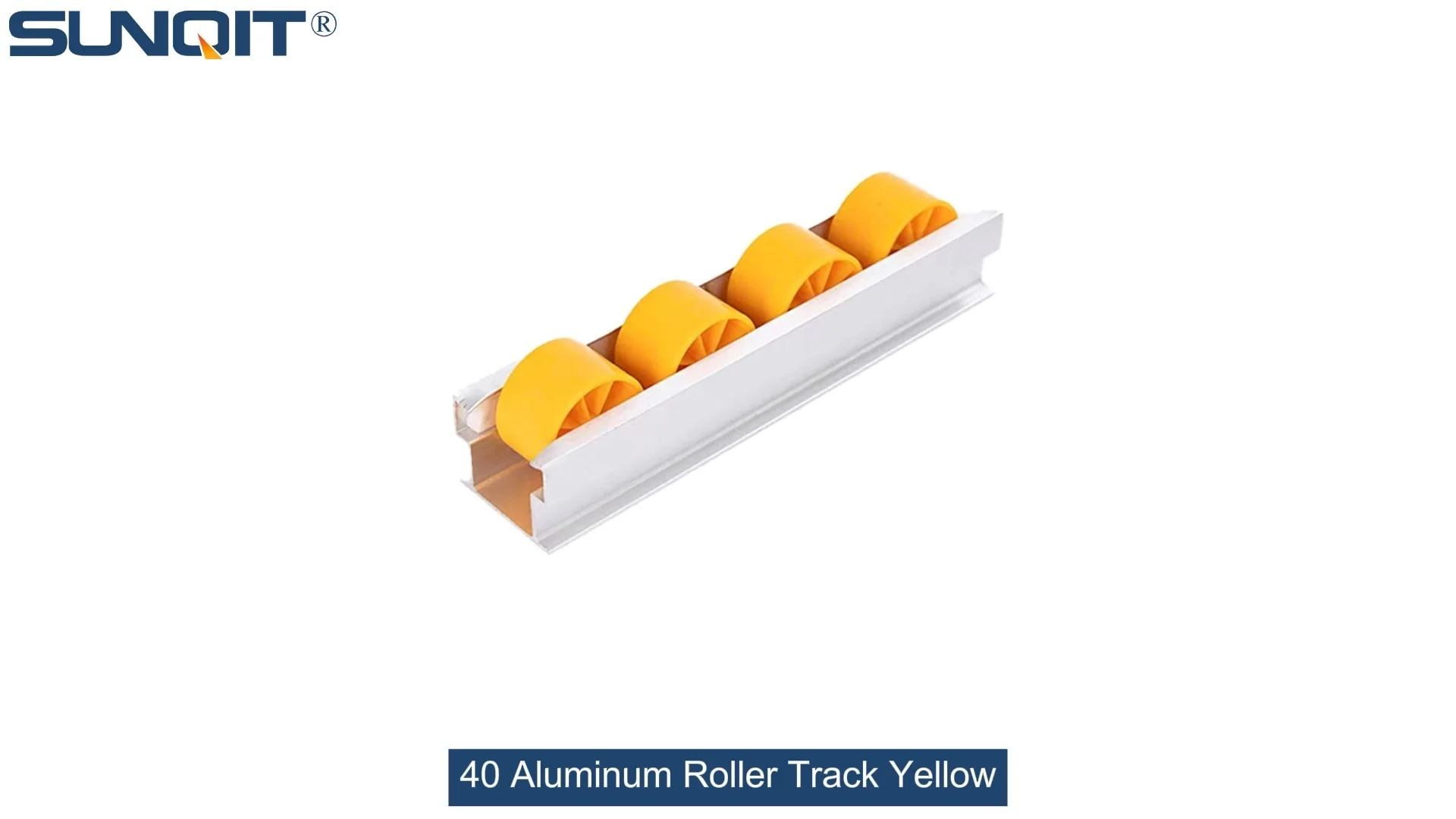
Durable and smooth-running modular roller rails. The system is fully assembled. The roller rail profile contains plastic rollers mounted on steel axles. Aluminum frame with plastic wheel make it anti corrosion,and material convey more smooth.
In the fast-paced world of manufacturing and warehousing, the smallest tools often make the biggest difference in keeping operations running smoothly. If you've ever walked through a production floor or a distribution center, you've probably seen them: those unassuming tracks with rollers that glide materials from one station to the next. They're quiet workhorses, but choosing the right type can mean the difference between a workflow that hums and one that sputters with delays, repairs, and unexpected costs. Today, we're diving deep into two popular options: the 40 Aluminum Roller Track Yellow and plastic tracks. By the end, you'll have a clear picture of which one fits your needs—whether you're setting up a new lean system, upgrading an existing line, or just trying to squeeze more efficiency out of your daily operations.
Understanding Roller Tracks: The Backbone of Efficient Material Flow
Before we jump into the specifics of aluminum and plastic, let's take a step back. Roller tracks are more than just "conveyor belts without the motor"—they're critical components of a well-designed material handling system. They reduce manual labor, minimize the risk of dropping or damaging goods, and ensure that parts and products move consistently from point A to point B. In lean manufacturing, where waste reduction is king, a reliable roller track can cut down on wait times, streamline assembly lines, and even boost employee morale by eliminating tedious lifting and carrying. But not all tracks are created equal. The material they're made of, their load capacity, and how they hold up over time can vary drastically—especially when comparing metal and plastic options.
Meet the Contenders: 40 Aluminum Roller Track Yellow & Plastic Tracks
What is 40 Aluminum Roller Track Yellow?
First up: the 40 Aluminum Roller Track Yellow. If you've ever worked in an industrial setting, you've likely seen this track in action. It's part of a family of aluminum profile-based systems, designed for durability and flexibility. The "40" refers to the width of the track (40mm), making it sturdy enough for medium to heavy loads, while the "yellow" color isn't just for aesthetics—it's often a high-visibility hue that helps workers spot the track easily, reducing tripping hazards or misalignment issues. What really sets this track apart, though, is its construction. Made from extruded aluminum, it's lightweight yet surprisingly strong, thanks to the inherent properties of aluminum profile materials. The rollers themselves are typically made of steel or hard plastic, mounted on a metal frame that's built to withstand the rigors of daily use. And because it's part of a modular system, you can pair it with roller track accessories like placon mounts, connectors, and side guides to customize it for your exact needs—whether you're moving boxes, components, or even small machinery parts.
What Are Plastic Tracks?
On the other side of the ring, we have plastic tracks. These are often made from materials like PVC (polyvinyl chloride), polyethylene, or ABS (acrylonitrile butadiene styrene). They're lightweight, easy to install, and come in a range of colors and sizes—think grey, black, or even translucent options. Plastic tracks are popular in settings where weight is a concern, or where the materials being moved are lightweight (like small electronics, cosmetics, or food packaging). They're also prized for their corrosion resistance and low friction, which means materials glide smoothly without much effort. However, not all plastic tracks are the same. Some are thin and flimsy, designed for temporary use or light loads, while others are reinforced with fiberglass or thicker walls to handle more weight. For the sake of this comparison, we'll focus on mid-range plastic tracks—those marketed as "industrial grade" but still made entirely of plastic, not reinforced with metal.

Durability: Which Track Stands the Test of Time?
When it comes to material handling equipment, durability isn't just a nice-to-have—it's a necessity. A track that cracks, warps, or wears out after a few months can throw your entire workflow off track (pun intended). Let's break down how aluminum and plastic stack up in key durability categories.
Material Strength: Aluminum's Metal Advantage
Aluminum, by nature, is a tough material. The 40 Aluminum Roller Track Yellow is constructed from extruded aluminum, which means it's formed by pushing molten aluminum through a die to create a uniform, strong shape. This process gives the track a consistent wall thickness and structural integrity that plastic simply can't match. Aluminum resists dents and impacts—if a heavy box accidentally slams into the side of the track, it might leave a small scratch, but it won't crack or bend. Plastic, on the other hand, is more prone to damage from impacts. Even "heavy-duty" plastic tracks can chip or crack if they take a hard hit, especially in colder temperatures where plastic becomes more brittle. I once visited a warehouse in Minnesota that switched from plastic to aluminum tracks after a winter season where three plastic tracks cracked from workers accidentally bumping pallet jacks into them. The aluminum tracks? They're still in use five years later, with only minor scuffs.
Load Capacity: How Much Can They Handle?
This is where the 40 Aluminum Roller Track Yellow really shines. Thanks to its aluminum profile base and steel or metal-reinforced rollers, it's designed to handle loads up to 50-75 pounds per linear foot (depending on the specific model and roller spacing). That means you can slide heavy components—like engine parts, large toolboxes, or stacks of thick cardboard boxes—without worrying about the track sagging or the rollers bending. Plastic tracks, by comparison, are better suited for lighter loads. Most mid-range plastic tracks top out at 20-30 pounds per linear foot. Go beyond that, and you risk warping the track, causing rollers to seize, or even snapping the plastic frame. I spoke with a small electronics manufacturer in Texas who tried using plastic tracks to move circuit board assemblies (which weigh about 40 pounds each). Within a month, the tracks started bowing in the middle, and the rollers began sticking, leading to frequent jams. They switched to 40 Aluminum Roller Track Yellow, and the problem vanished.
Resistance to Wear, Heat, and Chemicals
Daily use takes a toll on any equipment, but aluminum and plastic react differently to common workplace stressors. Let's start with wear and tear: aluminum rollers (or plastic rollers mounted on aluminum frames) have low friction and are less likely to wear down over time. Even with constant use, the bearings in aluminum tracks tend to last longer, and when they do wear out, replacing a roller is a simple fix with basic roller track accessories. Plastic tracks, however, can develop rough spots or grooves on the roller surfaces after months of use, especially if they're moving abrasive materials like sandpaper or metal parts. These rough spots increase friction, making materials harder to push and eventually leading to complete roller failure.
Heat is another factor. If your facility gets hot—think a warehouse in Florida in August or a production line near ovens or welding stations—plastic tracks can soften or warp. I've seen plastic tracks in a bakery warehouse that became so pliable in the summer heat that they started to "sag" between supports, making materials slide unevenly. Aluminum, being a metal, handles heat much better; it might get warm to the touch, but it won't lose its shape. On the flip side, cold temperatures can make plastic brittle, as I mentioned earlier, while aluminum remains stable.
Chemicals are a wildcard. If your operation uses oils, solvents, or cleaning agents, plastic tracks might not hold up. Some plastics can degrade when exposed to harsh chemicals, leading to discoloration, cracking, or even melting. Aluminum, on the other hand, is resistant to most industrial chemicals (though it can corrode in highly acidic environments, which is why many aluminum tracks are anodized or coated for extra protection). The yellow color of the 40 Aluminum Roller Track Yellow isn't just for visibility—it's often a powder coating that adds an extra layer of chemical and corrosion resistance.

Cost Analysis: Initial Investment vs. Long-Term Value
Let's talk money. It's the first question most managers ask: "Which one is cheaper?" But the answer isn't as simple as "plastic costs less upfront." To truly compare, we need to look at the total cost of ownership (TCO)—initial purchase price, maintenance, replacement, and even downtime costs.
Initial Cost: Plastic Has the Edge—At First
There's no denying it: plastic tracks are almost always cheaper to buy upfront. Depending on the brand and length, you might pay 30-50% less for a plastic track than for a 40 Aluminum Roller Track Yellow. For small businesses or startups on a tight budget, this can be tempting. Why spend more on aluminum when plastic "does the same job" for less? But here's the catch: "does the same job" only holds true for light loads and short-term use. If you're running a high-volume operation or moving heavy materials, that initial savings can disappear fast.
Maintenance and Replacement Costs: Aluminum Saves Over Time
Plastic tracks might be cheap to buy, but they're often expensive to maintain. Let's say you install a 10-foot plastic track in a busy warehouse. If it's moving 20-pound boxes 50 times a day, how long will it last? Maybe 1-2 years before the rollers start sticking, the frame warps, or the plastic cracks. Replacing it costs time (taking the line down, sourcing a new track) and money (buying the replacement, paying someone to install it). Now, compare that to the 40 Aluminum Roller Track Yellow. With proper care, it can last 5-10 years. When something does wear out—like a roller bearing—you can replace just that roller (using affordable roller track accessories) instead of the entire track. Over a decade, that's 5-10 plastic track replacements vs. 1 aluminum track with a few minor repairs. The math adds up quickly.
Downtime is another hidden cost. If your plastic track jams or breaks during a busy shift, your production line stops. Employees stand around waiting, orders get delayed, and customers get frustrated. Aluminum tracks, with their sturdier build, are far less likely to cause unexpected downtime. I worked with a furniture manufacturer a few years back that switched to aluminum tracks after a plastic track failure cost them a rush order. The initial investment in aluminum paid for itself in just six months by avoiding those costly delays.
| Factor | 40 Aluminum Roller Track Yellow | Plastic Tracks |
|---|---|---|
| Initial Cost | Higher (30-50% more than plastic) | Lower (30-50% less than aluminum) |
| Expected Lifespan | 5-10 years | 1-2 years (with regular use) |
| Maintenance Needs | Low (occasional roller replacement, lubrication) | High (frequent roller jams, frame warping, full track replacement) |
| Load Capacity | 50-75 lbs per linear foot | 20-30 lbs per linear foot (max) |
| Resistance to Heat/Cold/Chemicals | High (stable in extreme temps, resistant to most chemicals) | Low (can warp, crack, or degrade) |

Applications: When to Choose Aluminum vs. Plastic
So, which track is right for you? It depends on your specific needs. Let's break down the best use cases for each.
Choose 40 Aluminum Roller Track Yellow If…
- You're moving heavy loads (over 30 lbs per item).
- Your operation runs high-volume or 24/7 shifts.
- Your facility has extreme temperatures (hot, cold, or fluctuating).
- You need a track that integrates with other aluminum profile systems (like workbenches or material racks).
- Long-term durability and low maintenance are priorities (5+ year timeline).
Choose Plastic Tracks If…
- You're moving very light loads (under 20 lbs per item).
- It's for temporary use (e.g., a short-term project or event).
- Your facility is climate-controlled (no extreme heat, cold, or moisture).
- You're on a very tight budget and can't afford the initial aluminum investment (but plan to upgrade later).
Installation and Flexibility: Which Track Plays Well With Others?
Another factor to consider is how easy the track is to install and adapt to your space. Both aluminum and plastic tracks are designed to be modular, but aluminum has a clear edge when it comes to flexibility—thanks in part to its compatibility with aluminum profile accessories.
The 40 Aluminum Roller Track Yellow is part of a larger ecosystem of aluminum profile systems. That means you can connect it to workbenches, shelves, or even custom material racks using standard roller track accessories like placon mounts, connectors, and brackets. Need to adjust the height? Add an aluminum profile leg. Want to split the track into two directions? Use a T-junction connector. This modularity makes it easy to reconfigure your workflow as your needs change—no need to buy a whole new system. Plastic tracks, while sometimes modular, often rely on proprietary accessories that are harder to source or limited in variety. If you want to customize a plastic track, you might end up jury-rigging solutions that don't hold up over time.
Installation itself is a mixed bag. Plastic tracks are lighter, so they're easier to carry and mount—no need for heavy tools or extra help. Aluminum tracks are heavier, but once they're up, they stay put. I've seen plastic tracks start to pull away from the wall after a few months because the lightweight plastic can't handle the constant vibration of materials sliding over it. Aluminum, bolted securely to a sturdy frame, stays anchored for years.
The Verdict: Aluminum for Long-Term Value, Plastic for Short-Term Savings
At the end of the day, the choice between 40 Aluminum Roller Track Yellow and plastic tracks comes down to your priorities. If you need a track that can handle heavy loads, stand up to daily abuse, and last for years—all while integrating seamlessly into a lean system—aluminum is the way to go. Yes, it costs more upfront, but the long-term savings in maintenance, replacement, and downtime make it worth every penny.
Plastic tracks have their place, too—for light loads, temporary setups, or situations where budget is the only consideration. But if you're building a system that needs to grow with your business, aluminum is the smarter investment. It's not just a track; it's a foundation for efficiency, reliability, and peace of mind.
So, the next time you're standing in front of a stack of tracks, asking yourself "aluminum or plastic?" remember this: the best track isn't the cheapest one—it's the one that keeps your workflow moving, day in and day out, without costing you more in the long run. For most of us, that's the 40 Aluminum Roller Track Yellow. It's not flashy, but it's the kind of tool that makes you forget it's there—because it just works.