- Company Articles
- Products and Technology
- Product knowledge
- 40 Roller Track Placon Mount Flat: Compatibility with Automated Guided Vehicles (AGVs)

40 Roller Track Placon Mount Flat: Compatibility with Automated Guided Vehicles (AGVs)
Related Product
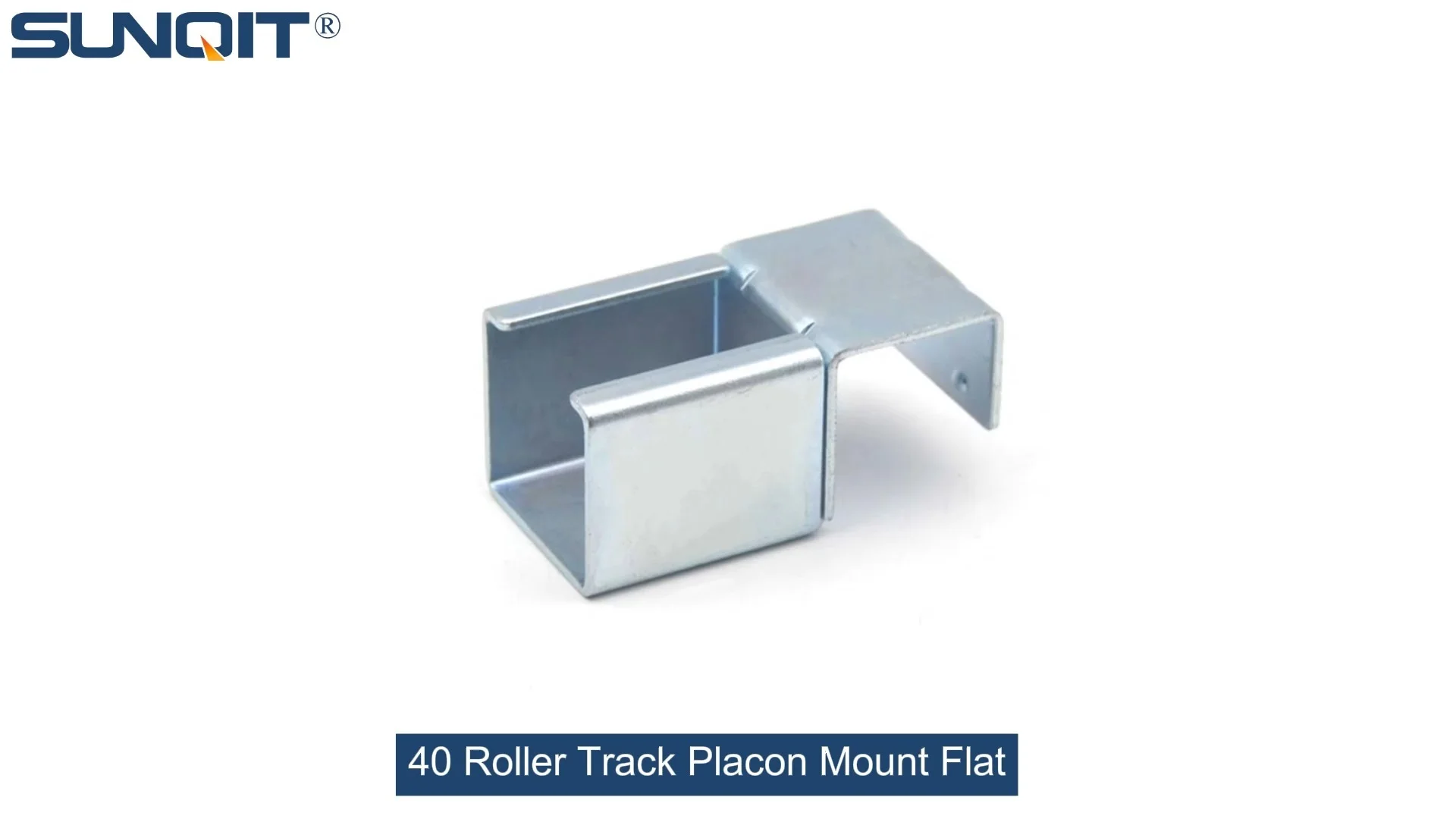
40 Roller Track Placon Mount Flat
Roller track placon mount work as a connector for roller track and pipe or aluminum profile in rack syetem, it is a necessary parts in rack system which widely used in industrial plant and logistic,warehouse storage.
Step into a modern manufacturing facility today, and you'll likely notice a symphony of precision: robots assembling components, workers collaborating with smart tools, and Automated Guided Vehicles (AGVs) gliding smoothly across the floor, transporting materials with clockwork accuracy. In this era of Industry 4.0, where efficiency and flexibility reign supreme, the harmony between material handling systems and automation tools isn't just a luxury—it's the backbone of competitive production. At the heart of this harmony lies a critical yet often overlooked component: the roller track. Specifically, the 40 Roller Track Placon Mount Flat has emerged as a game-changer, designed to seamlessly sync with AGVs and elevate the performance of lean manufacturing setups.
But why does compatibility between roller tracks and AGVs matter so much? Imagine a scenario where an AGV arrives at a workstation to unload components, only to find the track misaligned, causing jams or delays. Or a track system that's too rigid to adapt when production lines reconfigure for a new product. These hiccups don't just slow down operations—they erode the very efficiency that automation promises. That's where the 40 Roller Track Placon Mount Flat shines. Engineered with precision and flexibility in mind, it's more than just a conveyor component; it's a bridge between static infrastructure and dynamic automation, ensuring that AGVs and track systems work as one cohesive unit.
What Is 40 Roller Track Placon Mount Flat? Breaking Down the Basics
Before diving into its compatibility with AGVs, let's get to know the 40 Roller Track Placon Mount Flat itself. At first glance, it might look like a simple series of rollers mounted on a frame, but its design is a testament to thoughtful engineering tailored for modern manufacturing. Let's break down its key features:
Core Structure: The "40" in its name refers to its standard width (40mm), making it compatible with common aluminum profile systems—a staple in lean manufacturing setups. The "Placon Mount Flat" design is where the magic begins: it features a flat, low-profile mounting base that attaches directly to aluminum profiles or workbench frames, ensuring a stable, vibration-resistant foundation. Unlike bulkier track systems that sit high off the surface, this flat mount design keeps the track close to the workstation, reducing the risk of material tipping during AGV transfers.
Material Matters: Constructed from high-grade aluminum alloy, the track balances strength and lightweight performance. Aluminum isn't just corrosion-resistant (critical for factories with varying temperatures or humidity); it also minimizes the overall weight of the system, making it easier to reconfigure when production needs change. The rollers themselves are typically made from wear-resistant plastic or steel, depending on the load requirements—plastic for lighter components (like 3C electronics) and steel for heavier parts (like automotive components).
Roller Precision: Each roller is spaced evenly and mounted on precision bearings, ensuring smooth, consistent movement of materials. Whether it's a small circuit board or a larger assembly part, the rollers reduce friction to near-zero, allowing materials to glide effortlessly—even when pushed by an AGV's gentle nudge. This precision is key: uneven roller spacing or sticky bearings could cause materials to get stuck, throwing off AGV schedules and disrupting the production flow.
Flexibility at Its Core: One of the standout features of this track is its modularity. It's designed to be cut to custom lengths, connected with simple brackets, and combined with other components (like side guides or end stops) to fit unique workstation layouts. This modularity aligns perfectly with the lean system philosophy—"build only what you need, and adapt as you grow."
AGVs in Modern Manufacturing: Why Compatibility Can't Be an Afterthought
AGVs have transformed material handling from a manual, error-prone task into a streamlined, data-driven process. These autonomous vehicles—ranging from small, cart-like transporters to larger, heavy-duty carriers—navigate factories using sensors, QR codes, or even 3D mapping, moving raw materials, work-in-progress, and finished goods between stations. In industries like automotive, 3C assembly, and medical device manufacturing, AGVs are no longer optional; they're essential for meeting tight production deadlines and reducing labor costs.
But for AGVs to deliver on their promise, they need reliable "handoff points" where they can load or unload materials. This is where roller tracks come in. Think of AGVs as the "delivery trucks" of the factory, and roller tracks as the "loading docks"—if the dock is poorly designed, the truck can't do its job efficiently. Here's what AGVs demand from a roller track system:
- Consistent Height Alignment: AGVs have fixed docking heights. If the roller track sits even a few millimeters too high or low, materials might get stuck during transfer, or the AGV might struggle to align itself, wasting precious time.
- Smooth Transitions: When an AGV pushes a bin onto the track, there should be no "bump" or resistance. A rough transition could damage delicate components (like medical devices) or cause the AGV to overload its motors.
- Stability Under Dynamic Loads: AGVs move quickly—some at speeds up to 2 m/s. When they brake to dock, the track must withstand sudden stops without shifting or vibrating, ensuring materials stay in place.
- Adaptability to AGV Navigation: Many AGVs use optical sensors or magnetic strips to navigate. The track system shouldn't interfere with these signals—no metal components that block sensors, no reflective surfaces that cause false readings.
Traditional roller tracks often fall short here. Some are too rigid, making height adjustments a hassle. Others use uneven roller spacing, leading to jams. The 40 Roller Track Placon Mount Flat, however, is engineered to address these pain points head-on—making it a natural partner for AGVs.

Design for Compatibility: How 40 Roller Track Placon Mount Flat Works with AGVs
Now, let's connect the dots: how exactly does the 40 Roller Track Placon Mount Flat meet AGVs' unique demands? Let's break down its compatibility features, step by step.
1. Flat, Low-Profile Mounting for Perfect AGV Alignment
Remember that "Placon Mount Flat" design? It's not just for looks. By mounting directly to aluminum profiles with a flat base, the track sits at a consistent height—no wobbly brackets or uneven supports. Most AGVs dock at heights between 80mm and 150mm, and the 40 Roller Track's adjustable mounting slots let operators fine-tune the height to match their AGV's specifications, down to the millimeter. This precision eliminates alignment issues, ensuring that when an AGV approaches, the track and vehicle are perfectly level—like two puzzle pieces clicking into place.
2. Smooth Roller Transitions: No More "Bumps" During Material Transfer
The rollers on the 40 Track are mounted on stainless steel axles with sealed bearings, reducing friction to almost zero. But what really sets it apart is the "entry/exit" design: the first and last rollers are slightly recessed, creating a gentle slope that guides materials onto/off the track without a jolt. Imagine rolling a box off a table onto a smooth ramp versus dropping it onto a hard floor—that's the difference this design makes. For AGVs, this means less stress on their motors and a lower risk of material damage, even when moving delicate items like smartphone screens or medical syringes.
3. High Load Capacity for Heavy-Duty AGV Tasks
Not all AGVs carry small parts—some transport heavy components, like automotive engine blocks or large appliance parts. The 40 Roller Track Placon Mount Flat is built to handle these loads, with a maximum weight capacity of up to 50kg per meter (depending on roller spacing). Its aluminum frame resists bending under pressure, and the flat mounting base distributes weight evenly across the profile, preventing sagging over time. This durability means AGVs can unload heavy bins without worrying about the track buckling—a critical feature for industries like automotive and machinery manufacturing.
4. Compatibility with AGV Navigation Systems
Modern AGVs use a mix of navigation technologies: laser guidance, magnetic tape, or QR codes on the floor. The 40 Roller Track's aluminum frame is non-magnetic and non-reflective, so it won't interfere with magnetic or laser signals. Even better, its low profile keeps it out of the AGV's sensor "line of sight," ensuring the vehicle can "see" its path clearly while docked. This might sound like a small detail, but in a busy factory with dozens of AGVs moving simultaneously, avoiding signal interference is essential to preventing collisions or misroutes.
5. Modular Design for Easy Integration into Existing AGV Routes
Factories rarely stay the same. A production line that assembles smartphones today might switch to tablets next month, requiring new workstations and AGV routes. The 40 Roller Track's modularity makes it easy to adapt: sections can be added or removed in minutes, and the flat mount design allows it to be repositioned along aluminum profiles without drilling new holes. This flexibility is a cornerstone of
lean solution
thinking—no more tearing out entire track systems when production needs change. Instead, you can tweak the layout to match new AGV paths, saving time and reducing waste.

Real-World Impact: Case Studies of AGV & 40 Roller Track Collaboration
Numbers and specs tell part of the story, but real-world applications show the true value of this compatibility. Let's look at two industries where the 40 Roller Track Placon Mount Flat and AGVs have transformed production lines.
Case Study 1: 3C Assembly Line (Smartphone Manufacturing)
A leading 3C electronics manufacturer in China was struggling with bottlenecks in its final assembly line. AGVs were supposed to deliver component bins to workstations, but the existing roller tracks were misaligned, causing 15-20 minute delays per shift as workers manually adjusted bins. After switching to 40 Roller Track Placon Mount Flat, the results were striking:
- AGV docking time reduced by 70% (from 2 minutes per station to 36 seconds).
- Material damage (e.g., cracked screens) dropped by 45%, thanks to smoother transitions.
- The line's overall throughput increased by 12%, allowing the factory to meet seasonal demand without adding extra shifts.
The key? The track's adjustable height and smooth rollers eliminated the need for manual intervention, letting AGVs and workers focus on their core tasks.
Case Study 2: Automotive Parts Distribution Center
A major automotive supplier operates a large warehouse where AGVs transport plastic components (e.g., dashboard parts) from storage to
production assemble
lines. The warehouse previously used steel roller tracks, which were heavy and hard to reconfigure. When the supplier introduced new AGV models with higher docking heights, they needed a track system that could adapt. The 40 Roller Track Placon Mount Flat solved this:
- Workers reconfigured 120 meters of track in just 2 days (vs. 1 week with the old steel system).
- AGV battery life improved by 15% because the smooth rollers reduced the energy needed to push bins onto the track.
- The aluminum track's corrosion resistance meant less maintenance—no more rusted rollers jamming during humid summer months.

Beyond Compatibility: How 40 Roller Track Supports Lean Manufacturing Goals
Compatibility with AGVs is a major selling point, but the 40 Roller Track Placon Mount Flat's value goes deeper—it aligns with the core principles of lean system thinking, helping factories reduce waste, improve efficiency, and adapt to change.
Waste Reduction: In lean manufacturing, "waste" includes anything that doesn't add value—like excess inventory, waiting time, or unnecessary movement. By ensuring AGVs and tracks work seamlessly, the 40 Roller Track cuts down on "waiting waste" (AGVs idling at misaligned stations) and "defect waste" (damaged materials from rough transitions). It also reduces "overprocessing waste": workers no longer need to manually adjust tracks or fix jams, freeing them to focus on value-adding tasks.
Sustainability: Lean isn't just about efficiency—it's about sustainability. The 40 Roller Track's aluminum construction is 100% recyclable, and its modular design means components can be reused when lines reconfigure. Unlike disposable plastic tracks or welded steel systems that end up in landfills, this track is built to last and adapt, aligning with the "reduce, reuse, recycle" ethos of modern manufacturing.
Continuous Improvement: Lean manufacturing thrives on continuous improvement, and the 40 Roller Track supports this mindset. Its adjustable design lets teams experiment with new layouts (e.g., changing track angles to reduce AGV travel time) and measure results in real time. Over time, these small tweaks add up to big gains in productivity—exactly what lean is all about.
Choosing the Right Roller Track for Your AGV System: Key Considerations
If you're considering integrating AGVs into your production line (or upgrading your existing track system), the 40 Roller Track Placon Mount Flat is a strong candidate—but it's important to choose the right configuration for your needs. Here are a few questions to ask:
- What's the typical weight of materials your AGVs transport? Heavier loads may require steel rollers instead of plastic.
- What's your AGV's docking height and approach angle? Ensure the track's mounting system can adjust to match these specs.
- Do you need ESD protection? For 3C or medical industries, look for ESD-safe rollers and aluminum components to prevent static damage.
- How often do your production lines reconfigure? The more frequently you change layouts, the more valuable the track's modularity becomes.
To help visualize, here's a quick comparison between traditional roller tracks and the 40 Roller Track Placon Mount Flat in AGV-compatible setups:
| Feature | Traditional Roller Tracks | 40 Roller Track Placon Mount Flat |
|---|---|---|
| AGV Height Alignment | Fixed; hard to adjust | Adjustable via slot mounting (±5mm) |
| Material Transition | Often bumpy; risk of jams | Smooth, recessed entry/exit rollers |
| Load Capacity | Up to 30kg/m (plastic) or 80kg/m (steel) | Up to 50kg/m (plastic rollers); 100kg/m (steel rollers) |
| Reconfiguration Time | Hours (requires tools/welding) | Minutes (modular, tool-free connections) |
| AGV Navigation Interference | High (steel frames may block signals) | Low (aluminum frame, non-reflective surface) |
The Future of AGV & Roller Track Integration: What's Next?
As manufacturing continues to evolve, the bond between AGVs and roller tracks will only grow stronger. Emerging trends like AI-powered AGVs (which can predict maintenance needs) and "digital twin" factories (virtual replicas of physical lines) will demand even more precision from track systems. The 40 Roller Track Placon Mount Flat is already poised to meet these challenges, with ongoing innovations like:
- Smart Sensors: Embedded sensors in rollers could detect wear or misalignment, sending alerts to maintenance teams before a jam occurs.
- Custom Roller Materials: New composites that reduce noise (critical for worker comfort) and increase grip for slippery materials (like oily automotive parts).
- Integration with MES Systems: Real-time data from the track (e.g., material flow rates) could feed into Manufacturing Execution Systems, helping managers optimize AGV routes on the fly.
At the end of the day, the goal remains the same: to create manufacturing systems that are efficient, flexible, and human-centric. AGVs handle the repetitive, physically demanding tasks, freeing workers to focus on creativity and problem-solving. The 40 Roller Track Placon Mount Flat ensures this partnership runs smoothly, turning the factory floor into a place where automation and human expertise work in harmony.
In a world where every second counts, the difference between a good production line and a great one often lies in the details. The 40 Roller Track Placon Mount Flat may not be the most glamorous piece of factory equipment, but its role in enabling AGV compatibility is indispensable. It's a reminder that in manufacturing, success isn't just about big robots or fancy software—it's about the quiet, well-engineered components that make the entire system hum. So the next time you see an AGV gliding across a factory floor, take a closer look at the track it's docked to. Chances are, it's the unsung hero ensuring that automation delivers on its promise—one smooth roll at a time.