- Company Articles
- Products and Technology
- Technology Sharing
- 40 Roller Track Placon Mount Flat: Future Trends in Lean Manufacturing Technology

40 Roller Track Placon Mount Flat: Future Trends in Lean Manufacturing Technology
Related Product
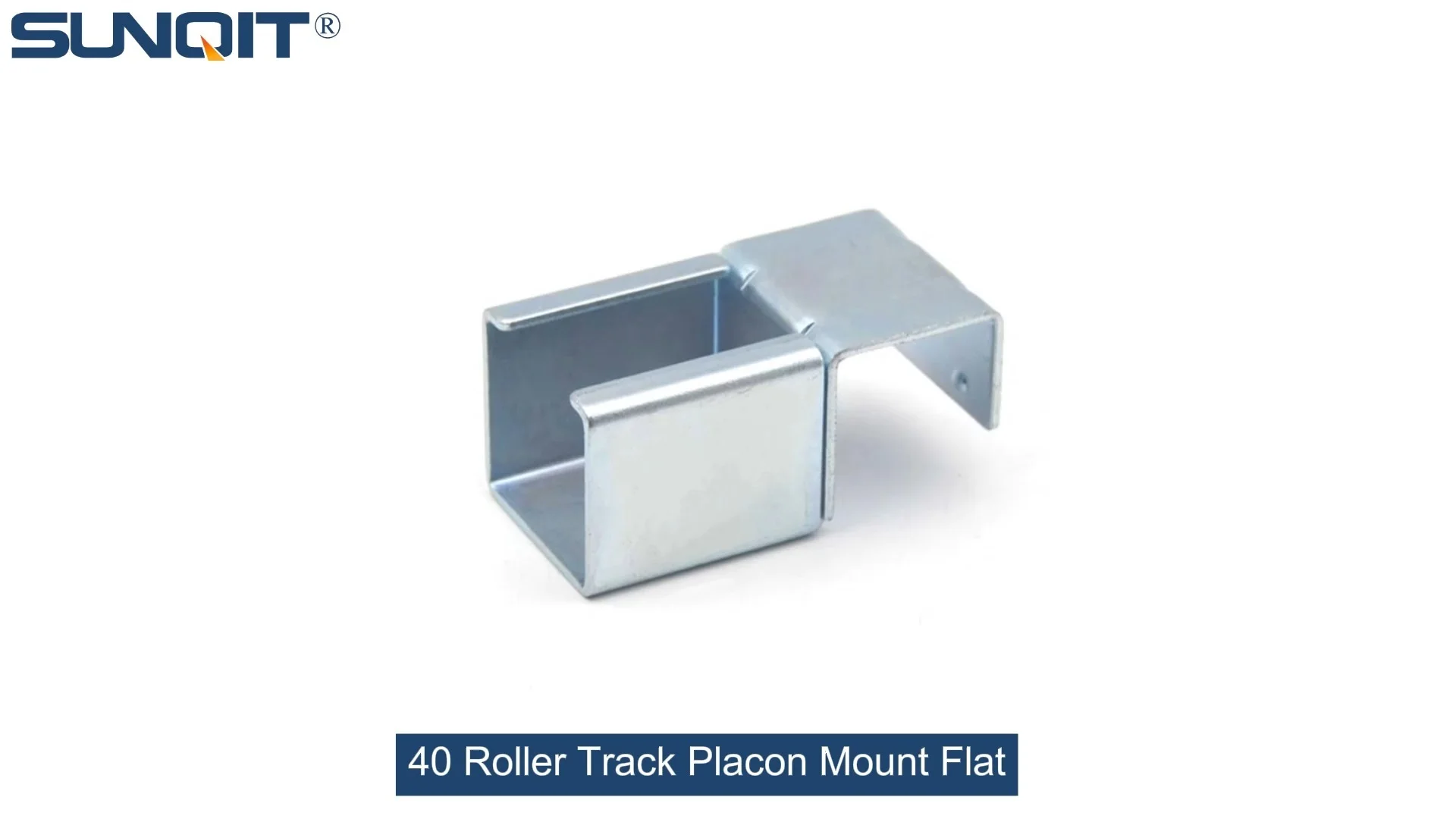
40 Roller Track Placon Mount Flat
Roller track placon mount work as a connector for roller track and pipe or aluminum profile in rack syetem, it is a necessary parts in rack system which widely used in industrial plant and logistic,warehouse storage.
In the fast-paced world of manufacturing, where every second counts and efficiency is the name of the game, the tools we choose can make or break production lines. Today, we're diving deep into a component that's quietly revolutionizing lean manufacturing: the 40 Roller Track Placon Mount Flat. More than just a piece of hardware, it's a bridge between traditional production limitations and the flexible, sustainable future of manufacturing. Let's explore why this unassuming track is becoming a cornerstone of modern lean systems, and how it's shaping the way industries from 3C assembly to medical device production operate.
What Makes 40 Roller Track Placon Mount Flat a Game-Changer?
Before we get into its role in lean manufacturing, let's start with the basics: what exactly is the 40 Roller Track Placon Mount Flat? At first glance, it might look like just another conveyor component, but its design and functionality tell a different story. Crafted with precision from high-grade aluminum profile, this track is engineered to move materials smoothly, quietly, and reliably across production lines. But what really sets it apart is how it embodies the core principles of lean manufacturing—eliminating waste, enhancing flexibility, and driving continuous improvement.
Let's break down its key features:
- Aluminum Profile Advantage: Unlike heavy steel tracks of the past, the use of aluminum profile makes this track lightweight yet surprisingly strong. This means easier installation, lower energy costs for movement, and a longer lifespan—all while being 100% recyclable, aligning with the growing demand for sustainable manufacturing practices.
- Flat Placon Mount Design: The "flat placon mount" might sound technical, but it's actually a genius simplification. This mounting system allows the track to integrate seamlessly with other lean system components like flow racks and conveyors. No more complicated adapters or custom brackets—just a straightforward, secure fit that cuts down installation time by up to 40% compared to traditional tracks.
- Smooth Material Flow: The 40mm roller spacing is optimized for small to medium-sized components, ensuring items glide along without jamming or slowing down. Whether it's circuit boards in a 3C assembly line or surgical tools in a medical facility, the consistent motion reduces manual handling, which means fewer errors and less worker fatigue.
- Modularity at Its Core: Lean manufacturing thrives on adaptability, and this track delivers. It can be easily extended, shortened, or reconfigured as production needs change. A smartphone manufacturer ramping up for a new model? Add a few extra sections. A medical device plant shifting to a new product line? Rearrange the track layout in hours, not days.
But don't just take our word for it. Let's put it side by side with traditional steel tracks to see the difference:
| Feature | 40 Roller Track Placon Mount Flat (Aluminum Profile) | Traditional Steel Track |
|---|---|---|
| Weight | Up to 60% lighter | Heavy, requiring stronger support structures |
| Installation Time | 2-3 hours for a 10m line | 6-8 hours for a 10m line |
| Maintenance Needs | Minimal (no rust, self-lubricating rollers) | Frequent (rust prevention, roller lubrication) |
| Flexibility | Easily reconfigurable; compatible with most lean system components | Rigid; often requires complete replacement for layout changes |
| Sustainability | Recyclable aluminum; low energy consumption | High carbon footprint; difficult to recycle |
How It Fits Into the Bigger Lean System Picture
Lean manufacturing isn't just about individual tools—it's about creating a cohesive system where every part works together to eliminate waste (what the experts call "muda") and maximize value. The 40 Roller Track Placon Mount Flat isn't an isolated component; it's the connective tissue that ties together flow racks, conveyors, and workstations into a unified lean solution.
Think of a typical production floor: materials start in a flow rack, move to a conveyor, then to a workstation where they're assembled, and finally to packaging. Each handoff is a potential bottleneck. But with the 40 Roller Track, these transitions become seamless. For example, when paired with a flow rack, the track ensures materials slide directly from storage to the production line without manual lifting. When connected to a conveyor, it maintains a steady, uninterrupted flow, preventing the "stop-start" delays that kill productivity.
One of the most powerful aspects of this integration is how it supports "pull production"—a key lean principle where materials are only moved when the next workstation needs them. Instead of piling up inventory (a major form of waste), the track acts as a smart buffer, ensuring just-in-time delivery. A 2024 study by the Lean Manufacturing Institute found that facilities using integrated roller track systems reduced inventory holding costs by an average of 28%—a number that directly impacts the bottom line.
But it's not just about efficiency; it's about empowering workers. When materials flow smoothly, operators spend less time fetching parts and more time on skilled tasks. In a recent interview, a production manager at a leading 3C manufacturer put it this way: "Before the 40 Roller Track, my team was spending 2 hours a day just moving components between stations. Now? That time is spent testing products and improving processes. It's not just a track—it's giving our people the space to do their best work."

Real-World Impact: Application Cases Across Industries
Numbers and features tell part of the story, but real change happens when a tool solves actual problems. Let's look at how the 40 Roller Track Placon Mount Flat is making a difference in three key industries:
3C Assembly: Speed and Precision for Electronics
In the fast-moving world of consumer electronics, where new models launch every few months, production lines need to pivot quickly. A major smartphone manufacturer in Shenzhen faced this exact challenge: their old steel tracks couldn't keep up with frequent reconfigurations, leading to costly downtime during model transitions.
After switching to the 40 Roller Track Placon Mount Flat, they saw immediate results. The aluminum profile's lightweight design made it easy for a small team to rearrange the track layout in under a day, compared to a week with steel. The smooth roller action also reduced component damage by 35%—critical for delicate parts like camera modules. "We used to have to inspect every part after moving it," said the plant engineer. "Now, we trust the track to handle them gently. It's been a game-changer for our quality control."
Medical Device Manufacturing: Clean, Compliant, and Efficient
Medical device production has zero room for error—both in terms of precision and cleanliness. A leading producer of surgical instruments in Germany needed a track system that could meet strict EU hygiene standards while supporting their lean goals of waste reduction.
The 40 Roller Track's aluminum profile was the perfect fit. Unlike steel, aluminum resists corrosion and is easy to sanitize, making it compliant with ISO 13485 medical device regulations. The flat placon mount also eliminated crevices where dust or bacteria could hide, a common issue with older track designs. As a result, the facility reduced cleaning time by 50% and passed their annual audit with zero non-conformities related to material handling.
Warehouse Logistics: Streamlining Order Fulfillment
Warehouses aren't just about storage—they're about getting the right product to the right place at the right time. A large e-commerce fulfillment center in Singapore was struggling with slow picking times, especially during peak seasons. Their traditional conveyor system was too rigid to handle the mix of small and medium-sized packages.
By integrating 40 Roller Track Placon Mount Flat with their existing flow racks and conveyors, they created a "dynamic picking zone." Workers now retrieve items from flow racks, place them on the roller track, and send them directly to packing stations. The track's variable speed settings (adjustable via simple controls) let them prioritize urgent orders, cutting average order processing time from 45 minutes to 22 minutes. "During our last Black Friday sale, we processed 30% more orders with the same staff," said the warehouse manager. "The track didn't just keep up—it kept us ahead."

Looking Ahead: Future Trends in Lean Manufacturing Technology
The 40 Roller Track Placon Mount Flat isn't static—it's evolving alongside the future of manufacturing. As industries move toward smarter, greener, and more flexible production, here are the trends that will shape its next generation:
1. Smart Integration with Industry 4.0
The next wave of lean manufacturing will blend physical movement with digital intelligence. Imagine 40 Roller Tracks equipped with sensors that monitor material flow in real time, sending data to a central dashboard. If a roller jams or a section gets overloaded, the system alerts maintenance before it causes a bottleneck. Some manufacturers are already testing RFID tags on track components, allowing for predictive maintenance—replacing parts before they fail, not after. This "smart track" could reduce unplanned downtime by up to 60%, according to early adopters.
2. Hyper-Customization for Niche Industries
While the 40mm size is versatile, future iterations will offer even more tailored solutions. For example, the aerospace industry might need wider tracks for large components, while microelectronics plants could use miniaturized versions for tiny circuit boards. Lean solution providers are already working on modular roller designs that can be swapped out in minutes, letting a single track handle everything from heavy automotive parts to delicate medical devices. This level of customization will make lean manufacturing accessible to small and medium enterprises (SMEs) that previously couldn't afford bespoke systems.
3. Sustainability Beyond Materials
Aluminum profile is already eco-friendly, but future tracks will take sustainability further. Think solar-powered roller systems for off-grid facilities, or tracks made from recycled aluminum combined with bamboo composites for even lower carbon footprints. Some innovators are exploring "energy recovery" rollers that generate small amounts of electricity as materials move, powering nearby sensors or LED lights. The goal? A lean system that's not just efficient for production, but for the planet too.
4. Human-Centric Design
Lean manufacturing isn't just about machines—it's about people. Future 40 Roller Tracks will focus on ergonomics, with adjustable heights, anti-fatigue mat integration, and noise-reducing rollers (already in prototype) that make workplaces quieter and safer. One exciting development is "collaborative tracks" that work alongside cobots (collaborative robots), where the track handles material movement and the cobot handles assembly, creating a seamless human-machine team. This partnership could boost productivity by 50% while reducing workplace injuries.

Why Choose the Right Lean System Partner?
As you consider integrating 40 Roller Track Placon Mount Flat into your production line, remember: the tool is only as good as the support behind it. A reliable lean system supplier doesn't just sell you a track—they work with you to design a complete solution, from initial layout to installation to ongoing maintenance. Look for partners who offer training for your team, so your operators know how to reconfigure the track themselves, and who stand behind their products with solid warranties.
In the end, the 40 Roller Track Placon Mount Flat is more than a component. It's a symbol of lean manufacturing's core promise: better, faster, and more sustainable production that respects both people and the planet. Whether you're a multinational manufacturer or a local workshop, this track represents the future—one where waste is minimized, flexibility is maximized, and every part of your production line works in harmony.
So, what's next for your facility? Maybe it's time to take a closer look at your material flow, spot the bottlenecks, and imagine how a little roller track could make a big difference. After all, lean manufacturing isn't about perfection—it's about continuous improvement. And sometimes, the smallest changes roll into the biggest results.