- Company Articles
- Products and Technology
- Solution
- 40 Roller Track Placon Mount Flat: Supporting Just-In-Time (JIT) Production Systems

40 Roller Track Placon Mount Flat: Supporting Just-In-Time (JIT) Production Systems
Related Product
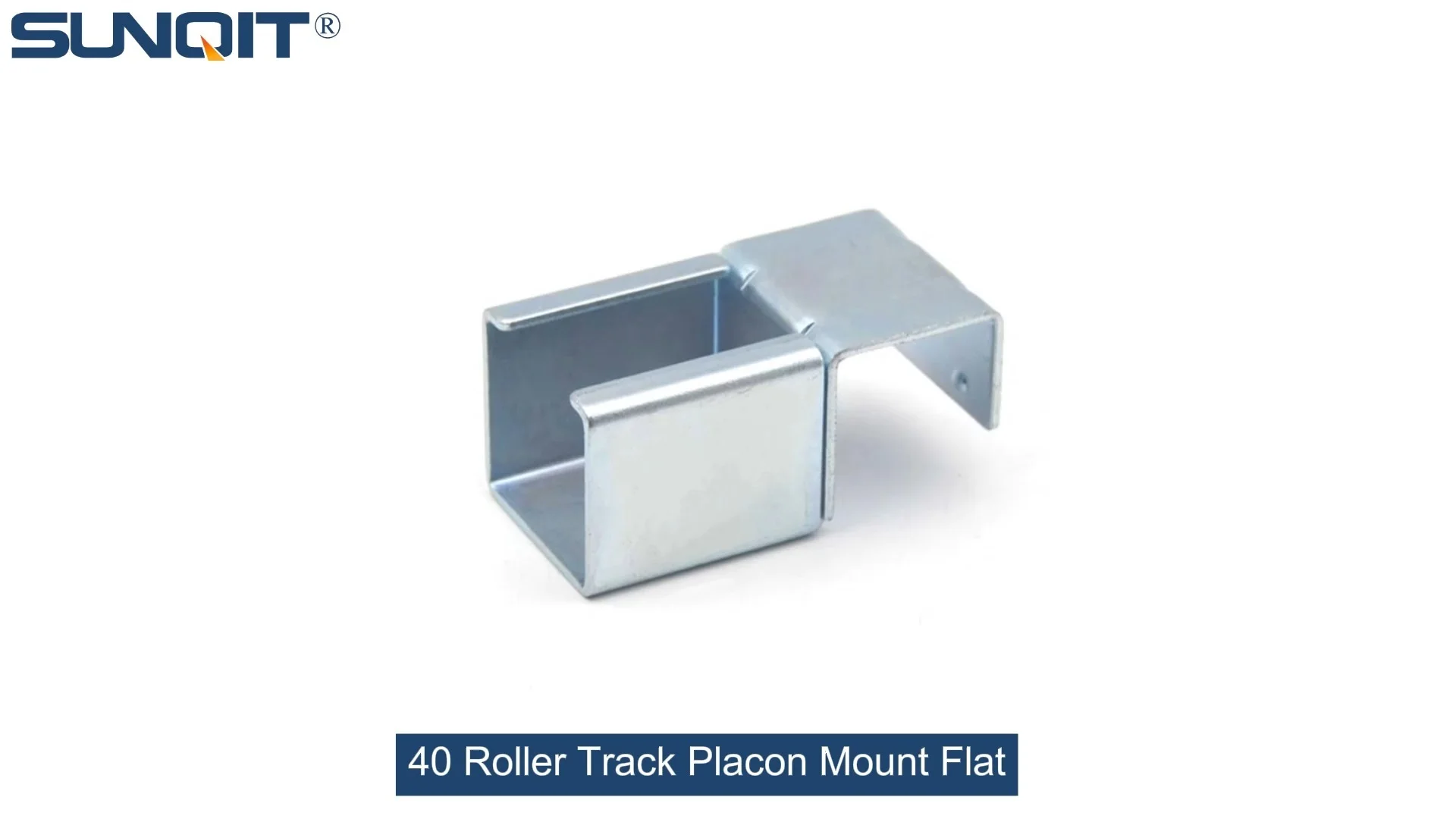
40 Roller Track Placon Mount Flat
Roller track placon mount work as a connector for roller track and pipe or aluminum profile in rack syetem, it is a necessary parts in rack system which widely used in industrial plant and logistic,warehouse storage.
In the fast-paced world of modern manufacturing, where efficiency and waste reduction are the cornerstones of success, Just-In-Time (JIT) production has emerged as a transformative methodology. By aligning material delivery with production demand, JIT minimizes inventory costs, reduces lead times, and enhances overall operational agility. Yet, the seamless flow of materials—often the lifeblood of JIT systems—relies heavily on the right equipment. Enter the
40 Roller Track Placon Mount Flat
: a yet critical component that bridges the gap between static storage and dynamic production lines. In this article, we'll explore how this innovative roller track solution empowers JIT systems, its design philosophy, real-world applications, and why it has become a go-to choice for manufacturers across industries.
What is the 40 Roller Track Placon Mount Flat?
At its core, the 40 Roller Track Placon Mount Flat is a precision-engineered material handling solution designed to facilitate the smooth, controlled movement of goods within production and environments. Part of a broader ecosystem of lean manufacturing tools—including
lean pipe systems
,
flow racks
, and
flexible workstations
—this roller track is characterized by its flat mounting design, modular construction, and compatibility with industry-standard aluminum profiles. Unlike traditional fixed conveyors, it offers the flexibility to adapt to changing production layouts, making it ideal for environments where agility is non-negotiable.
Crafted from high-grade aluminum extrusion profiles (a material celebrated for its strength-to-weight ratio and corrosion resistance), the track features a series of precision-machined rollers that glide with minimal friction. The "placon mount" design refers to its specialized mounting brackets, which allow for secure attachment to aluminum profiles or workbench surfaces—eliminating the need for complex welding or permanent fixtures. This not only simplifies installation but also enables quick reconfiguration, a key advantage for JIT systems that demand frequent layout adjustments.
Crafted from high-grade aluminum extrusion profiles (a material celebrated for its strength-to-weight ratio and corrosion resistance), the track features a series of precision-machined rollers that glide with minimal friction. The "placon mount" design refers to its specialized mounting brackets, which allow for secure attachment to aluminum profiles or workbench surfaces—eliminating the need for complex welding or permanent fixtures. This not only simplifies installation but also enables quick reconfiguration, a key advantage for JIT systems that demand frequent layout adjustments.
Design Features That Drive JIT Success
The 40 Roller Track Placon Mount Flat isn't just another conveyor component; it's a product engineered with the principles of lean manufacturing in mind. Let's break down its standout features and how they align with JIT objectives:
1. Low-Friction Roller Technology
At the heart of the track lies its roller system. Each roller is designed to minimize resistance, ensuring that even lightweight components (like 3C assembly parts) or heavier loads (such as automotive components) move smoothly without manual intervention. This reduces "wait time"—a common waste in JIT terminology—by ensuring materials arrive at workstations exactly when needed, not a moment later.
2. Modular and Scalable Construction
JIT production thrives on flexibility, and the track's modular design delivers just that. Sections can be easily connected using aluminum profile accessories like placon mount connectors or end supports, allowing manufacturers to build tracks of any length or shape. Need to extend a line to accommodate a new product? Simply add more sections. Want to create a U-shaped flow to optimize space? Reconfigure the existing modules. This scalability eliminates the need for costly overhauls when production needs change.
3. Compatibility with Lean Ecosystems
No manufacturing tool operates in isolation, and the 40 Roller Track Placon Mount Flat is no exception. It seamlessly integrates with lean pipe workbenches , ESD workstations , and turnover trolleys , forming a cohesive material flow network. For example, in a 3C assembly line, the track can connect a flow rack (stocking components) to an ESD workstation, ensuring sensitive electronics move safely and efficiently from storage to assembly—all without human lifting or delays.
4. Durability for Continuous Operation
JIT systems run around the clock, and equipment failure can bring production to a grinding halt. The track's aluminum frame and steel-reinforced rollers are built to withstand the rigors of 24/7 use, while its corrosion-resistant finish ensures longevity even in harsh environments (such as automotive plants with lubricants or medical facilities with strict cleaning protocols). This durability translates to lower maintenance costs and higher uptime—critical metrics for JIT success.
5. ESD-Ready Options
For industries like electronics manufacturing, electrostatic discharge (ESD) protection is non-negotiable. The track can be equipped with ESD-compliant rollers and conductive aluminum components, making it compatible with ESD workbench setups. This prevents static damage to sensitive components like circuit boards, ensuring product quality while maintaining JIT flow.
1. Low-Friction Roller Technology
At the heart of the track lies its roller system. Each roller is designed to minimize resistance, ensuring that even lightweight components (like 3C assembly parts) or heavier loads (such as automotive components) move smoothly without manual intervention. This reduces "wait time"—a common waste in JIT terminology—by ensuring materials arrive at workstations exactly when needed, not a moment later.
2. Modular and Scalable Construction
JIT production thrives on flexibility, and the track's modular design delivers just that. Sections can be easily connected using aluminum profile accessories like placon mount connectors or end supports, allowing manufacturers to build tracks of any length or shape. Need to extend a line to accommodate a new product? Simply add more sections. Want to create a U-shaped flow to optimize space? Reconfigure the existing modules. This scalability eliminates the need for costly overhauls when production needs change.
3. Compatibility with Lean Ecosystems
No manufacturing tool operates in isolation, and the 40 Roller Track Placon Mount Flat is no exception. It seamlessly integrates with lean pipe workbenches , ESD workstations , and turnover trolleys , forming a cohesive material flow network. For example, in a 3C assembly line, the track can connect a flow rack (stocking components) to an ESD workstation, ensuring sensitive electronics move safely and efficiently from storage to assembly—all without human lifting or delays.
4. Durability for Continuous Operation
JIT systems run around the clock, and equipment failure can bring production to a grinding halt. The track's aluminum frame and steel-reinforced rollers are built to withstand the rigors of 24/7 use, while its corrosion-resistant finish ensures longevity even in harsh environments (such as automotive plants with lubricants or medical facilities with strict cleaning protocols). This durability translates to lower maintenance costs and higher uptime—critical metrics for JIT success.
5. ESD-Ready Options
For industries like electronics manufacturing, electrostatic discharge (ESD) protection is non-negotiable. The track can be equipped with ESD-compliant rollers and conductive aluminum components, making it compatible with ESD workbench setups. This prevents static damage to sensitive components like circuit boards, ensuring product quality while maintaining JIT flow.

Bridging the Gap: How It Supports JIT Principles
JIT production is guided by the "Seven Wastes" framework, which identifies inefficiencies like overproduction, waiting, and unnecessary movement. The 40 Roller Track Placon Mount Flat directly addresses these wastes, making it a strategic asset for lean operations:
Eliminating Waiting Waste
In traditional setups, workers might spend valuable time fetching materials from distant storage areas. By integrating the track into a flow rack system, materials are delivered directly to the workstation via gravity or minimal force, reducing idle time. For instance, in a medical device assembly line, sterile components can flow from a cleanroom storage rack to the assembly station via the track, ensuring operators focus on production, not logistics.
Reducing Inventory Waste
JIT aims to keep inventory "just in time," and the track supports this by enabling "pull" systems. Instead of stockpiling materials, components are replenished only when the downstream workstation signals need—triggered by the movement of goods along the track. This aligns inventory levels with actual demand, cutting carrying costs and freeing up floor space.
Minimizing Motion Waste
Awkward bending, reaching, or lifting wastes energy and increases injury risk. The track's height-adjustable mounting (via aluminum profile accessories like adjustable feet) allows it to be positioned at ergonomic heights, reducing strain on workers. For example, when paired with a lean pipe workbench , the track can be mounted at waist level, so operators can load/unload materials with minimal movement.
Enhancing Continuous Improvement
JIT isn't static—it requires constant refinement. The track's reconfigurable design supports kaizen (continuous improvement) initiatives. If a production team identifies a bottleneck, they can quickly adjust the track's layout, add diverters, or integrate it with a conveyor system to optimize flow. This adaptability ensures the production line evolves alongside process improvements.
Eliminating Waiting Waste
In traditional setups, workers might spend valuable time fetching materials from distant storage areas. By integrating the track into a flow rack system, materials are delivered directly to the workstation via gravity or minimal force, reducing idle time. For instance, in a medical device assembly line, sterile components can flow from a cleanroom storage rack to the assembly station via the track, ensuring operators focus on production, not logistics.
Reducing Inventory Waste
JIT aims to keep inventory "just in time," and the track supports this by enabling "pull" systems. Instead of stockpiling materials, components are replenished only when the downstream workstation signals need—triggered by the movement of goods along the track. This aligns inventory levels with actual demand, cutting carrying costs and freeing up floor space.
Minimizing Motion Waste
Awkward bending, reaching, or lifting wastes energy and increases injury risk. The track's height-adjustable mounting (via aluminum profile accessories like adjustable feet) allows it to be positioned at ergonomic heights, reducing strain on workers. For example, when paired with a lean pipe workbench , the track can be mounted at waist level, so operators can load/unload materials with minimal movement.
Enhancing Continuous Improvement
JIT isn't static—it requires constant refinement. The track's reconfigurable design supports kaizen (continuous improvement) initiatives. If a production team identifies a bottleneck, they can quickly adjust the track's layout, add diverters, or integrate it with a conveyor system to optimize flow. This adaptability ensures the production line evolves alongside process improvements.
Real-World Application: 3C Assembly Line Transformation
To illustrate the impact of the 40 Roller Track Placon Mount Flat, let's look at a case study from the 3C (Computer, Communication, Consumer Electronics) industry—a sector known for high-mix, low-volume production and tight JIT deadlines.
A leading smartphone manufacturer was struggling with bottlenecks in its final assembly line. Materials were stored in racks 20 meters from the workstation, requiring operators to walk back and forth up to 50 times per shift. This not only wasted 2+ hours of productive time daily but also led to inconsistent material delivery, causing occasional line stoppages.
The solution? A lean material flow system centered on the 40 Roller Track Placon Mount Flat. The manufacturer installed tracks connecting flow racks (stocked with screens, batteries, and circuit boards) directly to ESD workstations . Each workstation was equipped with a small track segment that fed components to the operator via gravity. The track's modular design allowed for easy integration with existing aluminum profile workbenches , and its ESD-compliant rollers protected sensitive electronics.
The results were striking: Material delivery time dropped by 90%, operator movement waste was cut by 75%, and line stoppages due to "missing parts" decreased from 8 per week to zero. The manufacturer estimates the system paid for itself within 3 months through labor savings and increased throughput—proving that even small changes in material flow can drive significant JIT gains.
A leading smartphone manufacturer was struggling with bottlenecks in its final assembly line. Materials were stored in racks 20 meters from the workstation, requiring operators to walk back and forth up to 50 times per shift. This not only wasted 2+ hours of productive time daily but also led to inconsistent material delivery, causing occasional line stoppages.
The solution? A lean material flow system centered on the 40 Roller Track Placon Mount Flat. The manufacturer installed tracks connecting flow racks (stocked with screens, batteries, and circuit boards) directly to ESD workstations . Each workstation was equipped with a small track segment that fed components to the operator via gravity. The track's modular design allowed for easy integration with existing aluminum profile workbenches , and its ESD-compliant rollers protected sensitive electronics.
The results were striking: Material delivery time dropped by 90%, operator movement waste was cut by 75%, and line stoppages due to "missing parts" decreased from 8 per week to zero. The manufacturer estimates the system paid for itself within 3 months through labor savings and increased throughput—proving that even small changes in material flow can drive significant JIT gains.

Technical Specifications: A Closer Look
| Parameter | Details |
|---|---|
| Material | Aluminum extrusion profile (6063-T5), steel rollers with plastic or ESD coating |
| Roller Type | 40mm steel wheel (yellow, black, or white options); ESD-compliant black wheel available |
| Load Capacity | Up to 50 kg/m (evenly distributed) |
| Length Options | Standard: 1m, 2m; Custom lengths available upon request |
| Mounting Type | Placon mount (compatible with 40×40, 40×80 aluminum profiles) |
| Compatible Accessories | End supports with stops/wheels, placon mount connectors, center support brackets, aluminum guide rails |
| Surface Treatment | Anodized (silver) or powder-coated (custom colors available) |
| ESD Compliance | Resistance: 10⁶–10⁹ Ω (when equipped with ESD rollers and conductive brackets) |

Beyond the Track: Building a Complete Lean Solution
While the 40 Roller Track Placon Mount Flat is a star performer, its true power shines when combined with other lean tools. Here's how it fits into a holistic lean system:
With Lean Pipe Workbenches
Mount the track to the edge of a lean pipe workbench to create a "pick-to-light" system. As components flow along the track, operators can quickly access them without leaving their stations—ideal for high-speed assembly lines.
With Flow Racks
Use the track as the "backbone" of a flow rack system. By the track slightly, gravity pulls materials forward, ensuring first-in-first-out (FIFO) inventory rotation—a critical practice in JIT to prevent obsolete stock.
With Conveyor Systems
Integrate with motorized conveyors for longer-distance material transport. The track can act as a "buffer zone" between conveyor segments, allowing for smooth transfer of goods between production stages.
With Turnover Trolleys
Pair the track with turnover trolleys to create a closed-loop material system. Trolleys loaded with finished goods can be rolled onto the track and sent to packaging, while empty trolleys return via a parallel track—eliminating double handling.
With Lean Pipe Workbenches
Mount the track to the edge of a lean pipe workbench to create a "pick-to-light" system. As components flow along the track, operators can quickly access them without leaving their stations—ideal for high-speed assembly lines.
With Flow Racks
Use the track as the "backbone" of a flow rack system. By the track slightly, gravity pulls materials forward, ensuring first-in-first-out (FIFO) inventory rotation—a critical practice in JIT to prevent obsolete stock.
With Conveyor Systems
Integrate with motorized conveyors for longer-distance material transport. The track can act as a "buffer zone" between conveyor segments, allowing for smooth transfer of goods between production stages.
With Turnover Trolleys
Pair the track with turnover trolleys to create a closed-loop material system. Trolleys loaded with finished goods can be rolled onto the track and sent to packaging, while empty trolleys return via a parallel track—eliminating double handling.
Custom Solutions for Unique Challenges
Every manufacturing environment is unique, and off-the-shelf solutions don't always cut it. That's why leading suppliers offer custom-designed 40 Roller Track systems tailored to specific industry needs. For example:
Medical Device Manufacturing
A medical equipment producer required a track system that could withstand frequent sanitization with harsh chemicals. The solution? A track with stainless steel rollers and corrosion-resistant aluminum brackets, paired with lean pipe and accessories made from medical-grade materials.
Automotive Parts Production
An auto parts supplier needed to transport heavy engine components (up to 80 kg) along a 15-meter track. Engineers reinforced the aluminum profile and added larger-diameter steel rollers, increasing the track's load capacity to 100 kg/m—proving that even "standard" products can be adapted for heavy-duty use.
Warehousing and Logistics
A third-party logistics firm wanted to optimize order picking in a small warehouse. They installed a network of 40 Roller Track Placon Mount Flat sections on mezzanines, connecting storage areas to packing stations. The track's low-friction design allowed for manual pushing of heavy cartons, reducing reliance on forklifts and cutting picking time by 40%.
Medical Device Manufacturing
A medical equipment producer required a track system that could withstand frequent sanitization with harsh chemicals. The solution? A track with stainless steel rollers and corrosion-resistant aluminum brackets, paired with lean pipe and accessories made from medical-grade materials.
Automotive Parts Production
An auto parts supplier needed to transport heavy engine components (up to 80 kg) along a 15-meter track. Engineers reinforced the aluminum profile and added larger-diameter steel rollers, increasing the track's load capacity to 100 kg/m—proving that even "standard" products can be adapted for heavy-duty use.
Warehousing and Logistics
A third-party logistics firm wanted to optimize order picking in a small warehouse. They installed a network of 40 Roller Track Placon Mount Flat sections on mezzanines, connecting storage areas to packing stations. The track's low-friction design allowed for manual pushing of heavy cartons, reducing reliance on forklifts and cutting picking time by 40%.
Why Choose 40 Roller Track Placon Mount Flat for Your JIT System?
In a market flooded with conveyor options, what sets this track apart? Here are three compelling reasons:
1. It's Built for Lean, Not Just for Transport
Unlike generic conveyors designed solely for movement, this track is engineered with JIT and lean principles in mind. Its focus on flexibility, waste reduction, and continuous improvement makes it more than a tool—it's a strategic asset for lean transformation.
2. Total Cost of Ownership (TCO) Advantage
While initial costs may be slightly higher than basic roller tracks, the 40 Roller Track Placon Mount Flat delivers long-term savings through: minimal maintenance (no lubrication required for rollers), easy repairs (replace individual rollers instead of entire sections), and adaptability (avoiding costly replacements when layouts change).
3. A Partner in Problem-Solving
Reputable suppliers don't just sell tracks—they offer lean solutions . From design to installation support, they work with manufacturers to analyze material flow, identify bottlenecks, and tailor systems that align with JIT goals. This partnership approach ensures the track doesn't just "fit" into existing operations but actively enhances them.
1. It's Built for Lean, Not Just for Transport
Unlike generic conveyors designed solely for movement, this track is engineered with JIT and lean principles in mind. Its focus on flexibility, waste reduction, and continuous improvement makes it more than a tool—it's a strategic asset for lean transformation.
2. Total Cost of Ownership (TCO) Advantage
While initial costs may be slightly higher than basic roller tracks, the 40 Roller Track Placon Mount Flat delivers long-term savings through: minimal maintenance (no lubrication required for rollers), easy repairs (replace individual rollers instead of entire sections), and adaptability (avoiding costly replacements when layouts change).
3. A Partner in Problem-Solving
Reputable suppliers don't just sell tracks—they offer lean solutions . From design to installation support, they work with manufacturers to analyze material flow, identify bottlenecks, and tailor systems that align with JIT goals. This partnership approach ensures the track doesn't just "fit" into existing operations but actively enhances them.
Conclusion: The Unsung Hero of JIT Material Flow
Just-In-Time production is more than a methodology—it's a mindset that demands every component of the manufacturing process contribute to efficiency and waste reduction. The 40 Roller Track Placon Mount Flat embodies this mindset, proving that even seemingly simple tools can have a profound impact on operational success. Its modular design, seamless integration with lean ecosystems, and focus on JIT principles make it a cornerstone of modern material handling.
Whether you're a 3C manufacturer racing to meet smartphone demand, a medical device producer prioritizing precision, or a logistics firm streamlining order fulfillment, this track offers a path to smoother flows, faster delivery, and leaner operations. As JIT continues to evolve, tools like the 40 Roller Track Placon Mount Flat will remain essential—quietly supporting the production lines that power our world, one roller at a time.
Whether you're a 3C manufacturer racing to meet smartphone demand, a medical device producer prioritizing precision, or a logistics firm streamlining order fulfillment, this track offers a path to smoother flows, faster delivery, and leaner operations. As JIT continues to evolve, tools like the 40 Roller Track Placon Mount Flat will remain essential—quietly supporting the production lines that power our world, one roller at a time.