- Company Articles
- Products and Technology
- Product knowledge
- 40 Roller Track Placon Mount Flat vs. Ball Transfer Units: When to Choose Which?

40 Roller Track Placon Mount Flat vs. Ball Transfer Units: When to Choose Which?
Related Product
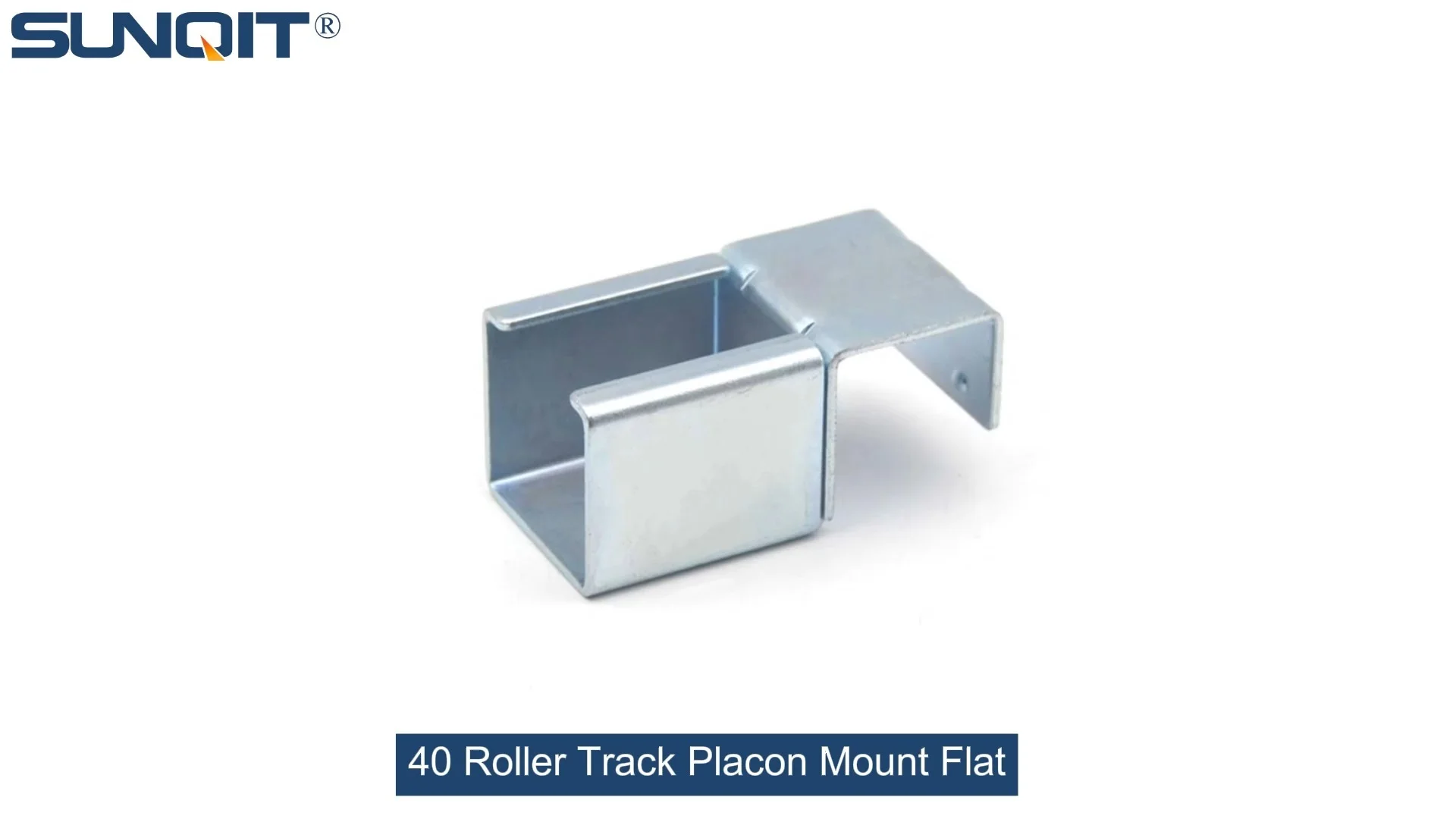
40 Roller Track Placon Mount Flat
Roller track placon mount work as a connector for roller track and pipe or aluminum profile in rack syetem, it is a necessary parts in rack system which widely used in industrial plant and logistic,warehouse storage.
In the fast-paced world of manufacturing, every second counts. Whether you're assembling smartphones in a 3C factory, packaging medical devices, or managing a warehouse center, the way you move materials can make or break your productivity. Two tools stand out in the realm of material handling: the 40 Roller Track Placon Mount Flat and Ball Transfer Units. Both play critical roles in keeping workflows smooth, but they're far from interchangeable. Let's dive into what makes each unique, and how to pick the right one for your operation.
Understanding the Basics
Before we compare, let's get clear on what each solution brings to the table. Both are part of modern lean manufacturing systems, designed to streamline processes, reduce waste, and boost efficiency—but their strengths lie in different scenarios.
What is 40 Roller Track Placon Mount Flat?
Imagine a conveyor system built for consistency and durability. The 40 Roller Track Placon Mount Flat (let's call it "roller track" for short) is exactly that. Part of the broader flow rack family, this tool features a series of parallel rollers mounted on an aluminum profile, designed for linear, one-directional material movement . Its "placon mount flat" design refers to how it attaches to frames—securely bolted to aluminum profiles, creating a stable, low-profile surface.
Commonly used in lean pipe workbench setups and production lines, it's built to handle long, flat, or rigid items. Think of it as the reliable workhorse for straight-line material transfer, whether you're moving boxes, panels, or components down an assembly line.
What are Ball Transfer Units?
Now, picture a workstation where materials need to glide in any direction—left, right, forward, backward—with minimal effort. That's where Ball Transfer Units (BTUs) shine. These compact devices house a central ball surrounded by smaller, allowing 360-degree rotation. They're often embedded into workbench surfaces or conveyor sections, creating a "floating" effect for lightweight to medium-weight items.
BTUs are the thinkers of material handling. Unlike roller tracks, they don't force a fixed path. Instead, they let operators manually guide items or enable automated multi-directional transfers, making them ideal for packing stations, sorting areas, or assembly cells where flexibility is key.
Head-to-Head: Key Differences
To truly understand which tool fits your needs, let's break down their core features side by side.
| Feature | 40 Roller Track Placon Mount Flat | Ball Transfer Units |
|---|---|---|
| Design | Linear roller track with fixed-direction rollers; mounted flat on aluminum profiles | Individual or grouped ball units; embedded in surfaces for 360° movement |
| Primary Movement | Unidirectional (straight line) | Omnidirectional (any direction) |
| Load Capacity | Higher (up to 50-100 kg/m, depending on roller spacing) | Lower (typically 10-30 kg per unit; cumulative for grouped units) |
| Speed Control | Steady, predictable; can be adjusted with brake rollers for slower movement | Depends on manual/automated force; harder to control for high-speed linear transfer |
| Material Compatibility | Ideal for rigid, flat-bottomed items (boxes, panels, metal sheets) | Best for smooth, even surfaces (small parts, cartons, plastic trays) |
| Maintenance Needs | Low; occasional roller lubrication and debris cleaning | Moderate; balls can jam with dust/debris; require regular cleaning |
| Space Efficiency | Long, continuous tracks; requires linear space | Compact; fits into workbench surfaces or small conveyor sections |
| Cost (Per Unit Length/Area) | More cost-effective for long linear runs | Higher per unit area; cost increases with coverage |

When to Choose Roller Track: The Workhorse Scenarios
The 40 Roller Track Placon Mount Flat excels in situations where consistency, heavy loads, and linear efficiency are priorities. Here are its sweet spots:
1. High-Volume Linear Production Lines
In automotive or appliance manufacturing, where assemblies move from station to station in a straight line, roller tracks keep the flow steady. For example, a refrigerator assembly line might use 40mm roller tracks to transfer door panels from the painting station to the final assembly area—no need for direction changes, just reliable, continuous movement.
2. Heavy or Bulky Materials
When dealing with items over 30 kg—like metal sheets, wooden crates, or large 3C device housings—roller tracks distribute weight across multiple rollers, reducing strain on the system. A warehouse handling automotive parts, for instance, would rely on these tracks to move engine components without sagging or jamming.
3. Lean Pipe Workbench Integration
As part of a lean pipe system, roller tracks seamlessly connect workbenches into a cohesive workflow. Imagine a electronics assembly line where PCBs are built on a lean pipe workbench, then slide along a roller track to the testing station—all within arm's reach, minimizing worker movement and maximizing efficiency.
4. Low-Maintenance Environments
Factories with limited maintenance staff appreciate roller tracks' durability. With aluminum construction and simple roller mechanisms, they resist corrosion and wear, even in dusty or semi-industrial settings like furniture manufacturing.

When to Choose Ball Transfer Units: The Flexibility Masters
BTUs shine where adaptability and multi-directional movement are non-negotiable. Here's where they outperform roller tracks:
1. Multi-Directional Workstations
Packaging stations often need to shift boxes from a conveyor to a pallet, then to a labeling machine—all in different directions. BTUs let workers glide packages smoothly without lifting, reducing fatigue and speeding up order fulfillment.
2. Small-Part Handling in 3C Assembly
In 3C manufacturing (think smartphones or laptops), delicate components like circuit boards or screens need gentle, precise movement. BTUs embedded in ESD workstations allow operators to rotate, position, and transfer parts with minimal friction, reducing the risk of static damage.
3. Sorting and Distribution Centers
Postal facilities or e-commerce warehouses sort packages by destination, requiring quick direction changes. BTUs in sorting tables let workers redirect parcels left, right, or onto different conveyor lanes without stopping the flow—critical for meeting tight delivery deadlines.
4. Automated Guided Vehicle (AGV) Interfaces
AGVs often drop off bins at stations where materials need to be moved to nearby workbenches. BTUs create a "bridge" between the AGV and the workstation, letting operators slide bins off the vehicle and into position effortlessly.

Beyond the Basics: Lean Solutions That Combine Both
Sometimes, the best answer isn't "either/or"—it's "both." Many manufacturers opt for hybrid systems that blend roller tracks and BTUs to solve complex workflows. For example:
- Assembly Lines with Inspection Stations: A roller track carries products down the line, but at the inspection station, a section of BTUs allows inspectors to rotate the item for 360° checks before sending it back onto the track.
- Warehouse Order Picking: Roller tracks move bulk cartons from storage to a picking zone, where BTUs let pickers sort individual items into smaller bins for shipping.
This is where a lean solution comes into play. Custom-designed systems, tailored to your specific process, can integrate both technologies—along with other lean pipe accessories like flow racks and conveyors—to create a workflow that's efficient, flexible, and ready to adapt as your needs change.
Making Your Decision: 3 Key Questions to Ask
Still unsure which to choose? Start with these three questions to narrow it down:
1. What's the primary direction of material movement?
If it's straight-line (e.g., from A to B on a production line), go with roller tracks. If you need 360° movement (e.g., workstation to pallet to conveyor), BTUs are better.
2. How heavy are your materials?
Over 30 kg? Roller tracks. Under 30 kg? BTUs work, but check load distribution (grouped BTUs can handle more).
3. What's your workflow's flexibility requirement?
Static, repetitive processes (e.g., automotive part production) thrive with roller tracks. Dynamic, changing processes (e.g., custom order fulfillment) need BTUs.
Final Thoughts: The Right Tool for the Right Job
In manufacturing, efficiency isn't about using the "best" tool—it's about using the right tool for your unique challenges. The 40 Roller Track Placon Mount Flat is your go-to for steady, heavy-duty linear transfer, while Ball Transfer Units excel in flexible, multi-directional scenarios. And when your needs blur the lines? A custom lean solution that combines both can turn bottlenecks into smooth, seamless workflows.
Whether you're outfitting a new production line or upgrading an existing workstation, remember: the goal is to reduce waste, boost productivity, and keep your team moving forward. With the right material handling tools, you're not just building products—you're building a smarter, more adaptable factory.