- Company Articles
- Products and Technology
- Product knowledge
- 40 Roller Track Placon Mount Flat vs. Skate Wheel Tracks: Performance Comparison

40 Roller Track Placon Mount Flat vs. Skate Wheel Tracks: Performance Comparison
Related Product
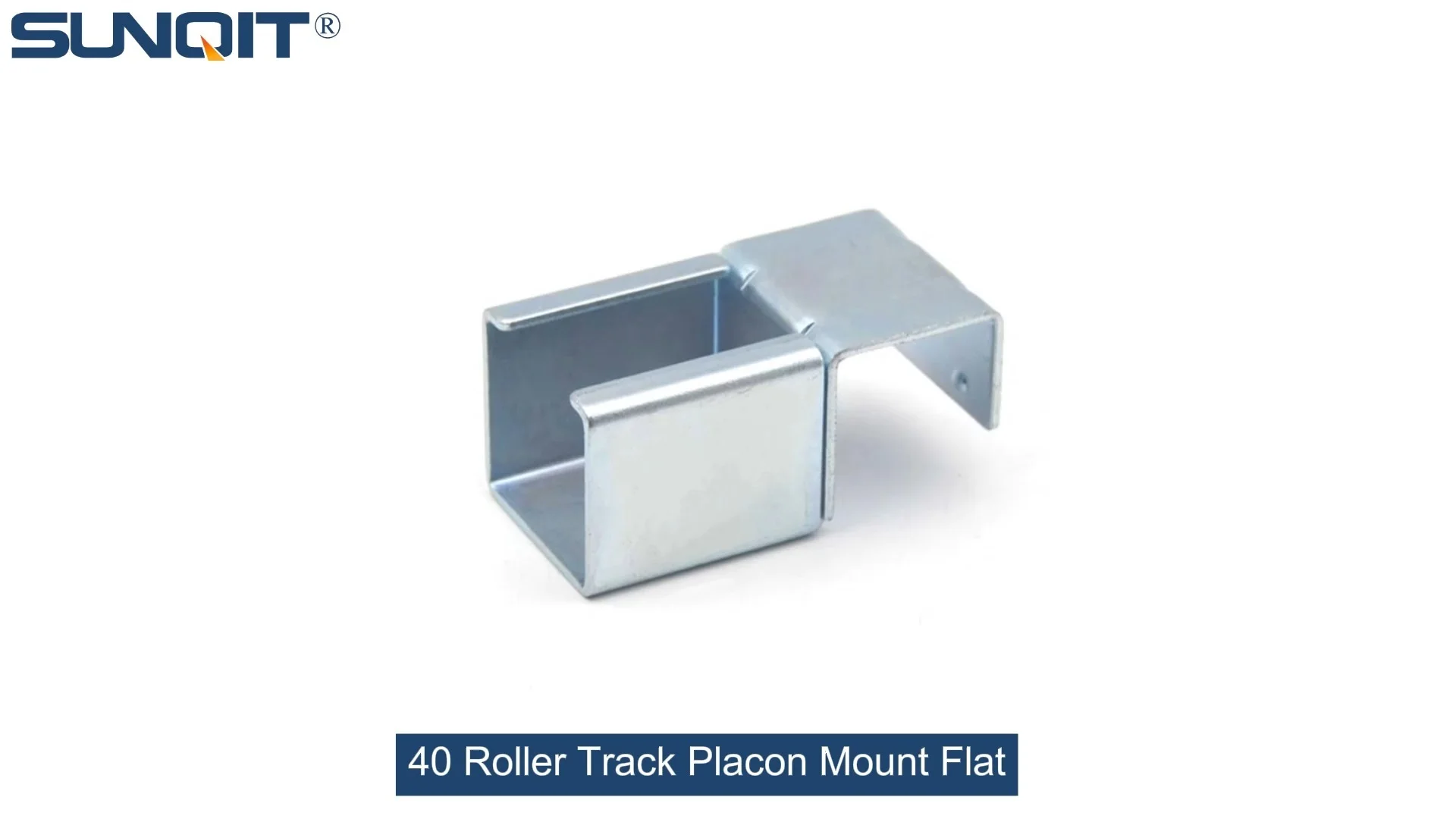
40 Roller Track Placon Mount Flat
Roller track placon mount work as a connector for roller track and pipe or aluminum profile in rack syetem, it is a necessary parts in rack system which widely used in industrial plant and logistic,warehouse storage.
Introduction: The Backbone of Efficient Material Handling
In the fast-paced world of manufacturing, where every second counts and precision is non-negotiable, the choice of material handling equipment can make or break your production line's efficiency. Among the unsung heroes of this domain are roller tracks—simple yet critical components that keep materials flowing smoothly from one workstation to the next. Today, we're diving deep into two popular options: the 40 Roller Track Placon Mount Flat and traditional Skate Wheel Tracks. Whether you're setting up a new lean system for 3C assembly or upgrading your warehouse's flow rack, understanding how these tracks perform can help you make decisions that align with your operational goals, budget, and long-term (lean) objectives.
At its core, material handling is about more than just moving parts—it's about creating a seamless rhythm that minimizes waste, reduces downtime, and adapts to changing production needs. This is where the philosophy of lean pipe systems shines: emphasizing flexibility, reusability, and continuous improvement. Both 40 Roller Track Placon Mount Flat and Skate Wheel Tracks are designed to support this philosophy, but they bring distinct strengths to the table. Let's explore what makes each unique, how they stack up in real-world scenarios, and which might be the better fit for your specific application.
Understanding the Contenders: What Are These Tracks, Anyway?
Before we jump into comparisons, let's get clear on what we're dealing with. Both tracks are part of the broader family of conveyor components, but their designs and materials set them apart in significant ways.
40 Roller Track Placon Mount Flat: The Heavy-Duty Performer
The 40 Roller Track Placon Mount Flat (let's call it "40 Roller Track" for short) is a robust, aluminum-based track system built for durability and adaptability. As the name suggests, it features a flat mounting design that integrates seamlessly with aluminum profiles—a staple in modern lean pipe workbench and production line setups. The "40" refers to the track width (40mm), making it a versatile choice for medium to heavy loads. Its rollers are typically made of steel or high-grade aluminum, with precision bearings that ensure smooth rotation even under stress.
What really sets this track apart is its mounting system. The "placon mount" design allows for quick attachment to aluminum extrusion profiles (think of those T-slot aluminum rails you see in workstations and flow racks), eliminating the need for welding or drilling. This modularity is a cornerstone of lean system design—meaning you can reconfigure your track layout in hours, not days, as production needs evolve.
Skate Wheel Tracks: The Lightweight Contender
Skate Wheel Tracks, on the other hand, are the lightweight cousins in the roller track family. They feature small, plastic or nylon wheels (the "skate wheels") mounted on a metal or plastic frame. These tracks are designed for lighter loads and are often chosen for their low cost and simplicity. You'll commonly find them in order picking stations, light-duty flow racks, and environments where materials are small or moderately weighted—think small electronics components or lightweight packaging.
Skate wheels are typically spaced further apart than rollers in 40 Roller Tracks, which can make them more economical but less suitable for uneven or heavy items. Their plastic wheels offer quiet operation, but they're not built for the same level of wear and tear as metal rollers.

Head-to-Head: Performance Metrics That Matter
Now, let's put these two tracks to the test. We'll evaluate them across six key performance areas that matter most to manufacturers: load capacity, flow efficiency, installation flexibility, durability, environmental adaptability, and cost-effectiveness. To make it easy to follow, we've summarized the key points in the table below, then dived into details.
| Performance Metric | 40 Roller Track Placon Mount Flat | Skate Wheel Tracks |
|---|---|---|
| Load Capacity | 50-150 kg/m (evenly distributed) | 10-40 kg/m (evenly distributed) |
| Flow Efficiency | High (steel/aluminum rollers with bearings; minimal friction) | Moderate (plastic wheels; more friction at higher loads) |
| Installation & Adjustment | Modular (placon mount on aluminum profiles); tool-free reconfiguration | Simple but less flexible (fixed mounting holes; limited adjustment) |
| Durability | Excellent (aluminum frame, steel rollers; resistant to impact and corrosion) | Moderate (plastic wheels prone to wear; metal frame may rust if uncoated) |
| Environmental Adaptability | ESD-safe options; suitable for cleanrooms, high-moisture areas | Limited (plastic wheels may degrade in harsh chemicals; not ideal for ESD environments) |
| Cost (Initial + Long-Term) | Higher initial cost; lower long-term maintenance | Lower initial cost; higher replacement/maintenance over time |
1. Load Capacity: Handling the Heavy Lifting
When it comes to moving materials, load capacity is often the first consideration. A track that can't handle your typical workpiece weight will lead to jams, slowdowns, and even safety hazards.
The 40 Roller Track excels here. Thanks to its aluminum extrusion frame and steel rollers, it can comfortably support 50-150 kg per meter when loads are evenly distributed. This makes it ideal for heavy components like automotive parts, large, or stacked circuit board trays in 3C assembly lines. For example, in a medical device factory producing MRI machine components (which can weigh 80-100 kg each), the 40 Roller Track ensures these parts glide smoothly from the welding station to quality control without strain.
Skate Wheel Tracks, by contrast, top out at around 10-40 kg per meter . Their plastic wheels and lighter frames are simply not built for heavy loads. They work well for small parts—like smartphone cases (500g each) or cosmetic packaging—but struggle with anything bulkier. A common issue we've seen is skate wheels deforming under repeated heavy use, leading to uneven flow and frequent replacements.
2. Flow Efficiency: Keeping Materials Moving Without Hitches
Efficiency isn't just about speed—it's about consistency. A track that delivers smooth, predictable flow reduces the risk of jams and ensures workpieces arrive at the next station in perfect condition.
The 40 Roller Track's steel or aluminum rollers, paired with precision ball bearings, minimize friction to an absolute minimum. This means even slightly inclined tracks (a common setup in flow rack systems) can move loads with minimal manual push. In a high-volume assembly line, for instance, a 40 Roller Track-based flow rack might feed 200+ dishwasher door panels per hour to the assembly station—each sliding into place with just a gentle nudge from the operator.
Skate Wheel Tracks, while adequate for light loads, introduce more friction, especially as weights approach their limits. The plastic wheels can "stick" if debris builds up in the axles, and their wider spacing (to cut costs) can cause smaller items to wobble or get stuck. We once visited a warehouse using skate wheels for small electronic parts, and operators were spending 15-20 minutes per shift unjamming tracks—a hidden cost in lost productivity.
3. Installation & Adjustment: Adapting to Changing Needs
In today's manufacturing landscape, flexibility is king. Production lines are reconfigured constantly to accommodate new products, seasonal demand spikes, or process improvements. Here, the 40 Roller Track's modular design is a game-changer.
The placon mount system lets you snap the track onto standard aluminum profiles (like 4040 or 3030 series) using T-slot nuts and bolts—no drilling required. Need to adjust the track angle for a new workpiece? Loosen a few screws, reposition, and you're done. This aligns perfectly with lean solution principles, where "sustainable improvement" means your equipment should evolve with your processes. A 3C manufacturer we worked with recently reconfigured their entire assembly line from smartphone to tablet production in a single weekend, thanks in large part to 40 Roller Tracks that could be rearranged without cutting or welding.
Skate Wheel Tracks, while easy to install initially, are far less adaptable. Most come with fixed mounting holes that require drilling into frames or workbenches. If you need to move the track a few inches left or right, you're looking at patching old holes and drilling new ones—hardly a "lean" process. This rigidity can be a dealbreaker for facilities that prioritize quick changeovers.
4. Durability: Longevity in the Trenches
Manufacturing floors are tough environments. Tracks get bumped by forklifts, exposed to oils and coolants, and subjected to constant vibration. Durability isn't just about lifespan—it's about consistent performance over time.
The 40 Roller Track is built to last. Its aluminum frame resists corrosion, even in humid or coolant-rich environments (like automotive machining shops). Steel rollers with zinc plating can take impacts from dropped parts without denting, and their bearings are sealed to keep out dust and debris. We've seen these tracks in operation for 5+ years with only minor roller replacements—impressive for equipment that's used 24/7 in some facilities.
Skate Wheel Tracks, by comparison, show their age faster. Plastic wheels, while cheap, wear down quickly under heavy use, developing flat spots that cause uneven flow. Uncoated steel frames can rust if exposed to moisture, and even powder-coated frames may chip with repeated impacts. One electronics manufacturer reported replacing skate wheels every 6-8 months on their high-traffic lines—a cost that adds up, not to mention the downtime for replacements.
5. Environmental Adaptability: Beyond the Basic Factory Floor
Not all manufacturing environments are created equal. Cleanrooms, medical device facilities, and 3C assembly areas (where static electricity can fry sensitive components) have unique needs—and the right track can make compliance a breeze.
The 40 Roller Track shines here with its ESD-safe options. By using conductive aluminum frames and steel rollers grounded to the workstation, it dissipates static charges, protecting delicate electronics during handling. This is a must-have for esd workbench setups in semiconductor or smartphone production. Additionally, its aluminum construction is easy to clean and sanitize, making it suitable for medical device cleanrooms where contamination control is critical.
Skate Wheel Tracks, with their plastic wheels and often uncoated metal frames, struggle in specialized environments. Plastic is an insulator, so static buildup is a risk—bad news for ESD-sensitive areas. In cleanrooms, plastic wheels can shed tiny particles, and their crevices trap dust, making thorough cleaning a chore. For general warehouses or non-sensitive assembly lines, this might not matter, but for regulated industries, it's a non-starter.
6. Cost-Effectiveness: Short-Term Savings vs. Long-Term Value
Let's talk money. Skate Wheel Tracks have a clear upfront advantage—they're often half the cost of 40 Roller Tracks. But as any seasoned operations manager will tell you, initial price is just one piece of the puzzle. Long-term costs (maintenance, replacements, downtime) often tell a different story.
The 40 Roller Track's higher initial investment pays off in lower maintenance and longer lifespan. With durable components and minimal wear, you'll spend less on replacements and repairs over 3-5 years. For example, a mid-sized automotive parts manufacturer calculated that switching from skate wheels to 40 Roller Tracks reduced their annual material handling maintenance costs by 40%—and that didn't even include the savings from reduced downtime.
Skate Wheel Tracks, while cheap to buy, become expensive to own. Frequent wheel replacements, downtime for repairs, and lost productivity from jams add up. In high-volume operations, the "savings" from choosing skate wheels often vanish within the first year.

Real-World Applications: When to Choose Which Track
Theory is great, but let's look at how these tracks perform in actual manufacturing settings. Here are two examples that highlight their strengths and ideal use cases.
Example 1: 3C Assembly Line (High Volume, Heavy Loads, ESD Requirements)
A leading smartphone manufacturer needed to optimize their final assembly line, where workers install screens, batteries, and motherboards into device casings. The line handles 50,000 units per day, with each motherboard tray weighing ~8 kg (and containing 20 motherboards). ESD protection is critical to avoid damaging components.
Initial Setup: They started with Skate Wheel Tracks to save costs. Within three months, they faced two major issues: plastic wheels were wearing unevenly, causing trays to jam 3-4 times per shift, and static buildup was frying ~100 motherboards monthly (a $50,000+ loss).
Solution: They switched to 40 Roller Track Placon Mount Flat with ESD-safe aluminum frames and steel rollers. The result? Jams dropped to zero, static-related failures disappeared, and the line speed increased by 15% (since workers no longer wasted time unjamming tracks). The ROI on the track upgrade was achieved in just 4 months.
Example 2: Small-Part Warehousing (Light Loads, Low Volume, Static Not a Concern)
A local hardware distributor runs a small warehouse storing lightweight plastic parts (e.g., screws, washers, small tools) for local manufacturers. Their daily throughput is low (~200 orders), and most items weigh less than 1 kg. They needed a simple flow rack system to organize parts and speed up order picking.
Setup: Skate Wheel Tracks were the perfect fit here. The low initial cost aligned with their budget, and the light loads meant wheel wear was minimal. Since the parts aren't ESD-sensitive and the volume is low, jams are rare, and maintenance is manageable (they replace wheels once a year during a planned shutdown).
Result: The system has run smoothly for 3 years, with total maintenance costs under $500. For their needs, skate wheels offered the best balance of cost and functionality.

Conclusion: Choosing the Right Track for Your Lean System
At the end of the day, there's no "better" track—only the right track for your specific needs. The 40 Roller Track Placon Mount Flat is the clear choice for high-volume, heavy-load, or specialized environments (ESD, cleanrooms, etc.), where durability, flexibility, and long-term reliability are non-negotiable. It's an investment in your lean system that pays dividends in efficiency and reduced downtime.
Skate Wheel Tracks, on the other hand, work well for low-volume, light-load applications where upfront cost is the primary concern and environmental sensitivity isn't an issue. They're a practical solution for small warehouses, hobby workshops, or temporary setups.
But here's the thing: manufacturing needs are rarely static. What starts as a "light-load" line might scale up, or a general assembly area might later require ESD protection. That's why many forward-thinking manufacturers opt for modular systems from the start—so they can upgrade components (like tracks) without overhauling their entire line. This is where a lean solution provider comes in: not just selling tracks, but designing systems that grow with you.
Whether you choose 40 Roller Tracks, skate wheels, or a mix of both, the key is to align your equipment with your operational goals. After all, in lean manufacturing, every component should contribute to one thing: making your process smarter, faster, and more adaptable. And isn't that the goal we're all chasing?