- Company Articles
- Products and Technology
- Product knowledge
- 40 Roller Track Placon Mount drop High vs 20 Series: Which Suits Your Facility Better?

40 Roller Track Placon Mount drop High vs 20 Series: Which Suits Your Facility Better?
Related Product
40 Roller Track Placon Mount drop High
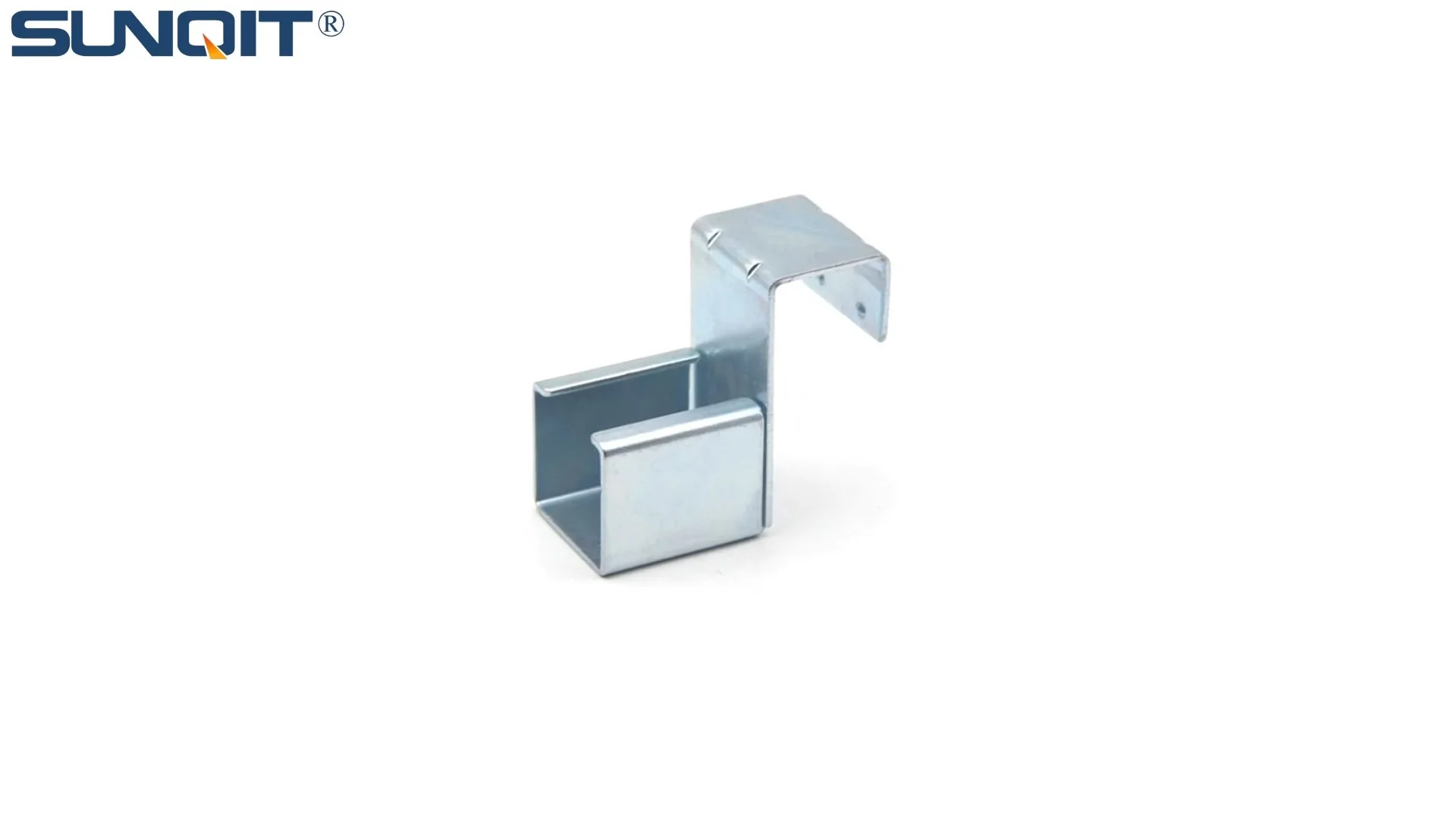
Roller track placon mount work as a connector for roller track and pipe or aluminum profile in rack syetem, it is a necessary parts in rack system which widely used in industrial plant and logistic,warehouse storage.
In the fast-paced world of manufacturing and warehouse logistics, the efficiency of material handling can make or break your daily operations. Every second wasted on clunky, ill-fitting equipment adds up—delaying production lines, tiring out your team, and eating into your bottom line. That's why choosing the right roller track system isn't just about buying a piece of hardware; it's about investing in a smoother workflow, happier employees, and a facility that can adapt as your needs grow. Today, we're diving deep into two popular options: the 40 Roller Track Placon Mount drop High and the 20 Series. By the end, you'll have a clear picture of which one aligns with your facility's unique rhythm, challenges, and goals.
First, Let's Talk About Roller Tracks: The Unsung Heroes of Material Flow
Before we compare these two systems, let's take a moment to appreciate why roller tracks matter. Imagine a typical day on your factory floor: pallets of components need to glide from the warehouse to the assembly line, finished products must move seamlessly to packaging, and work-in-progress bins need to shift between workstations without a hitch. A well-designed roller track system turns these tasks from manual struggles into effortless, gravity-powered motion. It reduces the physical strain on your team, cuts down on wait times, and creates a predictable flow that makes scheduling and quality control easier.
But not all roller tracks are built the same. The 40 Roller Track Placon Mount drop High and 20 Series represent two distinct approaches to solving these challenges—one optimized for robustness and heavy-duty use, the other for flexibility and space efficiency. Let's break them down.
Meet the 40 Roller Track Placon Mount drop High: Built for the Heavy Hitters
If your facility deals with larger, heavier loads on a daily basis, the 40 Roller Track Placon Mount drop High might just be your new best friend. Let's start with what "Placon Mount drop High" actually means. The "Placon Mount" refers to its unique mounting system, which uses specialized brackets (called placon mounts) to attach the track securely to aluminum profiles or workbenches. This design isn't just about stability—it also allows for precise height adjustment, so you can align the track perfectly with your existing conveyor lines or work surfaces. The "drop High" feature? That's the vertical clearance between the track and the mounting surface, giving you extra space underneath for cables, tools, or even additional storage—no more wasted vertical real estate.
Constructed primarily from high-grade aluminum profile, this track is built to withstand the rigors of industrial environments. Aluminum isn't just lightweight; it's resistant to rust and corrosion, making it ideal for facilities that deal with moisture, oils, or cleaning agents. The rollers themselves are often made from hardened steel or durable plastic, designed to glide smoothly even when carrying loads up to 200 kg per meter—enough to handle heavy automotive parts, large appliance components, or stacked storage bins.
What really sets the 40 Series apart, though, is its commitment to lean principles. Lean solution isn't just a buzzword here; it's built into the track's DNA. The modular design means you can easily extend, shorten, or reconfigure the track as your production needs change. Need to add a curve to bypass a new workstation? Swap out a straight section for a curved one. Moving the track to a different area of the facility? The placon mounts detach quickly, and the aluminum components are light enough for two people to relocate without heavy machinery. This adaptability is a game-changer for facilities that prioritize continuous improvement—no more being stuck with a "one-and-done" system that becomes obsolete in a year.
Let's put this into context with a real-world example. A mid-sized automotive parts manufacturer in Guangdong recently upgraded their assembly line with the 40 Roller Track Placon Mount drop High. Previously, their team was manually pushing steel bins of engine parts across a flat surface—a task that took 15 minutes per bin and left workers with sore backs by lunchtime. After installing the 40 Series, those same bins now slide into place in under 2 minutes, and the team reports a 40% reduction in physical complaints. Plus, when they expanded their production line six months later, they were able to reconfigure the existing tracks instead of buying new ones—saving over $10,000 in equipment costs.

Introducing the 20 Series: Smaller Footprint, Big on Flexibility
Now, let's shift gears to the 20 Series. If the 40 Series is the workhorse for heavy loads, the 20 Series is the nimble specialist for tighter spaces and lighter, more frequent material movements. Think of it as the roller track equivalent of a compact car—easy to maneuver, efficient in tight spots, and perfect for facilities where every square inch counts.
The 20 Series gets its name from its narrower width, typically around 20mm, which makes it ideal for smaller bins, totes, or individual components. This slim profile shines in industries like 3C assembly (think smartphones, laptops, and wearables), where parts are small but need to move quickly between workstations. Unlike bulkier systems, the 20 Series can fit into tight gaps between workbenches, under shelving, or even as part of mobile workstations—giving you the freedom to design your layout around your team's workflow, not the other way around.
Don't let its size fool you, though—the 20 Series is no lightweight when it comes to durability. Like its 40 Series cousin, it often uses aluminum profile for the frame, ensuring it holds up to daily use without bending or warping. The rollers are smaller but precision-engineered to handle loads up to 80 kg per meter, which is more than enough for most small to medium-sized components. And because it's lighter, installation is a breeze—your maintenance team can set up a 10-meter track in under an hour with basic tools, minimizing downtime.
One of the 20 Series' biggest strengths is its compatibility with lean pipe systems. If your facility already uses lean pipe workbenches or flow racks, the 20 Series integrates seamlessly, turning your existing setup into a connected material flow network. For example, a medical device manufacturer in Jiangsu recently added 20 Series tracks to their lean pipe workstations. Now, instead of having nurses walk back and forth to fetch tools and supplies, the tracks deliver everything directly to each workstation—cutting down on non-value-added steps and letting the team focus on assembling critical equipment.
Another standout feature? Its cost-effectiveness for low-to-medium volume operations. If you don't need to move heavy loads every minute of the day, the 20 Series gives you reliable performance without the higher price tag of a heavy-duty system. And because it's so easy to reconfigure, you can start small—say, with a single track between two workstations—and expand as your production scales. It's lean solution in action: invest only what you need now, and adapt later without waste.

Head-to-Head: 40 Series vs 20 Series
Now that we've explored each system's strengths, let's put them side by side. The table below breaks down key factors like load capacity, space requirements, and long-term adaptability to help you see which one aligns with your facility's reality.
| Factor | 40 Roller Track Placon Mount drop High | 20 Series |
|---|---|---|
| Load Capacity | Up to 200 kg per meter – ideal for heavy bins, pallets, and large components | Up to 80 kg per meter – perfect for small totes, individual parts, and light assemblies |
| Space Requirements | Wider track (40mm+) and higher clearance – needs more horizontal and vertical space | Narrow profile (20mm) – fits into tight gaps between workstations or under shelves |
| Installation & Reconfiguration | Modular but heavier; requires 2-3 people for setup or moves | Lightweight and tool-friendly; 1-2 people can install or reconfigure in under an hour |
| Best For Industries | Automotive, heavy machinery, appliance manufacturing, large-scale warehousing | 3C assembly, medical devices, electronics, small-parts manufacturing, retail logistics |
| Long-Term Cost | Higher upfront cost, but lower replacement needs for heavy-use scenarios | Lower initial investment, great for facilities with evolving needs or smaller budgets |
| Maintenance Needs | Sturdy design means less frequent maintenance; occasional roller lubrication | Simple to clean and repair; rollers are easy to replace individually if worn |
But numbers only tell part of the story. Let's dig deeper into how these differences play out in real facilities.

Matching the System to Your Facility: Scenarios That Matter
The best roller track system isn't the "best" on paper—it's the one that fits your daily challenges. Let's walk through common facility scenarios to see which system rises to the occasion.
Scenario 1: You Run an Automotive Parts Warehouse
Your days involve moving heavy metal components—engine blocks, transmission parts, brake assemblies—each weighing 50kg or more. Your team needs to shift these from storage racks to pickup points quickly to keep the assembly line fed. Here, the 40 Roller Track Placon Mount drop High is the clear winner. Its 200kg per meter capacity ensures those heavy bins glide smoothly without jamming, and the drop-high design gives you space underneath for forklift tines or additional storage. Plus, its corrosion-resistant aluminum profile stands up to the oils and greases common in automotive environments, so you won't be replacing tracks every year.
Scenario 2: You Manage a 3C Assembly Line for Smartphones
Your workstations are compact, with operators sitting shoulder-to-shoulder, assembling tiny circuit boards and screens. Material bins are small—think 10-15kg max—and need to zip between stations quickly. The 20 Series is your match here. Its narrow profile fits between workbenches, and its lightweight design lets you add curves or short straight sections exactly where needed. Pair it with lean pipe workbenches, and you've got a setup where parts flow to your team, not the other way around—cutting down on wasted steps and keeping production moving at 3C's breakneck pace.
Scenario 3: You Operate a Mixed-Use Facility (Warehouse + Small-Scale Production)
Some days, you're moving full pallets of raw materials; other days, you're shuffling small parts bins to a mini-assembly area. This is where a hybrid approach might work best. Use the 40 Series for the warehouse-to-production bulk transfers, and the 20 Series for the "last mile" delivery to workstations. Since both systems are built on lean principles—modular, reusable, and adaptable—you can connect them with flow racks or conveyor sections, creating a unified material flow system that handles everything from heavy pallets to tiny components.
Scenario 4: You're a Small Manufacturer on a Tight Budget
You need to improve material flow but can't afford a full-scale upgrade. Start small with the 20 Series. Its lower upfront cost lets you test a single track between your two busiest workstations. If it works (and we think it will!), you can expand gradually. Many small facilities report seeing ROI within 3 months, thanks to reduced labor time and fewer production delays. And because it's so easy to reconfigure, you won't feel locked into a setup if your product line changes next year.
Beyond the Track: Thinking About the Big Picture (Lean Solution Matters)
While comparing specs is helpful, remember that the best roller track system is part of a larger lean solution. Both the 40 and 20 Series align with the core idea of "reusable, continuously improvable" systems—but how you integrate them into your facility will determine their long-term value.
For example, if you choose the 40 Series, pair it with adjustable aluminum profile workbenches so you can raise or lower the track as your production line evolves. If you go with the 20 Series, combine it with flow racks to create a "supermarket" of parts that replenish automatically as workstations use them up. The goal isn't just to move materials—it's to create a facility where every tool, track, and workstation works together to eliminate waste, reduce effort, and keep your team focused on what they do best.
Another thing to consider is future growth. A facility that's expanding into new product lines might benefit more from the 40 Series' higher capacity, even if it feels like overkill now. On the flip side, a facility in a rented space with strict layout constraints might prioritize the 20 Series' flexibility, knowing they can take it apart and reassemble it in a new location next year.
Final Thoughts: Your Facility Deserves a System That Grows With You
At the end of the day, choosing between the 40 Roller Track Placon Mount drop High and the 20 Series comes down to understanding your facility's unique rhythm. Ask yourself: What's the heaviest load we move daily? How much space do we have to work with? What's our 3-year plan for growth? And most importantly, how can this system make our team's jobs easier?
If heavy loads, durability, and vertical space optimization are your top priorities, the 40 Series will be your steady, reliable partner. If you need flexibility, space efficiency, and a system that grows with your budget, the 20 Series will adapt right alongside you. And remember—there's no rule that says you have to choose one or the other. Many of the most efficient facilities we've seen use both, creating a material flow ecosystem that handles every challenge thrown its way.
Whichever you choose, you're not just buying a roller track—you're investing in a facility that runs smoother, adapts faster, and supports your team in doing their best work. And in today's competitive manufacturing landscape, that's the kind of investment that pays off every single day.