- Company Articles
- Products and Technology
- Procurement Guidelines
- 40 Steel Roller Track Black ESD Wheel Buying Tips: ESD Sensitivity Considerations

40 Steel Roller Track Black ESD Wheel Buying Tips: ESD Sensitivity Considerations
Related Product
40 Steel Roller Track Black ESD Wheel
The roller track can be installed with multiple accessories to create different slopes and configurations of flow racks.All steel conveyor 40 roller track accessories are engineered to perfectly fit the sliding rail.
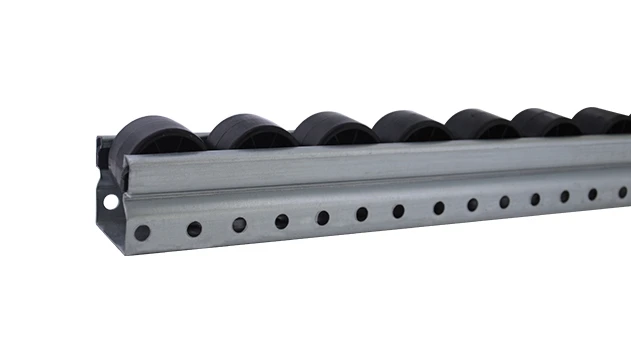
In the fast-paced world of manufacturing, where precision and reliability can make or break production goals, even the smallest components play a huge role. Take the humble roller track wheel, for example. When it comes to handling electrostatic discharge (ESD)-sensitive items—think microchips, circuit boards, or medical sensors—the right wheel isn't just a "nice-to-have." It's a critical line of defense against costly defects, production delays, and damaged reputation. That's where the 40 Steel Roller Track Black ESD Wheel comes into play. But with so many options on the market, how do you choose one that truly protects your products while keeping your lean system running smoothly? Let's dive into the key considerations for buying these essential components, with a sharp focus on ESD sensitivity.
Why ESD Sensitivity Matters More Than You Think
First, let's get clear on what ESD sensitivity really means. Electrostatic discharge happens when two objects with different electrical charges come into contact—think of the tiny spark you get when touching a doorknob after shuffling across carpet. In everyday life, it's harmless. But in a factory setting, that "tiny spark" can carry enough voltage (up to 30,000 volts!) to fry delicate electronic components. For context, some microchips can be damaged by discharges as low as 250 volts—weaker than the static from rubbing a balloon on your hair.
This is why industries like 3C assembly (computers, communication, consumer electronics), medical device manufacturing, and aerospace prioritize ESD protection. A single unprotected roller track wheel could accumulate static as it spins, then discharge onto passing components. The result? Failed quality checks, wasted materials, and frustrated teams scrambling to fix avoidable issues. So when shopping for 40 Steel Roller Track Black ESD Wheels, ESD sensitivity isn't just a bullet point on a spec sheet—it's the core reason these wheels exist.
Key Features to Prioritize for ESD Protection
Not all ESD wheels are created equal. To ensure your roller tracks truly safeguard sensitive products, keep an eye out for these non-negotiable features:
1. Surface Resistance: The Gold Standard (10⁶–10⁹ Ohms)
The most critical spec for any ESD wheel is its surface resistance. This measures how well the wheel conducts static electricity away from components. Look for wheels rated between 10⁶ to 10⁹ ohms —this "sweet spot" ensures static dissipates slowly and safely, rather than building up or discharging too quickly (which can still damage components). Avoid wheels with resistance below 10⁶ ohms (they might conduct too much, risking electrical interference) or above 10⁹ ohms (static could linger and discharge unexpectedly).
Pro Tip: Ask suppliers for a certification report or test data confirming surface resistance. Reputable manufacturers will happily provide this—if a supplier hesitates, that's a red flag.
2. Durable ESD Coating That Won't Wear Off
Most 40 Steel Roller Track Wheels use a specialized coating to achieve ESD properties. But here's the catch: if that coating chips, scratches, or wears thin after months of use, the wheel loses its ESD protection. Opt for wheels with urethane or rubber ESD coatings bonded to the steel core—these materials stand up to heavy loads, frequent cleaning, and the friction of daily operation. Avoid "painted-on" coatings, which tend to peel off quickly, turning your "ESD wheel" into a regular, static-prone wheel.
3. Load Capacity: Match It to Your Workflow
ESD protection doesn't mean sacrificing strength. 40 Steel Roller Track Wheels are designed for industrial use, so check the load capacity (usually listed in kg per wheel). If your line moves heavy PCBs or assembled devices, a wheel rated for 50kg might buckle under the strain, leading to uneven rolling and increased static buildup. For example, in automotive electronics assembly, where components like navigation systems are bulkier, aim for wheels rated 80kg+. In lighter 3C applications (e.g., smartphone parts), 30–50kg might suffice—but always err on the side of higher capacity to avoid premature wear.
4. Smooth Rolling: Minimize Friction, Maximize Safety
You might not think "smoothness" relates to ESD sensitivity, but it does. A wheel that jolts or sticks as it rolls creates friction, which generates more static electricity. Look for wheels with precision ball bearings —they reduce friction, keep components gliding evenly, and lower the risk of static buildup. Bonus: Smooth-rolling wheels also reduce noise in the factory, making for a more pleasant work environment (your team will thank you!).

Compatibility with Your Lean System: It's All About Integration
Your 40 Steel Roller Track Black ESD Wheels won't work in isolation—they're part of a larger lean system, whether that's a flow rack, conveyor, or ESD workstation. For true efficiency, the wheels need to integrate seamlessly with your existing setup. Here's what to consider:
Fits Standard Lean Pipe and Profile Systems
Most manufacturers design roller tracks to work with standard aluminum lean pipes (like 28mm or 40mm diameters) and aluminum extrusion profiles. If your facility uses a lean pipe workbench or flow rack built with t-slot aluminum profiles, ensure the wheel's mounting hardware matches these specs. Mismatched parts lead to wobbly tracks, uneven rolling, and (you guessed it) more static. A good supplier will list compatible pipe sizes and profile types (e.g., 4040, 3030 aluminum profiles) upfront—no guesswork needed.
Modular Design for Flexibility
Lean manufacturing thrives on adaptability—lines change, workflows evolve, and your equipment should keep up. Look for 40 Steel Roller Track Wheels that work with modular components, like adjustable brackets or quick-connect joints. This way, if you need to reconfigure a conveyor or add a new section to your flow rack, you won't have to replace all your wheels. It's not just about saving money; it's about keeping your lean system "lean" by avoiding unnecessary waste.
| Component | Why Compatibility Matters | Example |
|---|---|---|
| Lean Pipe Workbench | Wheels must align with bench height and track spacing | A 40mm track wheel on a 28mm pipe bench will cause misalignment |
| Flow Rack | Angle of incline affects wheel load distribution | Stiffer wheels work better for steeper flow rack angles |
| Conveyor System | Motor speed and wheel diameter impact rolling resistance | Oversized wheels on a slow conveyor waste energy |

Industry-Specific Needs: One Size Doesn't Fit All
ESD sensitivity varies by industry, and your wheels should reflect that. Let's break down what matters most in key sectors:
3C Assembly: Tiny Components, Big Risks
In 3C manufacturing (think smartphones, laptops, or smartwatches), components like microchips and LCD screens are ultra-sensitive to ESD. Here, wheel precision is as important as ESD protection. Look for wheels with tight tolerances (minimal wobble) to keep small parts centered on the track. Also, opt for non-marking coatings—scratching a screen or circuit board is just as bad as frying it with static.
Medical Devices: Cleanliness + ESD
Medical device production adds another layer: strict cleanliness standards. Wheels used in cleanrooms or for surgical instrument assembly must resist dust, chemicals, and frequent sanitization. Choose ESD wheels with smooth, non-porous coatings that won't trap bacteria or degrade when wiped down with disinfectants. Bonus points if they're certified for ISO 14644-1 (cleanroom standards)—it shows the supplier understands your industry's unique demands.
Automotive and Heavy Manufacturing: Durability First
While automotive parts are less ESD-sensitive than microchips, they're often heavier. For these applications, prioritize load capacity (100kg+ per wheel) and shock resistance. Steel cores with thick ESD rubber coatings stand up to the weight of engine components or metal brackets, while still dissipating static from any electronic parts (like sensors) passing through the line.
Beyond the Wheel: Maintenance and Longevity
Even the best ESD wheels lose effectiveness over time—if you neglect them. To keep your wheels protecting components long-term, follow these maintenance habits:
- Clean regularly, but gently: Use a soft, lint-free cloth and mild detergent (avoid harsh chemicals that strip ESD coatings). Dirt and debris build up on wheels, reducing their ability to conduct static.
- Test surface resistance quarterly: A simple handheld resistance meter can check if wheels are still within the 10⁶–10⁹ ohm range. If readings drop below or rise above this range, it's time to replace them.
- Inspect for wear: Check for cracks in the coating, flat spots on the wheel, or loose bearings. These are signs the wheel is no longer rolling smoothly or protecting against ESD.
Think of it like changing the oil in a car—regular upkeep prevents bigger problems down the line. A little time spent maintaining wheels saves hours of troubleshooting later.
Choosing a Supplier: It's About Partnership, Not Just Parts
Finally, the supplier you choose matters almost as much as the wheels themselves. Here's what to look for beyond the product:
Industry Expertise
A supplier who specializes in lean systems and ESD solutions will understand your unique needs. They'll ask questions like, "What's the most sensitive component you're moving?" or "Do you need wheels for cleanroom use?" instead of just pushing a generic product. Look for suppliers with case studies or testimonials in your industry—3C, medical, automotive—this shows they've walked in your shoes.
Customization Options
Sometimes, off-the-shelf wheels don't cut it. Maybe you need a specific wheel diameter for a tight space, or a custom coating for extra chemical resistance. A good supplier offers customization without inflating lead times or prices. After all, lean solutions thrive on tailored approaches, not one-size-fits-all answers.
Reliable Support
What happens if a batch of wheels arrives with inconsistent resistance readings? Or if you need help troubleshooting a compatibility issue with your flow rack? Choose a supplier with responsive customer support—preferably with local reps or quick email/phone turnaround. You don't want to be stuck with a pallet of useless wheels and no one to help fix the problem.
Final Thoughts: Protect What Matters Most
At the end of the day, buying 40 Steel Roller Track Black ESD Wheels is about more than checking boxes. It's about protecting the products your team works hard to build, the customers counting on your quality, and the lean system that keeps your operation efficient. By prioritizing ESD sensitivity—through the right resistance, durable coatings, compatibility, and supplier partnership—you're not just buying wheels. You're investing in peace of mind, fewer headaches, and a production line that runs as smoothly as those well-chosen wheels.
So the next time you're comparing options, remember: the best wheel isn't the cheapest or the flashiest. It's the one that keeps static at bay, integrates with your lean system, and stands up to the demands of your industry. Your sensitive components (and your team) will thank you.