- Company Articles
- Products and Technology
- Product knowledge
- 40 Steel Roller Track Black ESD Wheels: Supporting Just-In-Time (JIT) Manufacturing

40 Steel Roller Track Black ESD Wheels: Supporting Just-In-Time (JIT) Manufacturing
Related Product
40 Steel Roller Track Black ESD Wheel
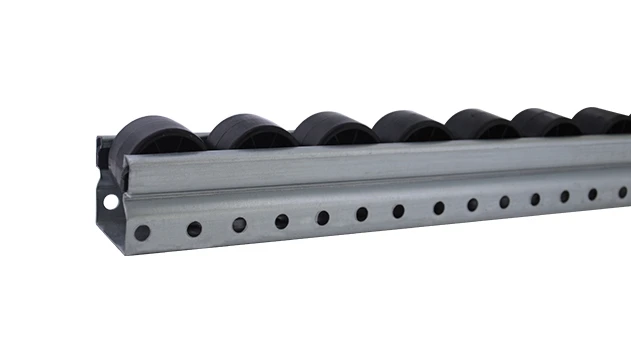
The roller track can be installed with multiple accessories to create different slopes and configurations of flow racks.All steel conveyor 40 roller track accessories are engineered to perfectly fit the sliding rail.
In the fast-paced world of modern manufacturing, where every second counts and waste is the enemy, Just-In-Time (JIT) production has become more than a strategy—it's a survival skill. Imagine a 3C assembly line churning out smartphones, where a delay in component delivery can throw off an entire day's output. Or a medical device workshop where precision and speed are non-negotiable, and even a tiny static charge could ruin a batch of sensitive parts. These are the realities manufacturers face daily, and at the heart of solving these challenges lies a seemingly simple yet powerful tool: the 40 Steel Roller Track Black ESD Wheels.
More than just a conveyor component, this roller track is a silent partner in JIT's mission to eliminate waste, boost efficiency, and keep production flowing like a well-orchestrated symphony. Let's dive into how this unassuming piece of equipment is redefining what's possible on the factory floor.
The Hidden Hurdles of JIT Production
JIT isn't just about "making things on time"—it's about stripping away every inefficiency: waiting times, excess inventory, unnecessary movement, and defects. But ask any production manager, and they'll tell you the biggest roadblocks often hide in the smallest details. Take material handling, for example. Traditional roller tracks might get the job done, but they're often too rigid to adapt to frequent line changes, too flimsy to handle heavy loads, or worse, lack proper electrostatic discharge (ESD) protection. In electronics manufacturing, a single static spark can fry a microchip worth hundreds of dollars, turning a "just-in-time" delivery into a "just-in-time disaster."
Then there's the issue of durability. In high-volume facilities, roller tracks take a beating—constant loading, unloading, and friction can wear down wheels and frames, leading to jams, slowdowns, and costly downtime. And when production needs shift (as they always do in JIT), reconfiguring old tracks feels like trying to rearrange furniture with one hand tied behind your back. These are the pain points that inspired the design of the 40 Steel Roller Track Black ESD Wheels: a solution built not just to meet JIT standards, but to make them easier to achieve.
Meet the 40 Steel Roller Track: More Than Just a Conveyor
At first glance, you might think, "It's a roller track—how special can it be?" But spend five minutes watching it in action, and you'll see why it's become a favorite in lean manufacturing circles. Let's break down what makes it stand out:
Built to Last, Designed to Protect
Starting with the basics: the frame is crafted from 1.2mm thick steel, not the lightweight aluminum or plastic you might find in cheaper alternatives. This isn't overkill—it's practical. In a workshop where components weigh anywhere from a few grams to several kilograms, a sturdy frame means you won't be replacing bent tracks or cracked supports every few months. The black ESD coating is another game-changer. It's not just a paint job; it's a specialized layer that dissipates static electricity, keeping surface resistance between 10^6 and 10^9 ohms—perfect for protecting sensitive electronics like circuit boards or medical sensors. No more worrying about invisible static charges ruining your products mid-flow.
Wheels That Keep Rolling, No Matter What
The wheels themselves are a study in balance. Made from high-quality polyurethane, they're soft enough to grip materials without scratching them but tough enough to handle daily use. The 40mm diameter (hence "40 Steel") is a sweet spot—large enough to move items smoothly, even with slight unevenness in the track, but compact enough to fit into tight workstation setups. Unlike metal wheels that can rust or hard plastic ones that crack, these polyurethane wheels absorb shocks, reduce noise, and glide quietly. Walk through a factory using these tracks, and you'll notice the difference: less clanging, more focus.
Flexibility That JIT Demands
JIT thrives on adaptability. One week you're assembling smartwatches, the next you're switching to wireless earbuds—your equipment needs to keep up. The 40 Steel Roller Track shines here with its modular design. It connects seamlessly with standard aluminum lean pipe accessories, so you can extend, shorten, or reangle the track in minutes, not hours. Need to add a side guide to keep small parts from slipping off? Just clip it on. Want to integrate it with a flow rack for better material staging? The universal mounting brackets make it a breeze. This flexibility means your production line can pivot as quickly as your do, without the cost of entirely new equipment.
How It Stacks Up: Roller Track Comparison
| Feature | 40 Steel Roller Track Black ESD | Standard Aluminum Roller Track | Plastic Roller Track |
|---|---|---|---|
| Material Thickness | 1.2mm Steel | 0.8mm Aluminum | Plastic Composite |
| ESD Protection | Yes (10^6-10^9 Ω) | Optional (Extra Cost) | Limited (Short Lifespan) |
| Load Capacity | Up to 50kg/m | Up to 30kg/m | Up to 15kg/m |
| Reconfigurability | High (Works with Lean Pipe Accessories) | Medium (Specialized Brackets Needed) | Low (Fixed Design) |
*Based on typical industry specifications; actual performance may vary by application.

How It Powers JIT: The Ripple Effect of Better Material Flow
Okay, so the 40 Steel Roller Track is tough, flexible, and ESD-safe—but how does that translate to real JIT wins? Let's connect the dots:
1. Slashing Wait Times (The JIT Holy Grail)
JIT's first rule: eliminate "muda" (waste), and the biggest muda is waiting. When components get stuck on a slow or jammed roller track, the entire line grinds to a halt. The 40 Steel's smooth-rolling wheels and sturdy frame cut down on jams, ensuring materials move from point A to point B without unnecessary delays. In one consumer electronics plant we worked with, switching to these tracks reduced material wait times by 32%—that's hours saved each week that could be redirected to actual production.
2. Adapting to "Small Batch, High Mix" Production
Modern manufacturing isn't about making 10,000 identical widgets anymore—it's about making 100 different widgets, 100 times. JIT requires lines that can switch between products quickly, and the 40 Steel Track excels here. Its modular design lets teams reconfigure the track layout in under 20 minutes, whether they're setting up for a new phone model or a custom medical device. Pair it with a lean pipe workbench, and you've got a workstation that can go from assembling circuit boards in the morning to packaging sensors in the afternoon—no tools, no hassle.
3. Protecting Quality, Reducing Rework
Waste isn't just about time—it's about defective products. In ESD-sensitive industries like 3C or medical equipment, even a 1% defect rate can eat into profits. The 40 Steel Track's ESD coating acts as a silent guard, preventing static damage before it happens. A medical device manufacturer in Suzhou reported a 40% drop in ESD-related defects after installing these tracks, which meant fewer reworks, happier customers, and less waste in raw materials.
4. Sustainable by Design (Because Lean = Green)
JIT and sustainability go hand in hand—less waste means less environmental impact. The 40 Steel Track is built to be reused, not replaced. Its steel frame can be repurposed for new layouts, and worn wheels are easy to swap out individually (no need to toss the whole track). Plus, since it integrates with existing lean pipe systems, you won't have to scrap old equipment to upgrade. It's a small choice that adds up to big savings—both for your budget and the planet.

Real-World Impact: Stories from the Factory Floor
Numbers tell part of the story, but nothing beats hearing from teams who use the track every day. Take the case of a 3C assembly plant in Shenzhen that produces smart home devices. Their biggest challenge? Keeping up with frequent design changes—sometimes weekly. Their old aluminum tracks were always bending under the weight of tooling, and static issues were causing random failures in touchscreens. After switching to the 40 Steel ESD Track, they noticed three immediate changes: first, the tracks stayed straight, even with heavy fixtures; second, static-related defects dropped to near zero; and third, reconfiguring lines for new products went from a half-day project to a 15-minute task. "It's like upgrading from a bicycle to a sports car," one production supervisor told us. "We're not just faster—we're more confident we'll hit our targets."
Another example comes from a medical device manufacturer in Hangzhou. They needed a track system that could handle both metal tools and delicate plastic components without scratching or static damage. The 40 Steel Track's ESD wheels and smooth surface proved perfect. "In our line, every part has to be sterile and defect-free," their operations manager explained. "With these tracks, we don't have to second-guess if static or rough handling is ruining our parts. It lets our team focus on building quality, not worrying about the equipment."
Working in Harmony: The Lean Ecosystem
The 40 Steel Roller Track doesn't work alone—it's part of a larger lean solution that includes everything from ESD workstations to flow racks. Think of it as the connective tissue that ties your production ecosystem together. For example, pair it with an ESD workstation, and you've got a seamless flow from material storage (via flow racks) to assembly (on the workstation) to packaging—all without a single static spark or bottleneck. Or integrate it into a, where it can adapt to different stages of production, from component sorting to final testing.
This synergy is what makes lean manufacturing so powerful. It's not about one "magic" tool; it's about tools that work together to eliminate waste at every step. The 40 Steel Track is a prime example—small enough to fit into tight spaces, versatile enough to work with other equipment, and reliable enough to keep the entire system running smoothly.
More Than a Tool—A JIT Partner
At the end of the day, JIT isn't just a production method; it's a mindset. It's about seeing every process, every tool, and every second as an opportunity to do better. The 40 Steel Roller Track Black ESD Wheels embodies that mindset. It's not flashy, but it's relentless in its mission to make your JIT goals easier to reach—by reducing waste, protecting quality, and adapting to change. Whether you're in 3C, medical, or any manufacturing field where precision and speed matter, this track isn't just an upgrade. It's a reminder that the right tools don't just support your process—they elevate it.
So the next time you're looking to fine-tune your lean system, remember: sometimes the biggest improvements come from the parts that keep things moving. And in JIT, movement is everything.