- Company Articles
- Products and Technology
- Product knowledge
- 40 Steel Roller Track Black ESD Wheels vs. Nylon Wheels: Static Control Comparison

40 Steel Roller Track Black ESD Wheels vs. Nylon Wheels: Static Control Comparison
Related Product
40 Steel Roller Track Black ESD Wheel
The roller track can be installed with multiple accessories to create different slopes and configurations of flow racks.All steel conveyor 40 roller track accessories are engineered to perfectly fit the sliding rail.
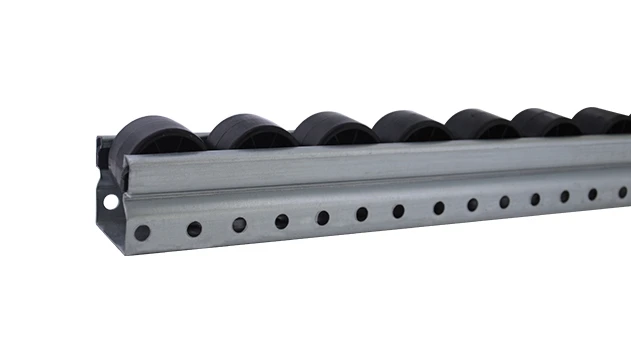
In the fast-paced world of manufacturing, where precision and efficiency are the backbone of success, even the smallest components can make a huge difference. When it comes to material handling systems—whether it's a flow rack in a warehouse or a conveyor on an assembly line—the type of wheels used in roller tracks plays a critical role in both productivity and product safety. Today, we're diving deep into two popular options: 40 Steel Roller Track Black ESD Wheels and Nylon Wheels. While both are designed to keep materials moving smoothly, their approach to static control, durability, and adaptability sets them worlds apart. Let's explore what makes each unique, and how to choose the right one for your lean system .
Understanding the Stakes: Why Static Control Matters in Manufacturing
Before we compare the wheels themselves, let's take a step back and understand why static control is non-negotiable in modern production environments. Static electricity might seem like a minor annoyance—think of the small shock you get when touching a doorknob—but in manufacturing, it's a silent threat. Sensitive electronic components, like those used in 3C (3C assembly) or medical devices, can be permanently damaged by even a tiny electrostatic discharge (ESD). Worse, static charges attract dust and debris, compromising product quality and creating safety hazards for workers.
Did you know? According to industry reports, ESD-related damages cost the electronics manufacturing sector billions of dollars annually. A single static discharge as low as 250 volts can ruin a microchip, while humans typically only feel discharges above 3,000 volts. That means your products could be getting damaged without you even noticing—until the defects show up in testing or, worse, in the hands of customers.
This is where ESD-compliant components, like the 40 Steel Roller Track Black ESD Wheels, come into play. They're not just "wheels"—they're part of a protective barrier that keeps your products safe, your lines running, and your reputation intact. Nylon wheels, on the other hand, are valued for their affordability and versatility, but how do they stack up when static is a concern?
Meet the Contenders: What Are 40 Steel ESD Wheels and Nylon Wheels?
40 Steel Roller Track Black ESD Wheels: Built for Static-Sensitive Environments
The 40 Steel Roller Track Black ESD Wheels are engineered with one primary goal: to dissipate static electricity before it can harm products or disrupt operations. Made from high-grade steel with a specialized black ESD coating, these wheels are designed to maintain a surface resistance between 10^6 and 10^9 ohms—a range specified by international ESD standards (like ANSI/ESD S20.20) for safe static dissipation. This coating acts like a conductor, channeling any built-up static charge away from the wheel and into the ground, rather than letting it accumulate and discharge onto sensitive components.
But they're not just about static control. The steel core gives these wheels exceptional strength, allowing them to handle heavy loads—often up to 50kg per wheel—without warping or wearing down. This makes them ideal for high-traffic areas, like conveyor systems in automotive or appliance manufacturing, where durability is as important as static protection.
Nylon Wheels: The Workhorse of General-Purpose Material Handling
Nylon wheels, by contrast, are a staple in many manufacturing and warehousing settings. Made from polyamide (nylon), they're lightweight, cost-effective, and known for their smooth, quiet operation. Nylon's natural resistance to abrasion and chemicals makes it a popular choice for general-purpose applications, like moving boxes on a flow rack or transporting non-sensitive parts across a factory floor.
However, standard nylon is an insulator, meaning it doesn't conduct electricity. While some nylon wheels are treated with antistatic additives to reduce static buildup, they rarely meet the strict ESD standards required for sensitive electronics. Their surface resistance typically falls above 10^11 ohms, which is too high to effectively dissipate static charges. For environments where static isn't a critical concern, though, nylon wheels shine with their low maintenance and budget-friendly price tag.

Head-to-Head: Key Differences Between 40 Steel ESD Wheels and Nylon Wheels
To help you visualize the differences, let's break down the most important factors side by side:
| Feature | 40 Steel Roller Track Black ESD Wheels | Nylon Wheels |
|---|---|---|
| Static Control Performance | ESD-compliant (10^6–10^9 ohms); actively dissipates static charges to ground. | Standard nylon: Insulative (≥10^11 ohms). Antistatic versions: Reduced static buildup but not ESD-certified. |
| Material & Durability | Steel core with ESD coating; highly resistant to impact, wear, and heavy loads (up to 50kg/wheel). | Nylon polymer; lightweight and abrasion-resistant but prone to cracking under extreme weight or temperature fluctuations. |
| Operating Environment | Thrives in harsh conditions: high humidity, temperature extremes, and areas with oils/chemicals. | Best in moderate environments; may degrade in high heat (>80°C) or exposure to strong chemicals. |
| Noise Level | Slightly louder due to steel construction; often paired with rubberized coatings to reduce noise. | Quieter operation; nylon's natural flexibility absorbs vibrations, making it ideal for noise-sensitive areas. |
| Cost | Higher upfront cost due to steel and ESD coating materials. | Lower initial investment; budget-friendly for general-purpose use. |
| Maintenance Needs | Low maintenance; occasional cleaning to remove debris from the ESD coating. | Minimal upkeep but may require replacement sooner in high-traffic areas. |

Static Control Showdown: How They Perform in Real-World Scenarios
Numbers and specs tell part of the story, but let's look at how these wheels perform when the pressure is on. Let's imagine two scenarios common in manufacturing:
Scenario 1: 3C Assembly Line with Sensitive Electronics
A manufacturer produces smartphones and tablets, where even a tiny static discharge could fry a circuit board. Their assembly line uses a conveyor system with roller tracks to move partially assembled devices between workstations. Here's how each wheel type would fare:
- 40 Steel ESD Wheels: As devices move along the conveyor, the ESD coating ensures any static charge generated by friction is dissipated immediately. Workers can focus on precision tasks without worrying about accidental damage. The steel core handles the weight of devices (often 2–5kg each) with ease, even during peak production hours.
- Nylon Wheels: Without ESD protection, static charges build up on the wheel surface. When a device passes over, that charge could discharge onto the circuit board, leading to "latent defects"—damage that isn't detected until the product is tested, causing costly rework or returns. Even antistatic nylon wheels might not prevent this, as their dissipation rate is too slow for high-speed lines.
Scenario 2: Warehouse Flow Rack for Non-Sensitive Parts
A logistics company uses flow rack systems to store and distribute plastic components for (home appliances). These parts are durable and not affected by static. Here's the breakdown:
- 40 Steel ESD Wheels: They'd work, but they'd be overkill. The ESD coating isn't needed, and the higher cost wouldn't provide any added value. The steel wheels might also be louder, which could be a nuisance in a busy warehouse.
- Nylon Wheels: Perfect fit. Their lightweight design makes the flow rack easy to load and unload, and their quiet operation keeps the warehouse environment pleasant. The lower cost allows the company to outfit more racks without breaking the budget.
Beyond Static: How Wheel Choice Impacts Your Lean System
In a lean system , every decision is guided by two principles: eliminating waste and maximizing value. When choosing between steel ESD wheels and nylon wheels, it's not just about static control—it's about aligning with your lean goals.
40 Steel ESD Wheels: Investing in Long-Term Sustainability
Lean manufacturing emphasizes "sustainable improvement," and steel ESD wheels embody this (philosophy). While their upfront cost is higher, their durability means they need replacement far less often than nylon wheels. In high-traffic areas, this translates to less downtime for maintenance, fewer replacement parts, and lower long-term costs. For example, a automotive plant using steel ESD wheels on their conveyors might replace wheels once every 5 years, compared to every 2 years with nylon—saving time and money in the long run.
Additionally, the ESD protection they provide reduces waste from damaged products, which is a key lean objective. In 3C or medical device manufacturing, where a single defective component can cost hundreds of dollars, the investment in steel ESD wheels quickly pays for itself in reduced scrap rates.
Nylon Wheels: Flexibility for Low-Volume or Changing Needs
Nylon wheels, on the other hand, offer flexibility—another cornerstone of lean thinking. If your production needs change frequently (e.g., switching between product lines with different weight requirements), nylon's lightweight design makes it easy to reconfigure flow rack or conveyor systems. Their lower cost also makes them ideal for temporary setups or low-volume operations where heavy-duty performance isn't necessary.
However, it's important to weigh this flexibility against the risk of waste. If you're using nylon wheels in a static-sensitive area "just to save money," you might end up paying more in the long run due to damaged products or frequent replacements.
Making the Right Choice: A Decision Framework
Still unsure which wheel is right for your operation? Here's a simple framework to guide your decision:
Choose 40 Steel Roller Track Black ESD Wheels if:
You handle sensitive electronics, medical devices, or explosive materials (static-sensitive products).
Your system carries heavy loads (>30kg per wheel) or operates in harsh environments (high heat, chemicals, humidity).
You prioritize long-term durability and low maintenance over upfront cost.
Compliance with ESD standards (ANSI/ESD S20.20, IEC 61340) is required for your industry.
Choose Nylon Wheels if:
You're moving non-sensitive, durable products (e.g., plastic parts, boxes, or metal components).
Your system operates in a moderate environment with stable temperatures and no exposure to harsh chemicals.
Noise reduction or lightweight reconfiguration is a top priority.
You're working with a tight budget and can accept more frequent replacements.
Real-World Results: A 3C Manufacturer's Success Story
To put this into perspective, let's look at a case study from a leading 3C assembly plant in China. The plant was struggling with high defect rates in their smartphone production line—up to 5% of finished devices were failing final tests due to invisible static damage. Their existing nylon wheels on the conveyor system were the culprit: static charges were building up as devices moved between stations, zapping sensitive microchips.
After consulting with a lean system expert, they switched to 40 Steel Roller Track Black ESD Wheels on their main assembly conveyor. Within three months, defect rates dropped to 0.5%—a 90% improvement. The upfront cost of the steel wheels was offset by savings from reduced rework and fewer wasted components. Today, the plant has expanded the use of ESD wheels to all their sensitive component lines, calling it "one of the best lean investments we've ever made."
Final Thoughts: It's About Balance
At the end of the day, there's no "one-size-fits-all" answer when it comes to roller track wheels. 40 Steel Roller Track Black ESD Wheels are the clear choice for static-sensitive, heavy-duty applications, while Nylon Wheels excel in general-purpose, cost-conscious scenarios. The key is to assess your unique needs—consider your products, environment, budget, and long-term goals—and choose the option that aligns with your vision for a efficient, waste-free lean system .
Remember, in manufacturing, success lies in the details. Whether it's a flow rack in your warehouse or a conveyor on your assembly line, the right wheels can keep your operations moving forward—safely, efficiently, and profitably.