- Company Articles
- Products and Technology
- Product knowledge
- 40 Steel Roller Track Black Wheels: Critical for Lean Material Flow in Manufacturing

40 Steel Roller Track Black Wheels: Critical for Lean Material Flow in Manufacturing
Related Product
40 Steel Roller Track Black Wheel
The roller track can be installed with multiple accessories to create different slopes and configurations of flow racks.All steel conveyor 40 roller track accessories are engineered to perfectly fit the sliding rail.
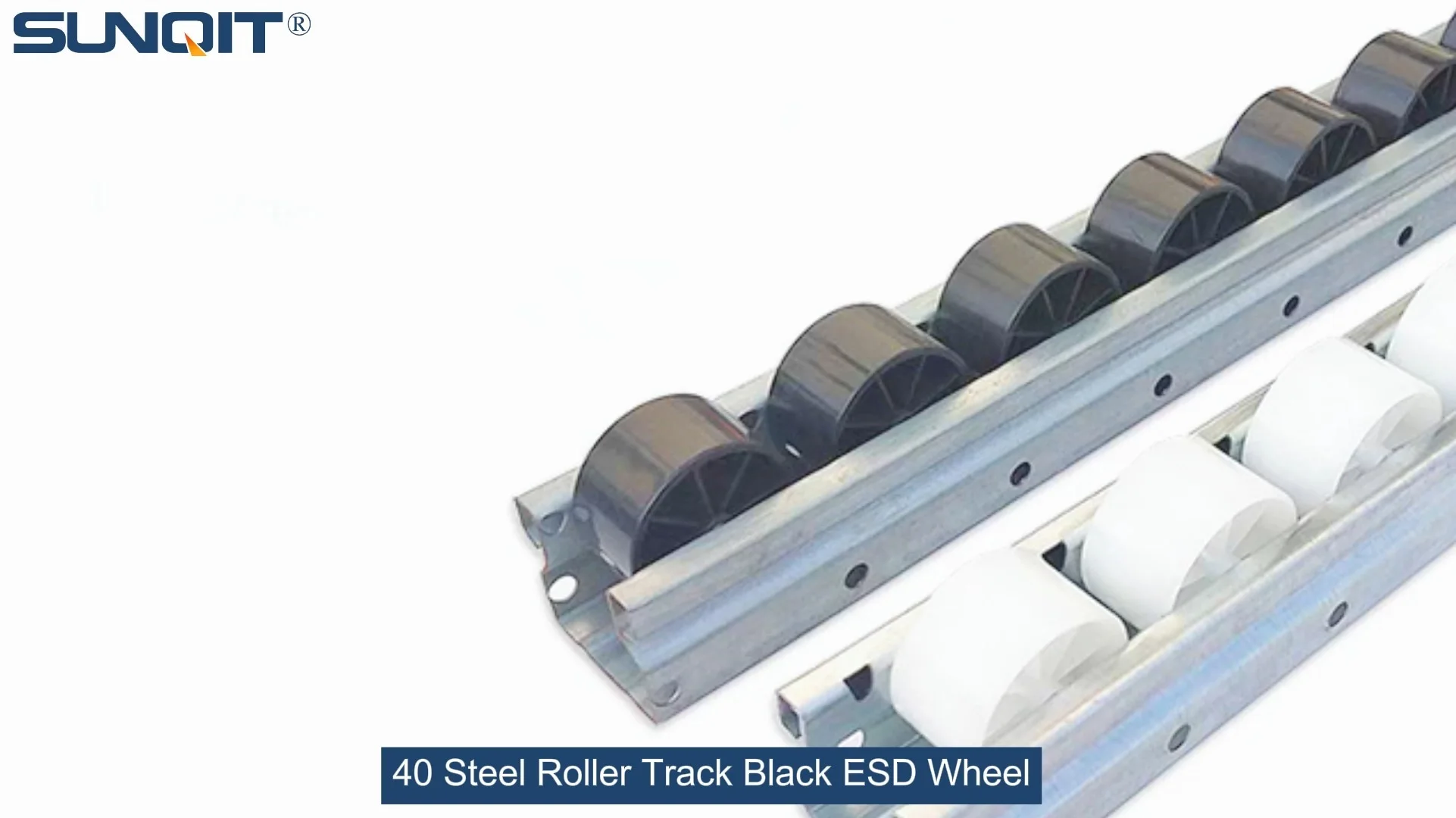
Walk into any modern manufacturing facility, and you'll quickly notice what separates the efficient operations from the struggling ones: the flow of materials. It's the silent heartbeat of production—when parts glide smoothly from storage to assembly lines, when workers don't waste time hunting for tools, and when bottlenecks dissolve before they even form. This isn't magic; it's the result of intentional, lean design. And at the center of that design, often unassuming but utterly critical, is equipment like the 40 Steel Roller Track with Black Wheels . In this article, we'll dive into why this component has become a cornerstone for lean material flow, how it integrates with systems like lean pipe workbenches and flow racks , and why manufacturers across industries are making it a key part of their lean solutions .
Why Material Flow Matters More Than You Think
Let's start with the basics: in manufacturing, time is money, but so is effort. A single kink in your material flow—say, a worker having to walk 20 feet to grab a component, or a cart getting stuck on a rough surface—can ripple into delayed production, increased labor costs, and even quality issues. Lean manufacturing, at its core, is about eliminating these wastes, and material flow is ground zero for that mission.
Think about a typical production assemble line. Parts need to move from inventory to the workbench, then from one station to the next, and finally to packaging. If each of these steps requires manual lifting, pushing, or adjusting, your team's energy is diverted from what they do best: building quality products. This is where roller tracks shine. They turn static storage into dynamic material delivery systems, letting gravity (or minimal force) do the heavy lifting.
But not all roller tracks are created equal. The 40 Steel Roller Track with Black Wheels stands out for a reason—and it starts with its design.
Design Features That Make 40 Steel Roller Track Black Wheels a Game-Changer
When engineers set out to create a roller track for industrial use, they're balancing three key needs: durability, flexibility, and efficiency. The 40 Steel Roller Track with Black Wheels nails all three, thanks to thoughtful design choices:
1. Steel Construction: Built to Last in Tough Environments
Manufacturing floors are unforgiving. Heavy loads, constant use, exposure to oils, coolants, and even occasional impacts—your equipment needs to take a beating and keep going. That's why the track itself is made of high-grade steel. Unlike plastic or aluminum alternatives (which have their uses), steel offers superior load capacity (often up to 500 lbs per linear foot, depending on configuration) and resistance to bending or warping over time. This means you can trust it with everything from small electronic components to heavier automotive parts without worrying about breakdowns.
2. Black Wheels: More Than Just a Color Choice
You might wonder, "Why black wheels?" It's not just aesthetics (though they do look sharp in industrial settings). The black wheels are typically made from a durable thermoplastic or rubber compound that offers two key benefits: grip and noise reduction . Unlike metal wheels, which can slip on smooth surfaces or create a racket when rolling, these black wheels maintain steady contact with materials (preventing jams) and keep operations quieter—a small detail that adds up to a more pleasant, less stressful work environment.
Plus, black hides scuffs and wear better than lighter colors, keeping your facility looking professional even after years of use. In high-visibility areas like customer tours or quality control zones, that's a nice bonus.
3. Modular Design: Fits Seamlessly Into Your Existing Setup
One of the biggest pain points in manufacturing upgrades is compatibility. You don't want to replace your entire system just to add a new component. The 40 Steel Roller Track with Black Wheels solves this with a modular design that plays well with existing lean pipe structures, flow racks , and workbenches. Whether you're building a new material handling system from scratch or retrofitting an old one, you can cut the track to length, attach it to standard aluminum profiles or steel frames, and connect it to other components like conveyor belts with minimal hassle. This flexibility makes it a favorite for facilities that need to adapt quickly to changing production needs.
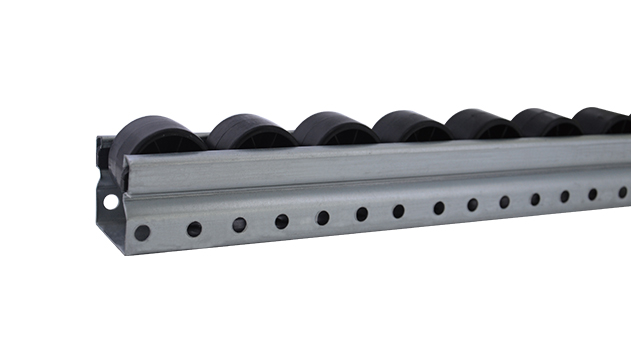
How It Integrates with Your Lean Ecosystem
A roller track on its own is useful, but its true power comes from how it connects with other lean tools. Let's break down the key partnerships:
1. With Flow Racks: Turning Storage into "Just-In-Time" Delivery
Flow racks (or gravity racks) are the workhorses of inventory management, designed to keep materials organized and accessible. Pair a 40 Steel Roller Track with Black Wheels with a flow rack, and you've got a system where the oldest inventory automatically moves to the front (FIFO—First In, First Out), reducing waste from expired or obsolete parts. In a 3C assembly plant, for example, this means smartphone components are always ready at the pick face, so workers don't have to dig through bins. The black wheels ensure small, delicate parts glide smoothly without getting stuck, while the steel track handles the weight of stacked bins.
2. With Lean Pipe Workbenches: Creating Ergonomic Workstations
Your assembly line's efficiency hinges on how well your workstations are designed. A lean pipe workbench is already a staple for its adjustability and modularity, but add a 40 Steel Roller Track to the mix, and you transform it into a dynamic workspace. Imagine a worker assembling circuit boards: instead of reaching across the bench for tools or parts, the roller track delivers components right to their fingertips. The track can be mounted under the bench, above it, or alongside, creating a seamless flow from storage to assembly. This not only speeds up production but also reduces strain on workers' shoulders and backs—boosting morale and cutting down on injuries.
3. With Conveyors: Bridging the Gaps in Material Flow
For longer distances or automated systems, roller tracks often team up with conveyors. The 40 Steel Roller Track can act as a "last mile" delivery system, connecting a main conveyor line to individual workstations. For example, in an automotive parts plant, a conveyor might bring a batch of brake components to a zone, and then the roller track distributes them to each assembly station. The black wheels' quiet operation ensures the workspace stays calm, even with constant material movement, while the steel track's durability handles the daily wear of repeated loading and unloading.
| Lean Tool | How 40 Steel Roller Track Enhances It | Key Benefit |
|---|---|---|
| Flow Racks | Enables FIFO inventory management with smooth material glide | Reduces waste from expired parts; speeds up picking |
| Lean Pipe Workbenches | Delivers components directly to the workstation | Improves ergonomics; cuts down on reach time |
| Conveyors | Connects main lines to individual stations (last-mile delivery) | Creates a continuous, automated material flow |
| Turnover Trolleys | Allows easy loading/unloading of trolleys via roller track ramps | Reduces manual lifting; speeds up trolley transfers |

Real-World Applications: Where It Shines Across Industries
The 40 Steel Roller Track with Black Wheels isn't limited to one type of manufacturing—it's a versatile tool that adapts to nearly any industry. Here are a few examples of where it's making a measurable difference:
Automotive Manufacturing
In auto plants, where heavy parts like engines and transmissions move constantly, durability is non-negotiable. The 40 Steel Roller Track handles these loads with ease, often used in assembly lines to move subassemblies from one station to the next. The black wheels stand up to oil and grease, ensuring consistent performance even in messy environments.
3C Electronics (Computers, Communications, Consumer Electronics)
Precision is key in 3C assembly, where small, delicate components like circuit boards and microchips are handled. The smooth glide of the black wheels prevents jostling that could damage parts, while the modular design lets manufacturers customize tracks to fit tight spaces between workstations. Paired with ESD (electrostatic discharge) workbenches, it creates a safe, efficient environment for sensitive electronics.
Medical Device Production
Medical manufacturing demands strict cleanliness and reliability. The 40 Steel Roller Track's steel construction is easy to sanitize, making it ideal for environments where hygiene is critical. Whether moving surgical instrument parts or assembling diagnostic equipment, the track ensures materials flow without contamination risks, supporting compliance with regulatory standards.
Warehousing and Distribution
Even beyond production, roller tracks play a role in getting products out the door. In warehouses, they're used in picking zones to move bins of orders to packing stations, reducing the time workers spend walking between shelves. The steel track's load capacity means it can handle heavy cartons, while the black wheels' grip prevents slippage during peak shipping seasons.

The Competitive Edge: Why Manufacturers Choose This Roller Track
With so many material handling options on the market, why do lean-focused manufacturers keep coming back to the 40 Steel Roller Track with Black Wheels? Let's break down the advantages:
1. Cost Efficiency Over Time
While upfront costs might be slightly higher than plastic alternatives, the durability of steel means fewer replacements and repairs. Over five years, a steel track will often outlast multiple plastic tracks, saving money in the long run. Plus, its modular design reduces the need for custom fabrication—you can reconfigure it as your needs change, avoiding the cost of buying new systems.
2. Improved Safety
Manual material handling is a leading cause of workplace injuries, from strains to falls. By automating the flow of materials, roller tracks reduce the need for lifting and pushing, lowering injury risks. The black wheels also minimize noise, which studies show reduces stress and distractions—another win for safety.
3. Scalability for Growing Operations
As your business grows, your material handling needs will too. The 40 Steel Roller Track's modular design makes it easy to add length, connect new sections, or reconfigure existing tracks to support higher production volumes. Whether you're expanding a single assembly line or building a new facility, it scales with you.
4. Sustainability: Aligning with Lean's "Reduce, Reuse, Recycle" Ethos
Lean manufacturing isn't just about efficiency—it's about sustainability. Steel is 100% recyclable, and the track's reusability means less waste from disposable or short-lived equipment. By investing in durable, adaptable tools like this roller track, manufacturers reduce their environmental footprint while improving their bottom line.
The Bottom Line: A Small Component with a Big Impact
In the grand scheme of manufacturing, the 40 Steel Roller Track with Black Wheels might seem like a small detail. But as any lean practitioner will tell you, it's the small details that add up to big results. By ensuring materials flow smoothly, reducing waste, and integrating seamlessly with other lean tools like flow racks , lean pipe workbenches , and conveyors, it becomes a critical link in the chain of efficient production.
Whether you're running a small job shop or a large-scale manufacturing plant, the right material handling equipment can transform your operations from "good enough" to "excellent." And when it comes to roller tracks, the 40 Steel Roller Track with Black Wheels isn't just a choice—it's a smart investment in your team's productivity, your products' quality, and your business's future.
So, the next time you walk through your facility, take a look at your material flow. Are there bottlenecks? Are workers expending energy on tasks that could be automated? If so, it might be time to consider how a simple, durable roller track could be the missing piece in your lean puzzle.