- Company Articles
- Products and Technology
- Product knowledge
- 40 Steel Roller Track Black Wheels for Cleanroom Conveyors in Medical Manufacturing

40 Steel Roller Track Black Wheels for Cleanroom Conveyors in Medical Manufacturing
Related Product
40 Steel Roller Track Black Wheel
The roller track can be installed with multiple accessories to create different slopes and configurations of flow racks.All steel conveyor 40 roller track accessories are engineered to perfectly fit the sliding rail.
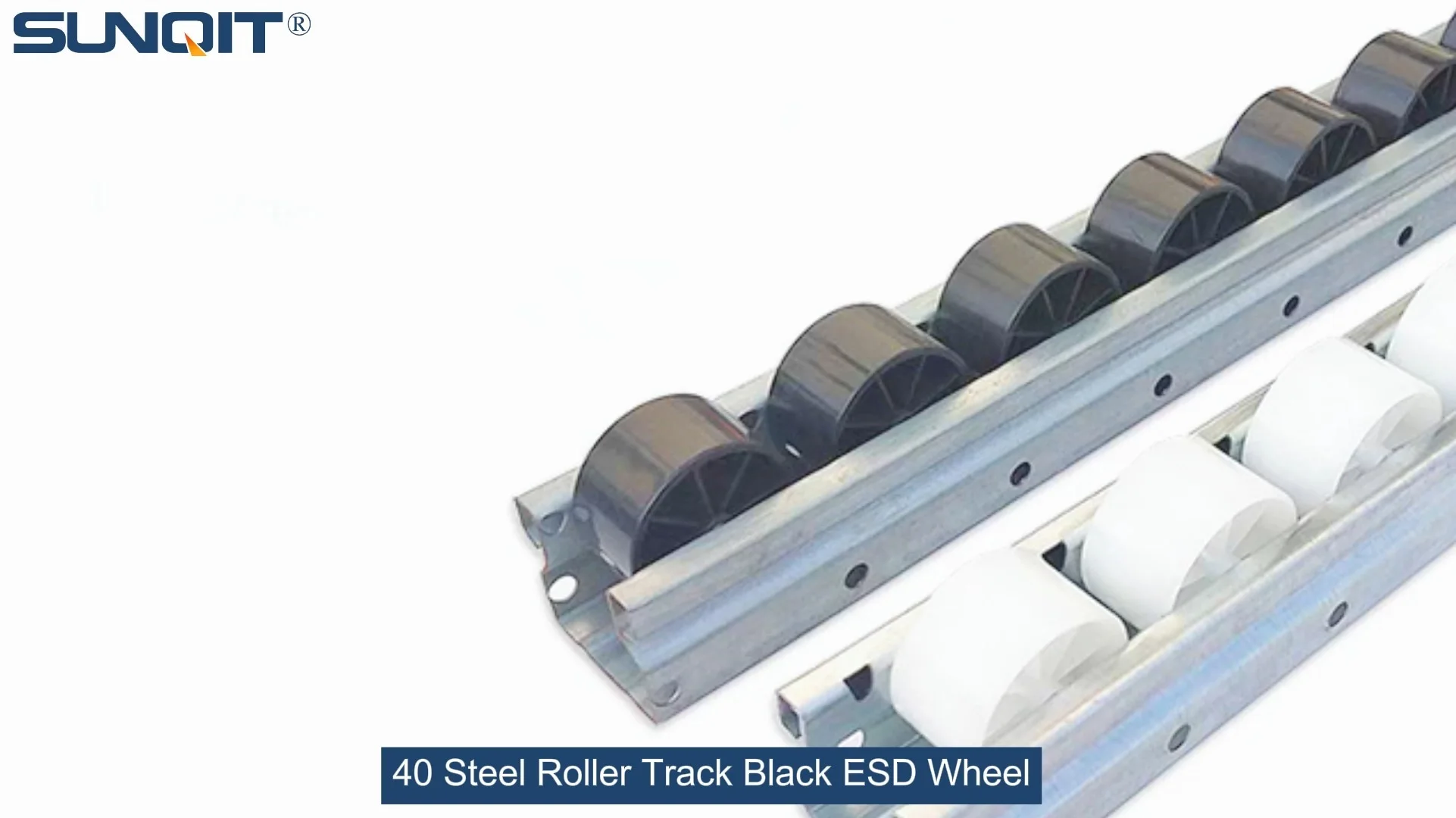
The unsung heroes keeping life-saving medical devices moving safely, efficiently, and spotlessly clean
When Precision Meets Purpose: The Heart of Medical Manufacturing
Walk into any medical device manufacturing facility, and you'll feel it immediately—the quiet intensity of a space where every detail matters. From the sterile gowns of workers to the hum of climate-controlled air systems, everything exists to protect one ultimate goal: creating products that save and improve lives. In this high-stakes environment, even the smallest component of the production line carries enormous responsibility. That's where the 40 Steel Roller Track with Black Wheels comes in—a seemingly simple part that plays a critical role in keeping life-saving equipment moving through cleanroom conveyors, flawlessly and safely.
Medical manufacturing isn't just about building tools; it's about upholding a promise to patients, doctors, and caregivers. A single particle of dust, a tiny static charge, or a momentary jolt in the production line could compromise a surgical instrument, a diagnostic device, or a life-sustaining machine. Cleanrooms, with their ISO 14644-1 Class 7 standards, are designed to eliminate these risks—but they demand equipment that rises to the same level of perfection. Conveyors, the workhorses of material transport, must do more than just move parts from A to B. They must do so without generating particles, without creating static, without requiring constant maintenance that disrupts sterile conditions, and without failing when reliability matters most.
Enter the 40 Steel Roller Track with Black Wheels. Engineered specifically for the unique challenges of medical cleanrooms, this isn't just a conveyor component—it's a guardian of quality, a partner in precision, and a silent contributor to better patient outcomes. Let's dive into why it matters, how it works, and why medical manufacturers around the world trust it to keep their most critical production lines running smoothly.
The Cleanroom Challenge: Why Ordinary Conveyors Fall Short
Cleanrooms in medical manufacturing are unlike any other workspace. Imagine a room where the air is filtered 600 times per hour, where surfaces are wiped down with disinfectants multiple times a day, and where even the smallest metal shard or plastic fragment could trigger a production halt. In these environments, conveyors face a unique set of challenges that turn "good enough" into "unacceptable."
First, there's the battle against contamination. Standard conveyor wheels, often made from low-grade plastics or uncoated metals, can shed particles as they wear down. In a cleanroom, those particles aren't just mess—they're potential hazards. A single flake from a deteriorating wheel could land on a surgical tool, leading to infections or device malfunctions. Then there's static electricity: medical devices, especially those with sensitive electronics, are damaged by electrostatic discharge (ESD). Ordinary wheels can build up static charges, putting delicate components at risk the moment they touch the conveyor.
Durability is another hurdle. Medical production lines run around the clock, with conveyors carrying heavy loads of metal parts, glass syringes, or plastic components. Wheels that crack, warp, or seize under pressure force unscheduled maintenance—disrupting sterile conditions and delaying production of time-sensitive medical supplies. And let's not forget cleanability: harsh disinfectants and frequent wipe-downs can degrade low-quality materials, turning wheels into breeding grounds for bacteria if they develop cracks or porous surfaces.
For medical manufacturers, these challenges aren't just operational headaches—they're compliance nightmares. Regulatory bodies like the FDA and ISO 13485 don't just recommend standards; they enforce them with rigorous inspections and strict penalties for non-compliance. A conveyor wheel that fails to meet these standards isn't just a part to replace—it's a risk to the entire facility's ability to operate.
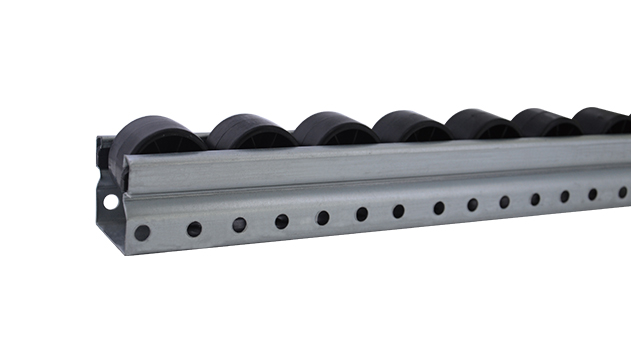
Engineered for Excellence: What Makes the 40 Steel Roller Track Black Wheels Different
Designing a conveyor wheel for medical cleanrooms isn't about cutting corners—it's about reimagining what a wheel can be. The 40 Steel Roller Track with Black Wheels was born from this mindset: every feature, from the material of the wheel to the precision of the bearing, exists to solve the unique challenges of medical manufacturing. Let's break down the engineering that makes it indispensable.
The Black Wheel: More Than Just a Color
At first glance, the black color might seem like a stylistic choice, but it's actually a functional one. The wheels are injection-molded from conductive polyamide (PA), a high-performance plastic infused with carbon fibers to dissipate static electricity. This gives them a surface resistance of 10^6 to 10^9 ohms—perfectly within the ESD-safe range required for sensitive medical electronics. No more static shocks, no more damaged components, no more risks to device integrity.
But the benefits don't stop there. This specialized PA is also incredibly wear-resistant, even under constant friction. Unlike cheaper plastics that chip or flake, it maintains a smooth surface, preventing particle shedding. And yes, the black color? It's intentional. Light-colored wheels can show stains or discoloration, making it harder to spot contamination during inspections. The deep black finish hides minor marks while highlighting any major spills or residues, making cleaning checks faster and more effective.
Steel Core: Strength You Can Trust
Beneath the durable PA exterior lies a robust steel core, giving the wheel the strength to handle heavy loads without flexing or warping. Medical components vary widely in weight—from lightweight syringes to heavy metal surgical tools—and the 40mm steel roller track is built to handle it all, with a per-wheel load capacity of up to 50kg. This strength ensures the wheel maintains its shape and performance, even during 24/7 operation, reducing the need for frequent replacements and minimizing downtime.
The steel core also plays a role in precision. Unlike plastic-only wheels that can develop play or wobble over time, the steel structure keeps the wheel perfectly aligned with the track. This alignment is critical for maintaining consistent speed and positioning, ensuring components arrive at each workstation exactly where they need to be—no more manual adjustments, no more wasted materials, no more missed deadlines.
Sealed Bearings: Silent, Smooth, and Sterile
Ever noticed how some conveyors sound like a clattering train? That noise often comes from exposed bearings, which collect dust, grit, and lubricant residue. In a cleanroom, that's a double problem: the noise disrupts concentration, and the residue becomes a contamination risk. The 40 Steel Roller Track wheels solve this with precision-sealed ball bearings, encased to prevent both debris from entering and lubricant from escaping.
The result? A wheel that spins silently (less than 50dB at full load) and smoothly, even after years of use. No more annoying hums disrupting the cleanroom calm, no more lubricant leaks leaving sticky trails on the track, and no more bearing failures due to dust buildup. It's a small detail that makes a big difference in daily operations.

Technical Specifications: The Numbers Behind the Performance
When it comes to medical manufacturing, "trust" isn't enough—you need data. The 40 Steel Roller Track with Black Wheels doesn't just meet industry standards; it exceeds them, backed by rigorous testing and precise engineering. Here's a closer look at the specifications that make it a leader in cleanroom conveyor technology:
| Feature | Specification | Benefit to Medical Manufacturing |
|---|---|---|
| Wheel Diameter | 40mm | Optimal size for balancing load capacity and rotational speed, ensuring smooth transport of small to medium medical components |
| Wheel Material | Conductive Polyamide (PA) with Steel Core | ESD-safe (10^6-10^9 Ω), wear-resistant, and non-shedding to prevent contamination |
| Load Capacity | 50kg per wheel | Handles heavy components like metal surgical tools and diagnostic equipment without deformation |
| Bearing Type | Sealed Precision Ball Bearings | Silent operation (<50dB), no lubricant leakage, and protection against dust/debris |
| Operating Temperature Range | -10°C to 60°C | Stable performance in temperature-controlled cleanrooms and cold storage areas |
| Cleaning Compatibility | Resistant to ISO 14644-1 Class 7 disinfectants | Withstands frequent wipe-downs with alcohol, hydrogen peroxide, and other medical-grade cleaners |
| Track Material | High-Grade Steel with Electrophoretic Coating | Corrosion-resistant, smooth surface for easy cleaning, and enhanced durability |
| Compliance | FDA, ISO 13485, and RoHS certified | Meets global regulatory standards for medical device manufacturing |
These specifications aren't just numbers on a page—they're the result of thousands of hours of testing in real-world conditions. Engineers subjected the wheels to extreme stress tests: 100,000 cycles of heavy loading, continuous exposure to disinfectants, and temperature fluctuations. The result? A wheel that doesn't just meet the demands of medical manufacturing—it thrives under them.

In Action: How Medical Manufacturers Are Using the 40 Steel Roller Track
Talk about specifications is important, but seeing the 40 Steel Roller Track with Black Wheels in action is where its true value shines. Let's explore how medical manufacturers are integrating this technology into their production lines to solve real-world challenges and deliver better outcomes.
Surgical Instrument Assembly: Precision in Every Turn
One leading manufacturer of laparoscopic tools faced a recurring problem: their old conveyor wheels were causing tiny scratches on the stainless-steel surfaces of their instruments. These scratches weren't just cosmetic—they created crevices where bacteria could hide, failing post-production sterility tests. After switching to the 40 Steel Roller Track with Black Wheels, the soft-yet-durable PA surface eliminated scratches entirely. The result? A 40% reduction in failed sterility tests and a 25% increase in production speed, as workers no longer had to manually inspect and polish each instrument for scratches.
Diagnostic Device Production: Protecting Sensitive Electronics
A diagnostic equipment maker specializing in MRI machine components struggled with static damage to their circuit boards. Even the smallest electrostatic discharge was frying delicate microchips, leading to costly and production delays. The conductive PA wheels of the 40 Steel Roller Track solved this by dissipating static charges before they could build up. Within three months of installation, static-related failures dropped from 15% to less than 1%, saving the company over $200,000 in wasted materials and rework.
Pharmaceutical Packaging: Cleanliness Without Compromise
Pharmaceutical companies have some of the strictest cleanroom standards, and for good reason—contaminated medication can have fatal consequences. A large drug manufacturer was struggling to maintain ISO Class 7 compliance with their old conveyor system; routine swab tests kept detecting plastic particles from deteriorating wheels. The non-shedding design of the 40 Steel Roller Track wheels eliminated this issue entirely. Today, their cleanroom swab tests consistently show zero particle contamination, passing FDA inspections with ease and reducing the time spent on cleaning and maintenance by 30%.
Lab Equipment Manufacturing: Adapting to Changing Needs
Medical manufacturing isn't static—production lines need to adapt to new products, changing demand, and evolving regulations. A lab equipment producer needed a conveyor system that could quickly reconfigure for different device sizes, from small pipettes to large centrifuges. The modular design of the 40 Steel Roller Track made this possible. Using compatible lean solution components like aluminum profiles and adjustable joints, they reconfigured their conveyor layout in hours instead of days, reducing downtime during product transitions by 60%.
"We don't just build conveyors—we build confidence. When our clients see the 40 Steel Roller Track with Black Wheels in their cleanrooms, they know we're invested in their success. It's not just a part; it's a promise that their production line is protected, compliant, and ready to deliver the medical tools patients need." — Lean Solution Specialist, Medical Manufacturing Equipment Provider
Beyond the Wheel: Integrating with Lean Solutions for a Smarter Production Line
Great components become extraordinary when they're part of a greater system. The 40 Steel Roller Track with Black Wheels isn't designed to work in isolation—it's a key piece of a comprehensive lean solution that helps medical manufacturers streamline operations, reduce waste, and improve efficiency. In medical manufacturing, where every second and every dollar counts, this integration isn't just beneficial—it's transformative.
Lean manufacturing principles, focused on eliminating waste and continuous improvement, are especially critical in medical production. The goal isn't just to produce faster, but to produce smarter—reducing errors, minimizing resource use, and ensuring every step adds value. The 40 Steel Roller Track fits seamlessly into this philosophy, working with other lean components like flow racks, workbenches, and modular conveyors to create a production line that adapts to needs, not the other way around.
For example, imagine a medical device assembly line where components flow from storage to assembly stations via flow racks equipped with the 40 Steel Roller Track. The smooth, consistent movement of parts reduces the need for manual handling, cutting down on labor costs and human error. When paired with height-adjustable lean pipe workbenches, workers can access components at the optimal ergonomic height, reducing fatigue and improving precision. And because the entire system is modular, adding a new workstation or reconfiguring the line for a new product takes hours, not weeks—keeping manufacturers agile in a rapidly evolving industry.
Sustainability is another area where the 40 Steel Roller Track shines as part of a lean solution. Medical manufacturing generates significant waste, but the durable design of the wheels reduces the need for frequent replacements. When components do need updating, the modular system allows for easy part swaps instead of full system replacements, cutting down on material waste and lowering long-term costs. It's lean manufacturing at its best: doing more with less, for longer.
Perhaps most importantly, integrating the 40 Steel Roller Track into a lean solution gives medical manufacturers peace of mind. They're not just buying a wheel—they're investing in a system that's designed to grow with them, adapt to new regulations, and meet the ever-changing demands of the medical industry. It's a partnership in progress, where today's improvements lay the groundwork for tomorrow's innovations.
Why Choose the 40 Steel Roller Track Black Wheels? The Bottom-Line Benefits
At the end of the day, medical manufacturers have choices—and every choice comes down to value. The 40 Steel Roller Track with Black Wheels isn't the cheapest option on the market, but when you consider the total cost of ownership—from reduced downtime to compliance peace of mind—it's an investment that pays dividends. Let's break down the benefits that make it the clear choice for forward-thinking medical facilities.
Compliance Confidence
Regulatory inspections are stressful enough without worrying about your conveyor system. The 40 Steel Roller Track is designed to meet or exceed FDA, ISO 13485, and ISO 14644-1 Class 7 standards, giving you documentation and performance data to back up every claim. Passing inspections isn't just a relief—it's a competitive advantage, as regulatory compliance becomes a selling point for partners and clients.
Reduced Total Cost of Ownership
Cheap wheels might save money upfront, but they cost more in the long run. Frequent replacements, downtime for maintenance, and wasted materials add up fast. The 40 Steel Roller Track's durability means it lasts 3-5 times longer than standard wheels, while its low-maintenance design cuts down on service calls. One medical device manufacturer calculated that switching to these wheels reduced their annual conveyor maintenance costs by 65%—a savings that more than offset the initial investment within the first year.
Improved Product Quality
When your conveyor system works with you, not against you, product quality improves across the board. Fewer scratches, less static damage, and consistent part positioning lead to fewer defects and higher customer satisfaction. For medical manufacturers, this isn't just about reducing—it's about protecting their reputation as providers of reliable, life-saving products.
Future-Proofing Your Facility
The medical industry is constantly evolving, with new technologies, regulations, and product demands emerging every year. The modular design of the 40 Steel Roller Track ensures your conveyor system can evolve too. Need to add a new workstation? Reconfigure for a larger product? Upgrade to meet new ESD standards? The system adapts, saving you from costly overhauls down the line.
Peace of Mind
Perhaps the most valuable benefit is intangible: the peace of mind that comes from knowing your conveyor system is up to the task. When you're building products that impact lives, you can't afford to cut corners. The 40 Steel Roller Track with Black Wheels lets you focus on what matters most—creating innovative medical solutions—while it handles the heavy lifting of reliable, clean, compliant material transport.
More Than a Wheel: A Commitment to Better Healthcare
When you strip away the technical specifications, the compliance jargon, and the production metrics, the 40 Steel Roller Track with Black Wheels is about something bigger: it's about contributing to better healthcare. Every time these wheels spin, they're part of a chain that leads to a surgeon having a flawless instrument, a patient receiving a reliable diagnostic, or a caregiver administering medication that's safe and effective.
Medical manufacturing is a noble industry, driven by the desire to heal, help, and hope. The tools and equipment that power this industry should reflect that nobility—and that's what the 40 Steel Roller Track with Black Wheels does. It's not just engineered to perform; it's engineered to care—about the workers who build the products, the patients who rely on them, and the future of healthcare.
So the next time you walk into a medical facility, take a moment to appreciate the invisible heroes working behind the scenes. The 40 Steel Roller Track with Black Wheels might not be the star of the show, but in the quiet, precise world of medical manufacturing, it's a performer that never misses a cue—because when lives are on the line, good enough just isn't enough.