- Company Articles
- Products and Technology
- Product knowledge
- 40 Steel Roller Track Black Wheels vs. Aluminum: Strength and Weight Analysis

40 Steel Roller Track Black Wheels vs. Aluminum: Strength and Weight Analysis
Related Product
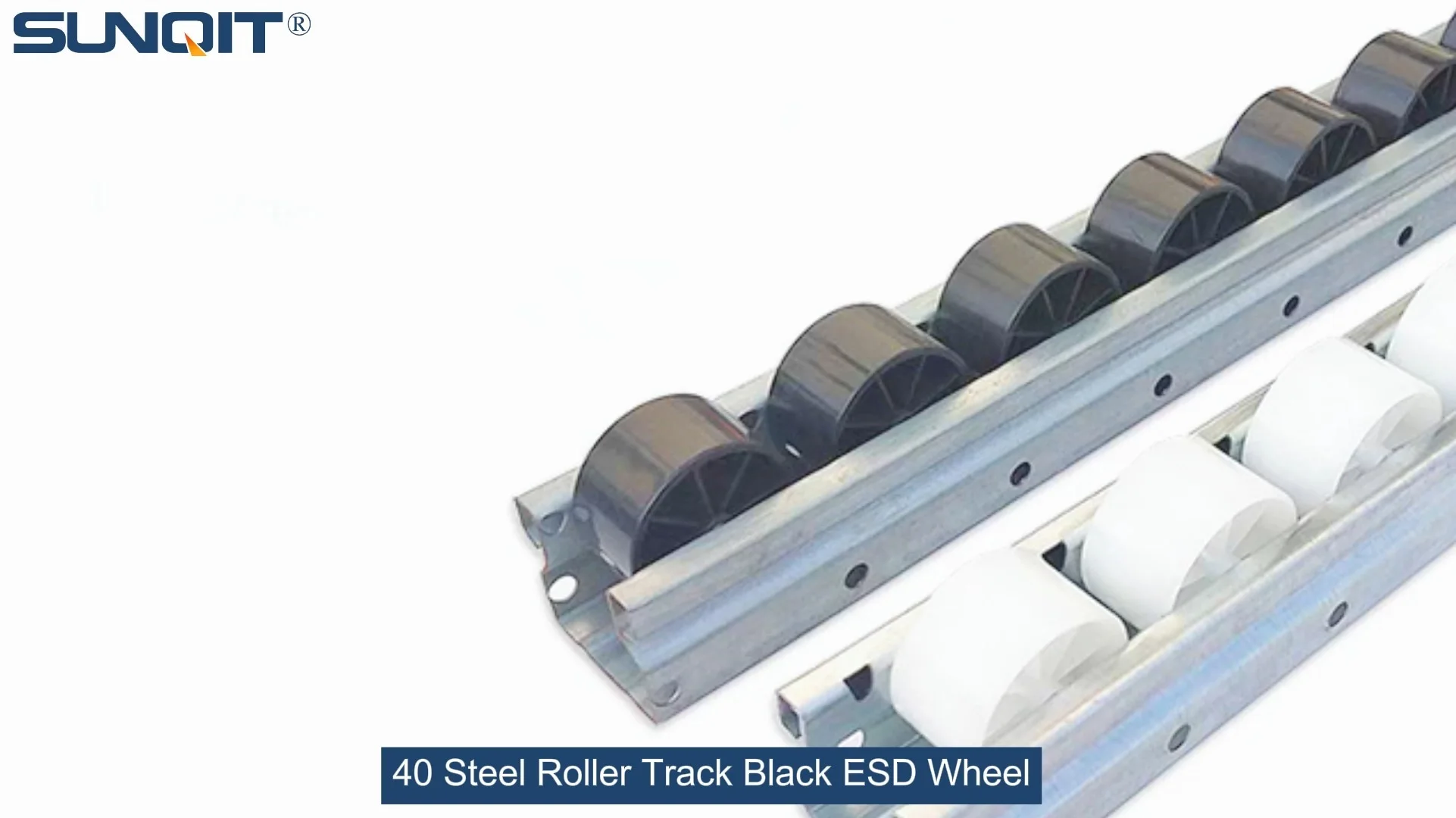
40 Steel Roller Track Black Wheel
The roller track can be installed with multiple accessories to create different slopes and configurations of flow racks.All steel conveyor 40 roller track accessories are engineered to perfectly fit the sliding rail.
In the fast-paced world of manufacturing, where every second counts and efficiency is the backbone of success, the choice of equipment can make or break your production line. Among the unsung heroes of this ecosystem are roller tracks—quietly ensuring that materials glide seamlessly from one workstation to the next, keeping the heartbeat of your operations steady. Today, we're diving deep into a critical decision many facility managers and lean system designers face: choosing between 40 Steel Roller Track with Black Wheels and Aluminum Roller Tracks. It's not just about metal vs. metal; it's about aligning your equipment with the unique rhythm of your workflow, the demands of your industry, and the core principles of lean solutions that prioritize sustainability and continuous improvement.
Understanding the Basics: Why Roller Tracks Matter in Lean Systems
Before we compare steel and aluminum, let's take a moment to appreciate why roller tracks are so vital. In any lean system , the goal is to eliminate waste—whether it's time, effort, or resources. Roller tracks, often integrated into flow racks and conveyors , are designed to minimize manual handling, reduce friction, and create a smooth, predictable material flow. Imagine a production line where components get stuck on rough surfaces, or workers strain to push heavy bins—these are the inefficiencies that eat into profits and morale. A well-chosen roller track turns these pain points into non-issues, letting your team focus on what they do best: building quality products.
But not all roller tracks are created equal. The material—steel or aluminum—dictates everything from how much weight they can bear to how easy they are to install, and even how they contribute to your long-term sustainability goals. Let's start by breaking down the fundamentals of each material.
Material Deep Dive: What Makes Steel and Aluminum Unique?
The Toughness of 40 Steel Roller Track with Black Wheels
Steel has been a cornerstone of manufacturing for centuries, and for good reason. The 40 Steel Roller Track, named for its 40mm width, is typically made from high-grade carbon steel, often with a black oxide coating or powder finish to enhance durability and resist corrosion. The black wheels, usually made from hardened rubber or polyurethane, add a layer of shock absorption and reduce noise—two factors that make a big difference in busy factories.
What truly sets steel apart is its inherent strength. Steel alloys are engineered to withstand heavy loads and repeated stress without bending or warping. This makes the 40 Steel Roller Track a workhorse in environments where raw materials or finished products are bulky, like automotive manufacturing or heavy machinery production. When you need a track that can handle consistent, high-weight traffic day in and day out, steel is often the first choice.
The Lightweight Advantage of Aluminum Roller Tracks
Aluminum, on the other hand, brings a different set of strengths to the table—literally. Known for its lightweight properties, aluminum roller tracks are often made from aluminum alloys (like 6061 or 6063) that balance strength and flexibility. Unlike steel, aluminum naturally resists rust, thanks to a thin oxide layer that forms on its surface, making it ideal for environments where moisture or chemicals are present, such as medical device assembly or food processing facilities.
Aluminum's lightness is more than just a convenience; it's a game-changer for lean pipe workbench setups and modular systems. When your production line needs to be reconfigured (a common scenario in agile manufacturing), moving aluminum tracks is significantly easier than wrestling with steel. This flexibility aligns perfectly with the "sustainable improvement" ethos of lean manufacturing—adaptability without sacrificing performance.
Key Takeaway: Steel is the heavyweight champion of strength, while aluminum is the agile contender, offering lightweight flexibility and corrosion resistance. The choice hinges on your specific load requirements, environment, and need for mobility.
Strength Showdown: How They Perform Under Pressure
When it comes to roller tracks, strength isn't just about "being tough"—it's about reliability. A track that bends under load can disrupt workflows, damage products, or even create safety hazards. Let's break down the strength metrics that matter most.
Load Capacity: Steel Takes the Lead
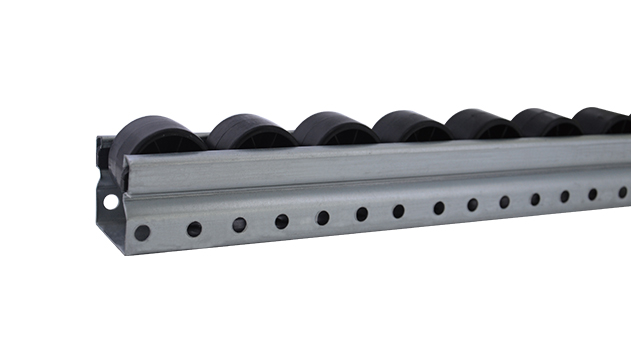
The 40 Steel Roller Track with Black Wheels is built for heavy lifting. On average, a standard 40mm steel track can support up to 500kg per linear meter, depending on the wheel spacing and frame design. This makes it ideal for transporting metal components, engine parts, or large assemblies—common in automotive or industrial machinery plants. The black wheels, often reinforced with steel cores, add to this load-bearing capability, ensuring that even unevenly distributed weight doesn't cause sagging over time.
Aluminum tracks, while strong for their weight, generally top out around 300-400kg per linear meter for similar dimensions. This is still more than enough for many applications, such as moving circuit boards in 3C assembly lines or small medical devices. However, if your operation regularly handles loads exceeding 400kg, steel becomes the safer bet.
Impact Resistance: Steel Handles the Rough and Tumble
Manufacturing floors are busy places, and accidents happen. A dropped tool, a misaligned bin, or a sudden stop can put unexpected stress on roller tracks. Steel's high tensile strength (typically 400-500 MPa) means it can absorb impacts without permanent deformation. The black polyurethane wheels also play a role here, cushioning shocks and reducing the risk of damage to both the track and the products being transported.
Aluminum, while ductile, is more prone to denting under heavy impact. A severe collision might leave a steel track unscathed, but an aluminum track could bend, requiring replacement. For high-traffic areas where bumps are frequent, steel's resilience is a significant advantage.
Long-Term Durability: A Tie with Different Strengths
Steel tracks, when properly maintained (e.g., regular cleaning and occasional lubrication of wheels), can last 10-15 years in industrial settings. However, they do require protection against corrosion—hence the black coating, which acts as a barrier against rust. Without proper care, steel tracks in humid environments may start to degrade over time.
Aluminum tracks, by contrast, are virtually maintenance-free in terms of corrosion. Their natural oxide layer keeps rust at bay, even in damp conditions, extending their lifespan to 15+ years with minimal upkeep. The trade-off? Aluminum is softer than steel, so it may show wear faster in high-friction scenarios, such as constant contact with heavy, abrasive materials.

Weight Analysis: Why Every Kilogram Counts
Weight might not seem like a big deal until you're installing a 20-meter conveyor system or reconfiguring your lean pipe workbench layout for the third time this quarter. The difference between steel and aluminum can add up quickly—and impact everything from installation costs to energy efficiency.
Installation and Mobility: Aluminum Shines
A 40mm steel roller track weighs roughly 8-10kg per linear meter, including wheels and brackets. Aluminum tracks of the same size? Just 3-5kg per meter. That's a 50-60% weight reduction! For a typical production line with 50 meters of track, that's a difference of 250-350kg—no small feat when you're moving components manually or using lift equipment.
This lightweight advantage makes aluminum tracks a favorite for temporary setups, event-based manufacturing, or facilities that frequently rearrange workflows (hello, 3C electronics and fashion retail production!). It also reduces the strain on workers during installation, lowering the risk of injury and cutting down on setup time.
Transport and Shipping Costs: Aluminum Saves Money Upfront
Heavier steel tracks cost more to ship, both from the supplier to your facility and within your warehouse during installation. Aluminum's lower weight translates to lower freight bills—a small saving that adds up, especially for large orders or international shipments. For businesses focused on lean solution cost-efficiency, these upfront savings can be a deciding factor.
Energy Efficiency: Lighter Tracks, Lower Bills
In automated systems, where motors power conveyor belts and roller tracks, the weight of the track itself affects energy consumption. Aluminum tracks require less power to move, reducing electricity costs over time. For example, a motor driving a steel track might use 15-20% more energy than one powering an aluminum track of the same length—another long-term saving that aligns with sustainable manufacturing practices.

Head-to-Head Comparison: Steel vs. Aluminum Roller Tracks
| Feature | 40 Steel Roller Track (Black Wheels) | Aluminum Roller Track |
|---|---|---|
| Load Capacity (per linear meter) | Up to 500kg | 300-400kg |
| Weight (per linear meter) | 8-10kg | 3-5kg |
| Corrosion Resistance | Moderate (requires coating) | High (natural oxide layer) |
| Impact Resistance | Excellent (minimal deformation) | Good (may dent under heavy impact) |
| Installation Ease | Heavy; requires more labor/equipment | Lightweight; easier to handle |
| Maintenance Needs | Regular cleaning/lubrication; coating touch-ups | Minimal (no rust protection needed) |
| Best For | Heavy loads, high-impact environments (automotive, machinery) | Light-to-medium loads, corrosive environments, agile setups (medical, 3C) |
Industry Applications: Which Track Fits Your Workflow?
The "right" track depends on your industry's unique demands. Let's explore how steel and aluminum tracks perform in key sectors:
Automotive and Heavy Machinery: Steel's Domain
In automotive plants, where engine blocks, transmissions, and chassis components are moved daily, the 40 Steel Roller Track is king. Its 500kg load capacity ensures that even the heaviest parts glide smoothly, while its impact resistance stands up to the rough-and-tumble of a busy factory floor. Steel tracks also pair well with conveyor systems in these settings, providing the stability needed for continuous, high-volume production.
3C Electronics and Medical Devices: Aluminum's Playground
The 3C (Computer, Communication, Consumer Electronics) industry thrives on agility. Production lines for smartphones, laptops, or circuit boards are often reconfigured to adapt to new models, making aluminum's lightweight and modularity invaluable. Similarly, medical device manufacturing requires clean, corrosion-resistant equipment—qualities aluminum delivers effortlessly. Aluminum tracks also integrate seamlessly with esd workbench setups, where static control is critical, as they don't conduct electricity like steel (though steel tracks can be ESD-treated with special coatings).
Warehousing and Logistics: A Balanced Approach
In warehouses, where both heavy pallets and lightweight packages are handled, the choice often mixes steel and aluminum. Steel tracks might be used in bulk storage areas for heavy goods, while aluminum tracks shine in picking zones, where workers need to reposition flow racks quickly to optimize space. This hybrid approach embodies the lean solution mindset—using the right tool for each job to minimize waste and maximize efficiency.
Cost vs. Value: The Long-Term Perspective
Initial cost is always a consideration, but in lean manufacturing, we look at the total cost of ownership (TCO)—initial purchase, installation, maintenance, and replacement over time.
Steel tracks are generally cheaper upfront, with prices ranging from $20-$30 per linear meter (depending on wheel quality). Aluminum tracks, due to material costs, start at $35-$45 per linear meter. However, aluminum's lower shipping and installation costs can narrow this gap. Over time, aluminum's minimal maintenance needs (no rust treatment, fewer replacements) and energy savings often make it the more cost-effective choice, especially in environments where corrosion or frequent reconfiguration is a factor.
Pro Tip: For short-term, heavy-load projects, steel may be the budget-friendly option. For long-term, agile setups, aluminum's TCO is usually lower—invest in flexibility today, save tomorrow.
Sustainability: Aligning with Lean's "Reuse and Improve" Ethos
Lean manufacturing isn't just about efficiency—it's about sustainability. Both steel and aluminum are 100% recyclable, but aluminum has a slight edge here: recycling aluminum uses 95% less energy than producing new aluminum, compared to 74% for steel. For companies aiming to reduce their carbon footprint, aluminum tracks are a greener choice.
Additionally, aluminum's lightweight nature reduces fuel consumption during transportation, and its modularity means tracks can be disassembled, reused, or repurposed when production lines change—aligning perfectly with the "reusable," (sustainable improvement) promise of modern lean systems.
Conclusion: Choosing Your Roller Track Partner
At the end of the day, there's no "one-size-fits-all" answer. The 40 Steel Roller Track with Black Wheels is the go-to for heavy loads, impact resistance, and upfront cost savings. Aluminum Roller Tracks excel in lightweight, corrosive, or agile environments, offering long-term value and sustainability.
The best approach? Start with your workflow: What's the maximum load you'll handle? How often will you reconfigure your line? What's your environment like (humid, dry, corrosive)? Then, partner with a lean pipe supplier who understands your industry and can tailor a solution—whether steel, aluminum, or a hybrid mix—that grows with your business.
Remember, in lean manufacturing, every component plays a role in creating a system that's not just efficient, but human-centric. A well-chosen roller track doesn't just move materials—it moves your team closer to their goals, one smooth glide at a time.