- Company Articles
- Products and Technology
- Product knowledge
- 40 Steel Roller Track Grey: Choosing Between Standard & Custom Designs

40 Steel Roller Track Grey: Choosing Between Standard & Custom Designs
Related Product
40 Steel Roller Track Grey
The roller track can be installed with multiple accessories to create different slopes and configurations of flow racks.All steel conveyor 40 roller track accessories are engineered to perfectly fit the sliding rail.It is enable the movement of SLC boxes.
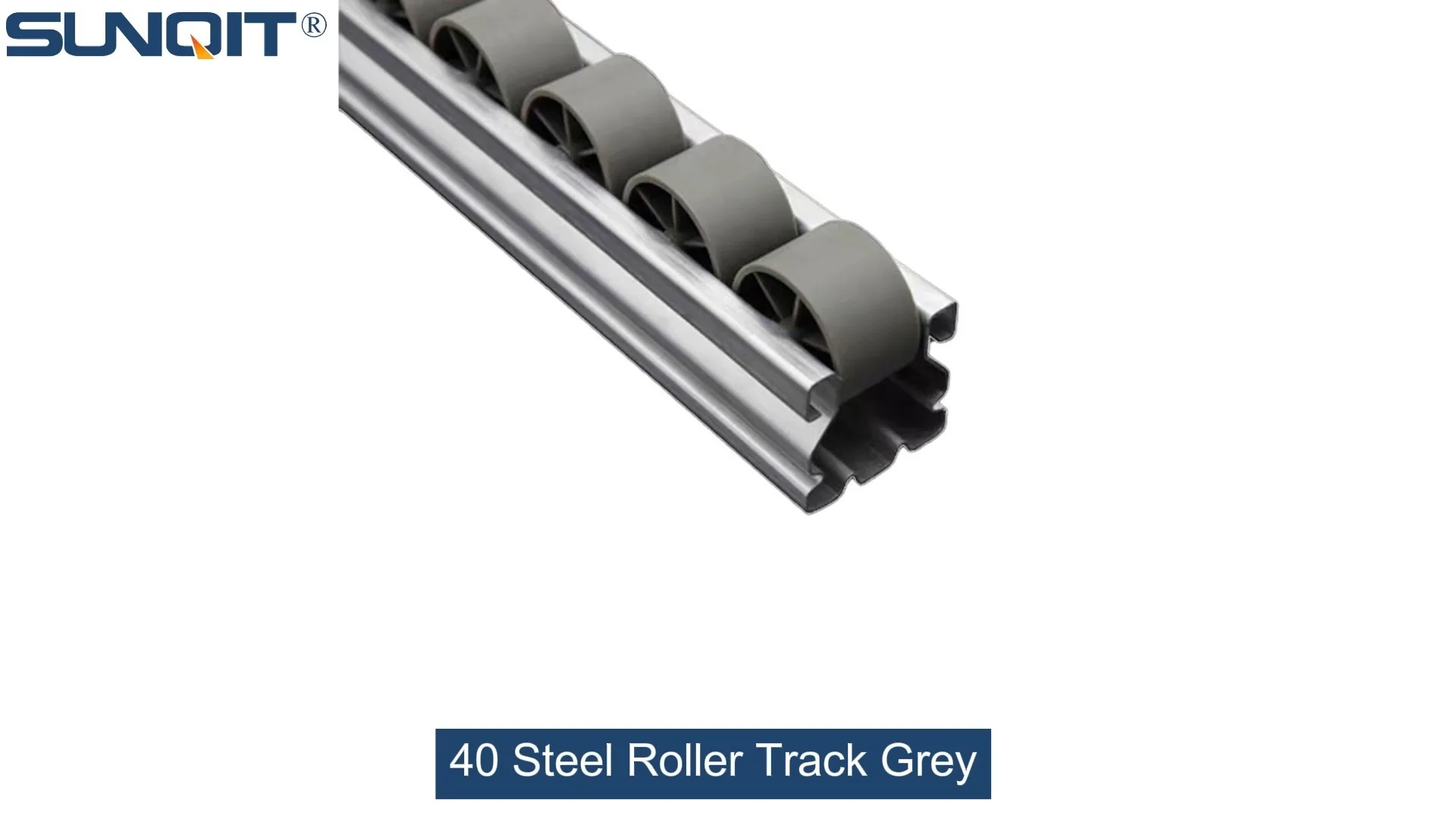
Material handling is the unsung hero of any manufacturing or warehouse operation. It's the quiet force that keeps parts moving, lines flowing, and products getting out the door on time. If you've ever walked through a well-oiled production floor, you've probably seen roller tracks at work—those smooth, rolling surfaces that make moving bins, boxes, and components feel effortless. Among these, the 40 Steel Roller Track Grey stands out as a reliable, versatile option. But when it comes to picking between a standard off-the-shelf design or a custom-made solution, how do you know which one fits your needs? Let's break it down, step by step.
What Exactly Is 40 Steel Roller Track Grey?
First things first: let's get to know this component. The 40 Steel Roller Track Grey is a type of roller track made from high-quality steel, finished in a durable grey coating that resists corrosion and wear. The "40" typically refers to its width or diameter (depending on the specific model), making it a medium-sized option suitable for a wide range of load capacities. It's designed to be part of lean manufacturing setups—think flow racks for material handling, conveyors in production lines, or even integrated into lean pipe workbenches for seamless material transfer. This track is a workhorse in industrial settings, prized for its strength, smooth operation, and compatibility with various lean system components.
Standard 40 Steel Roller Track Grey: The Go-To for Quick Solutions
Standard designs are pre-manufactured with fixed specifications—think set lengths, standard load capacities, and uniform roller spacing. They're the "one-size-fits-most" option, and here's why they're so popular:
- Cost-Effective: Since they're mass-produced, standard tracks come with a lower price tag. If you're working with a tight budget, this is a big plus.
- Ready to Use: No waiting around for custom fabrication. You can order them today and have them installed tomorrow, which is perfect for urgent projects or quick workflow upgrades.
- Consistent Quality: Mass production means strict quality control. Every standard track is the same, so you know exactly what you're getting.
- Easy Replacement: If a track gets damaged, you can swap it out with another standard one without any hassle. No need to wait for a custom replacement.
Who benefits most from standard tracks? Small to medium-sized businesses with straightforward material handling needs. For example, a 3C assembly line that uses flow racks to move phone components from the storage area to the assembly station. Standard 40 Steel Roller Track Grey fits perfectly here—its load capacity is enough for lightweight electronic parts, and the fixed lengths align with the standard shelf sizes of most flow racks.
Another scenario: a warehouse that needs to expand its conveyor system quickly. Standard tracks can be easily integrated into existing conveyor setups, saving time and money. Even in lean pipe workbench setups, standard tracks are often used because they're compatible with common lean pipe accessories, making assembly a breeze. For businesses that rely on flow rack wholesale or conveyor wholesale, standard tracks are a staple inventory item, allowing them to fulfill orders quickly and efficiently.

Custom 40 Steel Roller Track Grey: Tailored to Your Unique Needs
Custom designs are built from scratch to match your exact requirements. Whether you need a track of a specific length, higher load capacity, or a special coating for ESD (electrostatic discharge) protection, custom is the way to go. Here's what makes custom tracks stand out:
- Perfect Fit: If your workspace has odd dimensions or non-standard equipment, custom tracks can be cut and shaped to fit like a glove. No more trying to make a square peg fit into a round hole.
- Enhanced Performance: Need a track that can handle heavier loads? Custom designs can be reinforced with thicker steel or stronger rollers. Working in a cleanroom? Ask for a special anti-static coating to protect sensitive components.
- Seamless Integration: Custom tracks can be designed to work with your existing setup, like aluminum profile accessories or unique conveyor systems. For example, if you have an ESD workstation that requires specific track dimensions to align with the work surface, a custom track will integrate flawlessly.
- Future-Proof: Custom tracks can be built to accommodate future expansions. If you plan to scale your operation, a custom design can be adjusted later without replacing the entire system.
Who should opt for custom? Large manufacturing plants with complex workflows, medical device producers that need precision, or any business with unique material handling challenges. Let's take a medical equipment manufacturer as an example. Their production line requires tracks that fit into a cleanroom environment, with ESD protection to prevent damage to sensitive devices. A custom 40 Steel Roller Track Grey with an anti-static coating and precise dimensions will fit into their cleanroom setup, ensuring both safety and efficiency. These custom tracks are often integrated with aluminum profile accessories to create a seamless, sterile workflow.
Another example: an automotive parts factory that moves heavy engine blocks. A custom track with reinforced steel and higher load capacity ensures safety and efficiency. These tracks are designed to work with the factory's existing conveyor systems, which are tailored to the unique layout of the automotive production line. For businesses that offer lean solution services, custom tracks are a key part of providing tailored setups that meet their clients' specific needs.

Standard vs Custom: A Side-by-Side Comparison
Still unsure which one to choose? Let's put them head-to-head in a table to see how they stack up against key factors:
| Factor | Standard Design | Custom Design |
|---|---|---|
| Cost | Lower upfront cost | Higher upfront cost |
| Lead Time | Immediate (ready to ship) | Longer (depends on design complexity) |
| Load Capacity | Fixed (standard range) | Customizable (higher or lower as needed) |
| Flexibility | Limited (fixed specs) | High (tailored to your needs) |
| Integration | Fits standard systems | Fits unique systems (e.g., aluminum profile accessories) |
| Use Case | Straightforward workflows (3C assembly, basic warehouses) | Complex workflows (medical devices, heavy automotive parts) |

Real-World Applications: Where Standard and Custom Shine
Let's look at some real-world examples to see how these tracks are used in different industries:
1. 3C Assembly Lines
In the fast-paced world of consumer electronics, speed is everything. Standard 40 Steel Roller Track Grey is a staple here. Flow racks filled with standard tracks move small components like circuit boards and batteries from storage to assembly stations quickly. Since these lines are often standardized, the fixed lengths and load capacities of standard tracks work perfectly. Plus, with flow rack wholesale options, businesses can stock up on standard tracks at a lower cost, ensuring they always have replacements on hand.
2. Medical Device Manufacturing
Medical device production requires precision and compliance with strict regulations. Custom tracks are the norm here. For example, a company making surgical instruments might need tracks with ESD protection to prevent static damage to sensitive tools. A custom 40 Steel Roller Track Grey with an anti-static coating and precise dimensions will fit into their cleanroom setup, ensuring both safety and efficiency. These custom tracks are often integrated with aluminum profile accessories to create a seamless, sterile workflow.
3. Automotive Parts Production
Automotive parts are heavy, so load capacity is key. Custom tracks with reinforced steel are used to move engine blocks, transmission parts, and other heavy components along assembly lines. These tracks are designed to handle loads that standard tracks can't, ensuring that the production line runs smoothly without breakdowns. They're also integrated into conveyor systems that are tailored to the unique layout of the automotive factory, making material handling more efficient.
4. Warehouse Logistics
Warehouses often use a mix of standard and custom tracks. Standard tracks are used in general storage areas where the workflow is straightforward, while custom tracks are used in areas with unique space constraints. For example, a warehouse with high shelves might need custom tracks that fit into narrow aisles, allowing forklifts to move materials easily. Custom tracks can also be designed to work with lean pipe workbenches in packing stations, making it easier for workers to sort and pack products.
5. Electronics Manufacturing
Electronics manufacturing often involves small, delicate components that need to be handled with care. Standard 40 Steel Roller Track Grey is used in flow racks that hold bins of circuit boards, resistors, and other parts. These tracks are smooth, so the bins glide easily, reducing the risk of damage to the components. For companies that produce larger electronics like laptops or TVs, custom tracks might be needed to handle the heavier weight of the finished products. These custom tracks are integrated into conveyor systems that move the products from the assembly line to the packaging area, ensuring that the heavy items are transported safely.
6. Food and Beverage Industry
While the 40 Steel Roller Track Grey is primarily used in industrial settings, it can also be found in the food and beverage industry. Standard tracks are used in flow racks that hold ingredients like flour, sugar, and spices in warehouses. Custom tracks might be needed in production lines where food products are moved, requiring special coatings to meet food safety standards. For example, a bakery might use custom tracks with a food-grade coating to move dough trays along the production line, ensuring that the tracks are safe for contact with food.
40 Steel Roller Track Grey: A Key Component in Lean Solutions
Lean manufacturing is all about eliminating waste and maximizing efficiency, and the 40 Steel Roller Track Grey plays a big role in this. Whether standard or custom, these tracks help create lean workflows by:
- Reducing Waste: Smooth rolling tracks minimize the effort needed to move materials, reducing physical strain on workers and cutting down on time wasted moving heavy items.
- Improving Flow: Tracks keep materials moving in a consistent, predictable way, preventing bottlenecks in production lines.
- Enhancing Flexibility: Both standard and custom tracks are compatible with lean systems, meaning you can easily reconfigure your setup as your needs change. For example, you can rearrange standard tracks in a flow rack to accommodate a new product line, or adjust custom tracks to fit a revised assembly process.
- Durability: Steel construction means these tracks last a long time, reducing the need for frequent replacements and saving money in the long run.
When integrated into a lean solution, the 40 Steel Roller Track Grey becomes more than just a material handling tool—it's a building block of a more efficient, profitable operation. For example, a lean pipe system using these tracks can be reconfigured quickly to adapt to new production needs, aligning with the lean principle of continuous improvement. This flexibility is crucial for businesses that need to stay competitive in a fast-changing market.
Final Thoughts: Making the Right Choice
Choosing between standard and custom 40 Steel Roller Track Grey boils down to one question: What do your workflows need? If you have straightforward requirements, a tight budget, or need a quick solution, standard is the way to go. If you have unique space constraints, heavy load needs, or require special features like ESD protection, custom is worth the investment.
Remember, both options have their place in the world of material handling. Standard tracks are great for getting up and running quickly, while custom tracks ensure your setup is perfectly tailored to your operation. Whichever you choose, the 40 Steel Roller Track Grey is a reliable, durable option that will help keep your workflows moving smoothly.
So next time you're looking to upgrade your material handling system, take a moment to evaluate your needs. Whether it's a standard track for your flow rack or a custom track for your ESD workstation, you'll be making a choice that boosts efficiency, reduces waste, and keeps your production line running at its best. With the right track in place, you can focus on what matters most—growing your business and delivering quality products to your customers.