- Company Articles
- Products and Technology
- Product knowledge
- 40 Steel Roller Track Grey: Grey Coating Application Process & Quality Control

40 Steel Roller Track Grey: Grey Coating Application Process & Quality Control
Related Product
40 Steel Roller Track Grey
The roller track can be installed with multiple accessories to create different slopes and configurations of flow racks.All steel conveyor 40 roller track accessories are engineered to perfectly fit the sliding rail.It is enable the movement of SLC boxes.
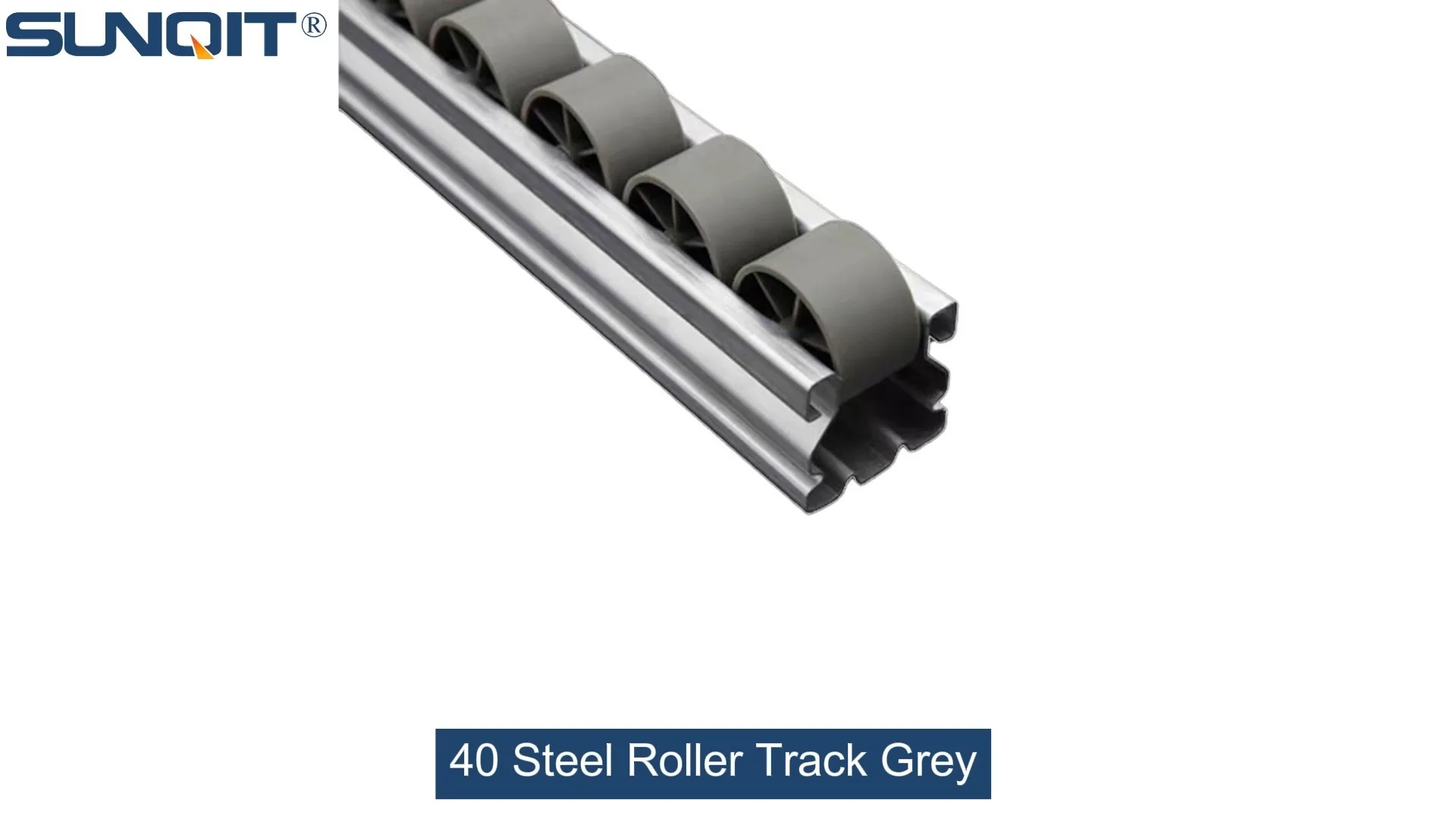
What is 40 Steel Roller Track Grey?
In the world of lean manufacturing, every component plays a critical role in ensuring smooth, efficient operations. The 40 Steel Roller Track Grey is one such essential component, designed to facilitate seamless material handling across various production and warehouse environments. This roller track is a key part of many lean solutions, including flow racks, conveyors, and custom workstations, providing a reliable surface for moving parts, components, and finished products with minimal friction.
The "40" in its name refers to the standard size that aligns with common industrial profiles, making it compatible with a wide range of aluminum profile accessories and other lean components. The grey coating isn't just for aesthetics—it's a functional layer that enhances durability, resists corrosion, and ensures long-term performance even in high-use areas. Whether it's part of a 3C assembly line, a medical device manufacturing setup, or a warehouse logistics system, the 40 Steel Roller Track Grey stands out for its robustness and versatility.
Grey Coating Application Process
Step 1: Pre-Treatment of Steel Rollers
The pre-treatment process is the foundation of a high-quality coating. It begins with degreasing, where the steel rollers are immersed in a hot alkaline solution (typically 50-60°C) for 10-15 minutes to remove any oil, grease, or dirt from the surface. This is followed by rinsing with clean water to wash away the degreasing agent. Next, pickling is performed using a dilute hydrochloric acid solution to remove rust and scale from the steel. The rollers are soaked in the acid for 5-10 minutes, depending on the level of rust. After pickling, they are rinsed again to neutralize the acid and prevent further corrosion. A final rinsing step with deionized water ensures no residual chemicals remain, and the rollers are dried completely using hot air before moving to the primer stage.
Step 2: Primer Application
An epoxy primer is applied to enhance adhesion between the steel and topcoat. This primer is chosen for its excellent bonding properties and resistance to corrosion. Using a spray gun, the primer is evenly applied to the rollers, forming a 30-40 μm thick layer. After application, the primer is air-dried for 10-15 minutes to ensure it sets properly before the topcoat is added, preventing mixing and ensuring a clean finish.
Step 3: Grey Coating Application
The grey topcoat uses electrostatic powder coating technology. Polyester-based powder is charged using a corona gun and sprayed onto grounded steel rollers. The electrostatic charge ensures uniform coverage even on complex edges. The powder layer thickness is controlled at 50-80 μm, which, combined with the primer, meets the 80-120 μm total coating requirement. This process guarantees consistent color and finish across all rollers.
Step 4: Curing and Drying
After coating, rollers are cured in an oven at 190°C for 18 minutes. This heat melts the powder, forming a smooth, hard film and cross-linking polymer molecules for enhanced durability. Post-curing, rollers cool gradually to room temperature to avoid cracking. Slow cooling preserves the coating's integrity, ensuring resistance to scratches and chemicals. Final inspection checks for defects before packaging.

Quality Control Measures for 40 Steel Roller Track Grey
1. Material Inspection Before Coating
Raw steel rollers undergo strict inspection: verifying steel grade (S235JR), dimensional accuracy (diameter ±0.1mm, length ±1mm), and checking for dents/cracks. Only rollers proceed to pre-treatment.
2. Coating Thickness Testing
A magnetic thickness gauge measures coating thickness. The 80-120 μm range balances durability and flexibility. Too thin coatings lack protection; too thick may crack.
3. Adhesion Testing
ASTM D3359 cross-cut test: 1mm grid pattern, adhesive tape peel. No flaking indicates ≥5MPa adhesion strength, ensuring coating stays bonded to steel.
4. Corrosion Resistance Testing
ASTM B117 neutral salt spray test: 5% NaCl solution, 35°C, 480 hours. No visible corrosion confirms resistance to harsh industrial environments.
5. Visual Inspection for Uniformity
Inspectors check for even grey color (ΔE ≤1.5 via colorimeter), no bubbles/pinholes, and smooth finish. Defective rollers are reprocessed.
| Quality Check Parameter | Standard Requirement | Testing Method |
|---|---|---|
| Coating Thickness | 80-120 μm | Magnetic Thickness Gauge |
| Adhesion Strength | ≥ 5 MPa | Cross-Cut Test (ASTM D3359) |
| Salt Spray Resistance | ≥ 480 hours | Neutral Salt Spray Test (ASTM B117) |
| Color Uniformity | ΔE ≤ 1.5 | Colorimeter |

Integration with Lean Manufacturing Systems
Flow Racks and 40 Steel Roller Track Grey
Flow racks use these tracks for FIFO material handling. The 5° incline enables gravity-fed part movement, reducing picking time by 20% in 3C assembly lines.
Conveyors and Roller Tracks
As part of roller conveyors, the track reduces friction, cutting energy use by 15% in automotive component lines. Compatible with gravity/powered conveyors.
Lean Pipe Workbenches and Accessory Compatibility
Integrated into lean pipe workbenches, the track delivers components directly to workers, reducing manual handling. Compatible with lean pipe clamps for easy attachment.
Aluminum Profile Accessories for Customization
Aluminum profile accessories like brackets connect the track to frames, enabling custom flow rack/conveyor designs for medical device manufacturing.

Key Benefits of 40 Steel Roller Track Grey in Lean Solutions
- Durability: Corrosion-resistant coating extends lifespan by 3x vs uncoated steel, reducing replacement costs.
- Smooth Operation: 0.15 friction coefficient minimizes energy use and worker fatigue.
- Lean Compatibility: Seamlessly integrates with flow racks, conveyors, and lean pipe workbenches.
- Cost-Effective: Low maintenance (annual cleaning) and long lifespan reduce total ownership cost.
- Customizable: Works with aluminum profile accessories for tailored material handling systems.
Real-World Application: 3C Assembly Line Optimization
A leading 3C manufacturer replaced old tracks with these roller tracks, improving line efficiency by 25%. The track's corrosion resistance reduced downtime by 30% in humid environments. Integration with flow racks and conveyors cut material handling time, boosting daily output by 18%.
Conclusion
The 40 Steel Roller Track Grey is a cornerstone of efficient lean manufacturing. Its rigorous coating process and quality control ensure durability, compatibility with flow racks, conveyors, lean pipe workbenches, and aluminum profile accessories. This component delivers long-term value, supporting sustainable, productive operations across industries. Investing in such high-quality components is key to building resilient lean solutions that meet modern production demands.