- Company Articles
- Products and Technology
- Installation And Maintenance
- 40 Steel Roller Track Grey Maintenance Tips: Extending Service Life in Factories

40 Steel Roller Track Grey Maintenance Tips: Extending Service Life in Factories
Related Product
40 Steel Roller Track Grey
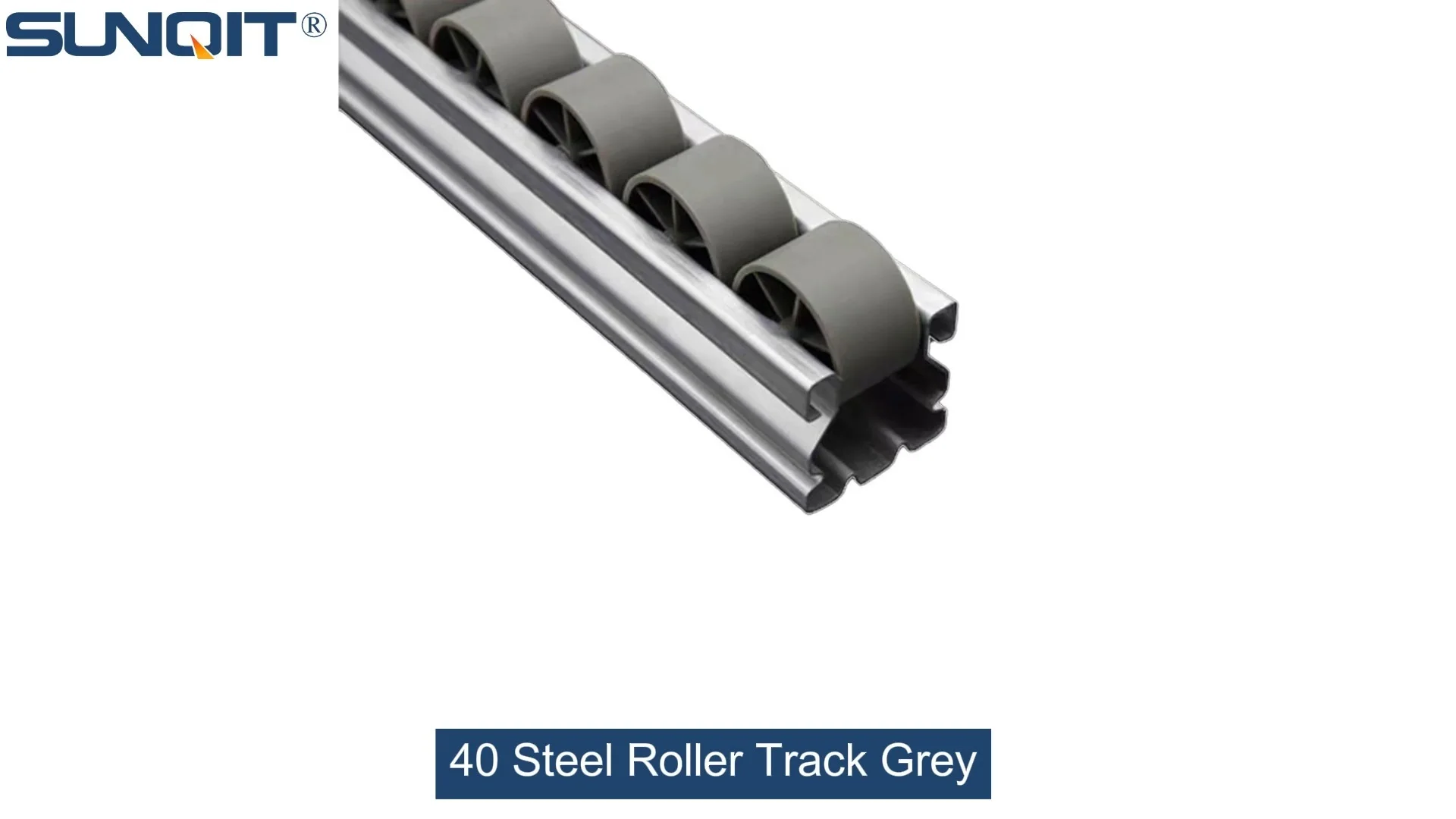
The roller track can be installed with multiple accessories to create different slopes and configurations of flow racks.All steel conveyor 40 roller track accessories are engineered to perfectly fit the sliding rail.It is enable the movement of SLC boxes.
40 Steel Roller Track Grey Maintenance Tips: Extending Service Life in Factories
Introduction: Why Maintenance Matters for Your 40 Steel Roller Track Grey
If you've ever stood on a factory floor watching products glide along a roller track, you know how much depends on that simple piece of equipment. The 40 Steel Roller Track Grey is a staple in lean system setups across industries—from 3C assembly lines to warehouse logistics. It's built to handle heavy loads and constant use, but like any hardworking tool, it needs regular care to keep performing at its best. Neglecting maintenance can lead to jammed lines, product damage, and unexpected downtime—costing your factory time and money. Let's dive into the tips that will keep your track rolling smoothly for years.
This track isn't just a metal frame with rollers; it's part of your factory's backbone. Every time a component slides along it, every time a worker relies on it to move materials quickly, it's contributing to your lean system goals of efficiency and waste reduction. Proper maintenance ensures that this backbone stays strong, supporting your team's efforts to keep production moving without hiccups.
Pre-Maintenance Preparation: Get Ready to Care for Your Track
Before you start any maintenance task, you need to be prepared. This means gathering the right tools and following safety rules to protect yourself and your equipment.
Tools You'll Need
Soft-bristle brush: For removing debris without scratching the steel surface.
Torque wrench: To tighten roller track connector bolts to the manufacturer's specifications (don't use a regular wrench—overtightening can damage threads).
Non-corrosive lubricant: Silicone-based lubricants work best for steel rollers—they don't attract dust like oil-based ones.
Flashlight: For checking hard-to-see areas like roller axles and under the track frame.
PPE (Personal Protective Equipment): Safety glasses to protect your eyes from debris, gloves to prevent cuts from sharp edges, and steel-toe boots to guard against falling parts.
Replacement parts: Keep spare roller track connector bolts, rollers, and caster wheel (if applicable) on hand for quick fixes.
Safety First
Never skip safety steps when working on your roller track. Here's what you need to do:
Lockout/Tagout (LOTO): If the track is connected to a powered system (like a conveyor), turn off the power and use a lockout/tagout device to prevent accidental startup while you're working.
Clear the area: Make sure no one is working near the track while you're performing maintenance to avoid accidents.
Inspect your tools: Before using any tool, check that it's in good condition—no broken handles or worn parts.
Daily Maintenance Checklist: Quick Tasks for Every Shift
Daily maintenance is all about catching small issues before they become big problems. Spend 5-10 minutes at the start or end of each shift doing these tasks:
Task
How to Do It
Why It Matters
Debris Removal
Sweep the entire length of the track with a soft-bristle brush. Pay extra attention to gaps between rollers and around roller track connector points.
Debris like metal chips or plastic shavings can jam rollers, scratch products, or cause premature wear on roller surfaces.
Roller Track Connector Check
Walk along the track and inspect every connector bolt. If any are loose, tighten them with your torque wrench (follow the manufacturer's torque specs—usually 15-20 Nm for steel connectors).
Loose connectors lead to track misalignment. Over time, this can cause products to get stuck or fall off the track, leading to downtime or product damage.
Roller Spin Test
Spin 5-10 random rollers with your finger. They should rotate freely without resistance or squeaking.
Resistant rollers indicate lack of lubrication or internal damage. If left unaddressed, they slow down material flow and increase wear on other parts.
Caster Wheel Inspection (if applicable)
If your track is part of a mobile unit (like a turnover trolley), check the caster wheel for wobbling or uneven rolling. Look for cracks in the tread or loose axle bolts.
Faulty caster wheels can cause the track to move unevenly, leading to product damage or operator strain. A worn wheel also increases the risk of the unit tipping over.
Pro Tip: Assign a specific worker to do these daily checks. Consistency is key—having the same person do the task every day helps them notice small changes that others might miss.
Weekly Maintenance Routine: More Detailed Care
Once a week, set aside 30-45 minutes for these more detailed tasks. They'll help keep your track in top shape and prevent minor issues from turning into major problems.
1. Lubricate the Rollers
Lubrication is essential for keeping rollers spinning smoothly. Here's how to do it right:
Take your silicone-based lubricant and apply a thin layer to each roller's axle. Don't overdo it—too much lubricant will attract dust and dirt.
Spin the roller a few times to spread the lubricant evenly inside the bearing.
Wipe off any excess lubricant with a clean cloth to avoid buildup.
Why this matters: Lubrication reduces friction between the roller and its axle, which slows down wear and tear. It also prevents squeaking, which can be a distraction for workers and a sign of impending damage.
2. Tighten All Fasteners
Walk along the entire length of the track and check every bolt and nut—including roller track connector points, frame bolts, and any brackets holding the track in place. Use your torque wrench to tighten any loose fasteners to the manufacturer's specs.
Important note: Don't overtighten. Over-tightening can strip threads or bend the connector, which is worse than a loose bolt. If you're unsure about the torque spec, check the product manual or contact your supplier.
3. Clean the Track Frame
Use a damp cloth to wipe down the steel frame of the track. Remove any grease, grime, or fingerprints that have built up over the week. For stubborn stains, use a mild detergent (avoid harsh chemicals that can damage the paint).
Why? A clean frame is easier to inspect for signs of corrosion or damage. It also helps maintain the track's appearance, which is important for keeping your factory looking professional.
4. Inspect Caster Wheels (if applicable)
For mobile tracks, take a closer look at the caster wheel:
Check the tread: If it's cracked, flattened, or worn down to the metal, it's time to replace the wheel.
Lubricate the wheel bearings: Apply a small amount of lubricant to the bearing area to keep it spinning smoothly.
Check the axle: Make sure the axle bolt is tight and there's no play in the wheel.
Monthly Maintenance Deep Dive: Catching Wear and Tear
Every month, do a thorough inspection of your 40 Steel Roller Track Grey. This is your chance to catch small signs of wear before they lead to big problems.
1. Check for Roller Wear
Examine each roller carefully:
Look for scratches or dents on the roller surface. These can damage products as they slide along the track.
Check if the roller is bent. A bent roller will cause products to move unevenly or get stuck.
If a roller is worn out or damaged, replace it immediately. Use a replacement roller that matches the original specs to ensure compatibility.
2. Alignment Check
A misaligned track can cause products to fall off or get stuck. Here's how to check alignment:
Place a straight edge (like a long level) along the top of the rollers. The straight edge should touch every roller without gaps.
If there are gaps, adjust the track supports. For mobile tracks, adjust the caster wheel height to level the track.
Check the track's direction: Is it parallel to the production line? If not, adjust the frame to align it correctly.
3. Roller Track Connector Integrity
Connectors are the glue that holds your track together. Inspect each roller track connector for:
Corrosion: Look for red rust spots. If you find rust, sand it off with fine-grit sandpaper and apply a rust-resistant paint to prevent further damage.
Fatigue: Are there any cracks or bent parts? If yes, replace the connector immediately—cracked connectors can break suddenly under load.
Compatibility: Make sure all connectors are the same type and size. Mixing different connectors can lead to misalignment.
4. Load Test
Test your track with a load similar to what it normally carries. For example, if your track is designed to hold 50 kg, place a 40 kg load on it and slide it along the track. Does it move smoothly? Are there any signs of bending or stress on the frame?
If the track struggles to handle the load, you might need to add more supports or upgrade to a heavier-duty track. Remember, overloading your track is one of the fastest ways to shorten its service life.
Quarterly Maintenance: Structural Checks for Longevity
Every three months, take an hour to do these structural checks. They'll help ensure your track is safe and reliable for long-term use.
1. Frame Inspection
The steel frame of your track is built to last, but constant use can cause it to bend or twist. Here's how to check:
Look for any bent or twisted parts of the frame. A bent frame will cause rollers to misalign and products to get stuck.
Check the welds: Are there any cracks or signs of weakness? If yes, contact a professional welder to repair them.
Make sure the frame is securely attached to the floor or wall (if it's a fixed track).
2. Corrosion Check
Steel tracks are prone to rust, especially in humid or dusty environments. Walk along the track and look for any red rust spots. If you find rust:
Sand the rusted area with fine-grit sandpaper until the metal is smooth.
Wipe off the dust with a clean cloth.
Apply a coat of rust-resistant paint to the area. Let it dry completely before using the track again.
3. Lean System Compliance
Is your track still supporting your lean system goals? Ask yourself these questions:
Does it help reduce waste in your production line?
Is it easy for workers to use?
Does it fit with the current layout of your factory?
If the answer to any of these is no, consider adjusting the track's layout or replacing it with a newer model that better fits your needs. Remember, lean systems are about continuous improvement—your track should evolve with your factory.
Troubleshooting Common Issues with 40 Steel Roller Track Grey
Even with regular maintenance, you might encounter issues. Here's how to fix the most common ones:
Issue 1: Jammed Rollers
What to do:
Stop the line and lock it out.
Remove the debris causing the jam (use a brush or tweezers for small pieces).
Check if the roller is bent or damaged. If yes, replace it.
Lubricate the roller axle to prevent future jams.
Issue 2: Loose Roller Track Connector
What to do:
Tighten the connector bolt with your torque wrench (follow the manufacturer's specs).
If the bolt is stripped, replace it with a new one of the same size and type.
If the connector itself is worn out, replace it immediately.
Issue 3: Uneven Track
What to do:
Check the track supports. Adjust them to level the track.
For mobile tracks, adjust the caster wheel height to level the track.
If the frame is bent, contact a professional to repair it.
Issue 4: Squeaking Rollers
What to do:
Lubricate the roller axle with silicone-based lubricant.
If the squeaking persists, check if the roller is bent or damaged. replace it if needed.
Long-Term Care Tips: Keeping Your Track Going Strong
Proper maintenance isn't just about fixing things when they break—it's about preventing issues before they start. Here are some long-term tips to extend your track's service life:
1. Store Tracks Properly (If Not in Use)
If you need to store your track for a while:
Clean the track thoroughly (remove all debris and grease).
Apply a coat of rust-resistant paint to the frame.
Cover the track with a waterproof tarp to protect it from moisture.
Store it in a dry, cool place away from direct sunlight.
2. Use Genuine Spare Parts
When replacing parts like roller track connector or caster wheel, always use genuine parts from a reliable supplier. Generic parts might be cheaper, but they often don't fit correctly or are made from lower-quality materials. This can lead to more frequent breakdowns and shorter track life.
3. Upgrade to Improve Efficiency
As your factory grows, your needs change. Consider upgrading your track to a newer model that offers better features—like higher load capacity or smoother rolling. This is part of continuous improvement in your lean system.
4. Train Your Team
Make sure all workers know how to use the track correctly. For example, don't overload it, don't drag heavy objects along the rollers, and report any issues immediately. A well-trained team is your best defense against track damage.
Conclusion: Invest in Maintenance for Long-Term Success
The 40 Steel Roller Track Grey is more than just a piece of equipment—it's an investment in your factory's efficiency and productivity. By following these maintenance tips, you'll extend its service life, reduce downtime, and keep your lean system running smoothly. Remember: Every minute you spend on maintenance saves you hours of downtime later.
Proper care of your track isn't a chore—it's a way to show respect for your workers, your products, and your factory's success. So grab your brush, torque wrench, and lubricant, and start caring for your track today. Your factory will thank you.