- Company Articles
- Products and Technology
- Product knowledge
- 40 Steel Roller Track Grey: Surface Finish Options & Grey Coating Durability

40 Steel Roller Track Grey: Surface Finish Options & Grey Coating Durability
Related Product
40 Steel Roller Track Grey
The roller track can be installed with multiple accessories to create different slopes and configurations of flow racks.All steel conveyor 40 roller track accessories are engineered to perfectly fit the sliding rail.It is enable the movement of SLC boxes.
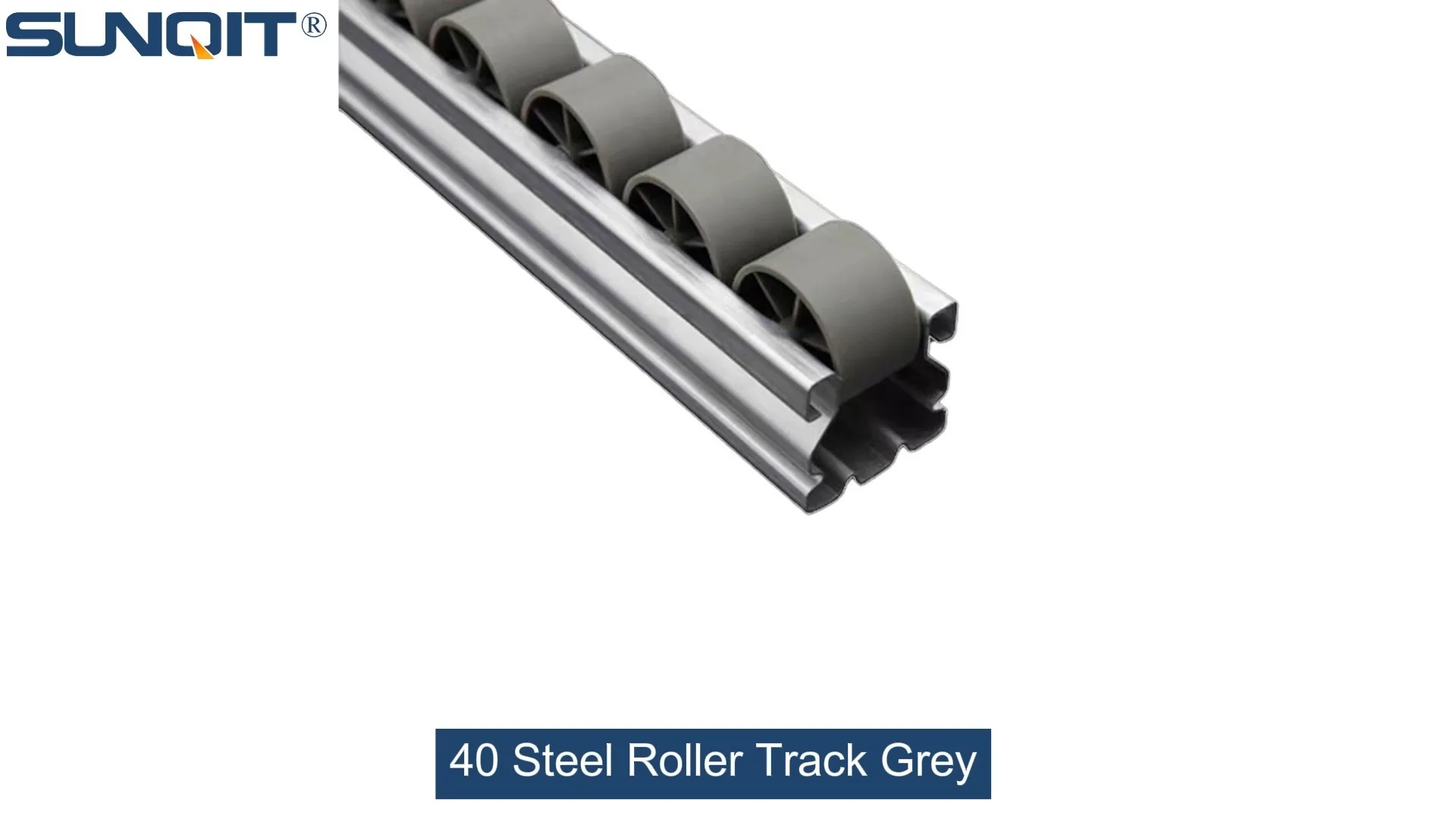
Roller tracks are the unsung heroes of modern manufacturing—quietly moving parts, components, and finished products across assembly lines, warehouses, and logistics hubs. Among the many options available, the
40 Steel Roller Track Grey
stands out as a favorite for lean system implementations. It's not just about the color; it's about the balance of durability, cost-effectiveness, and versatility that makes it a go-to choice for industries ranging from 3C assembly to warehousing logistics. In this article, we'll dive deep into its surface finish options, explore what makes its grey coating last, and show how it fits into the bigger picture of efficient production.
1. What Is 40 Steel Roller Track Grey?
Let's start with the basics: the "40" refers to the standard width of the track (40mm), a size that's compatible with most conveyor systems and flow racks. Made from high-quality cold-rolled steel, this track is designed to handle heavy loads while maintaining smooth movement. The grey coating—usually a powder coat finish—adds a layer of protection and a professional, neutral look that blends seamlessly into any factory environment.
Unlike bare steel, the grey coating prevents rust and scratches, which is critical for maintaining the track's performance over time. Whether you're using it in a conveyor system to move electronic components or in a flow rack to store parts for quick access, this track is built to withstand the daily wear and tear of busy production floors.
2. Surface Finish Options for 40 Steel Roller Tracks
When choosing a 40 steel roller track, you have several surface finish options to pick from, each tailored to specific needs. Let's break them down:
a) Grey Powder Coating
This is the most popular finish for good reason. The process involves cleaning the steel track thoroughly, applying a dry powder (usually epoxy or polyester) electrostatically, and then curing it in an oven at high temperatures. The result is a uniform, matte grey finish that's:
-
Scratch-resistant:
Can handle minor bumps from tools or parts without showing marks.
- Corrosion-resistant: Protects against moisture and mild chemicals, ideal for indoor manufacturing environments.
- Cost-effective: Cheaper than stainless steel or galvanized finishes, making it accessible for small and medium businesses.
- Easy to clean: A quick wipe with a damp cloth removes dust and dirt, keeping the track looking new.
Use cases: 3C assembly lines, manufacturing, and lean pipe workbench setups where a durable, low-maintenance finish is needed.
b) Galvanized Finish
Galvanized tracks are coated with zinc via hot-dip galvanizing. This finish offers excellent corrosion resistance, making it perfect for outdoor or high-moisture areas. The zinc layer acts as a sacrificial barrier—if the coating is scratched, the zinc will corrode first, protecting the steel underneath.
Benefits:
- Outstanding protection against rain, humidity, and saltwater (great for coastal warehouses).
- Long lifespan—can last up to 20 years in outdoor environments.
Use cases: Outdoor storage racks, logistics hubs in humid regions, and agricultural equipment manufacturing.
- Long lifespan—can last up to 20 years in outdoor environments.
Use cases: Outdoor storage racks, logistics hubs in humid regions, and agricultural equipment manufacturing.
c) Stainless Steel Finish
For industries where hygiene and maximum corrosion resistance are non-negotiable, stainless steel tracks are the way to go. Unlike coated finishes, stainless steel has inherent resistance to rust and bacteria, making it ideal for medical device manufacturing or pharmaceutical production lines.
Benefits:
- Highest durability—can withstand harsh chemicals and frequent cleaning.
- Easy to sanitize—critical for industries with strict hygiene standards.
Use cases: Medical equipment assembly, food processing (though check for food-grade certifications), and clean rooms.
- Easy to sanitize—critical for industries with strict hygiene standards.
Use cases: Medical equipment assembly, food processing (though check for food-grade certifications), and clean rooms.
d) Black Oxide Finish
Black oxide is a chemical finish that creates a dark, matte surface on the steel. It's not as corrosion-resistant as other finishes, but it's great for reducing glare and adding a sleek look to precision assembly lines.
Benefits:
- Reduces light reflection—perfect for optical component manufacturing or electronics assembly where glare can affect precision.
- Enhances aesthetic appeal—adds a professional, modern look to workstations.
Use cases: Optical device production, aerospace component assembly, and high-precision 3C manufacturing.
- Enhances aesthetic appeal—adds a professional, modern look to workstations.
Use cases: Optical device production, aerospace component assembly, and high-precision 3C manufacturing.

3. Grey Coating Durability: What Makes It Last?
The grey powder coat finish on the 40 steel roller track isn't just a pretty face—it's built to last. But what factors contribute to its durability? Let's take a look:
a) Pre-Treatment Quality
The key to a long-lasting coating starts before the powder is even applied. A reputable supplier will perform thorough pre-treatment steps: degreasing to remove oil and dirt, phosphating to create a rough surface that helps the powder adhere better, and rinsing to ensure no residues are left behind. Skipping these steps can lead to peeling or chipping of the coating, so it's important to choose a supplier that prioritizes quality here.
b) Coating Thickness
The ideal thickness for the grey powder coat is between 60 and 80 microns. Thicker coatings offer better protection, but they can also increase costs and make the track less flexible. A good balance ensures that the coating can handle scratches and minor impacts without breaking down. Most high-quality tracks will have a consistent thickness across the entire surface, which is a sign of careful manufacturing.
c) Environmental Exposure
How well the grey coating holds up depends on where you use it. In a dry, indoor assembly line (like a 3C production floor), it can last up to 10 years or more with proper maintenance. In humid environments (like a warehouse near the coast), it may need more frequent inspections to prevent rust. However, compared to bare steel, it's still a massive improvement—you won't have to worry about rust spots forming after a few months of use.
d) Physical Wear and Tear
The grey coating is scratch-resistant, but it's not indestructible. Dropping heavy objects on the track or using abrasive tools can cause chips. However, these chips are easy to repair with touch-up paint, which prevents rust from spreading. For most production environments, the wear and tear are minimal—especially if workers are trained to handle the track with care.

4. Real-World Applications of 40 Steel Roller Track Grey
The 40 Steel Roller Track Grey isn't just a theoretical product—it's used every day in factories and warehouses around the world. Let's look at some common applications:
a) Flow Racks for 3C Assembly
In a 3C assembly line (where smartphones, tablets, and laptops are made), time is of the essence. Workers need quick access to components like screens, batteries, and circuit boards. A flow rack equipped with 40 Steel Roller Track Grey allows these components to slide down to the assembly station, right at the worker's fingertips. This reduces the time spent walking to retrieve parts, which aligns with the lean principle of eliminating waste.
For example, a factory assembling wireless earbuds might use a flow rack with grey tracks to store small plastic cases. The cases slide smoothly to the worker, who can pick them up without stopping their assembly process. This simple change can increase production efficiency by up to 20%—a big win for any lean system.
b) Conveyor Systems for Warehousing Logistics
Warehouses that handle large volumes of goods rely on conveyor systems to move packages quickly. The 40 Steel Roller Track Grey is a key component here—its smooth surface ensures that packages glide across the conveyor without getting stuck. The grey coating also resists scratches from cardboard boxes and plastic containers, so the conveyor stays in good shape for years.
Imagine a warehouse that ships online orders. When a customer places an order, the package is picked from the shelf and placed on a conveyor with grey tracks. It moves to the packing station, then to the shipping area—all without any manual lifting. This not only saves time but also reduces the risk of worker injuries.
c) Lean Pipe Workbenches for Production Assemble
Lean pipe workbenches are a staple in lean manufacturing. They're flexible, easy to reconfigure, and designed to reduce waste. Adding 40 Steel Roller Track Grey to a workbench creates a sliding surface for parts bins, so workers can access what they need without reaching across the bench. This small addition can make a big difference in productivity—workers spend less time moving around and more time assembling products.
For example, a car parts manufacturer might use a lean pipe workbench with grey tracks to hold bolts and nuts. The bins slide to the worker, who can grab the right part quickly. This reduces the chance of mistakes and speeds up the assembly process.

5. Comparing Grey Coating with Other Finishes
To help you decide if the grey coating is right for your needs, let's compare it with other popular finishes:
| Finish Type | Durability (1-10) | Corrosion Resistance | Cost (1-10, 1=Low) | Ideal Use Cases |
|---|---|---|---|---|
| Grey Powder Coat | 8 | Good (indoor, low moisture) | 3 | 3C assembly, lean pipe workbenches, indoor conveyors |
| Galvanized | 9 | Excellent (outdoor/humid) | 5 | Outdoor storage racks, coastal warehouses |
| Stainless Steel | 10 | Superior (all environments) | 10 | Medical equipment, pharmaceutical manufacturing |
| Black Oxide | 7 | Moderate | 4 | Optical components, precision assembly |
6. Maintenance Tips to Extend Grey Coating Life
Even the most durable coating needs proper care to last. Here are some tips to keep your 40 Steel Roller Track Grey in top shape:
- Clean regularly: Use a soft cloth and mild detergent (like dish soap) to wipe off dust and dirt. Avoid abrasive cleaners or steel wool—they can scratch the coating.
- Inspect for damage: Every month, check the track for chips or peeling. If you find a small chip, use touch-up paint (matching the grey color) to cover it—this prevents rust from forming under the coating.
- Avoid harsh chemicals: Don't use strong acids or alkalis (like bleach or ammonia) on the track—they can break down the powder coat finish.
- Handle with care: When installing or moving the track, use gloves to avoid scratching it with tools. Don't drop heavy objects on the track, as this can cause dents or chips.
- Lubricate moving parts: If the track has rollers, lubricate them every 3-6 months to keep them moving smoothly. Use a light oil (like silicone oil) that won't damage the coating.
7. Why Choose 40 Steel Roller Track Grey for Your Lean System?
The 40 Steel Roller Track Grey is more than just a component—it's a tool that helps you implement lean principles effectively. Here's why it's a great choice:
Waste Reduction:
Its smooth surface reduces the time spent on handling parts, which aligns with lean's core goal of eliminating waste. For example, using it in a flow rack means workers don't have to walk to retrieve parts—they're right at their fingertips.
Reusability:
The durable grey coating means you can reuse the track when reconfiguring your production line. This fits perfectly with the lean of "sustainable improvement"—you don't have to buy new tracks every time you change your setup.
Versatility:
It works in almost every industry—from 3C assembly to warehousing logistics. You don't need different tracks for different lines, which simplifies your supply chain and reduces costs.
Cost-Effective:
Compared to stainless steel or galvanized finishes, the grey powder coat is much cheaper. This makes it accessible for small and medium businesses that want to implement lean systems without breaking the bank.
8. How to Choose a Reliable Supplier
The quality of your 40 Steel Roller Track Grey depends on the supplier you choose. Here are some things to look for:
Custom Solutions:
A good supplier will offer custom lengths, finishes, and accessories (like connectors) to fit your specific needs. For example, if you need a track that's 5 meters long for your conveyor system, they should be able to provide it.
Quality Assurance:
They should have strict quality control processes in place—like testing the coating thickness and corrosion resistance. Ask for certificates or test reports to ensure you're getting a high-quality product.
Lean Expertise:
A supplier that understands lean manufacturing will help you integrate the track into your system effectively. They can give you advice on how to use it in flow racks, conveyors, or workbenches to maximize efficiency.
After-Sales Support:
Look for a supplier that offers after-sales support—like maintenance tips or replacement parts. This ensures that you can keep your track in good shape for years.
9. Conclusion
The 40 Steel Roller Track Grey is a versatile, durable, and cost-effective choice for lean system implementations. Its grey powder coat finish offers excellent protection against scratches and rust, making it ideal for industries like 3C assembly, warehousing logistics, and production assemble. With proper maintenance and a reliable supplier, it can serve your production line for years, supporting your goals of efficiency and sustainability.
Whether you're building a new conveyor system, setting up a flow rack, or upgrading your lean pipe workbench, this track is a smart investment. It's not just about moving parts—it's about moving your business forward.