- Company Articles
- Products and Technology
- Product knowledge
- 40 Steel Roller Track Grey vs. Plastic Tracks: Strength & Longevity Comparison

40 Steel Roller Track Grey vs. Plastic Tracks: Strength & Longevity Comparison
Related Product
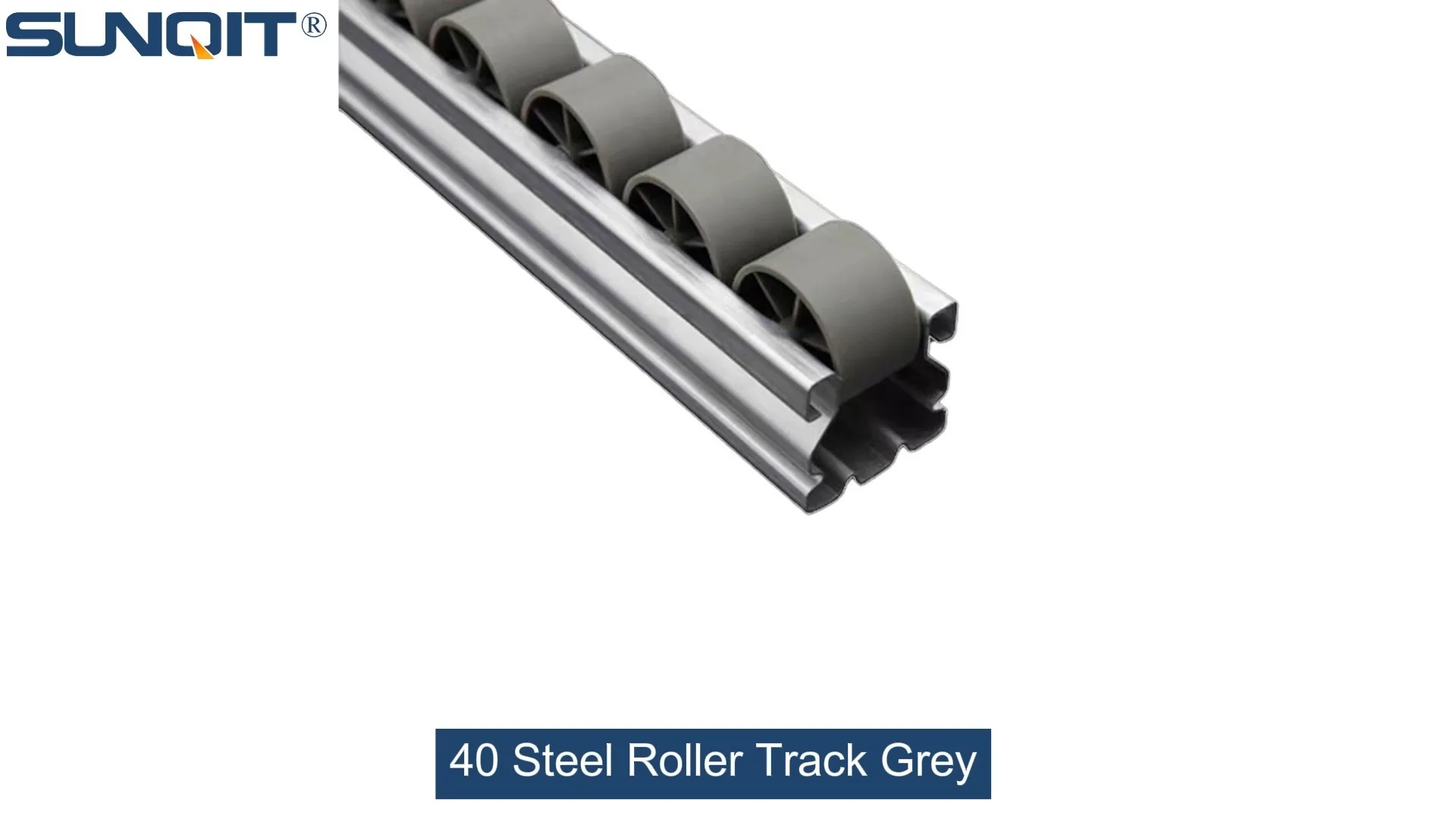
40 Steel Roller Track Grey
The roller track can be installed with multiple accessories to create different slopes and configurations of flow racks.All steel conveyor 40 roller track accessories are engineered to perfectly fit the sliding rail.It is enable the movement of SLC boxes.
40 Steel Roller Track Grey vs. Plastic Tracks: Strength & Longevity Comparison
If you've ever stood in a busy warehouse or a fast-paced production line, you know how much depends on the little things—like the roller tracks that keep parts moving smoothly from one station to the next. Choosing the right track isn't just about picking something that fits; it's about finding a solution that lasts, handles your daily load, and doesn't slow down your team. Today, we're diving deep into two popular options: szsunqit's 40 Steel Roller Track Grey and plastic roller tracks (like their yellow or grey plastic guide rails). We'll break down their strength, how long they hold up, and which one makes sense for your specific needs.
What Are These Tracks, Anyway?
First, let's get clear on what we're comparing. The 40 Steel Roller Track Grey from szsunqit is a heavy-duty option designed for industrial use. It's made of steel with a grey finish, built to handle consistent, heavy loads without bending or warping. On the other hand, plastic tracks (like the yellow or grey plastic roller track guide rails they offer) are lighter, often used in environments where weight or corrosion resistance (to certain chemicals) is a priority, or where you need a quieter operation.
Both are part of szsunqit's broader lean solution offerings—since they fit into flexible production lines and flow racks, helping teams optimize their workflow and reduce waste. Whether you're setting up a new conveyor system or upgrading an existing flow rack, these tracks are key components.
Strength & Load Capacity: Head-to-Head
When it comes to strength, there's no beating steel—especially for heavy-duty tasks. Let's put this into numbers with a comparison table:
| Feature | 40 Steel Roller Track Grey | Plastic Roller Track (Grey/Yellow) |
|---|---|---|
| Material Thickness | Typically 1.2-2.0mm steel (varies by model) | 0.8-1.5mm plastic (high-density polyethylene) |
| Maximum Load Per Meter | Up to 500 kg (depending on installation) | Up to 150 kg (light to medium loads) |
| Resistance to Bending | High—maintains shape even under repeated heavy use | Moderate—may flex under heavy loads, leading to uneven rolling |
| Impact Resistance | Excellent—can withstand drops of heavy parts without cracking | Good for light impacts, but may chip or crack if hit hard |
For example, if you're in the automotive industry, where you're moving heavy engine parts or metal assemblies, the 40 Steel Roller Track Grey is a no-brainer. It can handle the constant weight and abuse without breaking down. But if you're in the medical device industry, where you're moving lighter, more delicate components, plastic tracks might be a better fit—they're gentler on parts and quieter.
Longevity: How Long Will They Last?
Longevity isn't just about how strong something is—it's about how well it holds up over time against wear, corrosion, and environmental factors. Let's break this down:
Wear Resistance
Steel tracks have a much higher wear resistance than plastic ones. The 40 Steel Roller Track Grey from szsunqit has a durable grey coating that prevents scratches and reduces friction. Even after years of parts sliding over it, the rollers stay smooth and the track doesn't show signs of significant wear. Plastic tracks, on the other hand, can start to wear down at the contact points over time—especially if you're using them for heavy loads. The plastic may become glossy or even develop grooves, which can slow down parts or cause jams.
Corrosion Resistance
This is a tricky one. Steel is prone to rust if it's not properly coated, but szsunqit's 40 Steel Roller Track Grey has a protective finish that resists moisture and mild chemicals. However, if you're working in a wet environment or with corrosive substances, plastic tracks might have an edge—they don't rust at all. But for most manufacturing settings (automotive, 3C assembly, etc.), the steel track's coating is more than enough to keep corrosion at bay.
Temperature Tolerance
Steel tracks can handle a wide range of temperatures—from freezing cold to high heat (up to 200°C or more, depending on the coating). Plastic tracks, however, have a lower tolerance. They can start to soften at high temperatures (around 80-100°C) and become brittle in cold conditions (below 0°C). So if your production line uses heat-treated parts or operates in a cold warehouse, steel tracks are the safer choice.
Maintenance Needs
Steel tracks require minimal maintenance—just occasional cleaning to remove dust and debris, and maybe a quick check for loose bolts. Plastic tracks, though, may need more attention. If they get scratched or cracked, you might have to replace sections of the track to keep things running smoothly. Over time, this adds up in terms of both time and cost.
Practical Applications: Where Each Track Shines
Let's think about real-world use cases to help you decide:
Best For 40 Steel Roller Track Grey:
- Heavy-duty flow racks in automotive or mechanical manufacturing plants.
- Conveyor systems moving metal parts or large assemblies.
- Production lines where load capacity and durability are top priorities (like 3C assembly for large devices).
- Warehouses storing heavy pallets or boxes.
Best For Plastic Roller Tracks:
- Lightweight lean solution setups (like small parts assembly for consumer electronics).
- Medical device manufacturing, where corrosion resistance and quiet operation are key.
- Workstations handling delicate components (like circuit boards).
- Environments where you need to reduce noise (plastic tracks are quieter than steel).
Cost-Effectiveness: Short-Term vs. Long-Term
At first glance, plastic tracks might seem cheaper—they have a lower initial cost. But let's look at the big picture:
Suppose you buy a plastic track for $50 per meter, and it lasts 2 years before you need to replace it. A steel track costs $100 per meter but lasts 5 years. Over 5 years, the plastic track would cost you $125 (since you need to replace it twice), while the steel track costs $100. Plus, the steel track requires less maintenance, so you save time and labor costs too.
For businesses that value lean solution principles (like reusability and sustainability), the steel track is a better investment. It's built to last, so you don't have to throw it away as often—reducing waste and aligning with szsunqit's focus on sustainable improvement.
Why Choose szsunqit's Roller Tracks?
szsunqit isn't just a lean pipe supplier—they're a partner in optimizing your production line. Here's why their tracks stand out:
- High-Quality Materials: Their 40 Steel Roller Track Grey uses premium steel with a durable coating, ensuring strength and longevity.
- Customization: They offer custom solutions for your specific needs—whether you need a longer track, a different finish, or a setup that fits your unique production line.
- Compatibility: Their tracks work seamlessly with other szsunqit products, like flow racks, conveyors, and lean pipe workbenches—so you can build a cohesive, flexible system.
- Expertise: With years of experience in manufacturing and lean solutions, their team can help you choose the right track for your application—saving you time and avoiding costly mistakes.
Final Verdict: Which Track Should You Pick?
The answer depends on your needs:
If you need a track that can handle heavy loads, last for years, and withstand harsh conditions—go with the 40 Steel Roller Track Grey. It's the workhorse of the two, perfect for most manufacturing and warehouse settings.
If you're working with light, delicate parts, need a quieter operation, or are in a corrosive environment—plastic tracks are a solid choice. But keep in mind that they may not last as long as steel.
No matter which you choose, szsunqit has you covered. Their wide range of roller tracks and lean solutions are designed to help you build a more efficient, sustainable production line. So whether you're upgrading your current setup or starting from scratch, you can trust their products to deliver results.
Wrapping Up
Choosing between steel and plastic roller tracks isn't just about cost—it's about finding the right balance of strength, longevity, and practicality for your business. The 40 Steel Roller Track Grey from szsunqit is an excellent choice for most industrial applications, offering unbeatable strength and durability. Plastic tracks, while useful in specific cases, can't match steel's performance over the long haul.
At the end of the day, investing in high-quality roller tracks is an investment in your production line's efficiency and reliability. So take the time to evaluate your needs, and pick the track that will help you keep things moving smoothly for years to come.