- Company Articles
- Products and Technology
- Installation And Maintenance
- 40 Steel Roller Track White Installation Guide for Beginners

40 Steel Roller Track White Installation Guide for Beginners
Related Product
40 Steel Roller Track White
The roller track can be installed with multiple accessories to create different slopes and configurations of flow racks.All steel conveyor 40 roller track accessories are engineered to perfectly fit the sliding rail.It is enable the movement of SLC boxes.
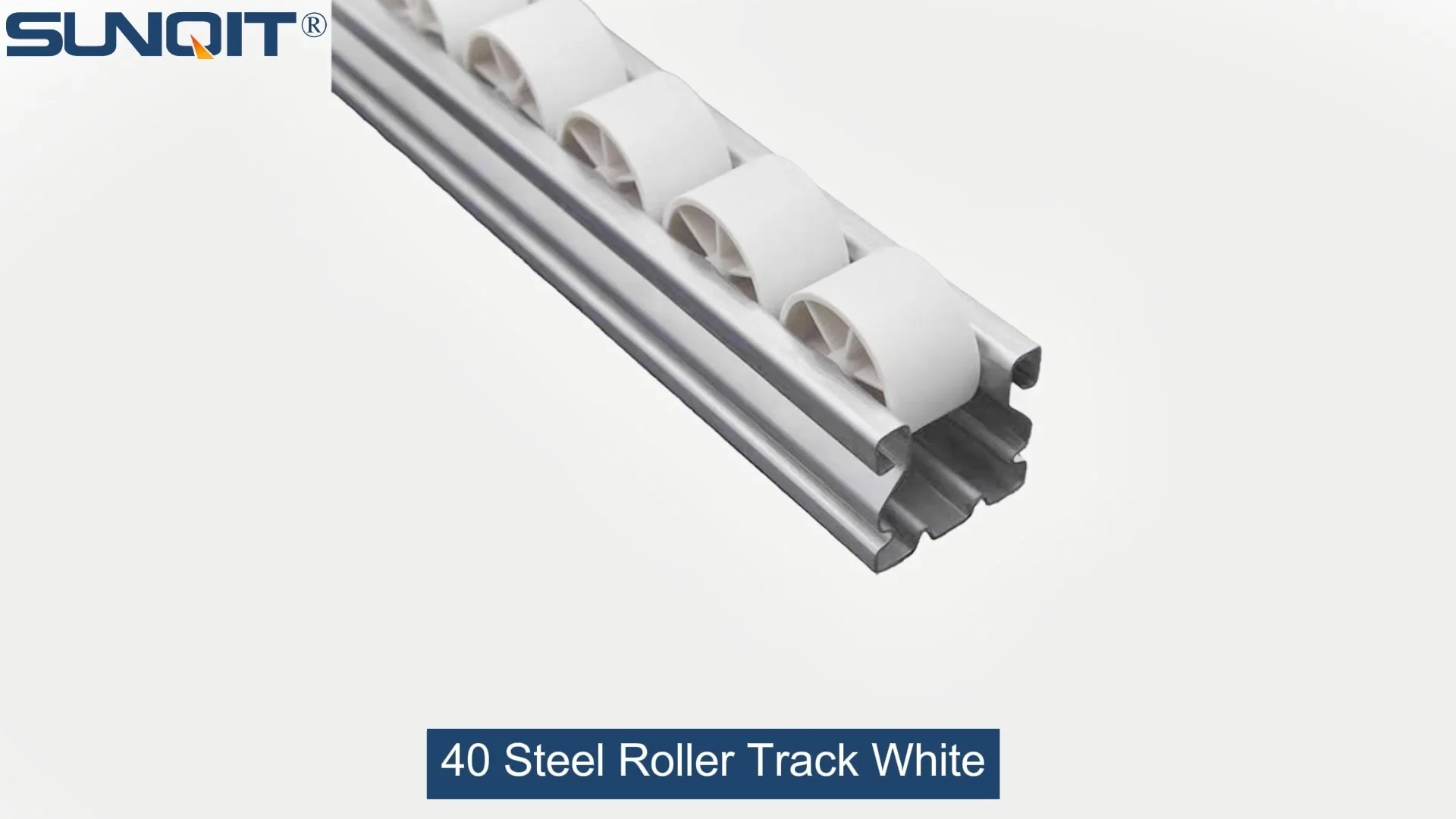
If you've ever worked in a warehouse, assembly line, or even a small workshop, you know how frustrating it can be when materials don't move smoothly. Parts get stuck, you waste time reaching for items, and the whole process feels clunky. That's where the 40 Steel Roller Track White comes in—it's a simple, effective tool that helps materials glide easily from one place to another, making your workflow faster and more efficient. Whether you're setting up a new flow rack, adding to a lean pipe workbench, or integrating with a conveyor system, this guide will walk you through every step of installing your 40 Steel Roller Track White like a pro—even if you're a complete beginner.
Pre-Installation Prep: What You Need to Get Started
Before you dive into installation, let's make sure you have all the right components and tools on hand. Skipping this step can lead to delays or mistakes, so take a few minutes to gather everything you need.
Components You'll Need
| Component Name | Quantity (per 1m track) | Notes |
|---|---|---|
| 40 Steel Roller Track White Sections | 1 (or as needed) | Choose length based on your space (common lengths: 0.5m, 1m, 2m) |
| Roller Track Connectors | 2 (for joining sections) | Use to link multiple track sections together |
| Roller Track Brackets | 2-3 (per 1m track) | Secures track to base (like flow rack frame or workbench) |
| M4/M5 Screws & Nuts | 4-6 (per bracket) | Make sure they fit the bracket holes |
| Plastic End Caps | 2 (per track) | Prevents dust from entering and protects hands from sharp edges |
Tools You'll Need
| Tool Name | Purpose |
|---|---|
| Measuring Tape | To mark the exact position for your track |
| Pencil/Marker | To draw lines on the base where brackets will go |
| Phillips Screwdriver | To tighten screws (choose size based on your screws) |
| Adjustable Wrench | To hold nuts in place while tightening screws |
| Level | To ensure the track is straight and sloped correctly (for flow) |
| Clean Cloth | To wipe off dust or debris from the track before installation |
Tip:
Lay out all components and tools on a flat surface (like a lean pipe workbench) before starting. This way, you won't have to hunt for anything mid-installation!
Step-by-Step Installation Guide
Now that you have everything ready, let's get to the fun part—installing your roller track! Follow these steps carefully, and you'll have a fully functional track in no time.
Step 1: Measure & Mark Your Installation Area
First, decide where you want to install the track. This could be on a flow rack, a lean pipe workbench, or even a custom frame. Use your measuring tape to find the exact length you need, then mark the positions for the brackets with a pencil. Remember: For materials to flow smoothly, the track should have a slight slope (about 1-2 degrees). If you're installing it on a flat surface, you might need to adjust the brackets to create this slope.
Pro Tip:
Use a level to check the slope as you mark. If the slope is too steep, materials will slide too fast; if it's too shallow, they won't move at all.
Step 2: Attach Brackets to the Base
Take your brackets and line them up with the marks you made earlier. Place a bracket every 50-60 cm along the track length (this ensures stability). Use your screwdriver and wrench to tighten the screws through the bracket holes into the base. Make sure the brackets are secure—wobbly brackets will lead to a wobbly track!
If you're installing the track on a lean pipe workbench, you might need special brackets designed to attach to the pipe. Check your bracket package to see if they're compatible—if not, you can find the right ones from a lean solution supplier.
Step3: Install the Roller Track Sections
Now, take your 40 Steel Roller Track White sections and slide them into the brackets. If you're using multiple sections, connect them with roller track connectors. To do this: insert one end of the connector into the first track section, then slide the second section onto the other end of the connector. Make sure the sections are aligned perfectly—any gaps or misalignment will cause materials to get stuck.
Once the sections are in place, tighten any screws on the brackets that hold the track. Don't over-tighten, though—you want the track to be secure but not bent.
Step4: Add End Caps & Test the Track
Slide the plastic end caps onto both ends of the track. This protects the track from dust and prevents your hands from getting cut on sharp edges. Next, it's time to test! Grab a small box or a piece of material that you'll be using on the track and roll it along. Does it move smoothly? If yes, great! If not, check for any misaligned sections or loose brackets. Adjust as needed until the material glides easily.
Step5: Final Checks & Adjustments
Double-check all screws and connectors to make sure nothing is loose. Give the track a gentle shake—if it moves, tighten the brackets again. If you're using the track for heavy materials, test with a weight similar to what you'll be moving to ensure it can handle the load. Once everything looks good, you're done!
Pairing Your Roller Track with Other Lean Components
The 40 Steel Roller Track White is even more powerful when paired with other lean tools. Let's look at some common combinations that can take your workflow to the next level:
1. Flow Rack Integration
Flow racks are a staple in lean warehouses, and the 40 Steel Roller Track White is the perfect addition. By installing the track on the shelves of a flow rack, you can create a first-in-first-out (FIFO) system. This means the first material you put on the rack is the first one you take off—ideal for managing inventory and reducing waste. Whether you're storing boxes of parts or finished products, this combination will make your warehouse more organized and efficient.
2. Lean Pipe Workbench Setup
If you work on an assembly line, adding the roller track to your lean pipe workbench can save you a lot of time. For example, in a 3C assembly line, you can install the track on the side of the workbench so that components like phone screens or batteries slide directly to your station. This eliminates the need to reach across the bench or walk to get parts, letting you focus on what you do best—assembling products quickly and accurately.
3. Conveyor System Connection
For larger production lines, the roller track can be connected to a conveyor system. This creates a seamless flow of materials from the warehouse to the assembly line to the packaging area. For example, a conveyor can move parts to a lean pipe workbench, where the roller track guides them to the worker. Once the part is assembled, it can slide back onto the conveyor to the next station. This integration reduces manual handling and speeds up the entire production process.
4. Part of a Complete Lean Solution
All these combinations are part of a complete lean solution. Lean manufacturing is about reducing waste and improving efficiency, and the 40 Steel Roller Track White plays a key role in that. By using this track with other lean tools, you can create a workflow that's flexible, scalable, and easy to adapt to changing needs. Whether you're a small business or a large manufacturer, this solution can help you save time, money, and resources.
Troubleshooting Common Issues
Even the best installations can have issues. Here are some common problems you might face and how to fix them:
1. Rollers Are Stuck
If rollers aren't moving smoothly, the most common cause is dust or debris. Use a clean cloth to wipe off the rollers and the track. If that doesn't work, apply a small amount of silicone lubricant to the rollers (avoid oil-based lubricants—they attract more dust).
2. Materials Won't Slide
This usually means the slope is too shallow. Adjust the brackets to increase the slope slightly. If the slope is already correct, check for misaligned sections or loose brackets. Tighten any loose screws and realign the track if needed.
3. Track Is Wobbly
Wobbly tracks are often caused by loose brackets. Double-check all screws and tighten them as needed. If the brackets are still loose, you might need to add more brackets along the track length for extra stability.
4. Connectors Are Loose
If the track sections are coming apart, check the connectors. Make sure they're inserted fully into both sections. If they're still loose, you can use a small amount of adhesive (like super glue) to keep them in place—just be careful not to get glue on the rollers.
Maintenance Tips to Keep Your Track Working Like New
To ensure your 40 Steel Roller Track White lasts for years, it's important to perform regular maintenance. Here are some simple tips:
-
Clean Regularly:
Wipe the track and rollers with a dry cloth every week to remove dust and debris. For stubborn dirt, use a damp cloth (but make sure to dry it thoroughly to prevent rust).
- Lubricate: Apply silicone lubricant to the rollers every 3-6 months. This keeps them rolling smoothly and prevents wear and tear.
- Check for Loose Parts: Inspect the brackets, screws, and connectors every month. Tighten any loose parts to avoid accidents.
- replace Worn Parts: If rollers are bent or broken, replace them immediately. Worn parts can cause materials to get stuck or damage your products.
- Store Properly: If you're not using the track for a long time, store it in a dry, cool place to prevent rust. Cover it with a cloth to keep dust off.
- Lubricate: Apply silicone lubricant to the rollers every 3-6 months. This keeps them rolling smoothly and prevents wear and tear.
- Check for Loose Parts: Inspect the brackets, screws, and connectors every month. Tighten any loose parts to avoid accidents.
- replace Worn Parts: If rollers are bent or broken, replace them immediately. Worn parts can cause materials to get stuck or damage your products.
- Store Properly: If you're not using the track for a long time, store it in a dry, cool place to prevent rust. Cover it with a cloth to keep dust off.
Real-World Applications: How Others Are Using This Track
Let's look at some real examples of how businesses are using the 40 Steel Roller Track White to improve their workflows:
Example1: 3C Assembly Line
A 3C manufacturer in China uses the track on their lean pipe workbenches. Workers assemble smartphones, and the track guides components like batteries and screens directly to their stations. This has reduced assembly time by 15% and cut down on errors caused by manual handling.
Example2: Warehouse Logistics
A warehouse that stores electronic parts uses the track on their flow racks. The FIFO system ensures that older parts are used first, reducing waste from expired components. This has saved the warehouse over $10,000 a year in inventory costs.
Example3: Medical Device Manufacturing
A medical device manufacturer uses the track in their clean room. The track is easy to clean and doesn't collect dust, making it perfect for sterile environments. It's used to move parts from the storage area to the assembly line, ensuring that the parts stay clean and uncontaminated.
Conclusion
The 40 Steel Roller Track White is a versatile, easy-to-install tool that can transform your workflow. Whether you're a beginner or an experienced professional, this guide has everything you need to install the track correctly and use it to its full potential. By pairing it with flow racks, lean pipe workbenches, conveyors, and other lean tools, you can create a complete lean solution that improves efficiency, reduces waste, and saves you time and money.
So what are you waiting for? Grab your tools, gather your components, and start installing your 40 Steel Roller Track White today. Your workflow will thank you!