- Company Articles
- Products and Technology
- Product knowledge
- 40 Steel Roller Track White Load Distribution: Preventing Roller Damage

40 Steel Roller Track White Load Distribution: Preventing Roller Damage
Related Product
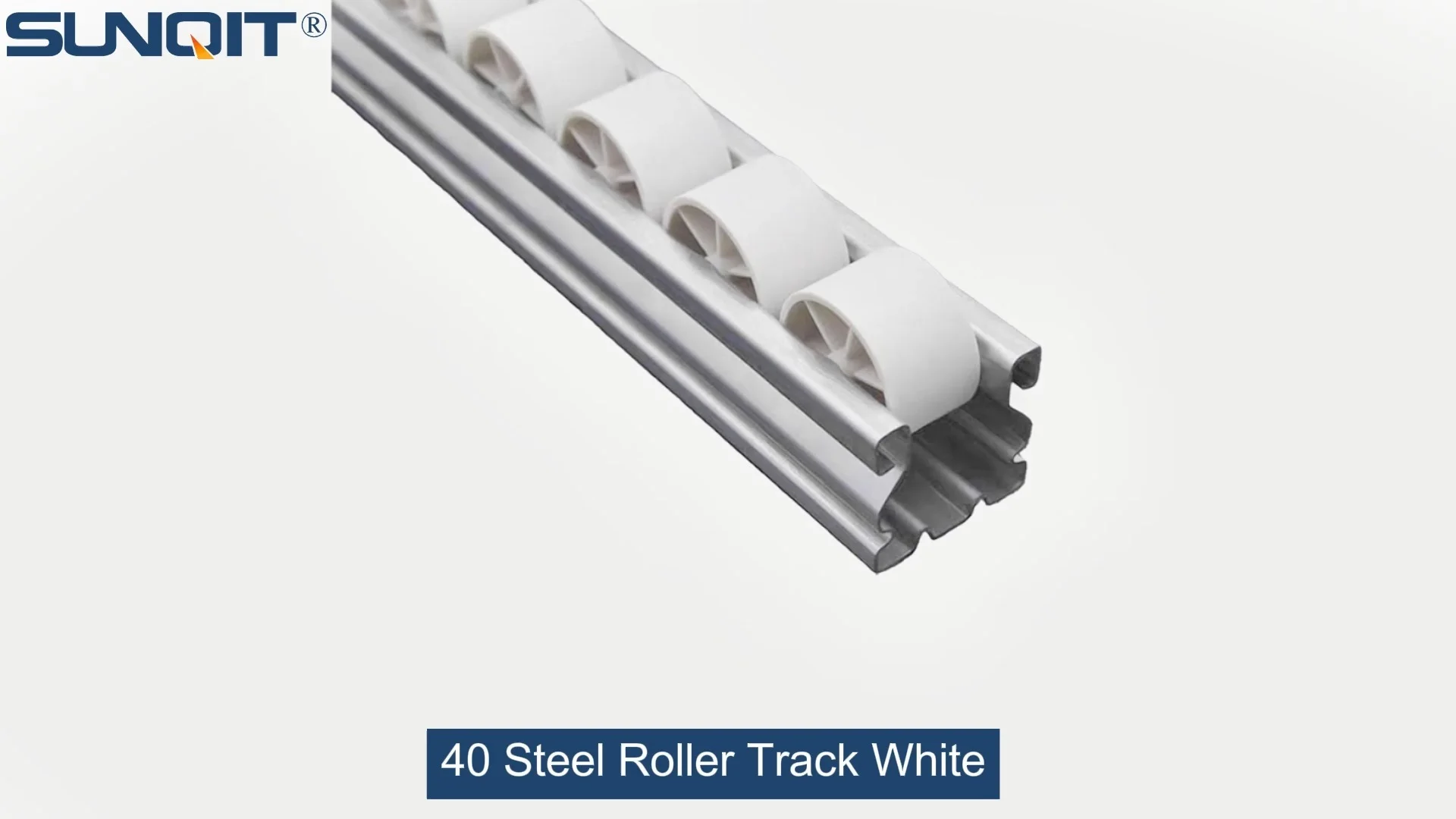
40 Steel Roller Track White
The roller track can be installed with multiple accessories to create different slopes and configurations of flow racks.All steel conveyor 40 roller track accessories are engineered to perfectly fit the sliding rail.It is enable the movement of SLC boxes.
40 Steel Roller Track White Load Distribution: Preventing Roller Damage
If you've ever worked with production lines or warehouse storage systems, you know how critical smooth material flow is to keeping operations running. One component that often takes center stage in these setups is the 40 Steel Roller Track White— a versatile, durable solution used in everything from flow racks to conveyors. But here's the thing: even the sturdiest roller track can fail prematurely if load distribution isn't handled correctly. Roller damage, bent tracks, and unexpected downtime aren't just minor annoyances; they eat into your budget, slow down production, and disrupt the lean flow your team works hard to maintain.
In this article, we'll dive deep into the art and science of load distribution for the 40 Steel Roller Track White. We'll cover why it matters, the key principles to follow, common mistakes to avoid, and how the right practices (paired with quality accessories and lean solutions) can keep your roller tracks in top shape for years. Whether you're setting up a new flow rack or troubleshooting existing conveyor issues, this guide will give you the insights you need to prevent roller damage and keep your operations lean and efficient.
What Is 40 Steel Roller Track White?
Before we get into load distribution, let's take a moment to understand what makes the 40 Steel Roller Track White unique. This roller track is part of SunQit's extensive lineup of lean material handling solutions, designed for general-purpose applications where corrosion resistance and clean aesthetics are important. The white coating isn't just for looks—it provides an extra layer of protection against rust and wear, making it ideal for environments like consumer electronics assembly lines or light warehousing.
Each track features high-quality steel rollers mounted on a robust frame, with precise spacing to ensure smooth movement of boxes, parts, or pallets. Unlike its ESD (electrostatic discharge) counterparts (like the black ESD roller tracks), the white version is optimized for non-sensitive materials, but it still adheres to strict quality standards to handle consistent loads. When paired with the right roller track accessories—like connectors, end supports, or guide rails—it becomes a flexible building block for custom flow racks and conveyors.
Why Load Distribution Matters for Roller Tracks
Imagine a scenario: a worker places a heavy box of 3C components on one end of a 40 Steel Roller Track White, but the box is off-center—most of its weight rests on just two rollers. Over time, those rollers start to bend. Then, one day, a roller snaps mid-shift, halting the entire conveyor line. The team has to stop production to replace the roller, and the delay causes missed deadlines. This isn't a hypothetical situation; it's a common problem in facilities that overlook load distribution.
Load distribution is about spreading the weight of your materials evenly across the roller track to minimize stress on individual rollers, joints, and connectors. When done right, it:
• Reduces the risk of roller damage and track bending
• Extends the lifespan of your roller track system
• Lowers maintenance costs and unplanned downtime
• Ensures consistent, smooth material flow (a core part of any lean solution)
Key Principles of Load Distribution for 40 Steel Roller Track White
1. Uniform Weight Spread: Avoid Point Loads
The biggest enemy of roller tracks is point loads—when most of the weight is concentrated on a small area (like a single roller or a few adjacent rollers). For the 40 Steel Roller Track White, each roller is designed to handle a specific amount of weight, but if you place a heavy item on just one spot, you exceed that limit. This leads to bent rollers, worn bearings, or even broken roller shafts.
How to fix this? Use pallets or trays to spread the weight of your materials across more rollers. For example, if you're moving small parts in boxes, place the boxes on a pallet that covers at least 5-6 rollers. This way, the weight is distributed evenly, and no single roller takes the brunt of the load.
2. Match Load Capacity to Track Specifications
Every 40 Steel Roller Track White has a maximum load capacity—usually listed as kg per meter or per roller. Before loading any material, make sure you know this number. Exceeding it is a surefire way to cause damage. For instance, if your track can handle 500 kg per meter, don't stack 600 kg of goods on a 1-meter section.
SunQit's 40 Steel Roller Track White is engineered to meet strict load standards, but it's up to you to use it correctly. If you're unsure about the capacity of your track, check the product specs or reach out to your supplier (like SunQit, a trusted roller track supplier) for clarification.
3. Proper Alignment of Loads
Misaligned loads are another common culprit of roller damage. If you push a box that's off-kilter onto the track, it will rub against the side rails and put extra stress on the rollers closest to the edge. Over time, this can cause the rollers to wear unevenly or even break.
To avoid this, train your team to align loads with the center of the track before moving them. For conveyor systems, consider adding guide rails (like the plastic roller track guide rail yellow or grey from SunQit's product line) to keep loads on path. This small step can go a long way in preventing unnecessary wear and tear.
4. Role of Roller Track Accessories in Load Distribution
Your roller track is only as strong as its accessories. Roller track connectors, end supports, and center brackets play a key role in distributing load across the entire system. For example:
•
Roller Track Connectors:
These link sections of track together. Using high-quality connectors (like SunQit's roller track connector) ensures that load is transferred smoothly from one section to the next, instead of getting stuck at the joints.
•
End Supports:
End supports (like the end support for roller track placon mount with stop) keep the track stable at the edges, preventing it from sagging under heavy loads.
•
Center Brackets:
For longer track sections, center brackets add extra support to distribute weight evenly, reducing the risk of bending.
Skipping these accessories or using cheap, non-genuine ones can lead to joint failure and track sagging—both of which disrupt load distribution and cause roller damage.
Common Mistakes to Avoid
Let's take a look at some of the most frequent mistakes facilities make when using 40 Steel Roller Track White, and how they impact load distribution:
1. Overloading a Single Section
As mentioned earlier, exceeding the load capacity of a track section is a recipe for disaster. For example, a warehouse team might stack three heavy boxes on a 2-foot section of track, thinking it's strong enough. But if each box weighs 200 kg, that's 600 kg on a section designed for 400 kg—leading to bent rollers and track damage.
2. Using Non-Genuine Accessories
Cutting corners on accessories is a common mistake. Cheap roller track connectors might seem like a good deal, but they often don't have the strength to handle heavy loads. This can cause joints to break, leading to uneven load distribution and roller damage.
3. Ignoring Maintenance
Dust, debris, and worn bearings can all affect load distribution. If a roller's bearing is worn out, it won't spin smoothly, putting extra stress on adjacent rollers. Regular cleaning and inspection (like checking for loose connectors or worn rollers) can prevent these issues from escalating.
4. Poor Integration with Flow Racks or Conveyors
When integrating 40 Steel Roller Track White into flow racks or conveyors, it's important to ensure that the track is level and aligned with other components. A flow rack that's tilted too much or a conveyor that's out of alignment will cause loads to shift, leading to uneven weight distribution and roller damage.
Case Study: Optimizing Load Distribution for a 3C Assembly Plant
Let's take a real-world example to see how proper load distribution can make a difference. A 3C assembly plant was using SunQit's 40 Steel Roller Track White in their flow racks and conveyors. They were experiencing frequent roller damage—up to 10 roller replacements per month— which cost them time and money.
SunQit's lean solution team analyzed their setup and found several issues:
• Workers were placing heavy 3C component boxes directly on the track without pallets, causing point loads.
• The flow racks lacked proper end supports, leading to track sagging at the edges.
• They were using cheap, non-genuine roller track connectors that were breaking under load.
The team recommended a few changes:
• Use pallets to spread the weight of component boxes across more rollers.
• Add end supports and center brackets to the flow racks.
• replace non-genuine connectors with SunQit's roller track connectors.
After implementing these changes, the plant saw a 40% reduction in roller replacement costs and a 25% decrease in downtime. Their production line ran smoother, and the team could focus on meeting deadlines instead of fixing broken rollers.
Good vs. Bad Load Distribution Practices
| Practice Type | Action | Impact on Roller Track |
|---|---|---|
| Good | Place loads on pallets to spread weight evenly. | Minimizes point loads; reduces roller wear. |
| Bad | Stack heavy items on one spot without pallets. | Causes bent rollers and track damage. |
| Good | Use genuine roller track accessories (connectors, supports). | Ensures smooth load transfer; prevents joint failure. |
| Bad | Use cheap, non-genuine accessories. | Leads to sagging tracks and uneven load distribution. |
| Good | Align loads with the center of the track. | Reduces side stress on rollers and guide rails. |
| Bad | Push misaligned loads onto the track. | Causes uneven wear and roller breakage. |
Final Thoughts
The 40 Steel Roller Track White is a workhorse in production and warehouse systems, but it needs proper care to perform at its best. Load distribution isn't just a technical detail—it's a core part of maintaining a lean, efficient operation. By following the principles we've discussed (uniform weight spread, proper alignment, using quality accessories), you can prevent roller damage, reduce downtime, and keep your material flow smooth.
Remember: if you're ever unsure about how to optimize your roller track setup, reach out to a trusted supplier like SunQit. They offer not just high-quality roller tracks and accessories, but also custom lean solutions to help you design a system that works for your specific needs. Whether you're setting up a new flow rack or troubleshooting an existing conveyor, the right guidance can make all the difference.
Don't let roller damage slow you down. Take the time to get load distribution right—your team, your budget, and your production line will thank you.