- Company Articles
- Products and Technology
- Product knowledge
- 40 Steel Roller Track White Sizing Guide: 40mm vs. 50mm for Your Needs

40 Steel Roller Track White Sizing Guide: 40mm vs. 50mm for Your Needs
Related Product
40 Steel Roller Track White
The roller track can be installed with multiple accessories to create different slopes and configurations of flow racks.All steel conveyor 40 roller track accessories are engineered to perfectly fit the sliding rail.It is enable the movement of SLC boxes.
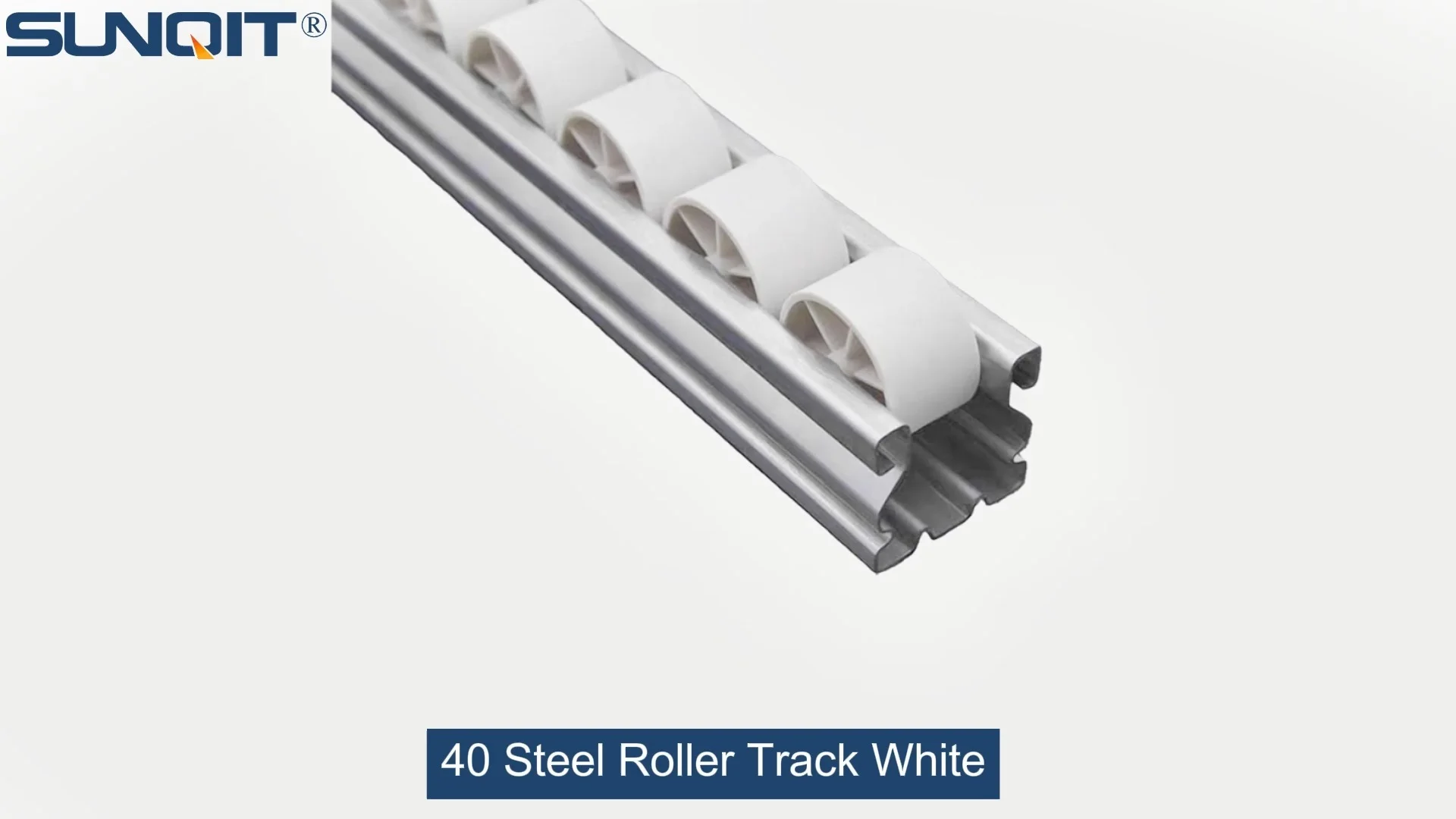
Roller tracks are the unsung heroes of efficient material handling in manufacturing and logistics. Whether you're moving small components on a flow rack or heavy parts along a conveyor line, the right roller track size can make all the difference in productivity and smooth operations. Today, we're diving deep into the 40 Steel Roller Track White —specifically comparing the 40mm and 50mm variants—to help you decide which one fits your needs best. This guide will break down their features, applications, and how they integrate into your overall lean solution, so you can make an informed choice that boosts your workflow.
Understanding 40mm Steel Roller Track White
Let's start with the 40mm Steel Roller Track White. This compact size is a favorite in industries where space is at a premium and items being moved are relatively lightweight. Made from high-quality steel with a white coating, it's not just durable but also adds a clean, professional look to your workspace.
Key Features of 40mm Steel Roller Track White
- Width: 40mm
- Roller diameter: Typically around 10mm (varies slightly by manufacturer)
- Load capacity: Up to 100kg per meter (depending on roller spacing and material thickness)
- Surface: Smooth white finish that resists scratches and corrosion
- Compatibility: Works seamlessly with standard aluminum profile systems and lean pipe workbench setups
Common Applications
The 40mm track shines in environments where precision and space efficiency are key. For example:
- 3C Assembly Lines: Moving small electronic components like phone parts or circuit boards.
- Medical Device Manufacturing: Handling delicate instruments that require gentle movement.
- Retail Warehouses: Flow racks for small products like cosmetics or accessories.
- Lean Pipe Workbenches: Integrating into workstations to slide parts directly to the operator.
Benefits
- Space-Saving: Its narrow width allows for more racks or workstations in the same area.
- Cost-Effective: Generally more affordable than the 50mm variant, making it ideal for budget-conscious setups.
- Easy Installation: Compatible with most standard connectors, so you can set it up quickly without specialized tools.
- Low Maintenance: The steel construction and white coating mean it's easy to clean and resistant to wear.
If your operations involve moving light to medium-weight items and you need to maximize every inch of space, the 40mm Steel Roller Track White is a solid choice.
Understanding 50mm Steel Roller Track White
Now, let's look at the 50mm Steel Roller Track White. This larger size is designed for heavier loads and high-volume operations where durability and strength are non-negotiable.
Key Features of 50mm Steel Roller Track White
- Width: 50mm
- Roller diameter: Usually 12mm or more, providing better support for heavy items
- Load capacity: Up to 250kg per meter (again, dependent on spacing and thickness)
- Surface: Same white coating as the 40mm, ensuring corrosion resistance and a clean appearance
- Compatibility: Works with heavier-duty aluminum profiles and conveyor systems
Common Applications
The 50mm track is built for tough jobs. You'll find it in:
- Automotive Manufacturing: Moving engine parts, body panels, or large components along assembly lines.
- Heavy Machinery Production: Handling bulky parts that require stable movement.
- Warehousing for Large Goods: Flow racks for boxes of tools, industrial supplies, or large retail items.
- Conveyor Systems: Integrating into automated lines that move heavy products between stations.
Benefits
- High Load Capacity: Can handle significantly more weight than the 40mm variant, making it perfect for heavy-duty tasks.
- Durability: Thicker steel and larger rollers mean it lasts longer under constant use.
- Stability: The wider base reduces the risk of items tipping over during movement.
- Versatility: Works with both manual and automated systems, so it's adaptable to different workflows.
If your operations involve heavy items or high-volume movement, the 50mm Steel Roller Track White is the way to go.
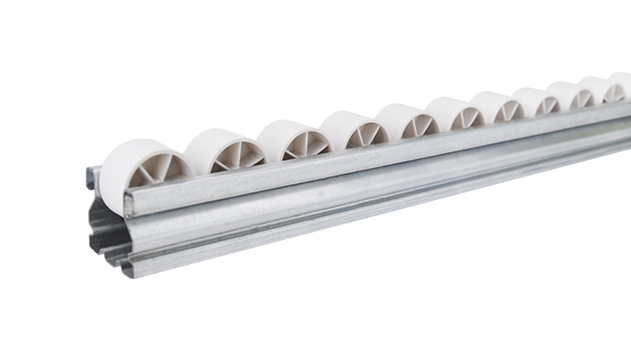
40mm vs. 50mm: Head-to-Head Comparison
| Feature | 40mm Steel Roller Track White | 50mm Steel Roller Track White |
|---|---|---|
| Width | 40mm | 50mm |
| Typical Roller Diameter | 10mm | 12mm+ |
| Max Load Capacity per Meter | Up to 100kg | Up to 250kg |
| Ideal Load Type | Light to medium-weight items (≤100kg/m) | Heavy items (≥100kg/m) |
| Space Efficiency | High (narrow width fits more setups) | Moderate (wider width takes more space) |
| Cost | Lower | Higher |
| Compatibility | Standard aluminum profiles, lean pipe workbenches | Heavy-duty aluminum profiles, conveyors |
| Best For | 3C assembly, medical devices, small retail warehouses | Automotive, heavy machinery, bulk warehouses |
| Roller Spacing | Closer (for small items) | Wider (for large items) |
| Material Thickness | Thinner (1.0-1.2mm) | Thicker (1.5-2.0mm) |

How to Choose Between 40mm and 50mm
Choosing the right size isn't just about load capacity—it's about understanding your entire workflow. Here are the key factors to consider:
1. Load Requirements
The most critical factor is the weight of the items you're moving. If your items weigh less than 100kg per meter, the 40mm track is sufficient. For heavier loads, the 50mm track is necessary to prevent damage and ensure safety.
2. Space Constraints
If your workspace is tight, the 40mm track's narrow width lets you fit more racks or workstations. If you have ample space, the 50mm track's stability might be more important even if it takes up a bit more room.
3. Existing Systems
Check if your current aluminum profile or lean pipe workbench uses 40mm or 50mm components. Choosing the same size ensures compatibility and easier integration. Mixing sizes can lead to instability and extra costs.
4. Budget
40mm tracks are more affordable, so if cost is a major factor and your loads are light, it's the better choice. 50mm tracks cost more but offer better durability and load capacity, which might save you money in the long run if you need to handle heavy items.
5. Future Scalability
If you plan to expand your operations or start handling heavier items later, investing in 50mm now could prevent the need for replacements down the line. It's a long-term investment that pays off as your business grows.
Pro Tip: If you have a mix of light and heavy items, consider using both sizes in different areas of your facility. For example, 40mm tracks in assembly lines and 50mm tracks in warehouses.

Integration with Other Lean Solutions
Roller tracks don't work in isolation—they're part of a larger lean solution that optimizes your entire workflow. Let's see how 40mm and 50mm tracks integrate with common systems:
Flow Racks
Flow racks are a staple in lean manufacturing, and roller tracks are their backbone. A 40mm track is perfect for small parts flow racks, while a 50mm track supports larger bins in heavy-duty flow racks. Both sizes help create a first-in-first-out (FIFO) system that reduces waste and improves efficiency. The smooth movement of items ensures that operators always have access to the oldest stock first, minimizing obsolescence.
Conveyor Systems
Conveyors use roller tracks to move items between stations. 40mm tracks are ideal for light-duty conveyors in assembly lines, while 50mm tracks power heavy-duty conveyors in warehouses or manufacturing plants. They work with chain conveyors, belt conveyors, and roller conveyors to keep your production line moving smoothly. The tracks are mounted on the conveyor frame, and the rollers rotate to move items along the line.
Lean Pipe Workbenches
Integrating roller tracks into your lean pipe workbench lets you slide parts directly to the operator, reducing reach time and fatigue. 40mm tracks fit well in compact workstations, while 50mm tracks are used in workbenches that handle heavier components. The tracks are attached to the workbench frame using connectors, and they can be adjusted to the perfect height for the operator.
Aluminum Profile Systems
Both track sizes are compatible with aluminum profile setups. 40mm tracks attach to smaller profiles (like 2020 or 3030), while 50mm tracks work with larger, heavier profiles (like 4040 or 4080). This compatibility makes it easy to customize your setup and adapt to changing needs. You can use aluminum profile connectors to attach the tracks to the profiles, creating a sturdy and flexible system.
By combining roller tracks with these systems, you create a cohesive lean solution that streamlines your operations and boosts productivity. Whether you're building a new setup or upgrading an existing one, roller tracks are a versatile and essential component.
Real-World Applications
Let's look at some real-world examples to see how these tracks perform in different industries:
Example 1: 3C Assembly Line (40mm Track)
A smartphone manufacturer uses 40mm Steel Roller Track White in their flow racks. Each rack holds bins of small components like screws, buttons, and screens. The narrow track allows them to fit 20% more racks in the assembly area, and the smooth movement ensures components reach operators quickly. This setup has reduced assembly time by 15% and cut down on part damage by 12%.
Example 2: Automotive Manufacturing (50mm Track)
A car plant uses 50mm tracks in their conveyor systems. The tracks move engine blocks (weighing 150kg each) from the machining department to the assembly line. The high load capacity handles the heavy engines, and the durable construction withstands constant use (24/7 operation). This has improved the line's uptime by 20% and reduced maintenance costs by 18%.
Example 3: Medical Device Warehouse (40mm Track)
A medical supply company uses 40mm tracks in their flow racks for surgical instruments. The clean white finish meets hygiene standards (ISO 13485), and the gentle movement protects delicate instruments. This setup has made order picking faster (10% reduction in time) and more accurate (10% fewer errors), reducing returns and improving customer satisfaction.
Example 4: Industrial Warehouse (50mm Track)
A logistics company uses 50mm tracks in their bulk storage flow racks. The racks hold large boxes of industrial supplies (weighing 200kg each), and the tracks allow for easy access to the oldest stock first (FIFO). This has optimized their inventory management and reduced waste from expired items by 25%. The tracks also make it easier to load and unload boxes using forklifts.
These examples show how choosing the right track size can have a tangible impact on your operations. By understanding your needs and selecting the appropriate size, you can improve efficiency, reduce costs, and boost productivity.
Maintenance Tips for Long-Lasting Performance
Proper maintenance ensures your roller tracks last longer and perform at their best. Here's a deeper dive into how to keep them in top shape:
Daily Cleaning
- Use a soft brush or vacuum to remove loose dust and debris from the tracks and rollers. This prevents rollers from jamming and keeps movement smooth.
- For sticky residues (like oil or grease), use a mild detergent and a damp cloth. Avoid harsh chemicals that can damage the white coating.
- Wipe down the tracks with a dry cloth after cleaning to prevent moisture buildup.
Lubrication
- Use a silicone-based lubricant (not oil-based) to reduce friction. Oil-based lubricants attract dust and can cause rollers to jam.
- Apply lubricant to the roller axles every 3-6 months, depending on usage. Wipe off excess lubricant to prevent buildup.
- For high-volume operations, lubricate every month to ensure smooth movement.
Weekly Inspections
- Check for bent or damaged rollers. If a roller is bent, it can cause items to stick or move unevenly. replace it immediately.
- Inspect the track for cracks or warping. A damaged track can lead to accidents or product damage. replace the track if it's cracked.
- Tighten any loose connectors to ensure the track is stable. Loose connectors can cause the track to shift, leading to uneven movement.
Monthly Adjustments
- Adjust the tension of the rollers if they're too loose (items slide too fast) or too tight (items don't move). Most tracks have adjustable screws for this.
- Check the alignment of the track. If it's not straight, items may veer off course. Adjust the connectors to straighten the track.
- Clean the roller bearings to remove dust and debris. This ensures the rollers rotate smoothly.
Seasonal Care
- In humid environments, check for signs of rust. If you see rust, use a rust remover and apply a protective coating to prevent further corrosion.
- In cold environments, ensure the tracks are free of ice or snow before use. Ice can damage rollers and cause items to slip.
- In dusty environments, increase cleaning frequency to prevent dust buildup.
By following these maintenance steps, you can extend the life of your roller tracks by 2-3 years and avoid costly downtime. Regular care ensures your tracks perform at their best, keeping your operations running smoothly.
Custom Lean Solutions for Your Unique Needs
Every business has unique challenges, and off-the-shelf solutions don't always fit. That's where custom lean solutions come in. Whether you need a specific track length, modified load capacity, or a complete system tailored to your industry, a reliable supplier can help.
For example, if you're in the medical industry, you might need roller tracks that meet strict hygiene standards. A custom solution could include tracks with a special anti-microbial coating. If you're in 3C assembly, you might need tracks that integrate with specific lean pipe workbench designs.
Custom solutions also let you combine different components—like 40mm and 50mm tracks in the same system—to handle varying load sizes. This flexibility ensures your setup is exactly what you need, no more, no less.
When choosing a supplier, look for one that offers:
- Expert design consultation to understand your needs
- High-quality materials (like steel and aluminum profile)
- Fast turnaround times to minimize downtime
- Post-installation support to ensure your system works perfectly
A custom lean solution can transform your operations, making them more efficient and adaptable to change. It's an investment that pays off in the long run by reducing waste, improving productivity, and boosting your bottom line.
Conclusion
Choosing between 40mm and 50mm Steel Roller Track White boils down to understanding your specific needs. The 40mm track is perfect for light loads and tight spaces, while the 50mm track excels at heavy loads and high-volume operations.
Remember to consider factors like load capacity, space, existing systems, budget, and future growth. And don't forget that these tracks are part of a larger lean solution—integrating them with flow racks, conveyors, and lean pipe workbenches can transform your workflow.
Whether you're in 3C assembly, automotive manufacturing, or logistics, the right roller track size will help you optimize your operations, reduce waste, and boost productivity. Take the time to assess your needs, and you'll make a choice that benefits your business for years to come.