- Company Articles
- Products and Technology
- Product knowledge
- 40 Steel Roller Track White vs. Nylon Roller Track: Friction Comparison

40 Steel Roller Track White vs. Nylon Roller Track: Friction Comparison
Related Product
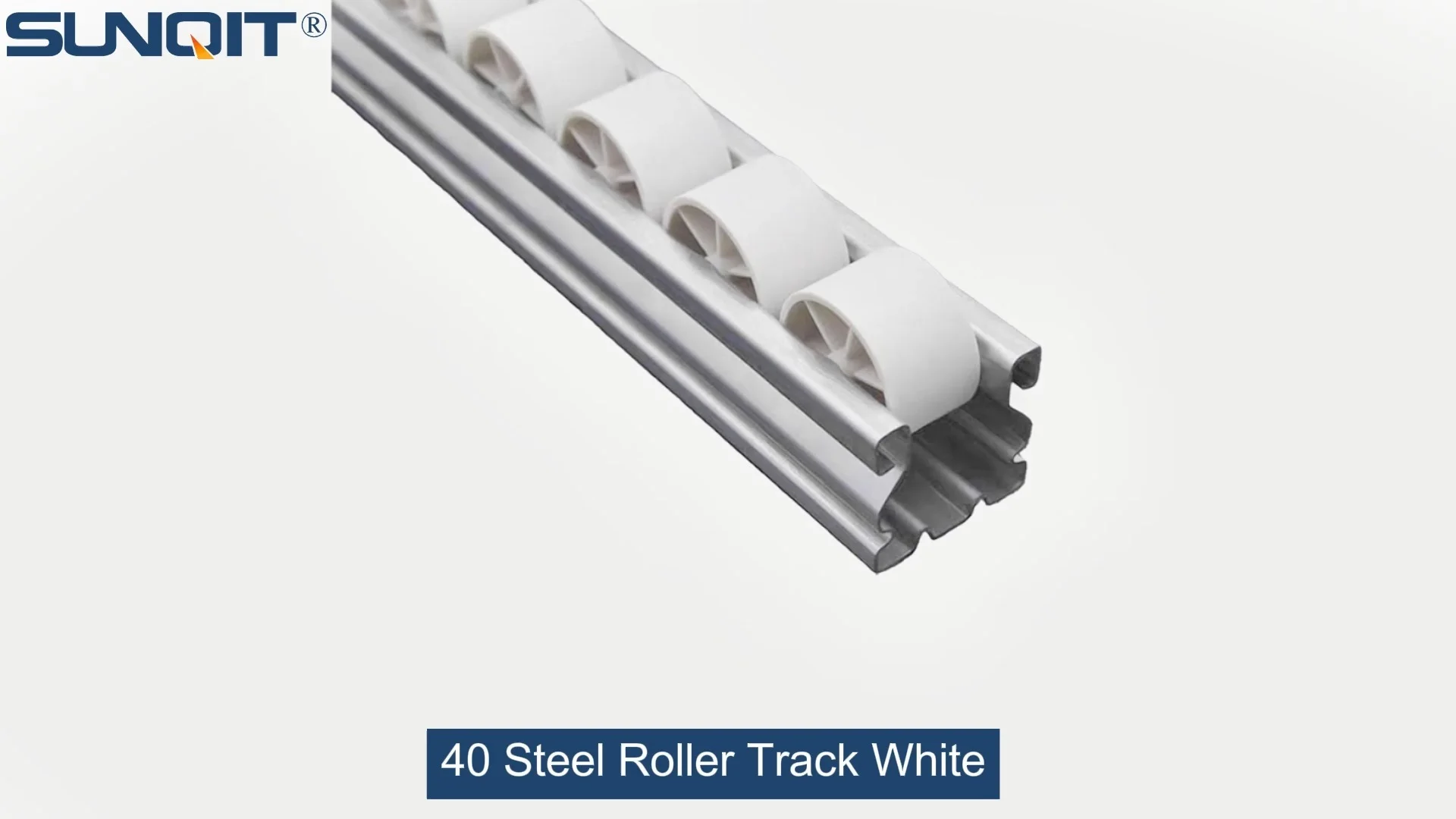
40 Steel Roller Track White
The roller track can be installed with multiple accessories to create different slopes and configurations of flow racks.All steel conveyor 40 roller track accessories are engineered to perfectly fit the sliding rail.It is enable the movement of SLC boxes.
Introduction: The Unsung Heroes of Lean Operations
If you've ever walked through a manufacturing plant, warehouse, or 3C assembly line, you've likely seen items gliding along flow racks or conveyors without much effort. Behind that smooth movement are roller tracks—small but critical components that keep lean systems running efficiently. Choosing the right roller track material can mean the difference between a seamless workflow and one plagued by jams, excess noise, or wasted energy. Today, we're diving deep into two popular options: 40 Steel Roller Track White and Nylon Roller Track. We'll compare their friction properties, real-world performance, and ideal applications to help you make an informed decision for your lean operations.
As a leading lean system supplier, szsunqit offers both these tracks as part of their comprehensive line of lean pipe accessories and flow rack components. Whether you're setting up a new lean pipe workbench or scaling your warehouse with wholesale flow racks, understanding the friction differences between steel and nylon tracks is key to optimizing your processes.
What Are 40 Steel Roller Track White and Nylon Roller Track?
40 Steel Roller Track White: Durability Meets Precision
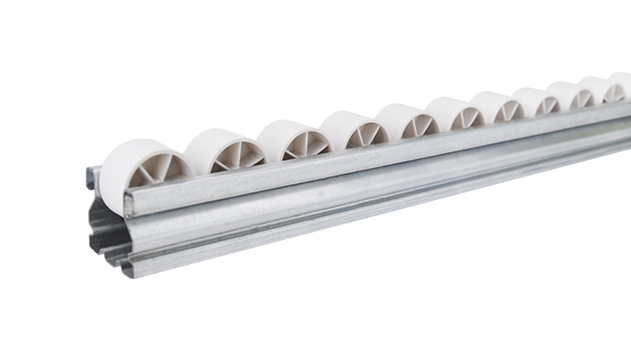
The 40 Steel Roller Track White is a heavy-duty component designed for high-load applications. It features a robust steel frame with white-coated wheels—these wheels aren't just for aesthetics; the white coating helps reduce corrosion and minimize noise compared to uncoated steel. This track is part of the 40 series, a standard size in lean systems that's compatible with most flow racks, conveyors, and lean pipe workbenches. Its construction makes it ideal for environments where durability and load capacity are top priorities, such as automotive manufacturing or large-scale warehousing.
Nylon Roller Track: Quiet Efficiency for Delicate Workflows
Nylon Roller Track, on the other hand, uses polymer wheels made from nylon—a synthetic material known for its low friction and excellent wear resistance. Unlike steel, nylon is non-metallic, so it's quieter and less likely to scratch delicate surfaces. This track is often used in industries where noise reduction and gentle handling are essential, like medical equipment assembly or 3C product lines (think smartphones and tablets). It's also lightweight, making it easy to install and adjust as part of a flexible lean system.
Friction Basics: Why It Matters for Lean Systems
Friction is the force that opposes motion between two surfaces in contact. For roller tracks, two types of friction are critical: static friction (the force needed to start an object moving) and dynamic friction (the force needed to keep it moving). Here's why these matter:
- **Flow Rack Efficiency**: Items on flow racks rely on gravity to move. Too much friction means bins get stuck; too little means they slide too fast (risking damage).
- **Conveyor Energy Use**: Lower friction reduces the power needed to run conveyors, cutting energy costs and aligning with lean principles of waste reduction.
- **Workbench Productivity**: On lean pipe workbenches, smooth-moving tracks help assembly line workers access parts quickly without unnecessary effort.
- **Maintenance Costs**: High friction leads to more wear and tear, increasing the need for repairs or replacements over time.

Detailed Friction Comparison: Steel vs. Nylon
To understand how these two tracks perform, let's compare their key friction-related properties. The following table uses realistic values based on industry standards and szsunqit's product specifications:
| Property | 40 Steel Roller Track White | Nylon Roller Track | Key Notes |
|---|---|---|---|
| Static Friction Coefficient | 0.15–0.20 | 0.10–0.12 | Nylon requires less force to start movement. |
| Dynamic Friction Coefficient | 0.10–0.15 | 0.08–0.10 | Nylon maintains lower friction during movement. |
| Noise Level (dB at 1m) | 55–65 dB | 40–50 dB | Nylon is 20% quieter—ideal for quiet environments. |
| Wear Resistance | High (10+ years under heavy use) | Medium-High (5–8 years under medium use) | Steel handles abrasive materials better. |
| Max Load Capacity (per meter) | 500–700 kg | 200–300 kg | Steel is better for heavy bins or parts. |
| Maintenance Needs | Occasional lubrication (every 6–12 months) | Minimal (only cleaning) | Nylon is self-lubricating. |
| Temperature Tolerance | -40°C to 200°C | -20°C to 120°C | Steel works in extreme hot/cold environments. |
| Corrosion Resistance | Good (white coating prevents rust) | Excellent (waterproof, no rust) | Nylon is ideal for humid warehouses. |
Factors That Influence Friction Performance
Friction isn't a fixed value—it changes based on several real-world factors. Let's explore how these factors affect both tracks:
1. Load Weight
Heavier loads increase friction, but steel tracks handle this better. For example, a 500kg bin on 40 Steel Roller Track White will have a dynamic friction coefficient of around 0.12, while the same bin on Nylon Roller Track might jump to 0.15 (exceeding its max load). For light to medium loads (100–200kg), nylon maintains its low friction, making it more efficient.
2. Speed of Movement
At high speeds (like on conveyors), steel tracks generate more heat due to friction, which can slightly increase resistance over time. Nylon tracks, however, have consistent friction even at speeds up to 2m/s—perfect for fast-paced assembly lines.
3. Surface Contamination
Dust, debris, or oil on tracks can raise friction. Steel wheels tend to trap small particles, requiring regular cleaning. Nylon wheels are smoother and repel most debris, so they stay efficient longer—even in dusty warehouses.
4. Environmental Conditions
Humidity: Steel tracks with white coating resist rust, but prolonged exposure to moisture can still cause wear. Nylon tracks are completely waterproof, so they're ideal for cold storage or outdoor loading docks. Temperature: Steel works in freezing or high-heat environments (like automotive paint shops), while nylon may warp at temperatures above 120°C.

Real-World Applications: Which Track Fits Your Industry?
The choice between steel and nylon depends on your industry's unique needs. Let's break down the ideal use cases for each:
When to Choose 40 Steel Roller Track White
This track is perfect for heavy-duty, industrial environments where durability and load capacity are non-negotiable. Key industries include:
- **Automotive Manufacturing**: For flow racks holding engine parts, transmission components, or heavy tooling.
- **Warehousing & Logistics**: For bulk storage of large bins or pallets on flow racks.
- **Mechanical Engineering**: For conveyors moving metal parts or machinery components.
- **Heavy Equipment Assembly**: For lean pipe workbenches handling large, heavy parts.
As a lean system supplier, szsunqit's 40 Steel Roller Track White is often used in wholesale orders for entire warehouse setups, as it provides consistent performance across large-scale operations.
When to Choose Nylon Roller Track
Nylon tracks shine in environments where quiet, gentle handling is priority. Key industries include:
- **3C Assembly**: For flow racks moving smartphones, tablets, or laptop components (delicate, scratch-prone items).
- **Medical Equipment**: For conveyors transporting sterile tools or sensitive devices (low noise is critical).
- **Consumer Electronics**: For lean pipe workbenches in assembly lines where workers need quiet, smooth access to parts.
- **Food & Beverage**: For flow racks holding lightweight packaging (nylon is food-safe and easy to clean).
Nylon tracks are also popular for small businesses or startups, as they're cost-effective and easy to install without specialized tools.
Integration with Lean Systems: Beyond the Track
Roller tracks don't work in isolation—they're part of a larger lean ecosystem. Here's how these tracks integrate with other szsunqit products:
Flow Racks
40 Steel Roller Track White is a staple in heavy-duty flow racks, like Material Rack B (3 row and 3 floor) from szsunqit. These racks are used to store bulk materials in warehouses, allowing items to move from the back to the front via gravity. Nylon tracks are used in lighter flow racks for 3C or medical parts, ensuring items glide smoothly without damage.
Conveyors
Steel tracks are used in roller conveyors for heavy loads, while nylon tracks are in belt conveyors for delicate items. Both tracks are compatible with szsunqit's conveyor systems, which are designed to be flexible and easy to reconfigure as your lean processes evolve.
Lean Pipe Workbenches
Workbench E (single deck without caster) from szsunqit often uses nylon tracks for assembly lines, where workers need to move parts quickly and quietly. Steel tracks are used in workbenches for heavy tooling or mechanical assembly.
Wholesale & Customization
For businesses looking to scale, szsunqit offers wholesale options for both tracks. This allows you to equip entire lines or warehouses with consistent components. Additionally, custom solutions are available—you can adjust track length, wheel spacing, or material to fit your unique workflow needs. As a lean system supplier, szsunqit's team of experts can help you design the perfect setup for your industry.
Conclusion: Making the Right Choice
Choosing between 40 Steel Roller Track White and Nylon Roller Track boils down to three key questions:
- **What's your load capacity?** If you handle heavy items (over 200kg), go with steel.
- **What's your environment?** If noise or humidity is a concern, nylon is better.
- **What's your maintenance budget?** Nylon requires less upkeep, while steel needs occasional lubrication.
As a leading lean system supplier, szsunqit provides both options to meet the diverse needs of modern manufacturing. Whether you're looking for wholesale tracks for a large warehouse or custom components for a small assembly line, their extensive product line has you covered. By choosing the right roller track, you can optimize your lean operations, reduce waste, and boost productivity—one smooth glide at a time.