- Company Articles
- Products and Technology
- Product knowledge
- 40 Steel Roller Track White Wheel Coating Process: Ensuring White Finish Longevity

40 Steel Roller Track White Wheel Coating Process: Ensuring White Finish Longevity
Related Product
40 Steel Roller Track White Wheel
The roller track can be installed with multiple accessories to create different slopes and configurations of flow racks.All steel conveyor 40 roller track accessories are engineered to perfectly fit the sliding rail.
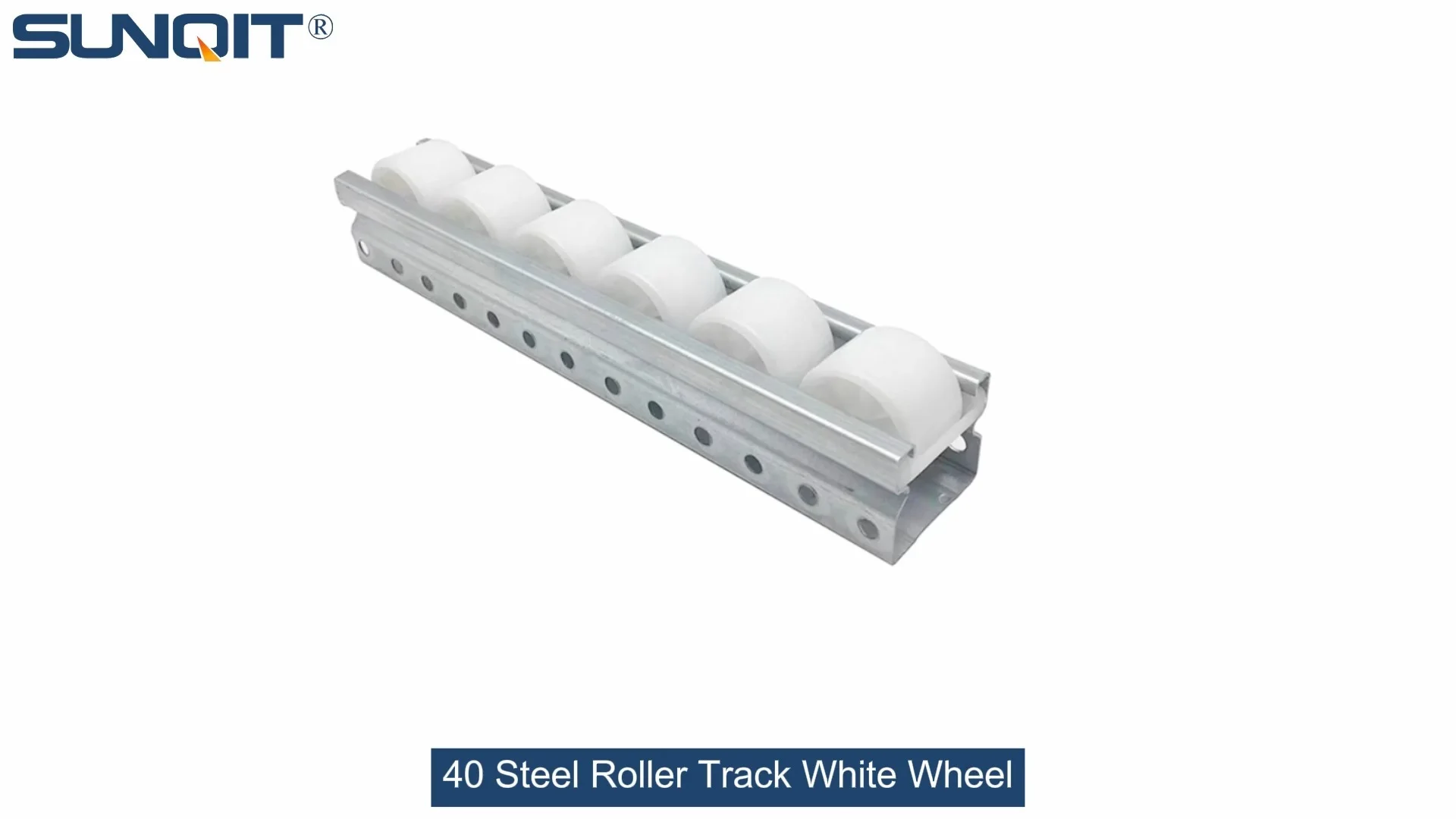
When you're setting up a conveyor system or a lean workstation, every component plays a critical role in keeping operations running smoothly. The 40 steel roller track white wheel is one such unsung hero—quietly bearing loads, guiding products, and maintaining the flow of your production line. But have you ever stopped to think about how that crisp white finish stays vibrant even after months of constant use, exposure to dust, moisture, and heavy wear? The answer lies in a meticulous coating process that blends precision engineering with strict quality control. Let's take a deep dive into every step of this process, from raw steel to the final product that graces your lean system.
Why Does the White Finish Matter?
White isn't just a color choice for these roller wheels—it's a strategic decision rooted in functionality and aesthetics. In industries like 3C assembly, medical equipment manufacturing, and food processing, cleanliness is non-negotiable. A white finish makes it easy to spot even the tiniest specks of dirt, debris, or product residue, allowing teams to maintain a hygienic workspace. For lean management practitioners, this visibility aligns perfectly with the principle of "visual control"—ensuring issues are identified and resolved before they disrupt production.
Apart from hygiene, the white finish adds a professional, polished look to your workspace. Whether it's a lean pipe workstation in a tech factory or a conveyor line in a warehouse, uniform white wheels create a sense of order and efficiency. But achieving and maintaining this bright white isn't simple; it requires a series of carefully calibrated steps that leave no room for error.
Step 1: Pre-Coating Preparation – The Foundation of Durability
Before any coating touches the steel, the wheels undergo a rigorous preparation process. This stage is the backbone of a long-lasting finish—skip or rush it, and even the best coating will fail prematurely. Let's break down each sub-step in detail:
1.1 Degreasing & Cleaning
The first task is to remove every trace of oil, grease, and manufacturing residues from the steel surface. Even a microscopic layer of oil can act as a barrier, preventing the coating from adhering properly. We use a two-stage cleaning process:
- Alkaline Bath: Wheels are submerged in a heated bath (60-70°C) of alkaline cleaner containing non-ionic surfactants and emulsifiers. This solution breaks down heavy grease and oil, lifting them away from the steel. The duration varies between 15-20 minutes depending on the level of contamination.
- Deionized Water Rinse: After the alkaline bath, wheels are rinsed with high-pressure deionized water to remove any remaining cleaner residue. Deionized water is used to avoid mineral deposits that could mar the final finish. They are then dried with hot air (80-90°C) to eliminate water spots and ensure a completely dry surface.
1.2 Surface Treatment: Sandblasting
Next, the wheels undergo sandblasting to create a rough, textured surface that enhances coating adhesion. This step is critical—without it, the coating might peel or chip off at the first sign of stress. Here's how we do it:
- Media Selection: We use aluminum oxide beads (120-150 grit) for their sharp edges and consistent abrasiveness. This media creates a uniform rough texture without damaging the wheel's structural integrity.
- Process Parameters: The sandblasting gun operates at 80-100 psi pressure, with the nozzle held 10-15 cm away from the wheel surface. Each wheel is blasted from multiple angles to ensure every part of the surface is covered, achieving a roughness of Ra 2.5-5 μm—ideal for coating adhesion.
- Post-Blasting Cleanup: After sandblasting, wheels are blown with compressed air to remove any remaining sand particles, then wiped with a lint-free cloth dipped in isopropyl alcohol to eliminate any dust or oils.
1.3 Pickling (For Rust-Prone Batches)
For wheels that have been stored or show signs of surface oxidation, we add a pickling step to remove rust and scale:
- Acid Bath: Wheels are submerged in a 10-15% sulfuric acid solution at 50-60°C for 10-15 minutes. The acid dissolves surface oxides, leaving a fresh, clean steel surface.
- Neutralization & Rinsing: After pickling, wheels are rinsed with deionized water and then submerged in a 5% sodium bicarbonate solution to neutralize any remaining acid. They are then rinsed again and dried with hot air to prevent re-oxidation.

Step 2: Coating Application – Powder Coating for Durability
We use powder coating for our 40 steel roller track white wheels because it offers superior durability compared to liquid coatings. Powder coating creates a hard, scratch-resistant layer that can withstand the rigors of industrial use. Let's explore the process in detail:
2.1 Powder Composition
The white powder we use is a blend of high-quality ingredients designed for longevity:
- Polyester Resin: Forms the base of the coating, providing excellent chemical resistance and flexibility.
- Titanium Dioxide: Gives the powder its bright white color and enhances UV resistance to prevent yellowing over time.
- Flow Agents: Ensure a smooth, even finish by reducing surface tension during curing.
- Hardeners: Promote cross-linking during curing, creating a rigid, durable layer.
2.2 Electrostatic Spraying
The powder is applied using an electrostatic spray gun:
- Charging: The spray gun imparts a negative charge to the powder particles (10-100 kV). The wheels are grounded, creating an electrostatic attraction between the powder and the steel surface.
- Application: Each wheel is sprayed in a controlled environment (temperature 20-25°C, humidity 40-60%) to ensure consistent powder deposition. The gun is moved in a circular motion to achieve a uniform coating thickness of 60-80 microns.
- Excess Powder Recovery: Any unused powder is collected using a cyclone separator and reused, making the process eco-friendly and cost-effective.
2.3 Curing Process
After spraying, the wheels are cured in an oven to transform the powder into a hard, durable finish:
- Gelling Stage: Wheels are first heated to 150°C for 5-10 minutes. This melts the powder, forming a gel-like layer that adheres to the surface.
- Cross-Linking Stage: Next, the temperature is raised to 200-220°C for 15-20 minutes. During this time, the polyester resin molecules cross-link with the hardeners, forming an insoluble, three-dimensional network. This cross-linking gives the coating its resistance to scratches, chemicals, and heat.
- Cooling: Wheels are cooled slowly in a controlled environment to prevent thermal shock, which could cause the coating to crack.
| Coating Type | Application Method | Key Advantages | Key Disadvantages |
|---|---|---|---|
| Powder Coating | Electrostatic spraying + oven curing | High durability, scratch-resistant, eco-friendly (no solvents), low VOC emissions | Requires specialized equipment, thicker coating may affect precision parts |
| Liquid Coating | Spray gun + air drying/baking | Thinner coating, better for intricate details, lower initial equipment cost | Less durable, uses volatile solvents, higher VOC emissions |

Step 3: Quality Control – Ensuring Perfection Every Batch
We don't just rely on process consistency—we test every batch rigorously to ensure our 40 steel roller track white wheels meet the highest standards. Here are the key tests we perform:
3.1 Adhesion Test (Cross-Cut Method)
This test checks how well the coating sticks to the steel surface:
- Procedure: Using a sharp blade, we make a grid of 1mm x 1mm squares (10x10 grid) on the coating. We then apply pressure-sensitive adhesive tape over the grid and peel it off quickly at a 180° angle.
- Pass Criteria: No more than 5% of the coating should peel off. Any batch failing this test is rejected, as poor adhesion leads to premature coating failure.
3.2 Corrosion Resistance Test (Salt Spray Test)
This test simulates harsh environments to ensure the coating protects against rust:
- Procedure: Wheels are placed in a salt spray chamber with a 5% NaCl solution, 35°C temperature, and 95% humidity. They are exposed for 240 hours.
- Pass Criteria: No red rust, blistering, or peeling allowed. Even minor signs of corrosion mean the batch is rejected.
3.3 Wear Resistance Test (Taber Abrasion Test)
This test measures how well the coating withstands friction:
- Procedure: We use a Taber Abraser with CS-10 abrasive wheels under a 1kg load. The wheel is rotated 1000 times, and the weight loss is measured.
- Pass Criteria: Weight loss must be less than 5mg. This ensures the coating can handle constant rolling and contact with products.
3.4 Color Consistency Check
We use a spectrophotometer to ensure every batch matches our standard white shade:
- Procedure: The spectrophotometer measures the color in CIELAB coordinates (L*, a*, b*). We compare each batch to our reference sample.
- Pass Criteria: The color difference (ΔE) must be less than 1.5. This ensures uniform appearance when used in a conveyor system or lean pipe workstation.
3.5 Thickness Measurement
Using a magnetic thickness gauge, we check the coating thickness at multiple points on each wheel:
- Pass Criteria: Thickness must be between 60-80 microns. Too thin, and it's not durable; too thick, and it may crack or affect wheel performance.

Step 4: Maintenance Tips for Long-Lasting White Finish
Even with the best coating, proper maintenance is essential to keep the white finish looking new. Here are our top tips for users:
4.1 Regular Cleaning
- Clean wheels weekly with a mild detergent (pH 6-8) and a soft cloth. Avoid harsh chemicals like bleach or ammonia, which can degrade the coating.
- For stubborn dirt, use a non-scratch sponge. Never use steel wool or abrasive pads—they will scratch the finish.
- In dusty environments, clean wheels twice a week to prevent dust buildup that can cause abrasion.
4.2 Avoid Impact & Extreme Temperatures
- Don't drop heavy objects on the wheels or hit them with tools. Even though the coating is durable, sharp impacts can chip it.
- Avoid exposing wheels to temperatures above 150°C—this can soften the coating and cause it to deform.
4.3 Touch-Up Minor Damage
- If a chip occurs, touch it up immediately with a matching white powder coating touch-up pen. This prevents rust from forming under the chip and spreading.
- For larger chips, remove the wheel and re-coat it to maintain the finish's integrity.
4.4 Lubricate Bearings
- Keep wheel bearings lubricated with a light machine oil every 3 months. This reduces friction, extending the wheel's life and preventing excessive wear on the coating.
Conclusion: The Art & Science Behind the White Finish
The 40 steel roller track white wheel is more than just a component—it's a testament to our commitment to quality and durability. From the initial cleaning to the final quality check, every step of the coating process is designed to ensure the white finish stays bright, durable, and functional for years.
Whether you're using these wheels in a 3C assembly line, a medical equipment manufacturing facility, or a warehouse conveyor, you can trust that they will maintain their pristine appearance while delivering reliable performance. This attention to detail is what makes our products a favorite among lean system practitioners and conveyor system designers.
Next time you see a white roller wheel in action, remember the hours of precision work that went into making it. It's not just about aesthetics—it's about building a system that's efficient, clean, and built to last. After all, in the world of lean management, every detail counts.