- Company Articles
- Products and Technology
- Procurement Guidelines
- 40 Steel Roller Track White Wheel Cost Analysis: Investment vs. Long-Term Savings

40 Steel Roller Track White Wheel Cost Analysis: Investment vs. Long-Term Savings
Related Product
40 Steel Roller Track White Wheel
The roller track can be installed with multiple accessories to create different slopes and configurations of flow racks.All steel conveyor 40 roller track accessories are engineered to perfectly fit the sliding rail.
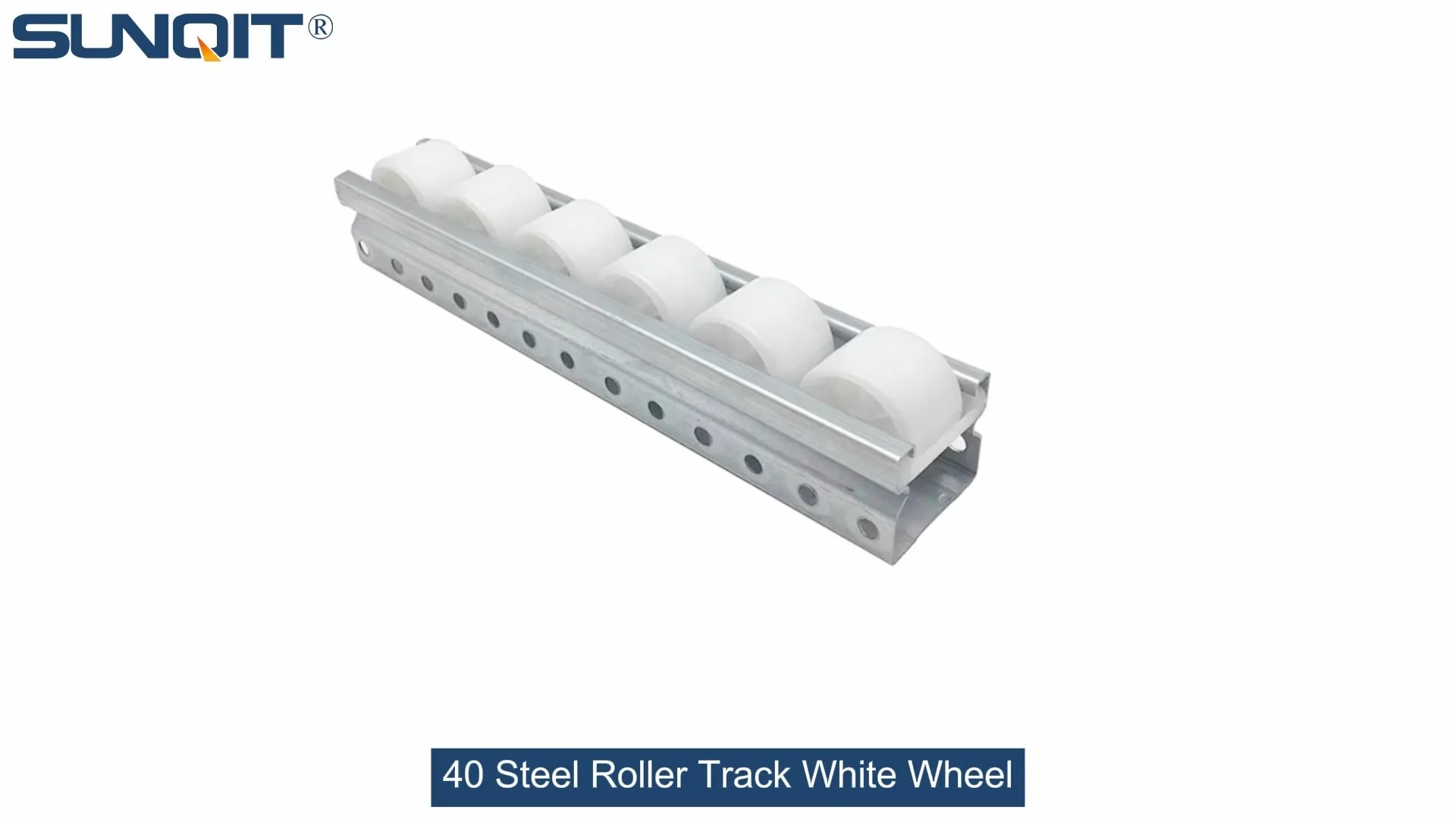
If you've ever walked through a busy warehouse or a manufacturing assembly line, you've probably seen roller tracks in action—those smooth, metal strips that let bins and parts glide from one station to the next without hassle. But not all roller tracks are created equal. Today, we're diving deep into one specific type: the 40 Steel Roller Track White Wheel. We'll break down what it costs upfront, how it saves you money over time, and why it's more than just a piece of equipment—it's a long-term investment in your operation's efficiency.
For manufacturers in industries like 3C assembly, warehouse logistics, or automotive parts production, every minute of downtime and every dollar spent on replacements adds up. The 40 Steel Roller Track White Wheel is designed to address these pain points, but to truly appreciate its value, you need to look beyond the initial price tag. Let's start by understanding what makes this track stand out.
Initial Investment Breakdown
Let's start with the obvious: what does a 40 Steel Roller Track White Wheel cost right out of the box? To get a clear picture, we need to look at all the components that go into your purchase.
| Cost Component | Average Cost (USD per Unit) | Notes |
|---|---|---|
| 40 Steel Roller Track White Wheel (per meter) | $15 - $22 | Depends on thickness and quality of steel |
| Roller Track Connectors | $2 - $5 each | Needed to join tracks or attach to frames |
| Installation Labor | $8 - $12 per meter | Based on average industrial labor rates |
| Shipping & Handling | 5-10% of total order value | Varies by location and order size |
| Total (per meter, installed) | $27 - $40 | Estimated for a standard setup |
Wait, but why is this track pricier than some plastic alternatives? Because steel is durable—way more so than plastic. The white wheel coating isn't just for looks; it's a protective layer that resists scratches and corrosion, extending the track's lifespan. So while you pay a bit more upfront, you're getting a product that's built to last.
Another thing to consider: bulk purchases can lower the cost. If you're buying 100 meters or more, many suppliers offer wholesale discounts, bringing the per-meter cost down by 10-15%. This is especially beneficial for large-scale operations that need extensive track systems.
Long-Term Savings: Where the Real Value Lies
The initial cost is just the starting point. To understand the true value of the 40 Steel Roller Track White Wheel, we need to look at how it saves you money over months and years. Let's break down the key areas of savings:
1. Durability = Less Replacement Cost
Plastic roller tracks might cost half as much upfront, but how long do they last? Maybe 1-2 years if you're lucky, especially in high-traffic areas. The 40 Steel Roller Track White Wheel? With proper maintenance, it can last 5-7 years—sometimes even longer. Let's do the math:
Suppose you need 100 meters of track. A plastic track costs $10 per meter installed (total $1000) and needs replacement every 2 years. Over 6 years, you'll spend $3000. The steel track costs $35 per meter installed (total $3500) but lasts 6 years. That's a savings of $500 over the same period—and that's just the replacement cost.
For heavy-duty applications, like moving metal parts in an automotive plant, the difference is even starker. Plastic tracks might break after a few months, while steel tracks keep going strong for years.
2. Efficiency Gains = Higher Productivity
Smooth, reliable roller tracks mean faster material flow. If your assembly line uses these tracks with a flow rack and conveyor, parts move from storage to the workstation without delays. Let's say a 3C assembly line processes 100 units per hour. A sticky or broken plastic track might slow that down by 5%—losing 5 units per hour, or 40 units per 8-hour shift. At $10 profit per unit, that's $400 lost per shift. The steel track's smooth white wheels eliminate those delays, keeping production on track.
Over a year (250 working days), that's $100,000 in recovered profits. And this doesn't even include the time saved by workers who don't have to stop and fix stuck tracks. When every second counts, efficiency is everything.
3. Low Maintenance = Less Downtime & Labor
Steel tracks require minimal maintenance. The white wheel coating resists dirt and grime, so you don't need to clean them as often. Plastic tracks, on the other hand, can crack or warp, requiring frequent repairs. Let's say you spend 1 hour per week fixing plastic tracks (at $20 per hour). Over a year, that's 52 hours × $20 = $1040 in labor costs. The steel track might need only 2 hours of maintenance per year—saving you $1000.
Downtime is another hidden cost. Every time a track breaks, your entire line might stop. For a plant that produces 200 units per hour, a 30-minute downtime costs 100 units—equivalent to $1000 if each unit has a $10 profit margin. Steel tracks drastically reduce this risk.
4. Compatibility with Lean Systems = Reduced Waste
Lean manufacturing is all about eliminating waste—whether it's time, materials, or effort. The 40 Steel Roller Track White Wheel fits perfectly into a lean system. It's compatible with lean pipe workbenches and other lean accessories, so you can easily reconfigure your line as your needs change. No need to buy new equipment every time you adjust your process.
For example, if you switch from assembling smartphones to tablets, you can rearrange the tracks and flow racks without replacing them—saving thousands in new setup costs. This flexibility is a core part of the lean philosophy, and the steel track supports it fully.
5. Sustainability = Lower Disposal Costs
Steel is recyclable, and the 40 Steel Roller Track White Wheel is designed to be reused. When it finally reaches the end of its life, you can recycle the steel instead of sending it to a landfill. Plastic tracks, however, are often non-recyclable (or hard to recycle) and end up in landfills—costing you disposal fees.
Plus, reusing parts aligns with the lean principle of sustainability, which is not just good for the planet but also for your brand's reputation. More and more customers are choosing suppliers who prioritize eco-friendly practices, so this is an added bonus.

Real-World Case Study: 3C Assembly Plant
Take a 3C assembly plant that produces wireless earbuds. This plant was using plastic roller tracks but faced frequent breakdowns and slow material flow. They decided to switch to the 40 Steel Roller Track White Wheel for their 200-meter assembly line.
| Metric | Before (Plastic Tracks) | After (Steel Tracks) | Annual Savings |
|---|---|---|---|
| Replacement Cost | $2000/year | $0 (first 6 years) | $2000 |
| Maintenance Labor | $2080/year | $40/year | $2040 |
| Productivity Loss | $50,000/year | $0 | $50,000 |
| Disposal Fees | $500/year | $0 | $500 |
| Total Annual Savings | - | - | $54,540 |
The initial investment for the steel tracks was $7000 (200 meters × $35/meter). The plant recouped this investment in just over 1.5 months. After that, every dollar saved is pure profit. Over 5 years, the total savings would be $272,700—way more than the initial cost.
The plant manager noted, "We used to spend hours every week fixing broken tracks. Now, we barely think about them. The steel tracks have made our line more efficient and our workers happier."

How Does It Compare to Alternatives?
Let's compare the 40 Steel Roller Track White Wheel with two common alternatives: plastic roller tracks and aluminum roller tracks.
| Feature | 40 Steel Roller Track White Wheel | Plastic Roller Track | Aluminum Roller Track |
|---|---|---|---|
| Initial Cost (per meter installed) | $27-$40 | $8-$15 | $35-$50 |
| Lifespan | 5-7 years | 1-2 years | 6-8 years |
| Maintenance Cost (per year) | $0.20-$0.50/meter | $1-$2/meter | $0.30-$0.60/meter |
| Efficiency | High (smooth flow) | Low (prone to sticking) | High (smooth flow) |
| Long-Term Value (5 years) | Excellent | Poor | Good |
As you can see, the steel track strikes a perfect balance between cost and value. It's more affordable than aluminum but lasts much longer than plastic. For most manufacturing plants, it's the best choice for long-term savings.
Aluminum tracks are a close second, but they're more expensive upfront. If your operation needs lightweight tracks (like in medical device manufacturing), aluminum might be a better fit. But for most general manufacturing applications, steel is the way to go.

Conclusion: Invest in the Long Run
The 40 Steel Roller Track White Wheel isn't just another piece of equipment—it's an investment in your operation's future. While the initial cost might seem higher than plastic alternatives, the long-term savings from durability, efficiency, low maintenance, and compatibility with lean systems make it a smart choice.
Whether you're in 3C assembly, warehouse logistics, or any other manufacturing sector, this roller track can help you reduce waste, boost productivity, and save money over time. The case study shows that the initial investment is recouped quickly, and the savings keep piling up for years.
So next time you're considering roller tracks for your line, don't just look at the price tag. Think about the total cost of ownership. The 40 Steel Roller Track White Wheel is more than worth the upfront cost—it's a decision that will pay off for your business for years to come.
If you're ready to upgrade your track system, look for a reliable supplier who offers high-quality steel tracks and wholesale discounts for bulk purchases. Your bottom line will thank you.