- Company Articles
- Products and Technology
- Product knowledge
- 40 Steel Roller Track White Wheel Friction Coefficient: Impact on Conveying Speed

40 Steel Roller Track White Wheel Friction Coefficient: Impact on Conveying Speed
Related Product
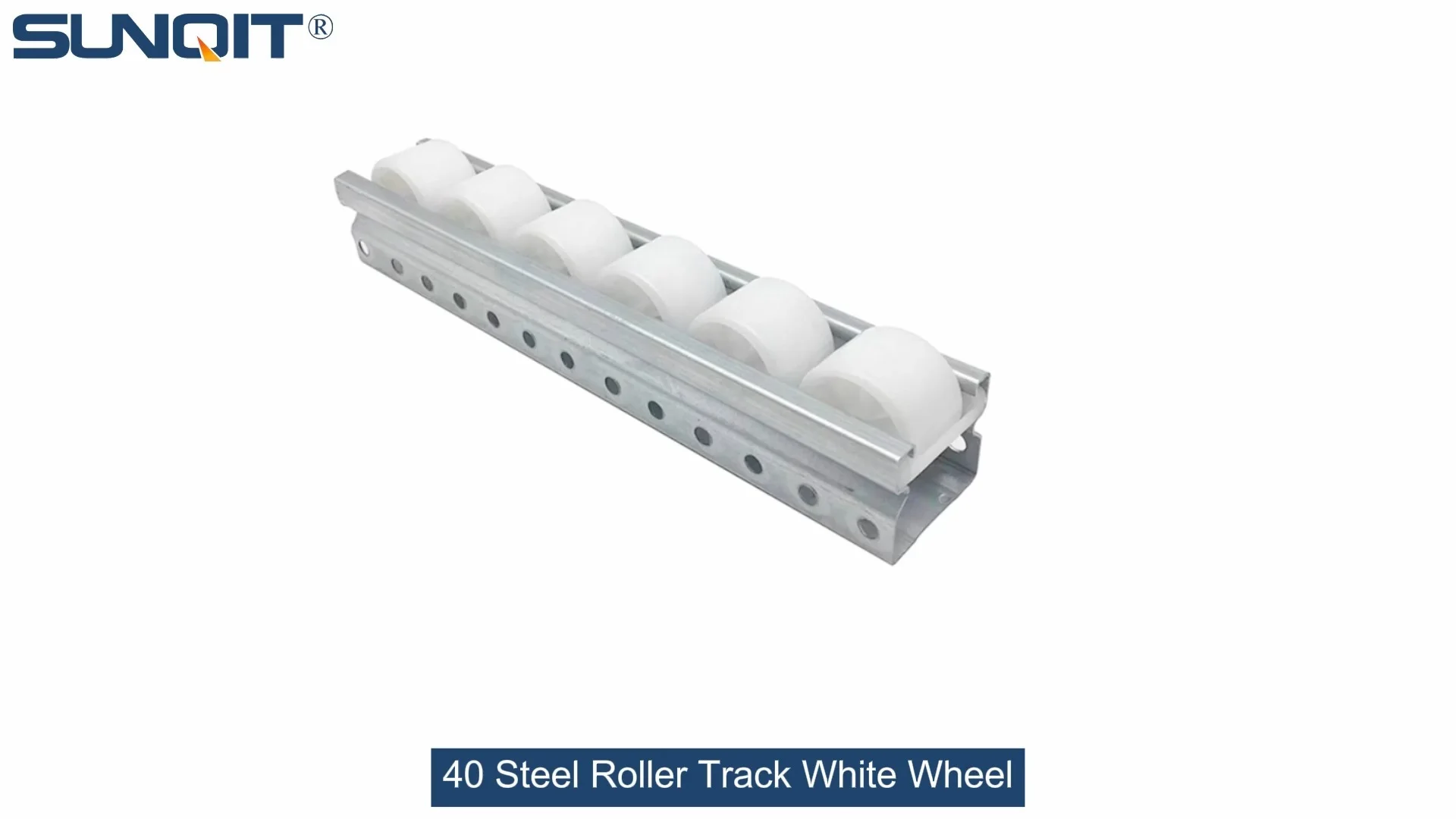
40 Steel Roller Track White Wheel
The roller track can be installed with multiple accessories to create different slopes and configurations of flow racks.All steel conveyor 40 roller track accessories are engineered to perfectly fit the sliding rail.
Have you ever watched a production line hum along smoothly, products gliding from one station to the next without a hitch? Or maybe you've noticed a bottleneck where items seem to drag or speed up unexpectedly, throwing off the entire workflow. Chances are, the friction coefficient of the roller wheels is playing a bigger role than you think. Today, we're focusing on one specific component: the 40 steel roller track white wheel. We'll break down what its friction coefficient means, how it affects conveying speed, and why this small detail can make a huge difference in your operations—whether you're running a flow rack in a warehouse, a conveyor in a 3C assembly line, or building a custom lean system for your business.
What Is Friction Coefficient, Anyway?
Let's start with the basics. Friction coefficient is a number that tells us how much resistance there is between two surfaces when they slide against each other. It's calculated as the ratio of the frictional force (the force that opposes motion) to the normal force (the force pressing the two surfaces together, usually the weight of the object). There are two main types: static friction (when the object is at rest) and kinetic friction (when it's moving). For roller tracks, we're mostly concerned with kinetic friction because we want to know how fast items will move once they start sliding.
Several factors influence the friction coefficient of a roller wheel: the material of the wheel, the surface finish of the track, the load on the wheel, temperature, and even humidity. For example, a wheel made of soft plastic will have a different friction coefficient than one made of steel, and a dusty track will increase friction compared to a clean one.
The 40 Steel Roller Track White Wheel: A Closer Look
The 40 steel roller track white wheel is a common component in many industrial setups, especially in environments where cleanliness and non-marking surfaces are important. Let's break down what makes it unique:
- Track Material: The 40 steel roller track is made of high-quality steel, known for its durability and strength. It's designed to handle heavy loads without bending or warping.
- Wheel Material: The white wheel is typically made of polypropylene (PP), a thermoplastic polymer that's lightweight, wear-resistant, and non-marking. This makes it ideal for applications where you don't want to scratch or leave marks on your products—like in medical device manufacturing or 3C assembly.
- Common Uses: You'll find these wheels in flow racks for storing small parts, conveyors in clean rooms, and lean workstations where precision is key. They're also popular in lean systems because they're easy to maintain and replace, aligning with the "sustainable improvement" of lean manufacturing.

How Friction Coefficient Affects Conveying Speed
Now, let's get to the heart of the matter: how does the friction coefficient of the white wheel impact the speed at which your products move? Let's use simple physics to explain this.
When a product is on a roller track, the force that moves it forward could be gravity (in a flow rack, where the track is inclined slightly) or a motor (in a powered conveyor). The frictional force from the wheels opposes this motion. The net force on the product determines its acceleration and, eventually, its steady speed.
For example, in a gravity-fed flow rack: the gravitational force component along the track is mg sinθ (where m is mass, g is gravity, θ is the angle of inclination). The frictional force is μk mg cosθ (μk is kinetic friction coefficient). The net force is mg (sinθ - μk cosθ). If this net force is positive, the product will accelerate until it reaches a steady speed (or hits the end of the rack). A higher μk means more friction, so the net force is smaller—leading to slower acceleration and a lower steady speed. Conversely, a lower μk means less friction, so the product moves faster.
But why does this matter? Let's take an example from 3C assembly. Suppose you're moving small electronic components along a flow rack to an assembly station. If the friction coefficient is too high, the components might get stuck halfway, causing a bottleneck. If it's too low, the components might slide too fast and collide at the end of the rack, damaging them. Finding the right balance is crucial for efficiency and product quality.
Another example: a powered conveyor in a warehouse. The motor provides a constant force to move products. A higher friction coefficient means the motor has to work harder to maintain the same speed, leading to higher energy costs. A lower friction coefficient allows the conveyor to move products faster with less energy, improving throughput and reducing operational costs.

Practical Implications for Industries
The impact of friction coefficient isn't just theoretical—it has real-world consequences for various industries. Let's look at some key sectors:
3C Assembly
In the 3C (computers, communications, consumer electronics) industry, precision is everything. Components like smartphones or laptops are delicate, so you need to move them at a consistent, gentle speed. The 40 steel roller track white wheel's low-to-moderate friction coefficient (usually between 0.15 and 0.20) is perfect for this. It ensures that components glide smoothly without getting stuck or moving too fast, reducing the risk of damage and improving assembly line efficiency. This aligns with lean solutions that focus on minimizing waste and maximizing productivity.
Medical Device Manufacturing
Medical devices require strict cleanliness standards. The white wheel's non-marking polypropylene material doesn't leave residue or scratches, making it ideal for clean room environments. Additionally, the friction coefficient needs to be just right—too high and you might damage sensitive equipment, too low and items might slide out of place. Szsunqit's custom solutions for the medical industry take this into account, designing lean pipe systems that meet both cleanliness and performance requirements.
Warehousing and Logistics
Warehouses handle high volumes of products every day, so throughput is key. A flow rack with the right friction coefficient can ensure that products move quickly but safely from storage to picking stations. The 40 steel roller track white wheel is durable enough to handle heavy loads, and its consistent friction coefficient means that products move at a predictable speed, reducing bottlenecks and improving order fulfillment times. This is a core part of lean logistics, where efficiency and speed are paramount.

Testing and Measuring Friction Coefficient
To ensure that the 40 steel roller track white wheel performs as expected, manufacturers like szsunqit conduct rigorous testing. Here are some common methods used to measure friction coefficient:
- Inclined Plane Test: This is a simple method where the product is placed on the track, which is gradually inclined until the product starts moving. The tangent of the angle at which this happens gives the static friction coefficient. For kinetic friction, you can measure the angle where the product moves at a constant speed.
- Force Gauge Test: A force gauge is attached to the product, and you pull it along the track at a constant speed. The force reading divided by the weight of the product gives the kinetic friction coefficient.
- Standardized Testing: Many manufacturers follow international standards like ISO 8295 for friction testing, ensuring consistency across different batches and products.
Consistency is key here. Even a small variation in friction coefficient can lead to big differences in conveying speed. That's why szsunqit uses strict quality control processes to ensure that every 40 steel roller track white wheel meets the same high standards.
Choosing the Right Roller Track for Your Needs
So, how do you choose the right roller track with the optimal friction coefficient for your operations? Here are some factors to consider:
- Product Load: Heavier products require wheels with higher load capacity and possibly a different friction coefficient. The 40 steel roller track is designed to handle heavy loads, but you need to make sure the wheels can support your specific weight.
- Speed Requirements: Do you need products to move quickly or slowly? A lower friction coefficient means faster speed, but you have to balance that with safety and product integrity.
- Environment: Is your facility a clean room? Do you need ESD protection? The white wheel is great for clean environments, but if you need ESD protection, you might opt for a black ESD wheel instead.
- Industry Standards: Some industries have specific standards for friction coefficients. For example, medical device manufacturing might require a certain level of friction to ensure compliance with regulations.
Szsunqit offers a wide range of roller track components, including the 40 steel roller track white wheel, and can provide custom lean pipe systems tailored to your unique needs. Whether you're looking for a standard solution or a custom design for your 3C assembly line or medical facility, their team of experts can help you find the right components to optimize your processes.
Comparison of Roller Wheel Friction Coefficients
To help you make an informed decision, here's a comparison of different roller wheel types and their friction coefficients:
| Wheel Type | Material | Kinetic Friction Coefficient (μk) | Key Applications |
|---|---|---|---|
| 40 Steel Roller Track White Wheel | Polypropylene (PP) | 0.15 - 0.20 | Flow racks, clean rooms, 3C assembly |
| Black ESD Wheel | Conductive PVC | 0.18 - 0.22 | ESD workstations, electronic assembly |
| Yellow Nylon Wheel | Nylon | 0.12 - 0.16 | High-speed conveyors, heavy load applications |
| Stainless Steel Wheel | Stainless Steel | 0.25 - 0.30 | Heavy-duty industrial applications |
Conclusion
The friction coefficient of the 40 steel roller track white wheel is a small but critical factor that can significantly impact the efficiency and safety of your operations. From flow racks in warehouses to conveyors in 3C assembly lines, understanding how this coefficient affects conveying speed is key to building lean systems that are efficient, reliable, and sustainable.
Szsunqit's range of roller track components and custom lean solutions are designed to meet the diverse needs of different industries. Whether you're looking for a standard 40 steel roller track white wheel or a custom design tailored to your specific requirements, their team can help you find the right solution to optimize your processes and achieve your lean manufacturing goals.
Remember, the right roller track components aren't just about moving products—they're about building a system that works for you, reducing waste, and improving productivity. So next time you're setting up a new line or optimizing an existing one, don't overlook the importance of the friction coefficient. It might just be the detail that makes all the difference.