- Company Articles
- Products and Technology
- Product knowledge
- 40 Steel Roller Track White Wheel in Automotive Parts Assembly: Precision Requirements

40 Steel Roller Track White Wheel in Automotive Parts Assembly: Precision Requirements
Related Product
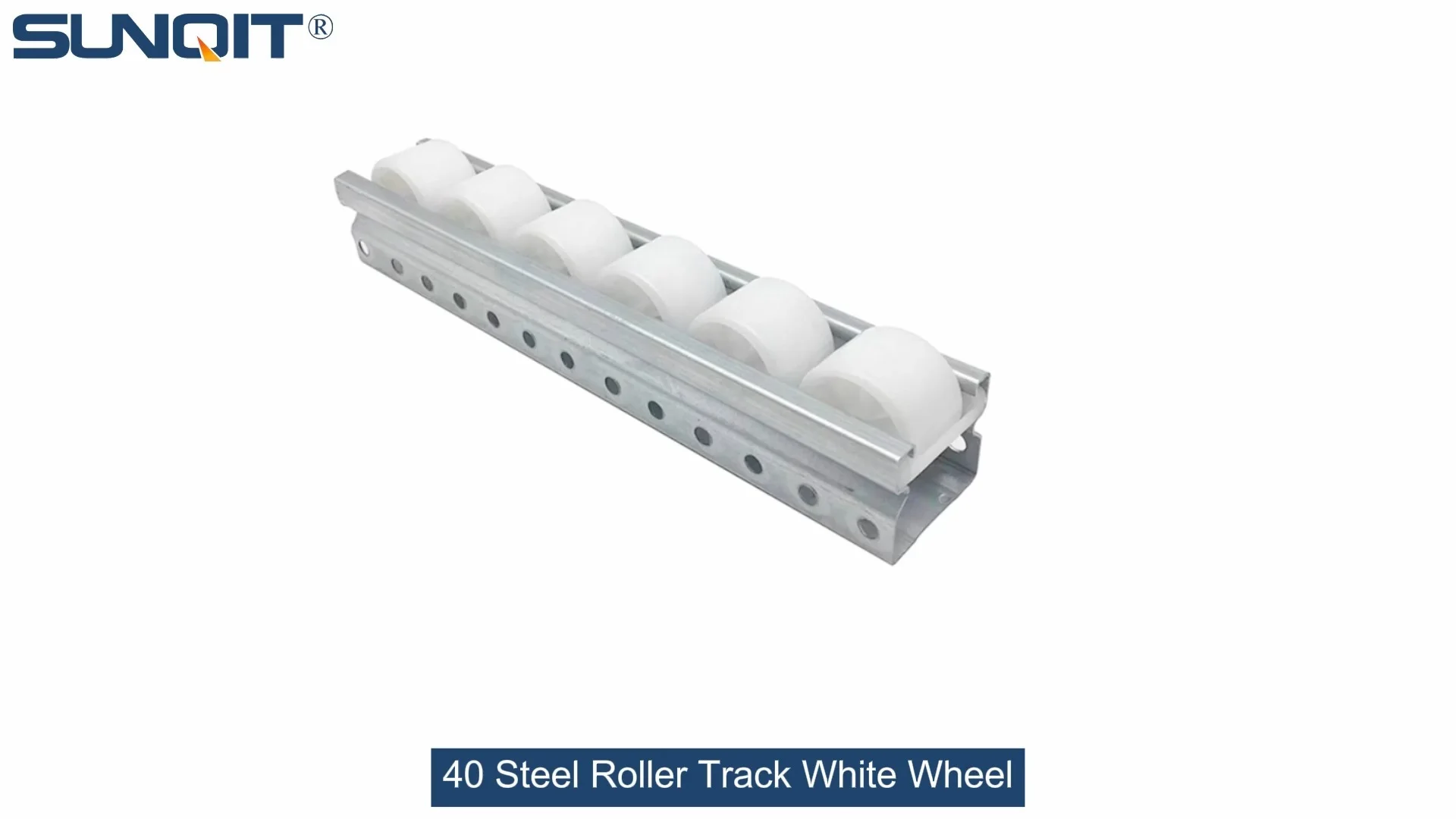
40 Steel Roller Track White Wheel
The roller track can be installed with multiple accessories to create different slopes and configurations of flow racks.All steel conveyor 40 roller track accessories are engineered to perfectly fit the sliding rail.
Automotive parts assembly is a world where every tiny detail counts. A single misalignment or a rough movement can lead to costly delays or defective products. That's why choosing the right components for your assembly line isn't just a purchase—it's an investment in reliability and efficiency. Today, we're diving deep into one such component that plays a silent but critical role: the 40 Steel Roller Track White Wheel. Used in conveyors and flow racks across automotive factories, this small part holds big importance when it comes to meeting strict precision standards.
What Is the 40 Steel Roller Track White Wheel?
Let's break it down simply. This component is a steel roller with a white, non-marking surface, designed to help parts glide smoothly along assembly lines. The 40mm size makes it versatile for handling various automotive parts—from small bolts to larger subassemblies like door panels. The white finish isn't just aesthetic; it prevents scratches on delicate surfaces, which is crucial for parts that need to stay in perfect condition before final assembly. Made from high-grade steel, it's built to withstand the daily wear and tear of a busy factory floor without losing its shape or performance. Whether it's moving a car body through the paint shop or a dashboard component to the final assembly station, this roller track is engineered to deliver consistent, reliable results.
Its Role in Automotive Parts Assembly
You'll find these roller tracks in almost every stage of automotive assembly. For instance, in the body shop, they help move metal panels from the stamping area to the welding station. The smooth rotation ensures that panels don't get dented or scratched during transport. In the paint shop, they're used on conveyors that carry car bodies through the painting process—any uneven movement here could lead to streaks or uneven coating. On the final assembly line, they support flow racks that hold interior components like seats and dashboards, allowing workers to grab parts quickly without searching. Precision here directly impacts the quality of the final product; if a roller is slightly out of round, it could cause a part to shift, leading to misalignment during assembly. This is why every roller must meet exact specifications to ensure consistent performance across the entire line. Even a small error in a single roller can have a ripple effect, slowing down production and increasing costs.

Key Precision Requirements for Optimal Performance
To function well in automotive assembly, the 40 Steel Roller Track White Wheel must meet strict precision standards. Let's dive deeper into each requirement:
| Aspect | Precision Requirement | Why It Matters |
|---|---|---|
| Dimension Tolerance | ±0.1mm for wheel diameter and axle hole | Ensures all rollers are almost identical in size, preventing bumps or jostling that could damage parts |
| Surface Finish | Ra ≤ 0.8μm | Creates an extremely smooth surface, reducing friction and extending the life of both the roller and the parts it carries |
| Load Capacity Consistency | ±5% variation in maximum load | Prevents unexpected failures when handling heavy parts like engine blocks, avoiding downtime and safety hazards |
| Rotational Smoothness | Less than 0.5N of resistance per wheel | Allows easy movement with minimal force, reducing worker fatigue and speeding up assembly processes |
| Compatibility | Exact fit with standard conveyor frames and flow rack slots | Enables easy installation and replacement, supporting flexible production lines that adapt to new models quickly |
Each of these requirements plays a vital role in ensuring the roller track performs as expected. For example, dimension tolerance of ±0.1mm means that every roller is uniform. If one roller is even a tiny bit larger than others, it could create a bump in the track, causing parts to shift. Surface finish of Ra ≤ 0.8μm ensures that the roller's surface is smooth enough to handle delicate parts without scratching them. Load capacity consistency is critical because automotive parts vary widely in weight—from small screws to heavy engine components. A roller that can't handle its specified load could break, leading to costly downtime. Rotational smoothness reduces the effort needed to move parts, which helps workers stay efficient throughout their shift. Compatibility with standard frames means that factories can easily swap out old rollers for new ones, keeping their lines running smoothly.

Integration with Lean Solutions
This roller track isn't just a standalone component—it's part of a larger lean system that helps automotive factories run more efficiently. Lean manufacturing focuses on eliminating waste and improving flexibility, and these rollers fit right into that philosophy. For example, using these rollers on conveyors allows factories to implement just-in-time (JIT) production, where parts arrive exactly when they're needed. This reduces inventory costs and storage space. Flow racks equipped with these rollers enable first-in-first-out (FIFO) inventory management, ensuring that older parts are used first, reducing waste from expired components.
When paired with lean pipe workbenches, the rollers create a seamless workflow where parts move directly from the rack to the workstation, minimizing unnecessary movement. This level of integration helps factories cut down on waste, improve efficiency, and respond faster to changes in customer demand. For instance, if a factory needs to switch to producing a new car model, the roller tracks can be easily adjusted or replaced to accommodate the new parts, supporting flexible production lines that adapt quickly. This flexibility is key in today's fast-paced automotive industry, where consumer preferences change rapidly.

How Suppliers Ensure Precision
Reputable suppliers know that precision can't be left to chance. They use advanced techniques like CNC machining to get exact dimensions for each roller. Every wheel goes through rigorous testing—load tests to check how much weight it can handle, friction tests to ensure smooth rotation, and dimensional checks to verify it meets specs. Customization is also key; if a factory needs rollers with ESD properties to handle electronic components (like car infotainment systems), suppliers can provide ESD-coated versions. This level of quality control ensures that every roller track performs consistently, reducing downtime and maintenance costs for the factory.
Suppliers also follow strict quality standards to ensure their products meet industry requirements. For example, they may use ISO 9001-certified processes to guarantee consistency in manufacturing. They also offer customization options to meet the unique needs of different automotive factories. Whether a factory needs rollers with specific load capacities or ESD coatings, a reliable supplier can deliver products that fit their exact requirements. This level of attention to detail is crucial for automotive factories that need to maintain high standards of quality and efficiency.
Conclusion
In the fast-paced world of automotive parts assembly, the 40 Steel Roller Track White Wheel is more than just a small component—it's a cornerstone of precision and efficiency. Its ability to handle delicate parts smoothly, meet tight tolerance standards, and integrate with lean solutions makes it essential for any modern assembly line. Choosing the right supplier for these components is crucial; you need a partner that understands the unique needs of automotive manufacturing and delivers reliable, high-precision products every time. Whether you're building a new line or upgrading an existing one, investing in quality roller tracks will pay off in the long run with fewer errors, faster production, and happier customers. By focusing on precision and integration with lean practices, automotive factories can stay competitive in an industry that demands constant improvement and innovation.