- Company Articles
- Products and Technology
- Product knowledge
- 40 Steel Roller Track White Wheel Load Capacity Charts: Sizing Recommendations

40 Steel Roller Track White Wheel Load Capacity Charts: Sizing Recommendations
Related Product
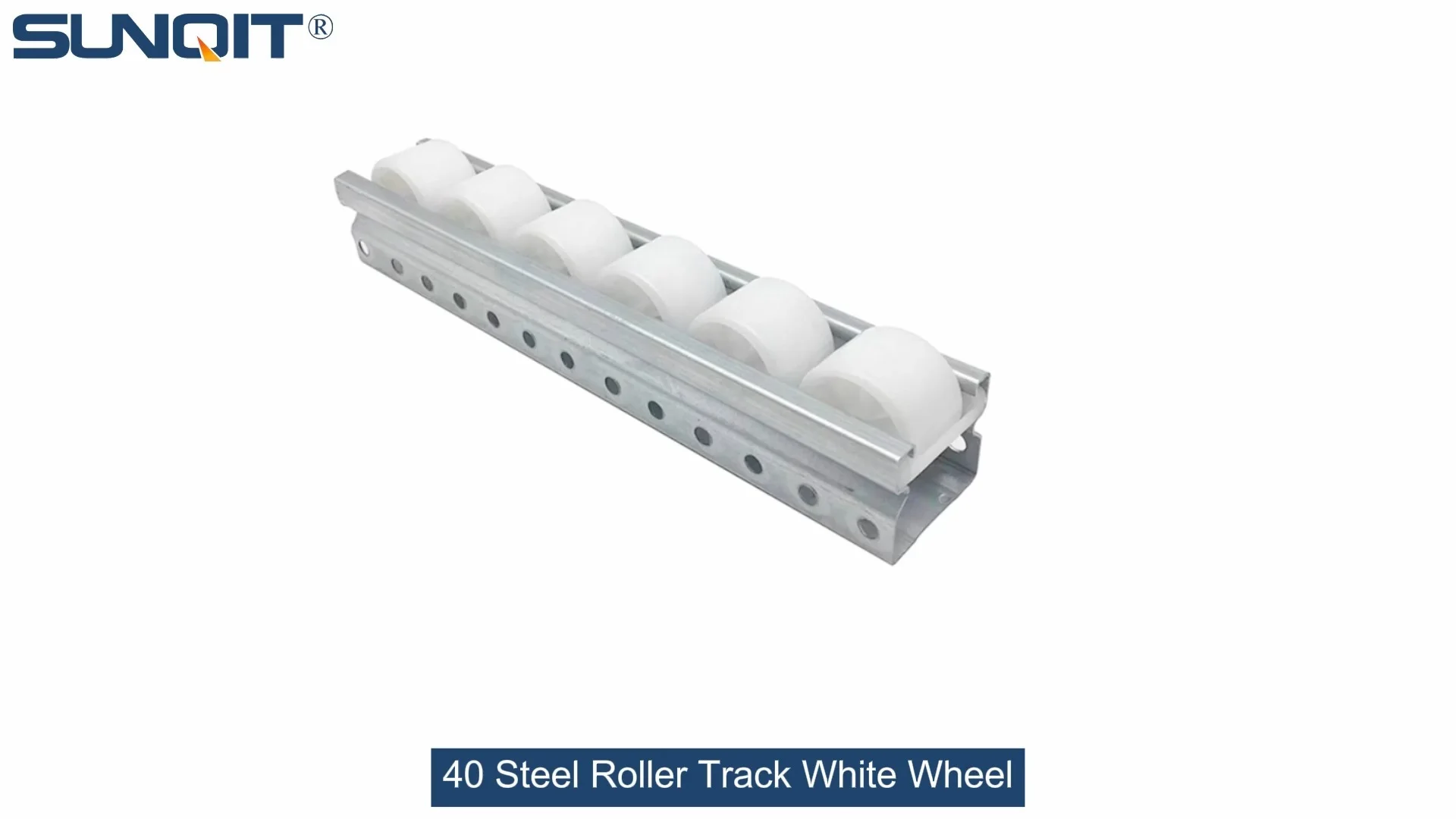
40 Steel Roller Track White Wheel
The roller track can be installed with multiple accessories to create different slopes and configurations of flow racks.All steel conveyor 40 roller track accessories are engineered to perfectly fit the sliding rail.
Introduction
If you've ever worked in a manufacturing or warehouse setting, you know how critical smooth material flow is to keeping operations running efficiently. Every component that gets stuck, every delay in moving parts from one station to another, adds up to lost time and money. That's where the 40 Steel Roller Track White Wheel comes in— a small but powerful component that's a backbone of modern lean systems, flow racks, and conveyor lines. Whether you're assembling 3C products, building medical devices, or managing warehouse inventory, choosing the right roller track size and understanding its load capacity can make all the difference in your daily operations.
In this article, we'll dive deep into everything you need to know about the 40 Steel Roller Track White Wheel: from its key features and factors affecting load capacity to detailed charts and sizing recommendations. We'll also explore how it integrates with lean pipe workbenches, flow racks, and conveyors, and share tips to avoid common mistakes and keep your system running smoothly. By the end, you'll have all the knowledge to pick the perfect roller track for your specific needs—whether you're setting up a new line or upgrading an existing one.
What Is the 40 Steel Roller Track White Wheel?
Let's start with the basics. The 40 Steel Roller Track White Wheel is a type of roller track system designed for material handling applications. It consists of a steel track (the base) and white wheels (usually made of high-quality nylon or polypropylene) that rotate smoothly to move items along the track. The "40" in its name refers to the wheel diameter (40mm), which is a common size for medium to light-duty applications.
The white wheels are a standout feature here. Unlike metal wheels, they're non-scratching—perfect for moving delicate parts like 3C components or medical device enclosures without damaging their surfaces. They're also resistant to wear and tear, even with frequent use, and have low friction, which means items slide easily without requiring extra force. The steel track, on the other hand, is durable and can handle heavy loads, making the combination of steel track and white wheels ideal for a wide range of uses.
This roller track is versatile too. You can use it in flow racks to enable FIFO (first-in-first-out) inventory management, in conveyors to move parts between workstations, or even in lean pipe workbenches as a slide-out tray for easy access to tools and components. It's compatible with a range of accessories, like end supports, connectors, and fixed plates, which makes it easy to integrate into almost any material handling system.

Key Factors Affecting Load Capacity
Before we get to the load capacity charts, it's important to understand the factors that influence how much weight the 40 Steel Roller Track White Wheel can handle. Ignoring these factors can lead to overloading, which causes premature wear, system failures, and safety hazards. Let's break them down:
- Roller Spacing: This is the distance between two adjacent wheels on the track. Closer spacing means more wheels support the load, so the track can handle heavier weights. For example, a track with 100mm spacing will hold more weight than one with 200mm spacing.
- Wheel Material: The white wheels are typically made of nylon or polypropylene. Nylon wheels are stronger and can handle more weight than polypropylene ones, but both are suitable for most light to medium-duty applications.
- Track Thickness: The thickness of the steel track affects its durability. Thicker tracks (like 1.5mm or 2mm) can support heavier loads than thinner ones (1mm).
- Installation Method: How you install the track matters. If it's mounted on a sturdy frame (like a flow rack or conveyor frame), it can handle more weight than if it's attached to a flimsy surface. Using proper accessories like end supports and connectors also increases load capacity.
- Environmental Factors: Temperature, humidity, and usage frequency all play a role. For example, in high-temperature environments (like near ovens in manufacturing lines), the wheels may soften and lose some load capacity. Similarly, frequent, continuous use will wear down the wheels faster than intermittent use.
- Item Distribution: The way weight is distributed on the track matters. If the load is evenly spread across multiple wheels, the track can handle more weight than if the load is concentrated on a few wheels.

40 Steel Roller Track White Wheel Load Capacity Charts
To help you choose the right roller track for your needs, we've compiled detailed load capacity charts based on common roller spacing and track thicknesses. These charts are based on standard conditions (room temperature, even load distribution, and proper installation). Keep in mind that these are maximum values—we recommend using a safety factor of 1.2 (i.e., multiply your expected load by 1.2 to get the minimum load capacity you need).
| Roller Spacing (mm) | Track Thickness (mm) | Wheel Material | Max Load per Linear Meter (kg) | Max Load per Roller (kg) | Recommended Application Scenarios |
|---|---|---|---|---|---|
| 100 | 1.5 | Nylon | 350 | 35 | Light parts: 3C assembly components (phone cases, small circuit boards), medical device parts (syringe barrels, small sensors) |
| 100 | 2.0 | Nylon | 400 | 40 | Medium parts: Plastic housings, metal brackets, small tools |
| 150 | 1.5 | Nylon | 300 | 30 | Medium parts: Automotive components (small gears, plastic clips), warehouse inventory (small boxes) |
| 150 | 2.0 | Nylon | 350 | 35 | Heavy parts: Metal enclosures, large 3C components (laptop frames), medical device housings |
| 200 | 1.5 | Nylon | 250 | 25 | Heavy parts: Industrial machinery components (small valves, metal plates), warehouse pallets (lightweight) |
| 200 | 2.0 | Nylon | 300 | 30 | Very heavy parts: Large metal brackets, heavy medical devices (MRI machine components), automotive engine parts (small) |
| 100 | 1.5 | Polypropylene | 250 | 25 | Light parts: Electronic accessories (chargers, cables), small plastic parts |
| 150 | 1.5 | Polypropylene | 200 | 20 | Light parts: Toy components, packaging materials |
Note: These values are for reference only. For custom applications (like high-temperature environments or very heavy loads), we recommend consulting our engineering team for a custom solution tailored to your specific needs.

Sizing Recommendations: How to Choose the Right Roller Track
Now that you have the load capacity charts, how do you pick the right size for your application? Here are step-by-step recommendations to help you make the best choice:
Step 1: Determine Your Load Requirements
First, calculate the weight of the items you'll be moving. For example, if you're moving small 3C components that weigh 5kg each, and you plan to have 10 items on a 1-meter track, your total load per linear meter is 50kg. Using the safety factor of 1.2, you need a track that can handle at least 60kg per linear meter. Looking at the chart, any of the tracks with 100mm spacing will work (since they can handle up to 250kg or more).
If you're moving heavier items like metal enclosures that weigh 20kg each, and you have 10 items on a 1-meter track, your total load is 200kg. With the safety factor, you need 240kg per linear meter. The track with 150mm spacing and 2.0mm thickness (350kg) would be a good choice.
Step 2: Choose the Right Roller Spacing
As mentioned earlier, closer spacing means higher load capacity. But it also means higher cost (since you need more wheels). So balance cost and load capacity:
-
100mm spacing:
Best for light to medium loads, or items that are small and need even support
Introduction
If you've ever worked in a manufacturing or warehouse setting, you know how critical smooth material flow is to keeping operations running efficiently. Every component that gets stuck, every delay in moving parts from one station to another, adds up to lost time and money. That's where the 40 Steel Roller Track White Wheel comes in— a small but powerful component that's a backbone of modern lean systems, flow racks, and conveyor lines. Whether you're assembling 3C products, building medical devices, or managing warehouse inventory, choosing the right roller track size and understanding its load capacity can make all the difference in your daily operations.
In this article, we'll dive deep into everything you need to know about the 40 Steel Roller Track White Wheel: from its key features and factors affecting load capacity to detailed charts and sizing recommendations. We'll also explore how it integrates with lean pipe workbenches, flow racks, and conveyors, and share tips to avoid common mistakes and keep your system running smoothly. By the end, you'll have all the knowledge to pick the perfect roller track for your specific needs—whether you're setting up a new line or upgrading an existing one.
What Is the 40 Steel Roller Track White Wheel?
Let's start with the basics. The 40 Steel Roller Track White Wheel is a type of roller track system designed for material handling applications. It consists of a steel track (the base) and white wheels (usually made of high-quality nylon or polypropylene) that rotate smoothly to move items along the track. The "40" in its name refers to the wheel diameter (40mm), which is a common size for medium to light-duty applications.
The white wheels are a standout feature here. Unlike metal wheels, they're non-scratching—perfect for moving delicate parts like 3C components or medical device enclosures without damaging their surfaces. They're also resistant to wear and tear, even with frequent use, and have low friction, which means items slide easily without requiring extra force. The steel track, on the other hand, is durable and can handle heavy loads, making the combination of steel track and white wheels ideal for a wide range of uses.
This roller track is versatile too. You can use it in flow racks to enable FIFO (first-in-first-out) inventory management, in conveyors to move parts between workstations, or even in lean pipe workbenches as a slide-out tray for easy access to tools and components. It's compatible with a range of accessories, like end supports, connectors, and fixed plates, which makes it easy to integrate into almost any material handling system.
Key Factors Affecting Load Capacity
Before we get to the load capacity charts, it's important to understand the factors that influence how much weight the 40 Steel Roller Track White Wheel can handle. Ignoring these factors can lead to overloading, which causes premature wear, system failures, and safety hazards. Let's break them down:
- Roller Spacing: This is the distance between two adjacent wheels on the track. Closer spacing means more wheels support the load, so the track can handle heavier weights. For example, a track with 100mm spacing will hold more weight than one with 200mm spacing.
- Wheel Material: The white wheels are typically made of nylon or polypropylene. Nylon wheels are stronger and can handle more weight than polypropylene ones, but both are suitable for most light to medium-duty applications.
- Track Thickness: The thickness of the steel track affects its durability. Thicker tracks (like 1.5mm or 2mm) can support heavier loads than thinner ones (1mm).
- Installation Method: How you install the track matters. If it's mounted on a sturdy frame (like a flow rack or conveyor frame), it can handle more weight than if it's attached to a flimsy surface. Using proper accessories like end supports and connectors also increases load capacity.
- Environmental Factors: Temperature, humidity, and usage frequency all play a role. For example, in high-temperature environments (like near ovens in manufacturing lines), the wheels may soften and lose some load capacity. Similarly, frequent, continuous use will wear down the wheels faster than intermittent use.
- Item Distribution: The way weight is distributed on the track matters. If the load is evenly spread across multiple wheels, the track can handle more weight than if the load is concentrated on a few wheels.
40 Steel Roller Track White Wheel Load Capacity Charts
To help you choose the right roller track for your needs, we've compiled detailed load capacity charts based on common roller spacing and track thicknesses. These charts are based on standard conditions (room temperature, even load distribution, and proper installation). Keep in mind that these are maximum values—we recommend using a safety factor of 1.2 (i.e., multiply your expected load by 1.2 to get the minimum load capacity you need).
Roller Spacing (mm) Track Thickness (mm) Wheel Material Max Load per Linear Meter (kg) Max Load per Roller (kg) Recommended Application Scenarios 100 1.5 Nylon 350 35 Light parts: 3C assembly components (phone cases, small circuit boards), medical device parts (syringe barrels, small sensors) 100 2.0 Nylon 400 40 Medium parts: Plastic housings, metal brackets, small tools 150 1.5 Nylon 300 30 Medium parts: Automotive components (small gears, plastic clips), warehouse inventory (small boxes) 150 2.0 Nylon 350 35 Heavy parts: Metal enclosures, large 3C components (laptop frames), medical device housings 200 1.5 Nylon 250 25 Heavy parts: Industrial machinery components (small valves, metal plates), warehouse pallets (lightweight) 200 2.0 Nylon 300 30 Very heavy parts: Large metal brackets, heavy medical devices (MRI machine components), automotive engine parts (small) 100 1.5 Polypropylene 250 25 Light parts: Electronic accessories (chargers, cables), small plastic parts 150 1.5 Polypropylene 200 20 Light parts: Toy components, packaging materials Note: These values are for reference only. For custom applications (like high-temperature environments or very heavy loads), we recommend consulting our engineering team for a custom solution tailored to your specific needs.
Sizing Recommendations: How to Choose the Right Roller Track
Now that you have the load capacity charts, how do you pick the right size for your application? Here are step-by-step recommendations to help you make the best choice:
Step 1: Determine Your Load Requirements
First, calculate the weight of the items you'll be moving. For example, if you're moving small 3C components that weigh 5kg each, and you plan to have 10 items on a 1-meter track, your total load per linear meter is 50kg. Using the safety factor of 1.2, you need a track that can handle at least 60kg per linear meter. Looking at the chart, any of the tracks with 100mm spacing will work (since they can handle up to 250kg or more).
If you're moving heavier items like metal enclosures that weigh 20kg each, and you have 10 items on a 1-meter track, your total load is 200kg. With the safety factor, you need 240kg per linear meter. The track with 150mm spacing and 2.0mm thickness (350kg) would be a good choice.
Step 2: Choose the Right Roller Spacing
As mentioned earlier, closer spacing means higher load capacity. But it also means higher cost (since you need more wheels). So balance cost and load capacity:
- 100mm spacing: Best for light to medium loads, or items that are small and need even support (like 3C components).
- 150mm spacing: Ideal for medium to heavy loads, like automotive parts or warehouse boxes.
- 200mm spacing: Suitable for heavy loads, but only if the items are large enough to spread the weight across multiple wheels.
Step 3: Consider Your Application
The type of system you're using the track in will also influence your choice:
- Flow racks: For flow racks, you'll want a track with 100mm or 150mm spacing, since items need to slide smoothly. The white wheels are perfect here because they reduce friction.
- Conveyors: Conveyors often use tracks with 150mm or 200mm spacing, especially if they're moving heavier items. The steel track's durability is important here, so choose a thicker track (2.0mm).
- Lean pipe workbenches: Lean pipe workbenches usually use tracks with 100mm spacing, since they're for light tools and components. The slide-out trays need to be easy to pull, so the low-friction white wheels are ideal.
- Custom solutions: If you have a unique application (like a medical device manufacturing line that needs sterile components), our custom solutions team can design a track with the right spacing and materials to meet your requirements.
Step 4: Check Environmental Factors
If you're working in a high-temperature environment, choose nylon wheels instead of polypropylene (since nylon can handle higher temperatures). If you're in a humid environment, make sure the steel track is coated to prevent rusting. For continuous use, opt for thicker tracks and stronger wheels to reduce wear.
Integration with Lean Systems and Other Components
The 40 Steel Roller Track White Wheel is more than just a standalone component—it's a key part of lean systems that focus on reducing waste and improving efficiency. Let's see how it integrates with other components:
Flow Racks
Flow racks are a staple of lean inventory management, and the 40 Steel Roller Track White Wheel is perfect for them. When you place items on the track at the back of the rack, they slide forward to the front as items are taken, following the FIFO principle. This reduces the time workers spend searching for parts and ensures that older inventory is used first, preventing obsolescence. For example, in a 3C assembly line, flow racks with this roller track hold small components like screws, connectors, and circuit boards, making them easily accessible to workers.
Conveyors
Conveyors are used to move parts between workstations, and this roller track is ideal for beltless conveyors (also called gravity conveyors). The white wheels allow parts to move smoothly without the need for motors, reducing energy costs. In a medical device manufacturing line, conveyors with this track move sterile components between assembly stations, ensuring that they're not contaminated by manual handling.
Lean Pipe Workbenches
Lean pipe workbenches are customizable workstations that help workers organize their tools and components. Adding the 40 Steel Roller Track White Wheel as a slide-out tray allows workers to access parts and tools without leaving their seats, reducing movement and improving productivity. For example, in an automotive assembly line, lean pipe workbenches with this track hold small gears and clips, making them easy to reach for workers assembling engines.
Custom Solutions
Every industry has unique needs, and our custom solutions team can design systems that integrate this roller track to meet those needs. For example, a 3C assembly plant may need a flow rack with this track that's compatible with their existing lean pipe workbenches. A medical device manufacturer may need a conveyor with this track that meets strict hygiene standards (like stainless steel frames and non-toxic wheels). Our team works closely with clients to understand their requirements and design solutions that are efficient, durable, and cost-effective.
Common Mistakes to Avoid
Even the best roller track can fail if used incorrectly. Here are some common mistakes to avoid:
- Overloading: This is the most common mistake. Always check the load capacity chart before using the track, and never exceed the maximum load. Overloading can cause the wheels to break or the track to bend, leading to downtime and safety hazards.
- Incorrect Roller Spacing: Choosing the wrong spacing can lead to uneven load distribution. For example, using 200mm spacing for small items that only cover one or two wheels will cause the items to tip over or get stuck.
- Ignoring Environmental Factors: As mentioned earlier, high temperatures or humidity can affect the wheels' load capacity. If you're working in a harsh environment, consult our team for advice on the right materials.
- Not Using Proper Accessories: Using the wrong end supports or connectors can reduce the track's load capacity. Always use accessories that are designed for the 40 Steel Roller Track White Wheel.
- Neglecting Maintenance: Regular maintenance is essential to keep the track running smoothly. Ignoring maintenance can lead to worn wheels, loose rollers, and system failures.
Maintenance Tips for Longevity
To get the most out of your 40 Steel Roller Track White Wheel, follow these maintenance tips:
- Regular Cleaning: Dust and debris can get stuck between the wheels, causing them to jam. Clean the track weekly with a soft brush or cloth to remove any dirt.
- Check for Loose Rollers: Loose rollers can cause items to get stuck. Check the rollers monthly and tighten any loose ones with a wrench.
- Lubrication: The white wheels are self-lubricating, but if you notice that items are not sliding smoothly, you can apply a small amount of silicone lubricant to the wheels (avoid oil-based lubricants, as they can attract dust).
- replace Worn Wheels: Worn wheels can cause items to slide unevenly. replace any wheels that are cracked, chipped, or worn down to less than 90% of their original diameter.
- Inspect the Track: Check the steel track for rust or bending monthly. If you notice any damage, replace the track immediately to avoid safety hazards.
Case Study: How a 3C Assembly Plant Improved Efficiency with the 40 Steel Roller Track White Wheel
Let's look at a real-world example of how this roller track helped a 3C assembly plant improve their operations. The plant was producing smartphones and had issues with their existing flow racks: the wheels were metal and scratched the delicate plastic components, and the spacing was too wide, causing small parts to get stuck. This led to a 10% downtime rate and increased scrap rates.
The plant reached out to our team for a custom solution. Our engineers recommended replacing the existing tracks with the 40 Steel Roller Track White Wheel (100mm spacing, nylon wheels, 1.5mm track thickness) in their flow racks and conveyors. We also designed lean pipe workbenches with this track as slide-out trays to integrate with their existing systems.
After installation, the plant saw significant improvements:
- Downtime reduced by 15% (from 10% to 8.5%) because parts no longer got stuck.
- Scrap rates decreased by 20% because the white wheels didn't scratch the plastic components.
- Productivity increased by 12% because workers spent less time searching for parts and more time assembling phones.
- Energy costs reduced by 5% because the gravity conveyors with this track didn't need motors.
The plant was so satisfied with the results that they expanded the use of this roller track to their other assembly lines, including tablet and laptop production.
Conclusion
The 40 Steel Roller Track White Wheel is a versatile, durable component that can transform your material handling operations. Whether you're using it in flow racks, conveyors, or lean pipe workbenches, understanding its load capacity and choosing the right size is key to maximizing efficiency and reducing waste. By following the sizing recommendations and maintenance tips in this article, you can ensure that your system runs smoothly for years to come.
If you're not sure which size to choose, or if you need a custom solution for your unique application, our team of experts is here to help. We have years of experience designing material handling systems for industries like 3C assembly, medical device manufacturing, and automotive production, and we can create a solution that meets your specific needs.
Investing in the right roller track is an investment in your company's efficiency and profitability. So why wait? Start using the 40 Steel Roller Track White Wheel today and see the difference it can make in your operations.