- Company Articles
- Products and Technology
- Product knowledge
- 40 Steel Roller Track White Wheel: Material Composition & Manufacturing Process

40 Steel Roller Track White Wheel: Material Composition & Manufacturing Process
Related Product
40 Steel Roller Track White Wheel
The roller track can be installed with multiple accessories to create different slopes and configurations of flow racks.All steel conveyor 40 roller track accessories are engineered to perfectly fit the sliding rail.
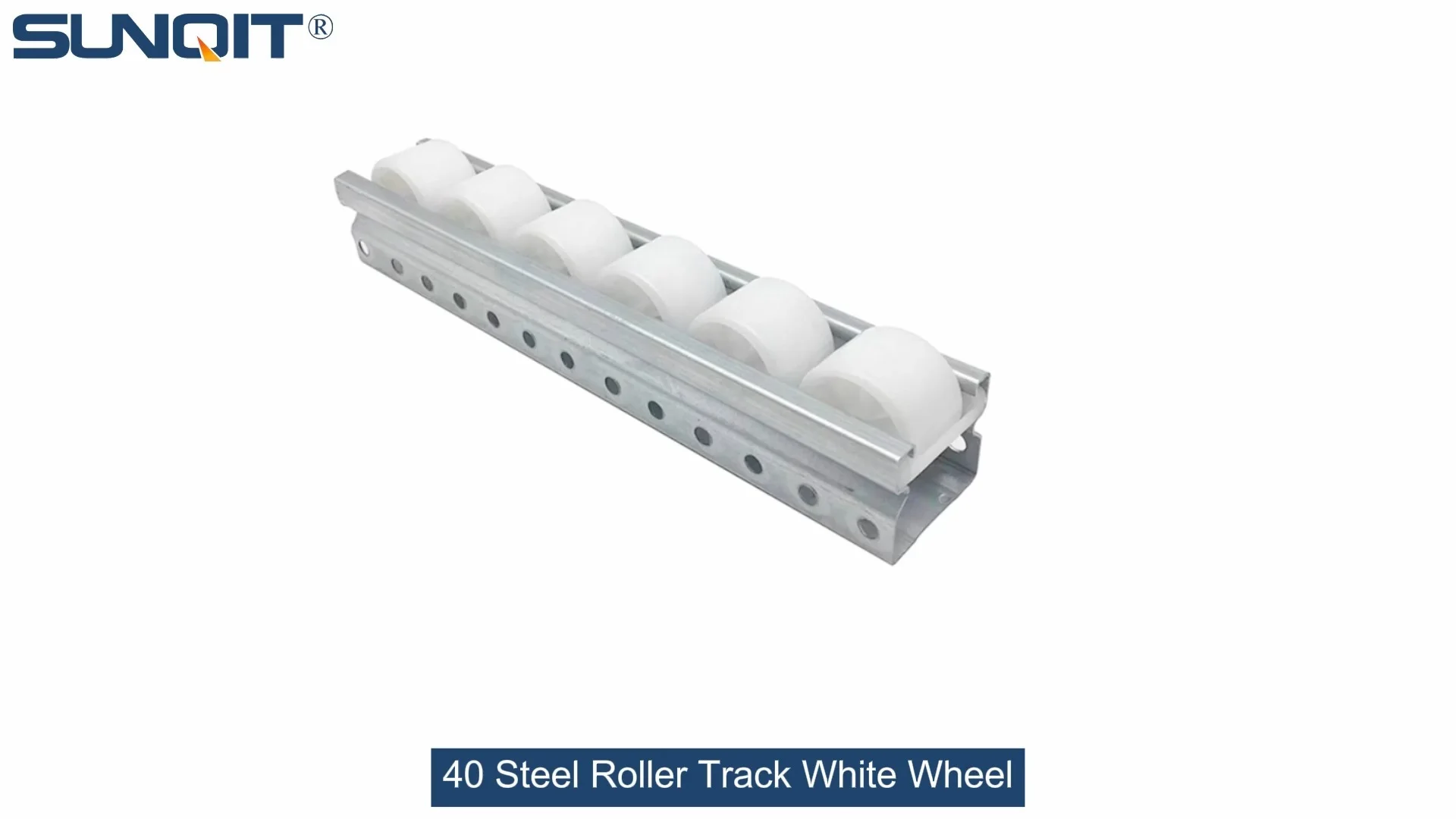
40 Steel Roller Track White Wheel: Material Composition & Manufacturing Process
In the fast-paced world of manufacturing, where every second counts and efficiency is the name of the game, small components often play surprisingly big roles. Take the 40 Steel Roller Track White Wheel, for example. This unassuming part is a workhorse in production lines, quietly ensuring materials glide smoothly from one workstation to the next, connecting assembly steps, and keeping operations flowing without a hitch. But what makes this roller track so reliable? How do its materials and manufacturing process contribute to its performance in factories across industries like 3C assembly, automotive, and medical device production? Let's dive in and explore the details that make this component a cornerstone of modern lean manufacturing systems.
Material Composition: Building Blocks of Durability & Precision
At first glance, a 40 Steel Roller Track White Wheel might seem simple—just a metal track with white wheels. But under the surface, every material choice is intentional, designed to balance strength, longevity, and functionality. Let's break down its key components:
1. Track Frame: The Backbone of Stability
The track frame, the structure that holds everything together, is typically crafted from high-quality steel. But not just any steel—manufacturers opt for cold-rolled steel (CRS) for its exceptional properties. Cold-rolled steel is made by rolling steel at room temperature, which aligns the metal's grains, resulting in a smoother surface finish, tighter dimensional tolerances, and higher strength compared to hot-rolled steel. This means the track frame can withstand heavy loads without warping, even after years of continuous use in busy factories.
For environments where corrosion resistance is critical—like medical device production or food packaging facilities—some variants use stainless steel (as referenced in the stainless steel pipe series). Stainless steel adds a layer of protection against rust and chemical exposure, ensuring the track remains reliable in harsh conditions.
2. White Wheels: The Silent Movers
The white wheels are where functionality meets finesse. Their color isn't just for aesthetics; it's often a clue to their material. Most commonly, these wheels are made from polypropylene (PP) or nylon, chosen for their unique blend of properties:
- Low Friction: PP and nylon wheels glide over surfaces with minimal resistance, reducing the force needed to move materials. This translates to smoother workflows and less wear on both the wheels and the items being transported.
- Chemical Resistance: They stand up well to oils, solvents, and cleaning agents often found in manufacturing settings, ensuring they don't degrade over time.
- Noise Reduction: Unlike metal wheels, plastic wheels operate quietly, helping to create a more pleasant working environment—a small detail that makes a big difference for factory floor workers.
- Non-Marking: The white color ensures the wheels won't leave scuff marks on sensitive materials, which is crucial when handling finished products or high-value components like 3C electronics.
For specialized applications, such as in ESD (Electrostatic Discharge) workstations (a key product line for many suppliers), wheels may include additives to dissipate static electricity, protecting sensitive electronic components from damage.
3. Axles & Connectors: Holding It All Together
No track is complete without its axles and connectors. Axles are usually made from hardened steel, ensuring they can support the weight of the wheels and the materials being transported without bending. Connectors, on the other hand, often use aluminum alloys (think aluminum profile accessories), chosen for their lightweight yet strong nature. Aluminum connectors make the track easy to assemble and reconfigure—aligning perfectly with the lean of "sustainable improvement" by allowing quick adjustments to production lines as needs change.
| Component | Common Material | Key Properties | Role in Performance |
|---|---|---|---|
| Track Frame | Cold-Rolled Steel / Stainless Steel | High tensile strength (300-500 MPa), smooth surface, corrosion resistance (stainless steel) | Supports heavy loads, maintains structural integrity |
| White Wheels | Polypropylene (PP) / Nylon | Low friction coefficient (0.2-0.3), chemical resistance, non-marking | Enables smooth, quiet material transport |
| Axles | Hardened Steel | High yield strength (>600 MPa), wear resistance | Supports wheel rotation under load |
| Connectors | Aluminum Alloys | Lightweight (density ~2.7 g/cm³), good machinability | Facilitates easy assembly and reconfiguration |
Manufacturing Process: From Raw Materials to Finished Track
Creating a 40 Steel Roller Track White Wheel is a journey of precision, involving multiple steps that transform raw materials into a component ready to tackle the demands of the factory floor. Let's walk through this process step by step.
1. Raw Material Inspection: The First Line of Quality
It all starts with the materials. Before production begins, every batch of steel, plastic resin, and aluminum is rigorously tested. Steel coils are checked for thickness uniformity and chemical composition (using spectrometers to verify elements like carbon and manganese). Plastic resins are tested for melt flow rate (MFR) to ensure consistent molding, and aluminum alloys are inspected for tensile strength. This step ensures only top-tier materials move forward—because a strong track starts with strong ingredients.
2. Track Frame Formation: Shaping the Backbone
For cold-rolled steel frames, the process begins with roll forming . Steel coils are fed into a series of rollers that gradually bend the metal into the track's cross-sectional shape—typically a U-channel or C-channel to house the wheels. This method allows for precise, repeatable shapes and high production efficiency.
After forming, the track is cut to length using automated saws or laser cutters, ensuring each piece meets exact (often within ±0.5mm tolerance). For stainless steel tracks, an additional passivation step may be added—immersing the steel in a nitric acid solution to remove free iron from the surface, enhancing corrosion resistance.
3. Wheel Production: Molding for Perfection
The white wheels are usually made via injection molding . Here's how it works:
- Plastic resin pellets (PP or nylon) are melted in a heated barrel until they become a viscous liquid.
- The molten plastic is injected into a mold cavity shaped like the wheel, under high pressure (typically 500-1500 bar).
- The mold is cooled (using water channels) to solidify the plastic, then opened to eject the finished wheel.
- Any excess plastic (flash) is trimmed off, and the wheels are inspected for defects like air bubbles or warping.
For ESD-safe wheels, conductive additives (like carbon black) are mixed into the resin before molding, ensuring the wheels can dissipate static charges—critical for electronics manufacturing where static can damage microchips.
4. Assembly: Bringing It All Together
Assembly is where the track frame, wheels, axles, and connectors finally come together. This step is often semi-automated, with workers using specialized tools to ensure precision:
- Axles are inserted into pre-drilled holes in the track frame, secured with retaining clips or press-fitting to prevent slipping.
- Wheels are pressed onto the axles, with just enough clearance to rotate freely without wobbling (typically 0.1-0.2mm radial play).
- Connectors (aluminum brackets, corner joints) are attached to the track ends using bolts or rivets, allowing multiple track sections to be linked together to form longer systems.
During assembly, workers check wheel alignment to ensure they're parallel—misaligned wheels can cause materials to jam or veer off course, disrupting production.
5. Surface Treatment: Protecting and Polishing
The track frame often receives a final surface treatment to enhance durability and appearance. For steel frames, this may involve powder coating —electrostatically applying a dry powder (usually gray or black) and curing it in an oven to form a hard, protective layer. Powder coating resists chipping and scratching better than paint, ideal for high-traffic factory environments.
Aluminum connectors may be anodized—creating a thin, protective oxide layer on the surface that's both decorative and corrosion-resistant.
6. Quality Testing: Ensuring Reliability
Before leaving the factory, each track undergoes a battery of tests:
- Load Testing: The track is loaded with weights up to its rated capacity (often 50-200 kg/m) and left for 24 hours to check for deformation.
- Rolling Resistance Test: A standardized weight is pulled along the track, measuring the force required—ensuring it meets low-friction specifications.
- Wheel Durability Test: Wheels are rotated continuously under load for thousands of cycles to simulate years of use, checking for wear or cracking.
- ESD Test (if applicable): Using a surface resistance meter to verify the wheels' resistance is within the safe range (10⁶-10¹¹ ohms).
Only tracks that pass all tests are packaged and shipped to customers—because in manufacturing, reliability isn't optional.
Beyond the Track: Fitting into Lean Manufacturing
The 40 Steel Roller Track White Wheel isn't just a standalone component—it's part of a larger ecosystem of lean manufacturing tools. Its design aligns perfectly with the principles of lean solution : eliminating waste, improving flow, and enabling continuous improvement.
1. Enabling Smooth Material Flow
In lean manufacturing, "flow" refers to the uninterrupted movement of materials from raw goods to finished products. The 40 Steel Roller Track excels here by connecting workstations, ensuring parts arrive exactly when needed (a key part of "just-in-time" production). For example, in a 3C assembly line, circuit boards might travel along these tracks from soldering stations to testing stations, with each wheel rotation bringing the product one step closer to completion.
Often paired with flow racks (another staple of lean systems), these tracks create gravity-fed storage solutions, where materials slide forward as the front item is taken—minimizing worker movement and reducing pick times.
2. Flexibility for Changing Needs
Modern manufacturing isn't static—production lines need to adapt to new products, higher volumes, or shifting demand. The track's modular design (thanks to those aluminum connectors) makes reconfiguration a breeze. Need to shorten the track for a smaller batch? Just unbolt a section. Want to add a curve to route materials around a new machine? Swap in a corner connector. This flexibility means the track can evolve with the factory, reducing the need for costly replacements—aligning with the "sustainable improvement" ethos of lean systems.
3. Supporting Custom Solutions
Every factory is unique, and off-the-shelf components don't always cut it. That's where custom solutions come in. Manufacturers of 40 Steel Roller Track White Wheels often offer tailored options, such as:
- Custom lengths (from 1m to 6m or more) to fit specific production layouts.
- Wheel material upgrades (like polyurethane for heavier loads or higher temperature resistance).
- Integrated sensors to track material flow (part of Industry 4.0 smart factory setups).
For example, a medical device manufacturer might need a track with ESD wheels and stainless steel frame to meet strict hygiene standards, while an automotive supplier might opt for heavy-duty steel wheels for transporting metal components. These customizations ensure the track isn't just a tool, but a partner in solving unique production challenges.
Why It Matters: The Impact of a Well-Made Track
At the end of the day, the 40 Steel Roller Track White Wheel might not be the most glamorous piece of equipment on the factory floor. But its role is irreplaceable. A track with subpar materials might warp under heavy loads, causing jams and downtime. Wheels with high friction could slow production, eating into profits. Poorly assembled tracks might fail unexpectedly, derailing deadlines.
By focusing on quality materials (cold-rolled steel, precision-molded wheels) and meticulous manufacturing (roll forming, injection molding, rigorous testing), this component becomes a silent contributor to success—keeping lines moving, workers efficient, and factories adaptable. It's a testament to the idea that in manufacturing, even the smallest parts can make the biggest difference.
So the next time you walk through a factory and see materials gliding smoothly along a track, take a moment to appreciate the engineering behind it. That 40 Steel Roller Track White Wheel? It's more than metal and plastic. It's the backbone of modern lean manufacturing—one wheel rotation at a time.