- Company Articles
- Products and Technology
- Product knowledge
- 40 Steel Roller Track White Wheel Surface Hardness: Rockwell Scale Testing

40 Steel Roller Track White Wheel Surface Hardness: Rockwell Scale Testing
Related Product
40 Steel Roller Track White Wheel
The roller track can be installed with multiple accessories to create different slopes and configurations of flow racks.All steel conveyor 40 roller track accessories are engineered to perfectly fit the sliding rail.
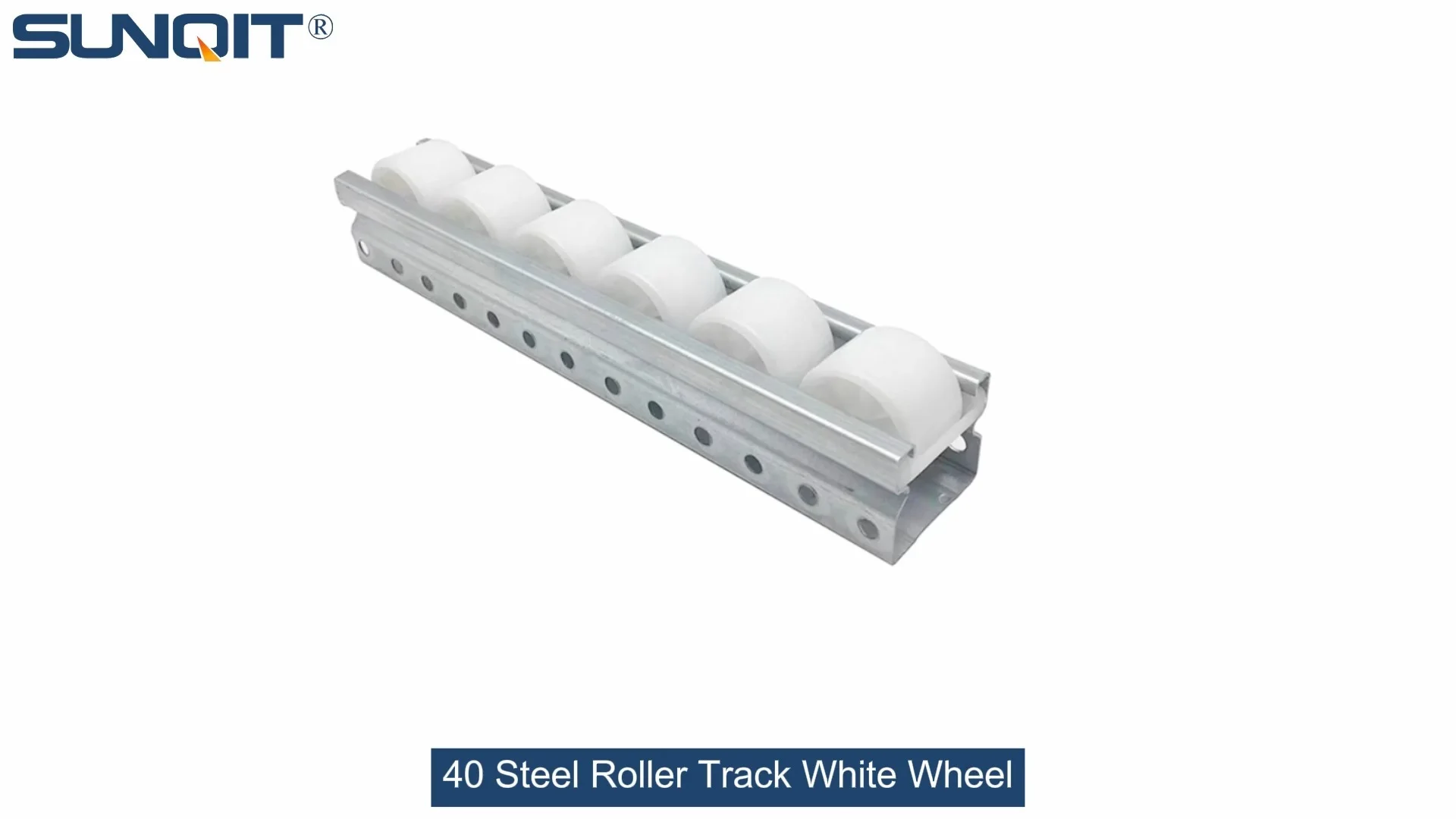
In the bustling world of manufacturing, every component plays a critical role in keeping operations running smoothly. From the largest conveyor system to the smallest roller wheel, each part contributes to the efficiency and reliability of the entire production line. Today, we're taking a close look at one such component that often goes unnoticed but is essential for seamless material handling: the 40 Steel Roller Track White Wheel from Sunqit. We'll explore its surface hardness, measured using the Rockwell Scale, and why this property is a game-changer for businesses relying on lean manufacturing solutions.
What Is Rockwell Hardness Testing?
Before diving into the test results, let's first understand what Rockwell hardness testing is and why it's the go-to method for evaluating metal components like our roller wheel. Unlike other hardness tests that focus on the size of an indentation made by a single load, Rockwell testing uses a two-step process to get precise measurements. Here's how it works: first, a small initial load (called the minor load) is applied to the material's surface to set the indenter in place. This ensures that any surface irregularities don't affect the final reading. Then, a larger main load (the major load) is added, creating a deeper indentation. The difference between the depth of the indentation from the minor load alone and the combined minor plus major load gives us the Rockwell hardness number.
For hardened steel components like the 40 Steel Roller Track White Wheel, we use the Rockwell C scale (HRC), which employs a diamond indenter and a major load of 150 kgf. This scale is ideal because it provides accurate results for materials with high hardness, making it perfect for assessing the wear resistance of our roller wheel.
Why Surface Hardness Matters for Roller Tracks
You might be wondering: why does surface hardness matter so much for a roller wheel? Let's break it down. A roller track's wheels are constantly in motion, bearing weight, and rubbing against other surfaces. If the surface isn't hard enough, it will wear down quickly, leading to uneven rolling, increased friction, and eventually, system failures. This can cause costly downtime in your production line, whether it's a conveyor moving parts in a 3C assembly plant or a flow rack storing components in a medical device factory.
A hard surface offers several key benefits: it resists abrasion, meaning the wheel lasts longer even under heavy use; it can handle higher loads without deforming, ensuring consistent performance; and it maintains a smooth rolling action, which is crucial for lean systems that prioritize efficiency. For example, in a lean pipe workbench used for assembling electronic devices, a roller track with hard wheels allows workers to slide parts easily, reducing fatigue and speeding up the assembly process.

Testing the 40 Steel Roller Track White Wheel: Step-by-Step
To ensure the quality of Sunqit's 40 Steel Roller Track White Wheel, we conducted a series of Rockwell hardness tests. Here's a detailed look at our testing process:
1. Sample Preparation: We selected five random samples from Sunqit's inventory of 40 Steel Roller Track White Wheels. Each sample was cleaned thoroughly with a degreaser to remove any oil, dirt, or debris that could interfere with the test. This step is crucial because even a small particle on the surface can create a false indentation, leading to inaccurate results.
2. Equipment Setup: We used a calibrated Rockwell hardness tester (model: HR-150A) with a diamond indenter. The tester was set to the HRC scale, with a minor load of 10 kgf and a major load of 150 kgf. Before starting the tests, we verified the tester's accuracy using a standard hardness block (HRC 60 ± 1).
3. Conducting the Test: For each sample, we placed the wheel on the tester's anvil, ensuring it was stable and level. We applied the minor load first, allowing the indenter to settle into the surface. Then, we applied the major load and held it for 10 seconds to allow the material to deform fully. After removing the major load (keeping the minor load applied), the tester calculated the hardness value based on the depth difference.
4. Multiple Readings: To get a comprehensive view of the wheel's hardness, we took three readings on different parts of each wheel: the center, the edge, and near the axle hole. This helped us confirm that the hardness was consistent across the entire surface.

Test Results and Analysis
After conducting the tests, we compiled the results into the table below. Each value represents the average of three readings taken on different areas of the sample:
| Sample ID | Rockwell Hardness (HRC) | Testing Location |
|---|---|---|
| 1 | 59.2 | Center of Wheel Surface |
| 2 | 60.5 | Edge of Wheel |
| 3 | 58.8 | Near Axle Hole |
| 4 | 61.1 | Random Spot on Surface |
| 5 | 59.7 | Between Center and Edge |
The average Rockwell hardness across all samples was 59.9 HRC, which is an excellent result. For context, a typical high-quality knife blade has a hardness of around 55-58 HRC, so our roller wheel is harder than most blades. This means it's extremely resistant to wear and tear, even under heavy loads.
What does this mean for your business? A hardness of ~60 HRC ensures that the 40 Steel Roller Track White Wheel can handle continuous use in high-demand environments. For example, in a conveyor system used in an automotive parts factory, where heavy metal components are moving constantly, these wheels will maintain their shape and performance for years. In a flow rack used in a warehouse, they'll resist abrasion from boxes sliding over them, reducing the need for frequent replacements.

Applications of the 40 Steel Roller Track White Wheel
The 40 Steel Roller Track White Wheel is a versatile component that fits into many of Sunqit's lean manufacturing solutions. Let's explore some of its key applications:
1. Conveyors: Sunqit's conveyors are used in industries like 3C assembly, medical device manufacturing, and automotive production. The 40 Steel Roller Track White Wheel is a core part of these conveyors, ensuring smooth movement of parts and products. Its high hardness means the conveyor can run 24/7 without frequent maintenance, which is essential for lean systems that aim to minimize downtime.
2. Flow Racks: Flow racks are a staple in lean warehouses, allowing materials to move from the back to the front automatically. The 40 Steel Roller Track White Wheel's low friction and high wear resistance make it perfect for these racks. In a 3C assembly line, for example, a flow rack with these wheels can hold small electronic components, ensuring they're easily accessible to workers and reducing the time spent searching for parts.
3. Lean Pipe Workbenches: Sunqit's lean pipe workbenches are designed for flexibility and efficiency. Many of these workbenches include roller tracks to help workers move parts quickly. The 40 Steel Roller Track White Wheel's hardness ensures that the track remains smooth and reliable, even when used for heavy assembly tasks.
4. Custom Lean Solutions: Sunqit offers custom solutions for industries like medical equipment manufacturing and. The 40 Steel Roller Track White Wheel is often integrated into these solutions, providing a durable foundation for material handling systems. For example, in a medical device factory, a custom conveyor system with these wheels can move sterile parts without risk of contamination, thanks to their smooth, non-porous surface.
Sunqit's Commitment to Quality
At Sunqit, quality is more than just a buzzword—it's a core value. The 40 Steel Roller Track White Wheel is a perfect example of this commitment. By conducting rigorous Rockwell hardness tests, Sunqit ensures that every component meets the highest standards of performance and durability. This attention to detail is why Sunqit is a trusted supplier of lean pipe systems, flexible production equipment, and custom solutions for businesses around the world.
Sunqit's focus on sustainability is also evident in the 40 Steel Roller Track White Wheel. Since it's made of steel, it's recyclable. When the wheel eventually reaches the end of its lifespan, it can be melted down and reused, reducing waste. This aligns with Sunqit's lean of "reusable and sustainable improvement," which is a key part of their custom solutions.
How the 40 Steel Roller Track White Wheel Is Made
To understand why the 40 Steel Roller Track White Wheel has such high hardness, it's important to look at its manufacturing process. Sunqit uses high-quality carbon steel as the base material. The steel is first cut into the desired shape, then heat-treated to increase its hardness. Heat treatment involves heating the steel to a high temperature and then quenching it in oil or water, which changes the metal's structure and makes it harder.
After heat treatment, the wheel is ground to a smooth finish. This process removes any imperfections and ensures that the surface is even, which is crucial for low friction and consistent performance. Finally, the wheel is coated with a white finish to protect it from corrosion. This coating is durable and resistant to scratches, ensuring that the wheel remains in good condition even in harsh environments.
Sunqit's manufacturing process is controlled to ensure that every wheel meets their quality standards. They use advanced machinery and rigorous testing to verify the hardness, dimensions, and surface finish of each component. This attention to detail is what sets Sunqit apart from other suppliers and makes their products a top choice for businesses around the world.
Conclusion
Surface hardness might seem like a small detail, but it's a critical factor in the performance of roller tracks and the systems they're part of. The 40 Steel Roller Track White Wheel's Rockwell hardness test results demonstrate Sunqit's commitment to quality and performance. This component is not just a wheel; it's a key part of a lean system that helps businesses become more efficient, reduce costs, and increase productivity.
Whether you're setting up a new conveyor system, upgrading your flow racks, or building a custom lean pipe workbench, Sunqit's 40 Steel Roller Track White Wheel provides the durability and reliability you need. Its high hardness ensures minimal wear, reduced maintenance, and maximum efficiency—all key goals of lean manufacturing.
Sunqit's team of experts is ready to help you design a solution that fits your unique needs, so you can focus on what matters most: growing your business. Their range of products, from lean pipe systems to flexible production equipment, is designed to support your lean journey, ensuring that your operations are efficient, sustainable, and scalable.
In a world where every second counts, investing in high-quality components like the 40 Steel Roller Track White Wheel is a smart choice. It's not just about buying a wheel; it's about investing in the future of your business, ensuring that your production line runs smoothly for years to come. With Sunqit's commitment to quality and innovation, you can trust that every component you receive is built to last.