- Company Articles
- Products and Technology
- Product knowledge
- 40 Steel Roller Track White Wheel Surface Smoothness: Impact on Product Quality

40 Steel Roller Track White Wheel Surface Smoothness: Impact on Product Quality
Related Product
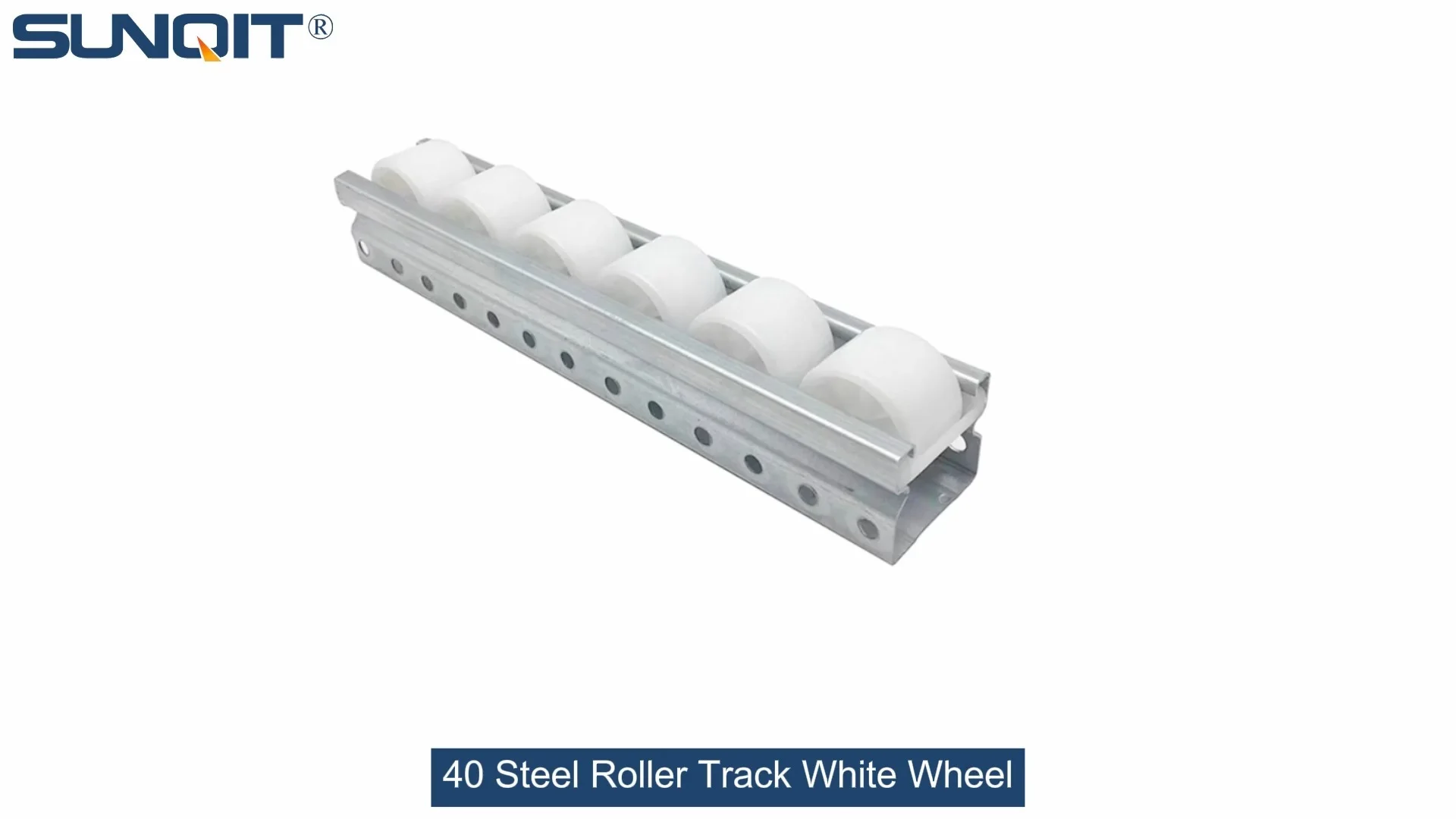
40 Steel Roller Track White Wheel
The roller track can be installed with multiple accessories to create different slopes and configurations of flow racks.All steel conveyor 40 roller track accessories are engineered to perfectly fit the sliding rail.
Introduction
When you're running a production line or managing a warehouse, every small detail counts. One of those details that often goes unnoticed but plays a huge role in keeping things moving smoothly is the roller track. Specifically, the 40 steel roller track with white wheels—you might not think much about its surface smoothness, but it's a game-changer for product quality and overall efficiency. Let's dive into why this matters so much.
What Exactly Is a 40 Steel Roller Track White Wheel?
First, let's get clear on what we're talking about. The 40 steel roller track white wheel is a component used in conveyor systems and flow racks. It's made of steel, which gives it durability, and the white wheel surface is typically a smooth coating that reduces friction. These tracks are designed to let products glide easily from one point to another, whether it's on an assembly line or in a warehouse picking area.
They're part of a larger lean system that focuses on minimizing waste and maximizing efficiency. Think of them as the unsung heroes of your production floor—quietly doing their job but making a big difference when they're working well (or causing headaches when they're not).

Why Surface Smoothness Is Non-Negotiable
Surface smoothness isn't just about how the track looks; it's about how it performs. A smooth surface means less friction between the wheel and the product being moved. But what happens if the surface isn't smooth? Let's break it down:
- Friction Build-Up: Rough surfaces create more friction, which can slow down products or even cause them to get stuck. This leads to bottlenecks in your line.
- Product Damage: If a product catches on a rough spot, it might get scratched, dented, or otherwise damaged. That's a direct hit to product quality.
- Wear and Tear: Rough surfaces wear out the wheels faster, leading to more frequent replacements and higher maintenance costs.

The Impact on Product Quality: A Deep Dive
Let's get into the nitty-gritty of how surface smoothness affects product quality. We'll look at several key areas:
1. Preventing Product Damage
Delicate electronic components sliding down a roller track need to stay scratch-free. For industries like 3C assembly (phones, laptops), even a small scratch can make a product unsellable. The white wheel surface of the 40 steel roller track is designed to be ultra-smooth, so products glide without any contact that could cause damage.
In a medical device manufacturing plant, where precision is everything, a smooth roller track ensures that sensitive instruments aren't marred during transport. This directly translates to higher quality products reaching customers.
2. Maintaining Consistent Production Flow
A smooth roller track keeps products moving at a steady pace. When tracks are rough, products can slow down or stop unexpectedly, leading to gaps in the production line. This inconsistency can affect the quality of the final product because assembly steps might be rushed or delayed to compensate.
Take an automotive assembly line: each part needs to arrive at the right time for installation. If a roller track causes a delay in a critical component, the entire line might have to adjust, potentially leading to mistakes in assembly. A smooth track ensures that parts flow consistently, keeping the line running efficiently and maintaining quality standards.
3. Reducing Maintenance Downtime
Rough surfaces wear out roller wheels faster. When wheels need to be replaced often, it means downtime for the production line. During that downtime, production stops, and any products in the queue might be affected. Moreover, frequent maintenance can lead to inconsistencies in the track's performance even after repairs.
The 40 steel roller track white wheel's smooth surface reduces wear and tear, so you spend less time fixing things and more time producing high-quality products. This is a key part of a lean solution—minimizing waste (in this case, maintenance waste) to improve overall efficiency.
4. Enhancing Safety
Safety might not seem directly related to product quality, but it is. If a product gets stuck on a rough track, it could cause a pile-up. This not only damages products but also creates a safety hazard for workers. A smooth track reduces the risk of jams, keeping the workplace safe and ensuring that products aren't damaged in accidents.
In a warehouse setting, flow racks with smooth roller tracks prevent boxes from getting stuck, which means workers don't have to manually push them—reducing the chance of injury and product damage.
5. Improving Accuracy in Assembly
When products move smoothly along a track, they arrive at the assembly station in the correct position and at the right time. This allows workers to focus on their tasks without having to adjust for misaligned or delayed parts. The result is more accurate assembly, which directly improves product quality.
For instance, in a 3C assembly line, small components like circuit boards need to be positioned precisely. A smooth roller track ensures that these components arrive exactly where they need to be, so workers can solder or attach them without errors.

Real-World Applications: How Smooth Tracks Make a Difference
Let's look at some specific industries where the 40 steel roller track white wheel's smoothness is critical:
3C Assembly Industry
The 3C industry (computers, communications, consumer electronics) relies heavily on precise assembly. Products are small and delicate, so any damage during transport is costly. Smooth roller tracks ensure that components like phone screens, laptop keyboards, and circuit boards move without scratches or dents. This is why many 3C manufacturers choose these tracks as part of their lean system.
Medical Device Manufacturing
Medical devices require the highest level of quality. Even a tiny flaw can have serious consequences. Smooth roller tracks are used to transport sensitive instruments and components, ensuring they remain in perfect condition. This is especially important in cleanroom environments where contamination and damage are strictly controlled.
Warehousing and Logistics
In warehouses, flow racks with smooth roller tracks are used to store and pick products. The smooth surface allows boxes to slide easily, making picking faster and reducing the chance of damage. This is key for e-commerce warehouses where speed and product integrity are essential.
Automotive Industry
Automotive parts are often heavy and bulky. Smooth roller tracks can handle the weight while keeping parts moving smoothly. This reduces the risk of damage to expensive components like engines or transmissions, ensuring that the final vehicle meets quality standards.
How to Ensure the Surface Smoothness of 40 Steel Roller Track White Wheels
So, how do manufacturers ensure that these tracks have the right level of smoothness? Let's look at some key factors:
1. Material Selection
The steel used for the track must be of high quality. It should be resistant to corrosion and wear. The white wheel surface is typically a coating that's applied evenly to ensure smoothness. Manufacturers often use materials like nylon or PVC for the wheel surface because they're smooth and durable.
2. Precision Manufacturing
The track and wheels are manufactured using precision tools to ensure that every part is uniform. This includes the diameter of the wheels, the spacing between them, and the smoothness of the surface. Any deviation from the standard can affect performance.
3. Quality Control Testing
After manufacturing, each track is tested for smoothness. This might involve using a profilometer to measure surface roughness or running test products along the track to check for friction. Only tracks that meet strict standards are shipped to customers.
4. Regular Maintenance
Even the best tracks need maintenance. Regular cleaning to remove dust and debris, lubrication of moving parts, and inspection for wear and tear all help keep the track smooth. This is part of a lean solution that focuses on continuous improvement.
Comparing Smooth vs. Rough Roller Tracks: A Quick Overview
| Factor | Smooth Roller Track | Rough Roller Track |
|---|---|---|
| Product Damage Risk | Low | High |
| Production Flow | Consistent | Erratic |
| Maintenance Cost | Low | High |
| Safety | High | Low |
| Assembly Accuracy | High | Low |
Conclusion
The surface smoothness of the 40 steel roller track white wheel is more than just a minor detail—it's a critical factor that impacts product quality, efficiency, and safety. Whether you're in the 3C assembly industry, medical device manufacturing, or warehousing logistics, investing in smooth roller tracks is a smart move for your business.
These tracks are part of a larger lean system that helps reduce waste and improve productivity. By ensuring that your roller tracks are smooth, you're not just protecting your products—you're also setting your business up for long-term success. So next time you're looking at your production line or warehouse setup, don't overlook the importance of those small white wheels. They might just be the key to taking your product quality to the next level.