- Company Articles
- Products and Technology
- Product knowledge
- 40 Steel Roller Track White Wheel vs. Bronze Wheels: Thermal Conductivity

40 Steel Roller Track White Wheel vs. Bronze Wheels: Thermal Conductivity
Related Product
40 Steel Roller Track White Wheel
The roller track can be installed with multiple accessories to create different slopes and configurations of flow racks.All steel conveyor 40 roller track accessories are engineered to perfectly fit the sliding rail.
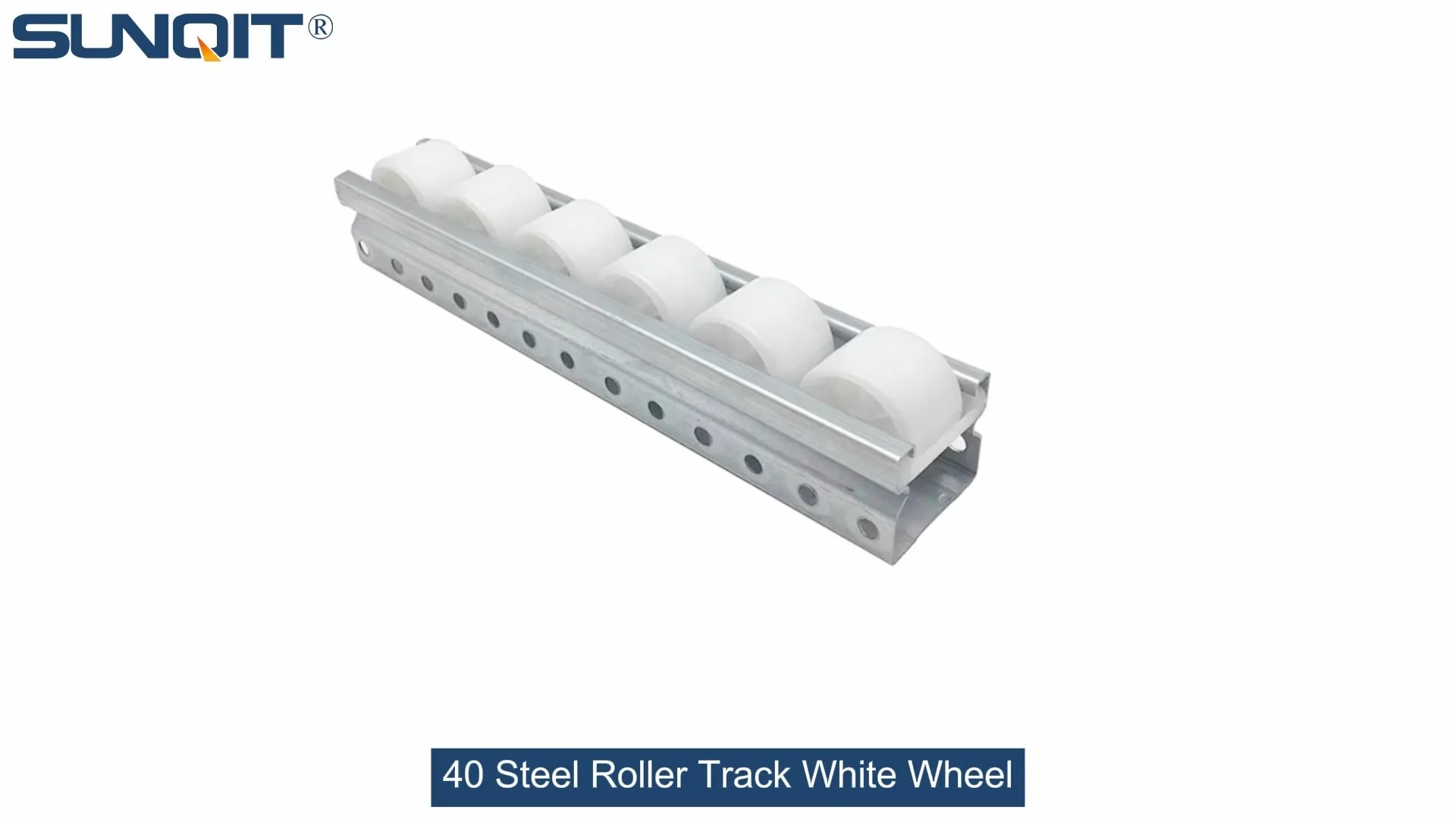
If you've ever walked through a busy manufacturing floor—whether it's a 3C assembly line, a medical device workshop, or a warehouse logistics hub—you've probably seen 40 steel roller tracks hard at work. These tracks are the backbone of flow racks , conveyors, and lean pipe workbenches, moving parts from one station to the next with precision. But have you ever stopped to think about the wheels that make these tracks run? Specifically, the difference between white wheels and bronze wheels, and how their thermal conductivity affects your production line?
As a trusted lean solution supplier with years of experience in customizing systems for industries like 3C, medical, and automotive, we know that every small component choice can impact efficiency, product quality, and long-term costs. Let's dive deep into this topic to help you make the right decision for your operation.
What Are 40 Steel Roller Tracks?
First, let's get on the same page about what 40 steel roller tracks are. These tracks are made from high-quality steel, designed to support the smooth movement of materials in flow racks , conveyors, and even lean pipe workbenches . They're a staple in lean manufacturing systems because they reduce friction, speed up material handling, and are easy to integrate into existing setups.
At Sunqit, we offer a wide range of 40 steel roller tracks—from white wheel options for sensitive applications to bronze wheel variants for heavy-duty use. Our flow rack wholesale and conveyor wholesale programs make it easy for businesses of all sizes to access these essential components.
White Wheel vs. Bronze Wheel: Material Basics
Before we talk about thermal conductivity, let's break down the materials behind each wheel type:
White Wheels
Most white wheels used in 40 steel roller tracks are made from nylon or a reinforced plastic composite. These materials are lightweight, corrosion-resistant, and have excellent ESD (electrostatic discharge) properties—making them ideal for industries like 3C assembly where static-sensitive components are handled.
Bronze Wheels
Bronze wheels are crafted from a metal alloy (typically copper and tin) with added elements like zinc or aluminum for strength. They're known for their durability, high load capacity, and resistance to wear and tear. Bronze is a conductive material, which means it transfers heat more easily than plastic.

Thermal Conductivity: Why It Matters
Thermal conductivity refers to a material's ability to transfer heat. In manufacturing, this property can have a huge impact on your production line—especially in high-speed or continuous-operation environments.
The Problem of Heat Buildup
When roller tracks are in use, friction between the wheels and the track generates heat. If this heat isn't dissipated properly, it can lead to several issues:
- Damage to sensitive components (like 3C parts or medical devices) due to temperature changes.
- Warping or degradation of wheel materials over time, leading to frequent replacements.
- Reduced efficiency in ESD workstations, where temperature fluctuations can affect static control.
Thermal Conductivity Data
To put things into perspective, let's look at typical thermal conductivity values (measured in W/m·K):
| Wheel Type | Material | Thermal Conductivity (W/m·K) |
|---|---|---|
| White Wheel | Nylon Composite | 0.2–0.5 |
| Bronze Wheel | Bronze Alloy | 50–60 |
As you can see, bronze wheels have a much higher thermal conductivity than white wheels. This means they can dissipate heat faster, but they also transfer heat to surrounding components more easily.

Real-World Impacts on Manufacturing
Let's take a look at how these differences play out in actual production scenarios:
Scenario 1: 3C Assembly Line
A 3C manufacturer uses white wheel roller tracks in their ESD workstations. The low thermal conductivity of the white wheels prevents heat buildup, which is critical for protecting delicate circuit boards from temperature-related damage. This setup also aligns with the manufacturer's lean goals—since the wheels are durable and easy to replace, they reduce downtime and maintenance costs.
Scenario 2: Automotive Parts Conveyor
An automotive plant uses bronze wheel roller tracks in their heavy-duty conveyors. The high thermal conductivity of the bronze wheels helps dissipate heat generated by the constant movement of heavy metal parts. This prevents the wheels from overheating and ensures the conveyor runs smoothly 24/7.

Choosing the Right Wheel for Your Needs
So, how do you decide between white and bronze wheels for your 40 steel roller tracks? Here's a quick guide:
Choose White Wheels If:
- You work with static-sensitive components (like 3C parts or medical devices).
- Your operation involves low to medium loads.
- You need to minimize heat transfer to surrounding components.
- You're setting up ESD workstations or lean pipe workbenches for light assembly.
Choose Bronze Wheels If:
- You handle heavy loads (like automotive parts or industrial machinery).
- Your production line runs continuously (high-speed conveyors).
- You need wheels that can withstand high temperatures or harsh environments.
- Durability and long-term performance are your top priorities.
Sunqit's Custom Solutions for Roller Track Needs
At Sunqit, we understand that every manufacturing setup is unique. That's why we offer a wide range of 40 steel roller tracks—including both white and bronze wheel options—to meet your specific requirements. Our lean solution experts can help you design a system that aligns with your lean goals, whether you need flow racks for warehouse logistics or conveyors for production assembly.
We also offer wholesale options for all our roller track components, making it easy to scale your operation without breaking the bank. Our aluminum pipe accessories and custom workbenches complement our roller track offerings, giving you a one-stop shop for all your lean manufacturing needs.
Final Thoughts
The choice between white and bronze wheels for your 40 steel roller tracks isn't just about material—it's about understanding how thermal conductivity affects your production line. By considering your industry, load requirements, and operational environment, you can make an informed decision that boosts efficiency and reduces costs.
If you're still unsure which option is right for you, our team of experts is here to help. Contact us today to learn more about our roller track products and custom lean solutions.