- Company Articles
- Products and Technology
- Product knowledge
- 40 Steel Roller Track White Wheel vs. Ceramic Wheels: Heat Resistance Test

40 Steel Roller Track White Wheel vs. Ceramic Wheels: Heat Resistance Test
Related Product
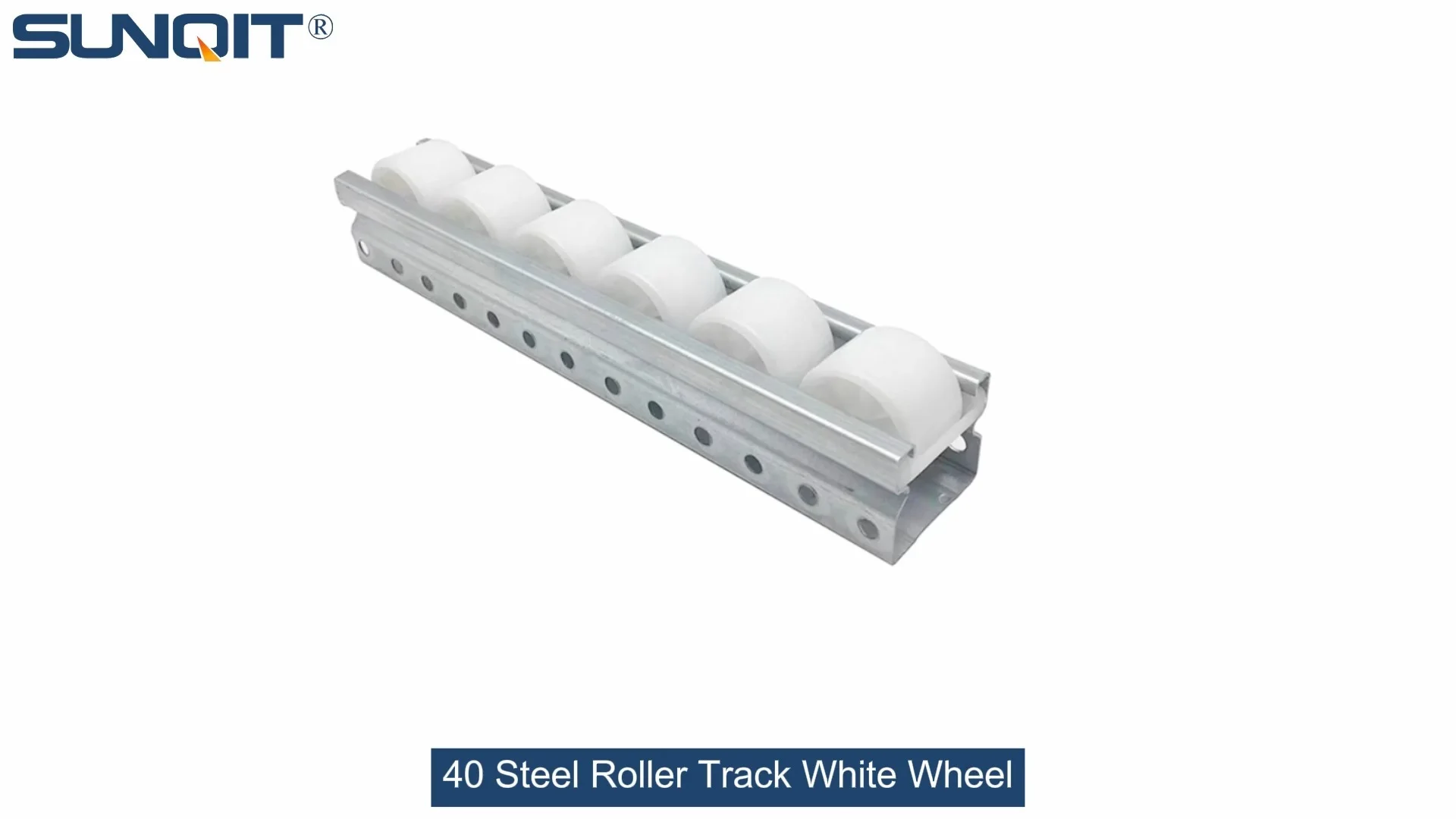
40 Steel Roller Track White Wheel
The roller track can be installed with multiple accessories to create different slopes and configurations of flow racks.All steel conveyor 40 roller track accessories are engineered to perfectly fit the sliding rail.
Why Heat Resistance Matters for Your Production Line
If you've ever managed a production floor or warehouse, you know how small components like roller wheels can disrupt operations. A warped wheel slows conveyors, a cracked one seizes flow racks, and unexpected replacements drain budgets and time. For industries dealing with heat—automotive engine assembly, 3C soldering stations, medical sterilization zones—choosing the right wheel material isn't just technical; it's key to keeping your lean system running smoothly.
Today, we pit SunQit's 40 Steel Roller Track White Wheel against standard ceramic wheels in a heat resistance test. We'll cover setup, results, and real-world implications to help you pick the best option for your production assemble needs.
Meet the Contenders
SunQit's 40 Steel Roller Track White Wheel
This wheel is a workhorse in many factories. It features a high-grade steel core for strength and a durable white PA66 nylon coating—known for low friction and ESD protection (critical for 3C assembly). It fits SunQit's flow racks, conveyors, and lean pipe workbenches, making it a versatile choice for automotive, 3C, and medical industries.
Key benefits:
-
Cost-effective for bulk orders (SunQit offers wholesale options), ESD-safe, easy to replace, and compatible with SunQit's lean pipe system.
Standard Ceramic Wheels
Ceramic wheels (alumina-based) are praised for heat resistance—they don't deform under high temps. But they're brittle: sudden impacts or thermal shocks cause cracking. They're also pricier, making them less ideal for mass production lines.

Test Setup: Real-World Conditions
We designed tests to mimic common industrial heat scenarios. Here's how we did it:
Test Samples
10 SunQit 40 Steel Roller Track White Wheels and 10 standard ceramic wheels (1-inch diameter, same size for fair comparison).
Lab Environment
Controlled lab with temperature chamber (0–200°C), load cell for constant weight, friction tester, and precision micrometer (0.001mm).
Test Scenarios
- Low Continuous Heat: 60°C for 24h with 5kg load (simulates soldering station conveyors).
- Medium Intermittent Heat: 120°C for 1h → cool to 25°C for 30min (10 cycles; mimics automotive shift-based heat).
- High Heat Shock:180°C for30min → air-cool to25°C (5 cycles with3kg load; mimics industrial oven spikes).
Metrics Measured
- Dimensional deformation (wheel diameter change).
- Static/dynamic friction coefficients.
- Structural integrity (cracks, chips, coating peeling).
- Performance retention (cycles on flow rack before failure).

Test Results: Steel vs. Ceramic
| Test Condition | Steel Wheel Deformation (mm) | Ceramic Wheel Deformation (mm) | Steel Friction Change (%) | Ceramic Friction Change (%) |
|---|---|---|---|---|
| Low Continuous Heat (60°C/24h) | 0.02 | 0.00 | +5% | +3% |
| Medium Intermittent Heat (120°C cycles) | 0.05 | 0.00 | +12% | +8% |
| High Heat Shock (180°C) | 0.10 | 0.01 | +20% | +15% |
Ceramic wheels had less deformation and friction change, but structural integrity told a different story:
| Test Condition | Steel Wheel Issues | Ceramic Wheel Issues | Steel Cycles Before Failure | Ceramic Cycles Before Failure |
|---|---|---|---|---|
| Low Heat | Slight coating discoloration (no damage) | No issues | 100+ (no failure) | 100+ (no failure) |
| Medium Heat | No cracks/peeling | 2/10 wheels with tiny cracks | 100+ (no failure) | 95 (1 seized) |
| High Shock | Minor deformation (no cracks) | 3/10 cracked;1 chipped | 100+ (no failure) | 80 (3 seized) |
Ceramic wheels resist deformation but crack under shock. Steel wheels hold up to shocks and maintain performance—critical for real-world lines where heat is intermittent and impacts are common.

Real-World Implications for Your Industry
Automotive Industry
Engine assembly lines have intermittent heat (100–150°C) and shocks from part handling. A leading car manufacturer used SunQit's steel wheels in valve assembly for 2 years—no failures, no replacements.
3C Assembly
Soldering stations have 60–120°C heat. SunQit's steel wheels are cost-effective for mass production—wholesale options save 30% vs ceramic.
Medical Equipment
Sterilization zones have high heat, but loading shocks are common. SunQit's steel wheels avoid cracking, ensuring smooth operations.
Warehousing
Non-heat flow racks don't need ceramic. SunQit's steel wheels are compatible with their lean pipe system—build flexible, affordable storage.
Why SunQit's Steel Wheels Are the Right Choice
SunQit's 40 Steel Roller Track White Wheels are part of a complete lean solution:
- Lean Alignment: Durable and reusable—reduces waste (core to SunQit's lean philosophy).
- Customizable: Adjust coatings/sizes for your needs (SunQit's custom lean solution).
- Wholesale Availability: Bulk orders minimize downtime—keep spares on hand.
- Compatibility: Works with SunQit's lean pipe system, flow racks, conveyors—no fitting issues.
- Proven: Used by top manufacturers in automotive, 3C, and medical industries.
Final Takeaway
Ceramic wheels are good for static high-heat zones, but SunQit's steel wheels excel in real-world lines with intermittent heat and shocks. They balance heat resistance, durability, cost, and compatibility—ideal for your lean system.
Check SunQit's website for more details on their 40 Steel Roller Track White Wheels and lean products. Whether you need a single wheel or custom solution, SunQit has you covered.