- Company Articles
- Products and Technology
- Product knowledge
- 40 Steel Roller Track White Wheel vs. Plastic Wheels: Performance Comparison

40 Steel Roller Track White Wheel vs. Plastic Wheels: Performance Comparison
Related Product
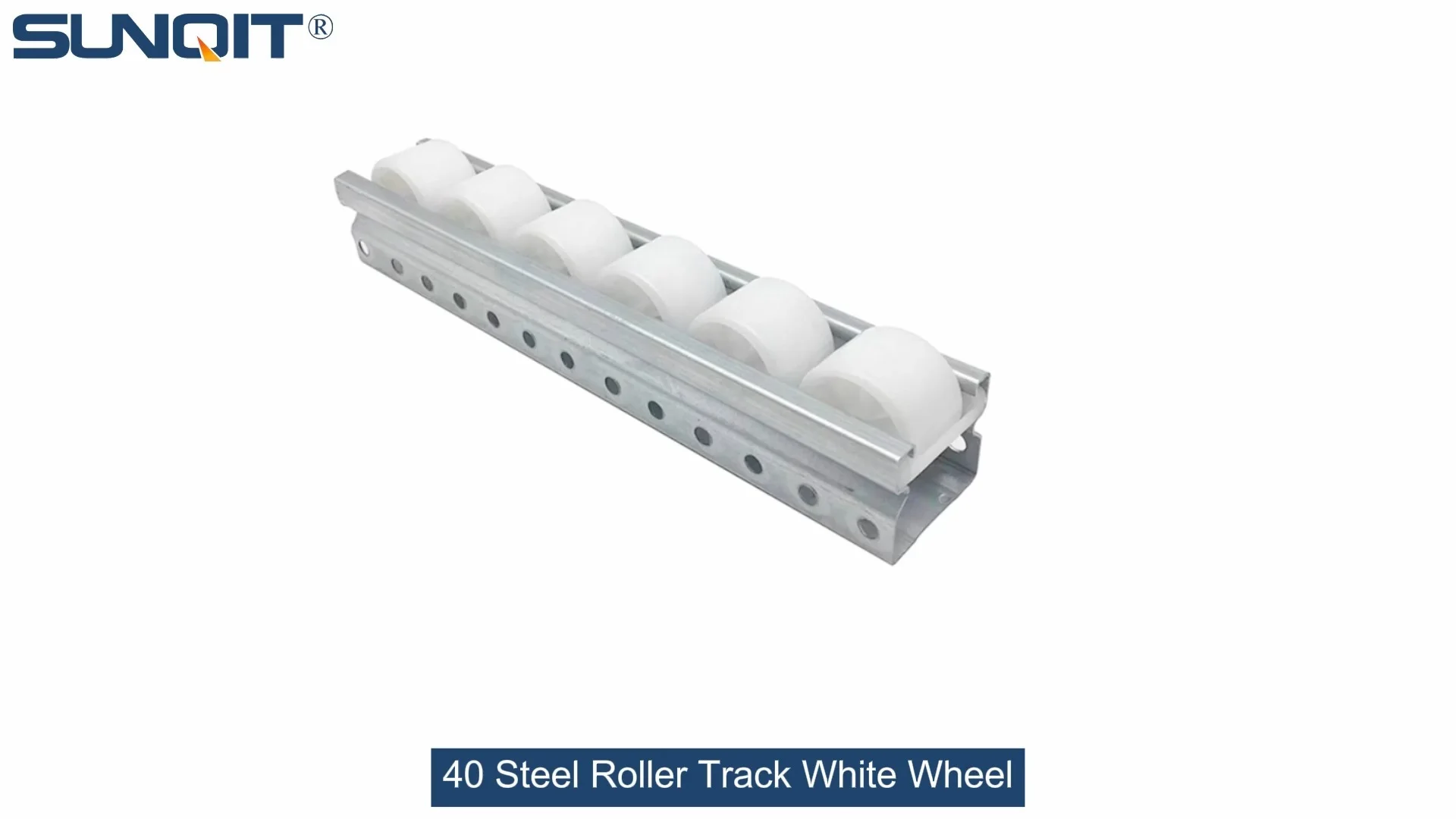
40 Steel Roller Track White Wheel
The roller track can be installed with multiple accessories to create different slopes and configurations of flow racks.All steel conveyor 40 roller track accessories are engineered to perfectly fit the sliding rail.
In the bustling world of manufacturing, where every second counts and production lines hum with precision, the smallest components often hold the key to operational excellence. Roller tracks, the unsung heroes of material handling, quietly determine how smoothly parts flow from one station to the next—whether in a high-speed conveyor system or a meticulously organized flow rack. Today, we're diving into a critical choice that shapes these workflows: the battle between 40 Steel Roller Track White Wheels and their plastic counterparts. Which one truly delivers the reliability, efficiency, and cost-effectiveness that modern lean systems demand? Let's break it down, not just with specs, but with the real-world impact these wheels have on your factory floor.
Meet the Contenders: A Quick Introduction
Before we pit them against each other, let's get to know these two wheel types up close. Both are designed for the 40-series roller track—a staple in lean pipe systems across industries like 3C assembly, automotive, and medical device manufacturing—but their DNA couldn't be more different.
40 Steel Roller Track White Wheel: The Heavy-Duty Workhorse
Crafted from high-grade steel with a smooth white finish, these wheels are built for resilience. The steel core ensures structural integrity, while the white coating adds a layer of protection against minor corrosion and wear. Designed to fit seamlessly into 40mm roller tracks, they're engineered for precision: each wheel rotates on a durable axle, minimizing friction even under heavy loads. Think of them as the reliable backbone of a conveyor system that never takes a day off.
Plastic Wheels: The Lightweight Contender
Plastic wheels, typically made from polypropylene (PP) or nylon, prioritize flexibility and cost-efficiency. Their lightweight design reduces the overall weight of the roller track, and their smooth, non-abrasive surface is gentle on delicate parts—making them a popular choice for industries like electronics where product protection is paramount. Available in various colors (though we're focusing on the standard variants here), they're often chosen for their quick installation and low initial cost.
Head-to-Head: Performance Metrics That Matter
When it comes to choosing between steel and plastic wheels, it's not just about "which is better"—it's about which aligns with your unique workflow needs. Let's compare them across six critical performance areas that directly impact your bottom line.
1. Load Capacity: How Much Can They Handle?
In manufacturing, "overloading" isn't just a buzzword—it's a recipe for downtime. Steel wheels shine here: a standard 40 Steel Roller Track White Wheel can comfortably support up to 80-100kg per wheel, making them ideal for heavy components like automotive parts or industrial machinery. Their rigid steel construction distributes weight evenly, preventing deformation even under continuous use.
Plastic wheels, on the other hand, typically max out at 30-50kg per wheel. While this is sufficient for lightweight items like consumer electronics or small medical devices, pushing them beyond their limits leads to warping or axle failure. For example, in a flow rack storing heavy metal parts, plastic wheels might start to sag within months, whereas steel wheels would maintain their shape for years.
2. Durability: Longevity in the Trenches
Manufacturing floors are unforgiving: constant vibration, exposure to oils, coolants, and occasional impacts. Steel wheels thrive in this chaos. The white coating acts as a barrier against rust, and the steel core resists dents and cracks. We've seen 40 Steel Roller Track White Wheels in automotive plants last 5-7 years with minimal maintenance—even in environments where they're exposed to daily spills.
Plastic wheels, while resistant to corrosion, are prone to wear and tear over time. Prolonged exposure to high temperatures (common in injection molding facilities) can cause them to become brittle, and sharp edges on parts can chip their surfaces. In a 3C assembly line where small, hard components zip along the track, plastic wheels might need replacement every 1-2 years—a hidden cost in terms of labor and downtime.
3. Friction & Noise: Keeping the Line Flowing Smoothly
A noisy, jerky production line isn't just annoying—it's a sign of inefficiency. Steel wheels, when properly lubricated, offer low friction, ensuring parts glide along the track with minimal resistance. However, they do produce more noise than plastic wheels, especially at high speeds. This can be a drawback in settings like medical device assembly, where a quiet environment is critical for precision work.
Plastic wheels excel in noise reduction. Their inherent elasticity absorbs vibrations, making them up to 30% quieter than steel alternatives. They also require less frequent lubrication, as plastic-on-metal contact generates less friction initially. But here's the catch: as plastic wheels wear, their surfaces become uneven, leading to increased friction and noise over time. What starts as a smooth glide can turn into a bumpy ride after six months of heavy use.
4. Maintenance: Time and Money Spent on Upkeep
Every minute spent maintaining equipment is a minute lost to production. Steel wheels demand more upfront maintenance: regular lubrication to prevent rust and ensure smooth rotation. However, this investment pays off in longevity. A quarterly check and lubrication are usually sufficient to keep them running strong.
Plastic wheels are low-maintenance at first—no lubrication needed, and their lightweight design makes them easy to replace. But their shorter lifespan means more frequent replacements. In a large warehouse with hundreds of plastic wheels on flow racks, replacing worn wheels can become a monthly chore, eating into your team's productivity and increasing long-term costs.
5. Cost: Initial Outlay vs. Long-Term Value
Let's talk numbers. Plastic wheels have a clear advantage in initial cost—they're typically 30-50% cheaper than steel wheels. For small businesses or short-term projects, this can be tempting. But when you factor in replacement frequency, the tables turn. A steel wheel that costs $15 and lasts 5 years works out to $3 per year, while a plastic wheel at $7 that needs replacement every 1.5 years costs $4.67 per year. Over a decade, the steel wheel is the more economical choice.
Add to this the labor cost of replacing wheels: if each replacement takes 15 minutes and your technician earns $30/hour, replacing 100 plastic wheels annually costs $750 in labor alone. Steel wheels, replaced once every 5 years, would cost just $150 over the same period. For companies focused on lean solutions, this long-term savings aligns perfectly with the "sustainable improvement" ethos.
6. Environmental Adaptability: Thriving in Your Unique Space
Not all manufacturing environments are created equal. Steel wheels are the go-to for harsh conditions: high temperatures, exposure to chemicals, or heavy debris. In a foundry or metalworking shop, where oil and coolant are constant companions, steel's resistance to corrosion and heat makes it indispensable.
Plastic wheels are better suited for clean, controlled environments. Think pharmaceutical packaging lines or electronics assembly, where dust and contamination must be minimized. Their non-conductive properties also make them a safer choice in ESD (Electrostatic Discharge) sensitive areas—though it's worth noting that specialized ESD steel wheels are available for environments where both conductivity and durability are needed.
At a Glance: Key Performance Comparison
| Performance Metric | 40 Steel Roller Track White Wheel | Plastic Wheels |
|---|---|---|
| Load Capacity per Wheel | 80-100kg | 30-50kg |
| Typical Lifespan | 5-7 years | 1-2 years |
| Noise Level | Higher (needs lubrication to minimize) | Lower initially, increases with wear |
| Maintenance Frequency | Quarterly lubrication | Minimal (but frequent replacement) |
| Long-Term Cost (5-Year Span) | Lower (higher initial cost, lower replacement) | Higher (lower initial cost, frequent replacement) |
| Best For | Heavy loads, harsh environments, long-term use | Light loads, clean environments, short-term projects |

Beyond the Metrics: Aligning with Your Lean Journey
At the end of the day, choosing between steel and plastic wheels isn't just about specs—it's about aligning with your company's lean pipe system goals. Our approach to lean solutions is rooted in "reusable, sustainable improvement," and this philosophy extends to every component, including roller track wheels.
For companies focused on long-term efficiency and reducing waste, 40 Steel Roller Track White Wheels are a natural fit. Their durability means less frequent replacement (reducing waste), and their high load capacity allows for flexible use across multiple projects—you can repurpose a steel wheel roller track from an automotive line to a consumer electronics line with minimal adjustments, embodying the "reusable" principle.
Plastic wheels, on the other hand, have their place in lean systems too—especially for short-term projects or environments where lightweight, low-noise operation is non-negotiable. The key is to view them as a temporary solution, not a permanent fixture, to avoid falling into the trap of hidden costs.

Making the Right Choice: A Practical Guide
Still unsure which wheel is right for your operation? Ask yourself these three questions:
- What's the average weight of the parts moving on the track? If it's over 50kg, steel is the safer bet.
- How long do you plan to use the roller track system? For projects longer than 2 years, steel wheels will save you money in the long run.
- What's your environment like? Harsh conditions (heat, chemicals, heavy debris) call for steel; clean, light-duty environments can benefit from plastic.
And remember: our lean pipe system experts are here to help. Whether you need a custom flow rack for your medical device line or a conveyor system for automotive parts, we design solutions that adapt to your needs—including the perfect wheel choice for your unique workflow.

Conclusion: Wheels That Drive Your Success
In the grand scheme of manufacturing, roller track wheels might seem like small fry. But as any lean expert will tell you, it's the small details that add up to big efficiency gains. 40 Steel Roller Track White Wheels offer durability, high load capacity, and long-term value—making them ideal for heavy-duty, long-term applications. Plastic wheels, with their low noise and initial cost, shine in light-duty, clean environments.
At the end of the day, the best choice depends on your specific needs. But whichever you choose, remember that a truly lean solution isn't just about the components—it's about how they work together to create a system that's reusable, adaptable, and built for continuous improvement. After all, in manufacturing, the goal isn't just to move parts from A to B—it's to do it smarter, better, and more sustainably than yesterday.