- Company Articles
- Products and Technology
- Product knowledge
- 40 Steel Roller Track White with Conveyors: Integrating for Automated Material Flow

40 Steel Roller Track White with Conveyors: Integrating for Automated Material Flow
Related Product
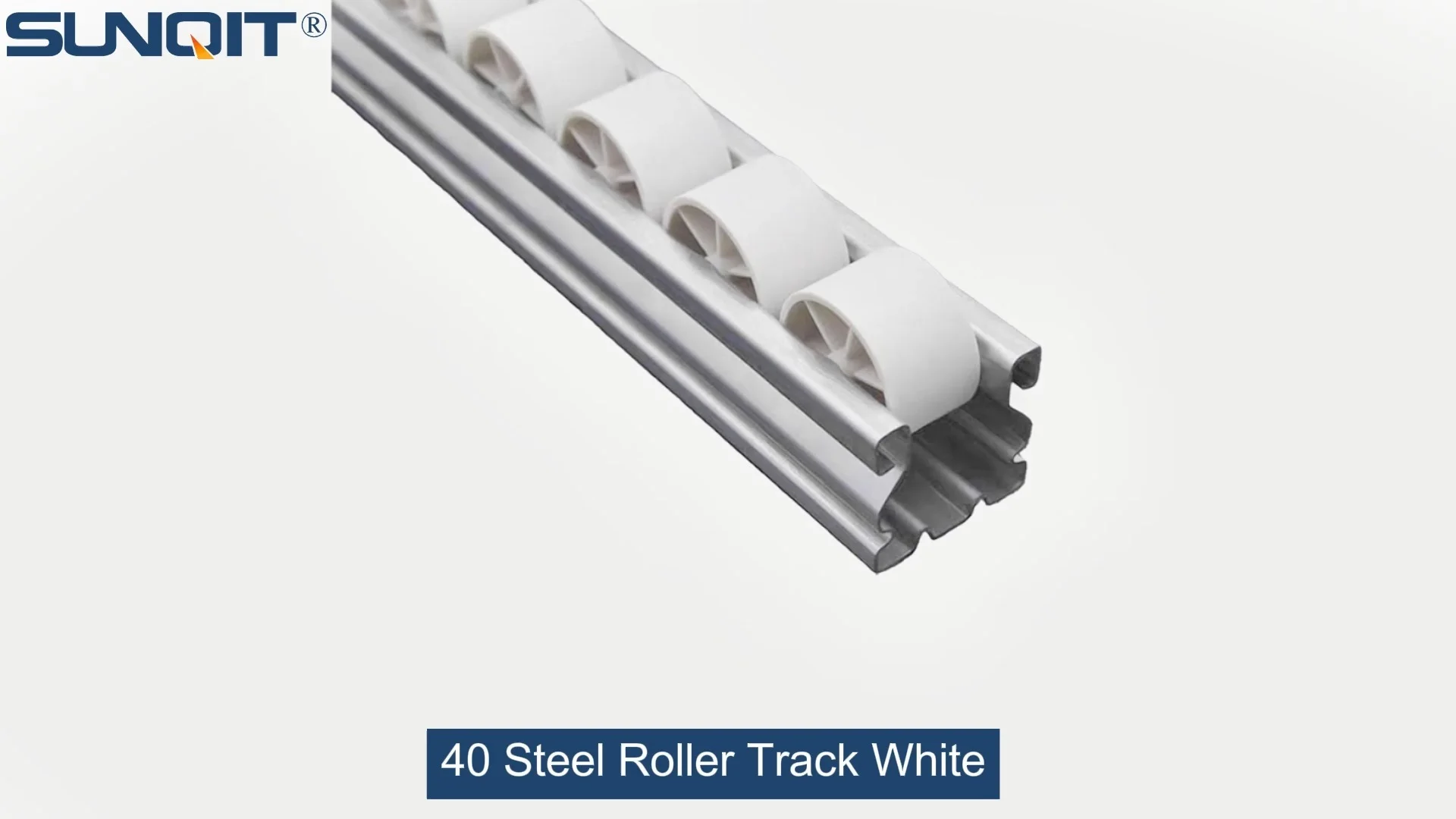
40 Steel Roller Track White
The roller track can be installed with multiple accessories to create different slopes and configurations of flow racks.All steel conveyor 40 roller track accessories are engineered to perfectly fit the sliding rail.It is enable the movement of SLC boxes.
The Pain of Disrupted Material Flow—And a Better Way Forward
In today's fast-paced manufacturing world, every minute wasted on material handling is a minute lost to productivity. Imagine a 3C assembly line where workers spend 15 minutes per hour walking back and forth to grab components, or a warehouse where bins get stuck in manual sorting stations, causing delays in order fulfillment. These are not hypothetical scenarios—they're everyday challenges for many businesses. The good news? There's a solution that turns these bottlenecks into smooth, automated workflows: integrating 40 Steel Roller Track White with conveyors. This combination isn't just about moving parts from Point A to Point B; it's about building a system that adapts to your needs, reduces waste, and boosts efficiency across the board.
At its core, this integration leverages two powerful tools: the 40 Steel Roller Track White (a durable, low-friction track for material movement) and conveyors (which extend the track's capabilities to create continuous, automated flow). Together, they form a lean solution that aligns with the principles of "reduce waste, increase value"—a philosophy that's at the heart of modern manufacturing success.
What Is 40 Steel Roller Track White, Exactly?
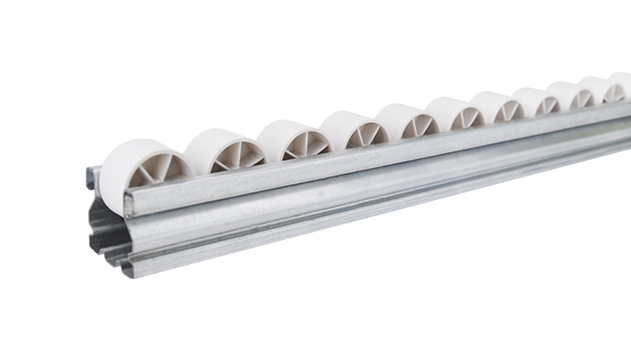
Let's start with the basics: 40 Steel Roller Track White is a high-performance material handling component designed to make moving goods easier and more efficient. The "40" refers to its standard width (40mm), a size that's widely adopted in industries like 3C assembly, medical device manufacturing, and warehousing. Here's why it stands out:
- **Durable Steel Construction**: Made from high-grade steel, this track can handle loads up to 500kg per meter—perfect for heavy bins, pallets, or component cases.
- **Low-Friction White Rollers**: The white finish isn't just for aesthetics; it's a smooth, non-stick surface that reduces friction, so materials glide without jams. This is especially useful for fragile items like medical devices or 3C components.
- **Corrosion Resistance**: The white coating adds a layer of protection against rust and moisture, making it ideal for humid environments (like food processing or pharmaceutical facilities).
- **Tool-Free Assembly**: With compatible roller track connectors, you can assemble the track in minutes—no welding or special tools required. This flexibility means you can reconfigure the track as your production line changes.
- **Cleanliness Focus**: The white color makes it easy to spot dirt or debris, which is critical for quality control in industries where hygiene is non-negotiable (like medical device manufacturing).
For businesses looking to scale, this track is also available in wholesale quantities—allowing you to equip entire production lines without breaking the bank. Suppliers like szsunqit offer bulk orders of 40 Steel Roller Track White, along with all the necessary accessories to get your system up and running quickly.
Why Conveyors Are the Perfect Complement to 40 Steel Roller Track White
While 40 Steel Roller Track White excels at moving materials over short distances, conveyors take its capabilities to the next level. Conveyors automate the flow of goods over longer paths, connecting storage areas to assembly lines, or assembly lines to packaging stations. Here's how different conveyor types work with the track:
1. Roller Conveyors
Roller conveyors are a natural match for 40 Steel Roller Track White. They use a series of rollers to move heavy items, and their frames are often made from aluminum profile—lightweight yet strong, making them easy to install and reposition. For example, you can connect a roller conveyor to the end of your 40 Steel Roller Track White to move bins from a flow rack to a lean pipe workbench, where workers assemble components without leaving their stations.
2. Belt Conveyors
Belt conveyors are ideal for fragile or irregularly shaped items that might not roll well on the track. They use a continuous belt to move goods, and you can integrate them with the 40 Steel Roller Track White to create a seamless flow. For instance, a 3C assembly line might use a belt conveyor to move small circuit boards from the track to an ESD workstation, where static-sensitive components are handled safely.
3. Free Flow Chain Conveyors
Free flow chain conveyors are designed for high-volume, continuous flow. They work well with the 40 Steel Roller Track White to move pallets or large bins across long distances. For warehouses, this combination can create a pick-and-pack line where items are picked from flow racks, slide down the track, and then are transported via chain conveyor to the shipping area.
The key benefit of combining these two systems is flexibility. You can add or remove sections of track or conveyor as your needs change—whether you're scaling up production or adjusting to a new product line. This adaptability is at the core of lean manufacturing, where waste reduction and continuous improvement are priorities.

Step-by-Step Guide to Integrating 40 Steel Roller Track White with Conveyors
Integrating these systems doesn't have to be complicated. Here's a practical, step-by-step guide to help you get started:
| Step Number | Required Components | Action Items | Key Tips |
|---|---|---|---|
| 1 | 40 Steel Roller Track White, Roller Track Connectors, Tape Measure, Metal Cutter | Map your material flow path and measure the length of track needed. Cut the track to size using a metal cutter. | Wear safety gloves and goggles when cutting the track to avoid injury. |
| 2 | Flow Rack, Bin Dividers, Component Bins | Install flow racks in your storage area. Place component bins on the racks, aligned with the start of your 40 Steel Roller Track White. | Use bin dividers to keep components organized—this reduces time spent searching for parts. |
| 3 | Conveyor Unit (e.g., Roller Conveyor), Roller Track Placon Mount | Align the conveyor with the end of the 40 Steel Roller Track White. Use roller track placon mounts to attach the track to the conveyor frame. | Ensure the track and conveyor are at the same height to prevent gaps that could jam materials. |
| 4 | Lean Pipe Workbench, ESD Mat (if needed) | Position the lean pipe workbench at the end of the conveyor. Add an ESD mat if you're handling static-sensitive components (like 3C parts). | Adjust the workbench height to match the conveyor's output—this reduces worker fatigue. |
| 5 | Test Bins, Stop Blocks | Run test bins through the system to check for jams or uneven flow. Add stop blocks at key points to control the speed of materials. | Involve your workers in the test—they'll have valuable feedback on how to improve the flow. |
Once your system is up and running, you can make adjustments as needed. For example, if you notice bins are moving too fast, you can add friction pads to the track. If you need to extend the flow path, you can add more sections of track or conveyor with minimal effort.

Real-World Case Study: How a 3C Assembly Company Transformed Its Material Flow
Let's take a look at a real example of how integrating 40 Steel Roller Track White with conveyors helped a 3C assembly company improve its productivity. XYZ Electronics, a manufacturer of smartphone components, was facing two major challenges:
- Workers spent 15 minutes per hour walking to grab components from storage.
- Bins of components often got stuck in manual sorting stations, causing delays in production.
The company decided to implement a system using 40 Steel Roller Track White, roller conveyors, flow racks, and lean pipe workbenches. Here's what they did:
Implementation Details
1. **Storage Area**: They installed 10 flow racks in their warehouse, each holding 20 bins of smartphone components. The racks were connected to 40 Steel Roller Track White, which directed bins to the conveyor line.
2. **Conveyor Line**: A 50-meter roller conveyor (with aluminum profile frames) was installed to connect the storage area to 15 lean pipe workbenches. The conveyor was equipped with sensors to stop bins at each workbench when needed.
3. **Assembly Stations**: Each lean pipe workbench was fitted with an ESD mat and tools, so workers could assemble components without leaving their stations. Bins of components arrived directly at the workbench via the conveyor.
Results
After implementing the system, XYZ Electronics saw significant improvements:
- **Productivity Increase**: Workers now spend less than 5 minutes per hour walking to get components—boosting productivity by 25%.
- **Reduced Delays**: The automated flow eliminated bin jams, reducing production delays by 30%.
- **Cost Savings**: The company saved $50,000 per year in labor costs, as they no longer needed extra workers to handle material movement.
- **Improved Quality**: With fewer manual touches, the number of damaged components decreased by 18%.
This case study shows that integrating 40 Steel Roller Track White with conveyors isn't just a technical upgrade—it's a strategic investment that pays off in the long run.
Key Benefits of the Integrated System
The combination of 40 Steel Roller Track White and conveyors offers a wide range of benefits for businesses of all sizes. Here are the most impactful ones:
1. Increased Efficiency
Automated material flow means components arrive exactly when needed—no waiting, no delays. For example, a car parts manufacturer reported a 30% increase in production speed after implementing this system.
2. Cost Savings
Less manual labor and fewer errors translate to lower costs. Over time, the system pays for itself—many businesses see a return on investment within 6 to 12 months.
3. Flexibility
This system is a lean solution at its best. You can add or remove sections of track or conveyor as your production line changes. For example, if you launch a new product, you can reconfigure the system to handle the new components without buying a whole new setup.
4. Improved Safety
Automated flow reduces the risk of workplace injuries from lifting heavy items. It also minimizes the chance of parts falling and causing accidents—keeping your workers safe.
5. Scalability
You don't have to invest in a full system upfront. Start with a small setup (like a single track and conveyor) and expand as your business grows. This makes it accessible for small businesses and startups.
Choosing the Right Components for Your Business
To get the most out of your integrated system, you need to choose components that align with your specific needs. Here are some tips:
1. Assess Your Load Capacity
First, determine the weight of the items you'll be moving. If you're handling heavy pallets (over 500kg), opt for heavy-duty 40 Steel Roller Track White and conveyors. For lighter items (like small bins), standard components will work.
2. Consider Your Industry
Different industries have different requirements. For example:
- **Medical Device Manufacturing**: Prioritize cleanliness (white track) and ESD protection (ESD workstations).
- **3C Assembly**: Use lean pipe workbenches with ESD mats to prevent static damage to components.
- **Warehousing**: Choose flow racks and conveyors that can handle high volumes of goods.
3. Think About Integration
Make sure the components you choose are compatible with your existing equipment. For example, if you already have aluminum profile frames, look for conveyors that use the same profile for easy integration.
4. Opt for Custom Solutions
If your needs are unique (like a curved flow path or special load requirements), consider a custom lean solution. Suppliers like szsunqit offer tailored designs for industries like 3C assembly, medical device manufacturing, and warehousing—ensuring your system meets your exact needs.
Maintenance Tips for Longevity
To keep your system running smoothly, follow these maintenance tips:
- **Regular Cleaning**: Wipe down the track and conveyors with a damp cloth every week to remove dust and debris. For white track, use non-abrasive cleaners to avoid scratching the surface.
- **Lubrication**: Apply lubricant to the rollers and conveyor belts every 3 months to reduce friction and wear.
- **Inspection**: Check for loose bolts or connectors monthly. Tighten any that are loose to prevent the system from shifting.
- **Load Check**: Don't exceed the maximum load capacity of the track or conveyor—overloading can cause permanent damage.
- **replace Parts**: If rollers are worn out or conveyors are damaged, replace them promptly to avoid downtime. Most suppliers offer replacement parts in wholesale quantities, so you can keep spares on hand.
Conclusion: Building a Seamless Material Flow for the Future
Integrating 40 Steel Roller Track White with conveyors is more than just a way to move parts—it's a way to build a future-proof material flow system that adapts to your business. Whether you're a small startup or a large manufacturing company, this combination offers efficiency, flexibility, and cost savings that help you stay ahead of the competition.
By choosing the right components (like flow racks, lean pipe workbenches, and aluminum profile conveyors) and following best practices for integration and maintenance, you can create a system that works for you. And with custom lean solutions available from suppliers like szsunqit, you can tailor the system to your exact needs—ensuring you get the most out of your investment.
So, if you're tired of disrupted material flow and wasted time, it's time to consider integrating 40 Steel Roller Track White with conveyors. It's not just an upgrade—it's a transformation that will help your business grow and thrive.