- Company Articles
- Products and Technology
- Installation And Maintenance
- 40 Steel Roller Track Yellow: Comparing Welded vs. Bolted Installation Methods

40 Steel Roller Track Yellow: Comparing Welded vs. Bolted Installation Methods
Related Product
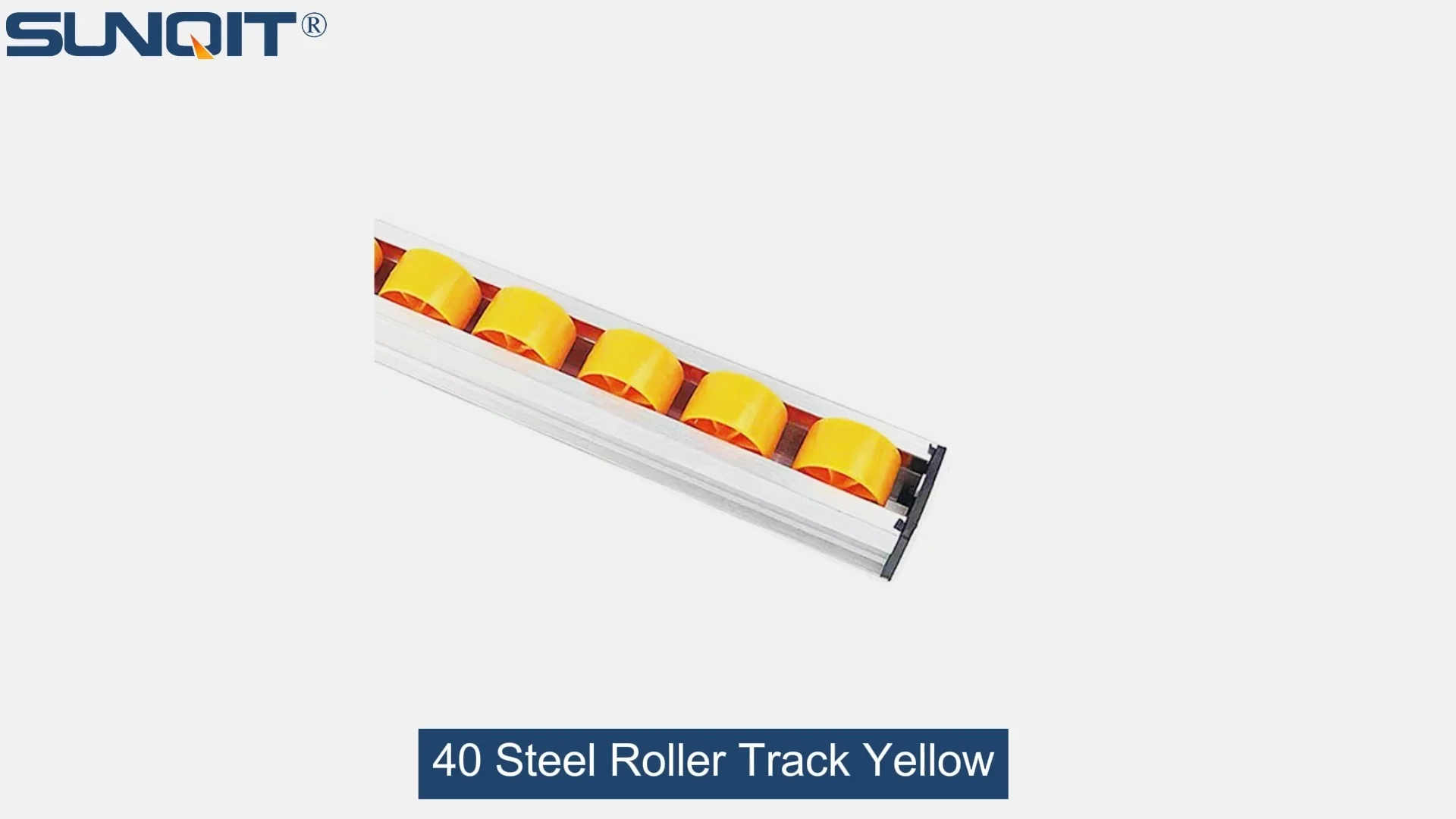
40 Steel Roller Track Yellow
The roller track can be installed with multiple accessories to create different slopes and configurations of flow racks.All steel conveyor 40 roller track accessories are engineered to perfectly fit the sliding rail.
40 Steel Roller Track Yellow: Comparing Welded vs. Bolted Installation Methods
When you walk into a busy manufacturing plant—whether it's assembling 3C products, handling medical devices, or moving automotive parts—you'll notice one thing that keeps everything running smoothly: roller tracks. Among the many types available, the 40 steel roller track yellow stands out for its durability, high visibility, and versatility. But here's the thing: even the best roller track won't perform well if you choose the wrong installation method. Today, we're diving deep into two common ways to install these tracks—welded vs. bolted—and help you decide which one fits your production needs best.
What Is 40 Steel Roller Track Yellow, Anyway?
Let's start with the basics. The 40 steel roller track yellow is a workhorse in lean manufacturing lines. Made from high-quality steel, it's built to handle daily wear and tear from moving parts, boxes, and components. The bright yellow color isn't just for looks—it's a safety feature, making the track easy to spot to prevent accidents. You'll find this track in flow racks, conveyors, and production assemble lines across industries like 3C assembly, medical devices, and automotive.
At Sunqit, this track is part of their extensive line of lean pipe and accessories, designed to support the lean principles of "reusable, sustainable improvement." It's compatible with a range of connectors and accessories, which makes it a flexible choice for various applications. But the real question is: how should you put it together?
Welded Installation: The Permanent Choice
Welded installation is the traditional way to set up roller tracks. It involves melting metal to join sections of the track together, creating a permanent bond. Let's break down the pros and cons of this method.
Pros of Welded Installation
First, welded tracks are incredibly strong. If you're handling heavy loads—like engine blocks or large medical equipment—this method gives you the structural stability you need. There are no loose parts to worry about initially, so you don't have to check for wobbly sections right after installation. Plus, the seamless look of welded tracks can make your production line feel more polished, which is a nice touch if clients visit your facility. Cons of Welded Installation
But here's where welded falls short: flexibility. Once you weld the tracks together, you can't adjust the layout. If your production line needs to change—say, you're launching a new product that requires a different track path—you'll have to cut the welded sections and reweld them, which is time-consuming and expensive. This goes against the lean of "sustainable improvement" that Sunqit promotes, since welded tracks aren't reusable. Installation time is another issue. Welding requires skilled workers who know how to handle heat and metal properly. You can't just grab a wrench and start—you need to set up safety equipment, prepare the metal surfaces, and wait for the welds to cool. And if a section of the track gets damaged, you can't just replace that part; you have to cut out the broken section and weld a new one in, which disrupts production. Ideal Scenarios for Welded Installation
Welded tracks are best for fixed production lines that won't change for years. For example, if you're running a line that handles the same heavy automotive parts day in and day out, welded installation makes sense. It's also a good choice if you prioritize structural strength over flexibility.
First, welded tracks are incredibly strong. If you're handling heavy loads—like engine blocks or large medical equipment—this method gives you the structural stability you need. There are no loose parts to worry about initially, so you don't have to check for wobbly sections right after installation. Plus, the seamless look of welded tracks can make your production line feel more polished, which is a nice touch if clients visit your facility. Cons of Welded Installation
But here's where welded falls short: flexibility. Once you weld the tracks together, you can't adjust the layout. If your production line needs to change—say, you're launching a new product that requires a different track path—you'll have to cut the welded sections and reweld them, which is time-consuming and expensive. This goes against the lean of "sustainable improvement" that Sunqit promotes, since welded tracks aren't reusable. Installation time is another issue. Welding requires skilled workers who know how to handle heat and metal properly. You can't just grab a wrench and start—you need to set up safety equipment, prepare the metal surfaces, and wait for the welds to cool. And if a section of the track gets damaged, you can't just replace that part; you have to cut out the broken section and weld a new one in, which disrupts production. Ideal Scenarios for Welded Installation
Welded tracks are best for fixed production lines that won't change for years. For example, if you're running a line that handles the same heavy automotive parts day in and day out, welded installation makes sense. It's also a good choice if you prioritize structural strength over flexibility.
Bolted Installation: The Flexible Alternative
Bolted installation is the modern, lean-friendly way to assemble roller tracks. Instead of welding, you use bolts and connectors—like Sunqit's roller track connectors or 40 fluent flat joint—to hold sections together. Let's look at why this method is gaining popularity.
Pros of Bolted Installation
Flexibility is the biggest win here. Need to adjust the track layout for a new product? Just loosen the bolts, move the sections, and retighten. No cutting, no welding, no mess. This is perfect for industries like 3C assembly, where product cycles are short and lines need to adapt quickly. Installation time is much faster too. You don't need a skilled welder—any team member with a wrench can assemble the tracks. Sunqit's clients often say that bolted installation cuts their setup time by half compared to welded. And maintenance is a breeze: if a roller breaks, you can replace it in minutes without disrupting the entire line. Another big plus is reusability. Bolted tracks can be disassembled and reused in other parts of your facility. This aligns perfectly with Sunqit's lean solution philosophy, which helps you save money and reduce waste over time. Cons of Bolted Installation
Bolted tracks are slightly less strong than welded ones, but for most applications—like handling small 3C parts or medical devices—this isn't a problem. You might have to check for loose bolts periodically, but that's a quick task that takes just a few minutes per line. And while the bolts are visible, they don't affect the track's functionality. Ideal Scenarios for Bolted Installation
Bolted installation is ideal for flexible production lines. If you're in the 3C industry, medical equipment manufacturing, or any field where you need to change your line layout often, this method is the way to go. It's also great for lean manufacturing environments where reusability and continuous improvement are key.
Flexibility is the biggest win here. Need to adjust the track layout for a new product? Just loosen the bolts, move the sections, and retighten. No cutting, no welding, no mess. This is perfect for industries like 3C assembly, where product cycles are short and lines need to adapt quickly. Installation time is much faster too. You don't need a skilled welder—any team member with a wrench can assemble the tracks. Sunqit's clients often say that bolted installation cuts their setup time by half compared to welded. And maintenance is a breeze: if a roller breaks, you can replace it in minutes without disrupting the entire line. Another big plus is reusability. Bolted tracks can be disassembled and reused in other parts of your facility. This aligns perfectly with Sunqit's lean solution philosophy, which helps you save money and reduce waste over time. Cons of Bolted Installation
Bolted tracks are slightly less strong than welded ones, but for most applications—like handling small 3C parts or medical devices—this isn't a problem. You might have to check for loose bolts periodically, but that's a quick task that takes just a few minutes per line. And while the bolts are visible, they don't affect the track's functionality. Ideal Scenarios for Bolted Installation
Bolted installation is ideal for flexible production lines. If you're in the 3C industry, medical equipment manufacturing, or any field where you need to change your line layout often, this method is the way to go. It's also great for lean manufacturing environments where reusability and continuous improvement are key.
Welded vs. Bolted: A Head-to-Head Comparison
Let's put these two methods side by side to make your decision easier. Here's a detailed comparison:
| Factor | Welded Installation | Bolted Installation |
|---|---|---|
| Flexibility | No adjustments possible after installation; fixed layout. | Highly flexible—easily adjust, add, or remove sections. |
| Installation Time | Longer; requires skilled welders and safety prep. | Shorter; no special skills needed—just basic tools. |
| Skill Requirement | Skilled welders with certification. | Basic mechanical skills; anyone with a wrench can do it. |
| Maintenance Ease | Hard to maintain—damaged sections need cutting and rewelding. | Easy—replace parts quickly with minimal downtime. |
| Reusability | Not reusable—can't disassemble without damaging the track. | Fully reusable—disassemble and reuse in other lines. |
| Load Capacity | High—ideal for heavy-duty loads (over 500kg per section). | Medium to high—sufficient for most applications (up to 400kg per section). |
| Modification Cost | High—requires cutting, rewelding, and new materials. | Low—just need new connectors or sections. |
| Lean Alignment | Low—goes against reusable and sustainable improvement principles. | High—aligns perfectly with lean of flexibility and reusability. |
Real-World Stories: Welded vs. Bolted in Action
Let's take a look at two real clients of Sunqit to see how these methods play out in the real world.
Client 1: Automotive Parts Manufacturer (Welded)
A client in the automotive industry needed a track system to handle heavy engine blocks. They chose welded installation because the line layout was fixed and the loads were over 500kg per section. The welded tracks have held up well for three years, with no issues. But when they wanted to add a new section for a new engine model, they had to spend $10,000 on cutting, rewelding, and new materials—something they didn't expect. Client 2: 3C Assembly Plant (Bolted)
A 3C assembly plant that makes smartphones switched from welded to bolted tracks. They needed to change their line layout every six months for new phone models. With bolted tracks, they can adjust the layout in a day instead of a week. They also reused old track sections for a new product line, saving $5,000 in materials. The plant manager said: "Bolted tracks are a game-changer for us. We can keep up with the fast pace of the 3C industry without breaking the bank." These stories show that the right method depends on your specific needs. But for most modern manufacturers, bolted installation is the better choice because it's flexible and aligns with lean principles.
A client in the automotive industry needed a track system to handle heavy engine blocks. They chose welded installation because the line layout was fixed and the loads were over 500kg per section. The welded tracks have held up well for three years, with no issues. But when they wanted to add a new section for a new engine model, they had to spend $10,000 on cutting, rewelding, and new materials—something they didn't expect. Client 2: 3C Assembly Plant (Bolted)
A 3C assembly plant that makes smartphones switched from welded to bolted tracks. They needed to change their line layout every six months for new phone models. With bolted tracks, they can adjust the layout in a day instead of a week. They also reused old track sections for a new product line, saving $5,000 in materials. The plant manager said: "Bolted tracks are a game-changer for us. We can keep up with the fast pace of the 3C industry without breaking the bank." These stories show that the right method depends on your specific needs. But for most modern manufacturers, bolted installation is the better choice because it's flexible and aligns with lean principles.
Why Sunqit's Bolted 40 Steel Roller Track Yellow Is the Right Choice
Sunqit's 40 steel roller track yellow is designed to work seamlessly with bolted installation. They offer a range of connectors and accessories—like roller track connectors, 40 fluent flat joint, and caster accessories—that make assembly easy. Here's why you should choose Sunqit:
1. Lean-Friendly Design
Sunqit's products are built around the lean of "reusable, sustainable improvement." Bolted tracks are fully reusable, so you can disassemble them and use them in other lines. This helps you reduce waste and save money over time. 2. Wide Range of Accessories
Sunqit has all the parts you need to assemble bolted tracks: connectors, joints, casters, and more. For example, their 40 fluent flat joint is perfect for connecting track sections quickly. You don't have to source parts from multiple suppliers—Sunqit has everything under one roof. 3. Custom Solutions
If you need a custom track layout for your industry—like 3C assembly or medical devices—Sunqit's team can design a bolted system that fits your needs. They understand the unique challenges of each industry and can create a solution that's flexible and efficient. 4. High-Quality Materials
Sunqit's 40 steel roller track yellow is made from high-quality steel that's resistant to rust and wear. It's built to last, even in busy production environments. 5. Support for Lean Manufacturing
Sunqit's bolted track systems support lean manufacturing practices like 5S and continuous improvement. You can adjust your line layout to eliminate waste and improve efficiency—something that's hard to do with welded tracks.
Sunqit's products are built around the lean of "reusable, sustainable improvement." Bolted tracks are fully reusable, so you can disassemble them and use them in other lines. This helps you reduce waste and save money over time. 2. Wide Range of Accessories
Sunqit has all the parts you need to assemble bolted tracks: connectors, joints, casters, and more. For example, their 40 fluent flat joint is perfect for connecting track sections quickly. You don't have to source parts from multiple suppliers—Sunqit has everything under one roof. 3. Custom Solutions
If you need a custom track layout for your industry—like 3C assembly or medical devices—Sunqit's team can design a bolted system that fits your needs. They understand the unique challenges of each industry and can create a solution that's flexible and efficient. 4. High-Quality Materials
Sunqit's 40 steel roller track yellow is made from high-quality steel that's resistant to rust and wear. It's built to last, even in busy production environments. 5. Support for Lean Manufacturing
Sunqit's bolted track systems support lean manufacturing practices like 5S and continuous improvement. You can adjust your line layout to eliminate waste and improve efficiency—something that's hard to do with welded tracks.
Step-by-Step Guide to Installing Sunqit's Bolted 40 Steel Roller Track Yellow
Installing bolted tracks is easy—here's how to do it:
Step 1: Gather Your Tools and Parts
You'll need: Sunqit's 40 steel roller track yellow sections, roller track connectors, 40 fluent flat joint, a wrench, a measuring tape, and a level. Step 2: Plan Your Layout
Measure the area where you want to install the tracks. Mark the positions of the track sections and connectors. Make sure the layout aligns with your production needs. Step 3: Assemble the Tracks
Take two track sections and connect them using a roller track connector or 40 fluent flat joint. Tighten the bolts with a wrench—don't over-tighten, as you may need to adjust later. Repeat this for all sections. Step 4: Level the Tracks
Use a level to make sure the tracks are flat. If a section is uneven, adjust the connectors or add shims under the track. Step 5: Test the Tracks
Roll a box or component along the tracks to make sure it moves smoothly. If there are any issues, adjust the sections until everything works perfectly. Step 6: Periodic Maintenance
Every month, check the bolts to make sure they're tight. If any bolts are loose, tighten them. This will keep your tracks running smoothly for years.
You'll need: Sunqit's 40 steel roller track yellow sections, roller track connectors, 40 fluent flat joint, a wrench, a measuring tape, and a level. Step 2: Plan Your Layout
Measure the area where you want to install the tracks. Mark the positions of the track sections and connectors. Make sure the layout aligns with your production needs. Step 3: Assemble the Tracks
Take two track sections and connect them using a roller track connector or 40 fluent flat joint. Tighten the bolts with a wrench—don't over-tighten, as you may need to adjust later. Repeat this for all sections. Step 4: Level the Tracks
Use a level to make sure the tracks are flat. If a section is uneven, adjust the connectors or add shims under the track. Step 5: Test the Tracks
Roll a box or component along the tracks to make sure it moves smoothly. If there are any issues, adjust the sections until everything works perfectly. Step 6: Periodic Maintenance
Every month, check the bolts to make sure they're tight. If any bolts are loose, tighten them. This will keep your tracks running smoothly for years.
Conclusion: Which Method Should You Choose?
Choosing between welded and bolted installation for your 40 steel roller track yellow depends on your production needs. If you have a fixed line with heavy loads and no plans to change, welded might be the right choice. But for most modern manufacturers—especially those in 3C assembly, medical devices, or any industry that needs flexibility—bolted installation is the way to go.
Bolted tracks are flexible, reusable, and easy to maintain. They align with the lean principles of "reusable, sustainable improvement" that Sunqit promotes. And with Sunqit's high-quality products and custom solutions, you can create a track system that fits your needs perfectly.
So, if you're looking to upgrade your production line, consider Sunqit's bolted 40 steel roller track yellow. It's a smart investment that will save you time and money in the long run.