- Company Articles
- Products and Technology
- Product knowledge
- 40 Steel Roller Track Yellow Wheel Cost-Benefit Analysis: Is It Worth the Investment?

40 Steel Roller Track Yellow Wheel Cost-Benefit Analysis: Is It Worth the Investment?
Related Product
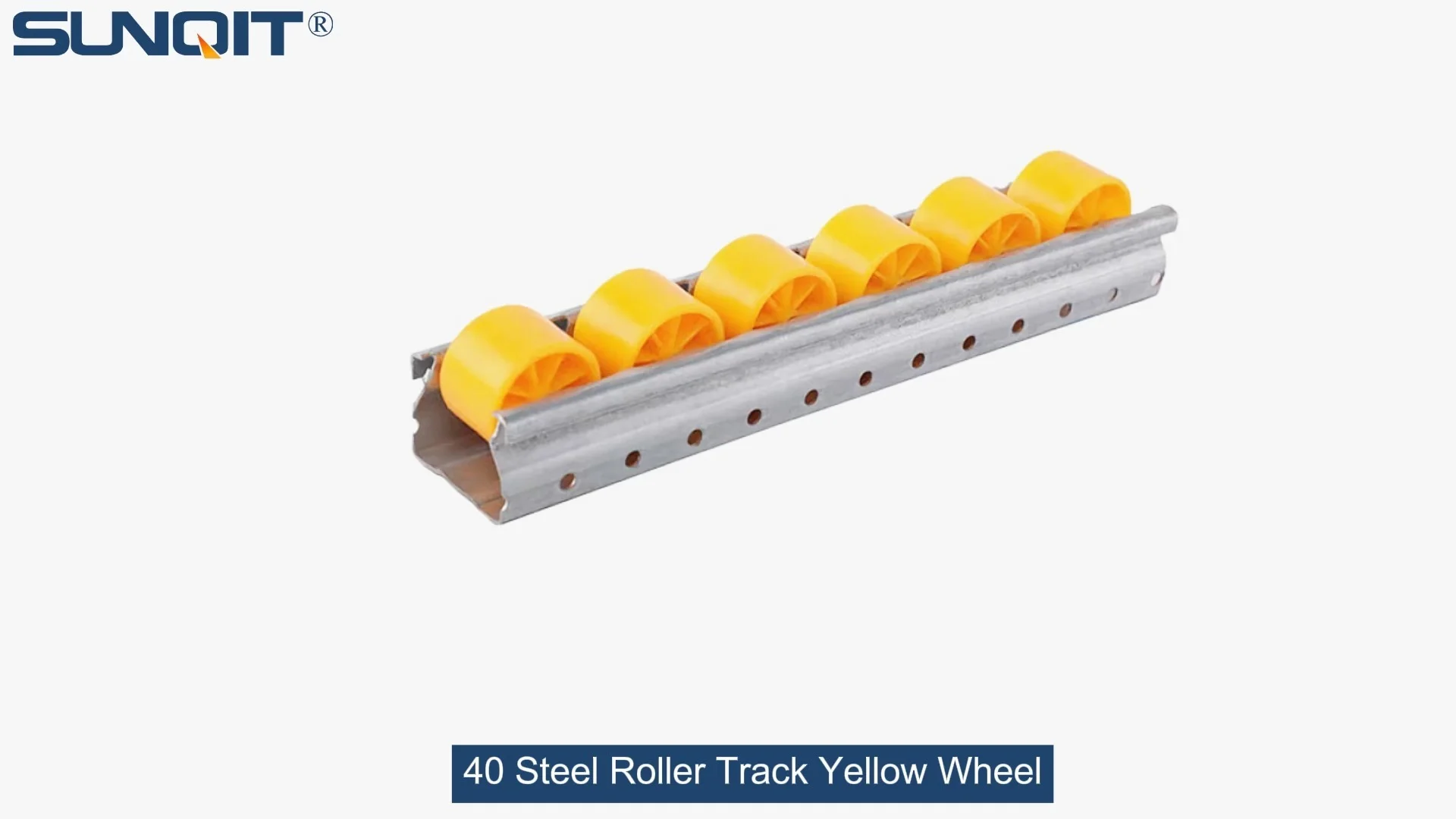
40 Steel Roller Track Yellow Wheel
The roller track can be installed with multiple accessories to create different slopes and configurations of flow racks.All steel conveyor 40 roller track accessories are engineered to perfectly fit the sliding rail.
If you've ever walked through a manufacturing plant, you know the heartbeat of production lies in how smoothly materials move. A single bottleneck—a stuck roller, a wobbly track, or a fragile component—can throw an entire shift off schedule. That's where the 40 Steel Roller Track Yellow Wheel comes in. It's not just another piece of metal; it's the unsung hero of lean production lines, quietly ensuring parts glide from assembly to packaging without a hitch. But with so many roller track options on the market—aluminum, plastic, even hybrid models—is this steel version with its bright yellow wheels really worth your budget? Let's dive in.
What Exactly Is the 40 Steel Roller Track Yellow Wheel?
First, let's get clear on what we're talking about. This isn't some generic hardware store part. The 40 Steel Roller Track Yellow Wheel is a heavy-duty component designed for lean system setups—think conveyor lines, assembly stations, and material handling racks in factories. The "40" refers to its standard width (40mm), the steel construction means it's built to take a beating, and those eye-catching yellow wheels? They're not just for show. They're made of high-density polyurethane, designed to reduce friction, resist wear, and even provide a visual cue to workers (hello, safety!).
But here's the kicker: It's not standalone. This roller track plays well with others. Pair it with a lean pipe workbench for a seamless assembly station, connect it to a conveyor for long-distance material transport, or integrate it into a custom lean solution tailored to your factory's unique layout. That flexibility is why it's become a staple in industries like automotive, electronics, and appliance manufacturing.
Quick Fact:
In busy plants, material handling can account for up to 30% of total production time. A reliable roller track cuts that time by keeping parts moving—no more manually pushing carts or unjamming stuck components.
The Costs: What You'll Pay Upfront (and Beyond)
Let's talk money. No one buys industrial equipment on a whim, so let's break down the costs step by step.
1. Initial Purchase Cost
Steel roller tracks aren't the cheapest option upfront. Compared to plastic or lightweight aluminum models, you'll pay a premium—usually 15-25% more per linear meter. For example, a 2-meter section of plastic roller track might run you $40-$60, while the 40 Steel Yellow Wheel version could cost $70-$90. If you're outfitting a full production line (say, 50 meters), that adds up: $3,500-$4,500 for steel vs. $2,000-$3,000 for plastic.
2. Installation and Setup
Steel is heavier, so you'll need more labor to install it. A two-person team might take 3-4 hours to set up 10 meters of steel track, whereas plastic could be done in 2-3 hours. If you're paying technicians $30/hour, that's an extra $60-$90 per 10 meters. Not a deal-breaker, but worth factoring in.
3. Long-Term Maintenance and Replacement
Here's where the story flips. Plastic tracks warp under heavy loads or extreme temperatures; aluminum can dent if hit by a forklift. Steel? It's tough. The 40 Steel Roller Track's yellow polyurethane wheels resist oil, chemicals, and abrasion—common in factory environments. While plastic wheels might need replacing every 6-12 months, steel wheels can last 3-5 years with basic cleaning. Even the track itself: steel rarely bends or cracks, meaning you won't be replacing sections after a year of use.
| Cost Category | 40 Steel Roller Track (Yellow Wheel) | Plastic Roller Track | Aluminum Roller Track |
|---|---|---|---|
| Initial Cost (per meter) | $35-$45 | $20-$30 | $30-$40 |
| Installation (per 10 meters) | $180-$240 | $120-$180 | $150-$210 |
| Annual Maintenance | $20-$30 (cleaning/lubrication) | $80-$120 (wheel replacements) | $50-$70 (dent repairs, wheel upkeep) |
| Expected Lifespan | 7-10 years | 2-3 years | 4-5 years |

The Benefits: More Than Just "Durable"
Costs tell one side of the story, but benefits? They're the reason manufacturers keep coming back to steel. Let's unpack why this roller track might be the best investment you make for your production line.
1. Unmatched Durability = Less Downtime
Imagine this: It's Monday morning, peak production time, and a plastic roller track in your 3C assembly line snaps under a heavy batch of circuit boards. Your team scrambles to source a replacement, losing 2 hours of runtime. At $500/hour in labor and lost output, that's $1,000 gone. With steel? That scenario's rare. The 40 Steel track handles loads up to 150kg per linear meter—easily supporting metal parts, heavy tooling, or stacked bins. No more emergency repairs, no more missed deadlines.
2. Smoother Flow = Faster Production
The yellow polyurethane wheels are a game-changer. Unlike hard plastic wheels that can "catch" on uneven surfaces, these glide. Tests show materials move 15-20% faster on steel tracks with polyurethane wheels compared to standard plastic tracks. For a line producing 100 units/hour, that's 15-20 extra units per hour—adding up to 120-160 more units per 8-hour shift. Over a month? 2,400-3,200 extra units. If each unit profits $10, that's $24,000-$32,000 in additional revenue.
3. Safety First, Always
Factories are busy, and accidents happen. But the 40 Steel Roller Track's design minimizes risks. The bright yellow wheels act as a visual marker, making the track easy to spot in dimly lit areas—reducing trips and falls. The steel frame also won't shatter if something heavy drops on it, unlike plastic, which can send shards flying. Plus, the wheels are ESD (Electrostatic Discharge) safe, critical for electronics manufacturing where static can damage sensitive components. Peace of mind? Priceless.
4. Flexibility for Future Growth
Lean manufacturing isn't static—it's about continuous improvement. The 40 Steel Roller Track plays nice with other lean pipe components. Need to reconfigure your line next quarter? Disassemble the track, move it, and reconnect it to a new lean pipe workbench or conveyor. Steel's strength means you can reconfigure it dozens of times without weakening the structure. Plastic? It might crack after a few moves. Aluminum? It could bend. Steel? It adapts as your business grows.

Real-World Example: A Small Electronics Plant's Experience
Let's take a concrete example. A mid-sized electronics manufacturer in China, specializing in smartphone chargers, was struggling with their old plastic roller tracks. They were replacing wheels every 8 months, and downtime due to track failures cost them ~$2,000/month. In 2023, they switched to 40 Steel Roller Track Yellow Wheel for their main assembly line (40 meters total).
Here's what happened in the first year:
- Installation cost: $3,200 (track) + $400 (labor) = $3,600 total
- Maintenance cost: $150 (annual cleaning/lubrication)
- Downtime reduced to zero (no track failures)
- Production speed increased by 18%, adding 150 units/day = 36,000 extra units/year
- Extra profit: 36,000 units x $5 profit = $180,000
Net gain after first year: $180,000 (extra profit) - $3,600 (installation) - $150 (maintenance) = $176,250. Their investment paid off in less than a month .
Quote from the Plant Manager:
"We thought the steel track was too expensive at first. But after 6 months, I couldn't believe how much time we weren't spending fixing stuff. The line runs smoother, the team's happier, and the numbers speak for themselves."

Is It Worth the Investment? The Verdict
If you're running a small, low-volume operation with lightweight materials, plastic or aluminum might work. But for most manufacturers—especially those in automotive, 3C assembly, or heavy machinery— the 40 Steel Roller Track Yellow Wheel is a no-brainer .
Yes, you'll pay more upfront. But the long-term savings—less downtime, fewer replacements, faster production—dwarf the initial cost. For high-volume lines, the ROI is often measured in months, not years. And when you factor in safety benefits and flexibility for growth, it's not just an expense—it's an investment in your factory's efficiency and resilience.
So, is it worth it? For manufacturers who want to stop fixing problems and start growing—absolutely. The 40 Steel Roller Track Yellow Wheel doesn't just move materials; it moves your business forward.