- Company Articles
- Products and Technology
- Product knowledge
- 40 Steel Roller Track Yellow Wheel Dimensions: Understanding 40mm Specifications

40 Steel Roller Track Yellow Wheel Dimensions: Understanding 40mm Specifications
Related Product
40 Steel Roller Track Yellow Wheel
The roller track can be installed with multiple accessories to create different slopes and configurations of flow racks.All steel conveyor 40 roller track accessories are engineered to perfectly fit the sliding rail.
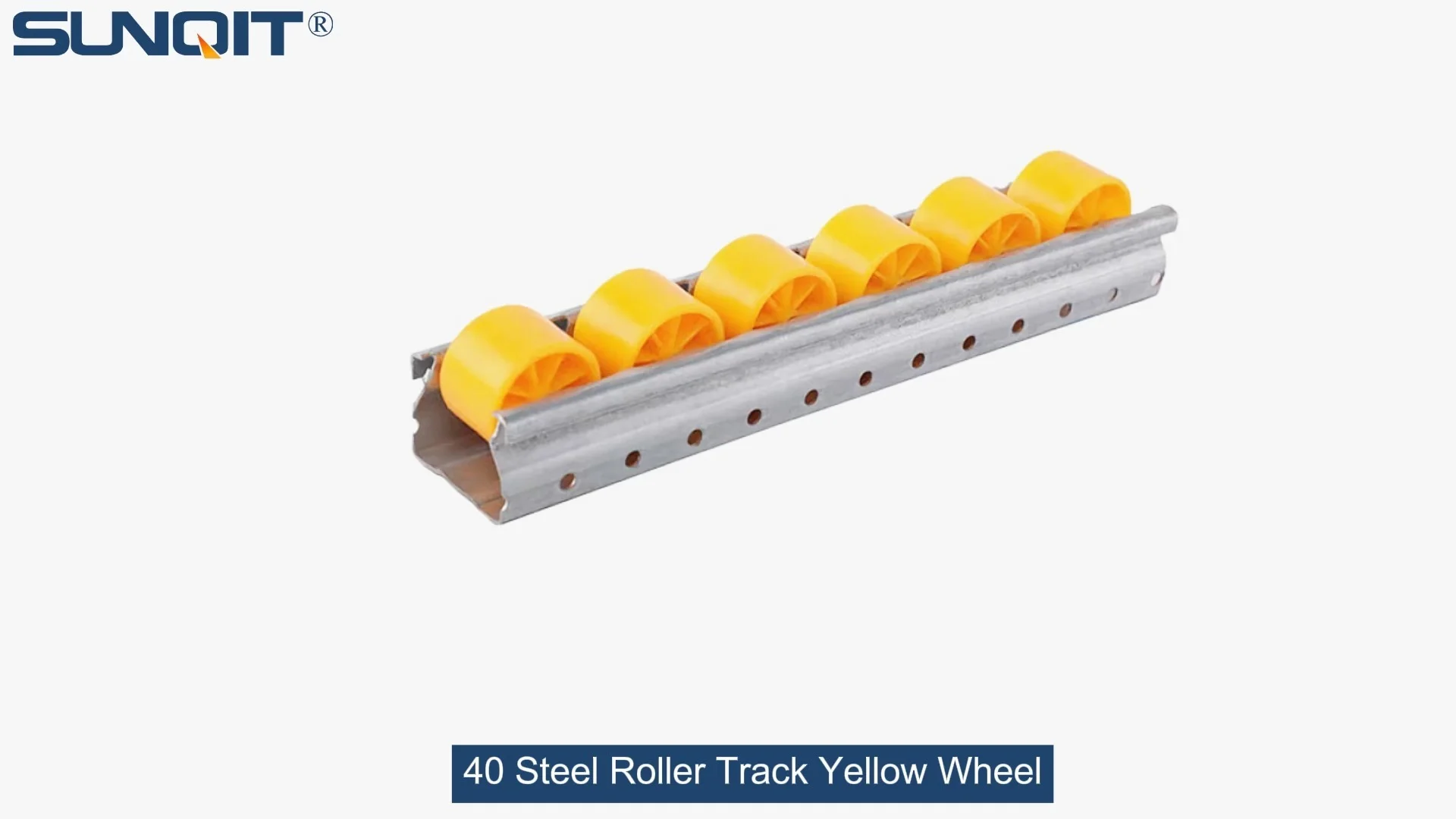
Dive into the details of one of manufacturing's unsung heroes—how the right dimensions drive efficiency, safety, and adaptability in production lines worldwide.
The Backbone of Smooth Production: What Is a 40mm Steel Roller Track?
Walk into any modern factory—whether it's assembling smartphones, packaging medical devices, or moving auto parts—and you'll notice a silent workhorse keeping things moving: roller tracks. These unassuming systems are the circulatory system of manufacturing, ensuring materials glide from station to station without bottlenecks. Among them, the 40 Steel Roller Track with Yellow Wheels stands out as a popular choice for its balance of strength, precision, and versatility. But why 40mm? And what makes those yellow wheels more than just a splash of color?
At its core, this track is engineered for one mission: to make material flow effortless . Imagine a production line where workers don't waste time lifting heavy bins or struggling with stuck carts. Instead, components slide smoothly from the warehouse to the assembly table, and finished products move to packaging without a hitch. That's the promise of a well-designed roller track—and the 40mm steel variant with yellow wheels delivers it reliably, day in and day out.
But to truly appreciate its value, we need to start with the basics: the dimensions. Every millimeter matters here. From the diameter of the wheels to the width of the track, each specification is a result of years of fine-tuning to meet the demands of industries like 3C assembly, automotive, and logistics. Let's break it down.
Decoding the Dimensions: Key Specifications of 40mm Steel Roller Tracks
When manufacturers talk about "40mm steel roller tracks," they're referring to a carefully calibrated set of measurements that ensure compatibility, durability, and performance. Let's start with the star of the show: the 40mm wheel diameter . This isn't a random number—it's a sweet spot between two needs: load capacity and speed control . A 40mm wheel strikes the right balance: large enough to handle heavy bins (we're talking up to 150kg per meter) without making the track bulky, and small enough to keep material movement steady (no runaway carts here!).
But the wheel is just part of the story. The track itself has critical dimensions that determine how well it integrates into your existing setup. Let's look at the full picture with a detailed breakdown:
| Specification | 40mm Steel Roller Track (Yellow Wheel) | Why It Matters |
|---|---|---|
| Wheel Diameter | 40mm | Balances load capacity (150kg/m) and smooth, controlled movement; compatible with standard material bins. |
| Track Width | 80mm (standard) | Fits most industry-standard containers; wide enough to prevent tipping, narrow enough for space-saving layouts. |
| Steel Thickness | 1.5mm–2.0mm | Thick enough to resist bending under heavy loads; thin enough to keep the track lightweight for easy reconfiguration. |
| Wheel Material | High-strength steel with yellow polyurethane coating | Steel core for durability; polyurethane coating reduces noise and protects delicate parts (like 3C components). |
| Wheel Spacing | 50mm–75mm apart | Ensures even weight distribution; prevents small parts from getting stuck between wheels. |
| Surface Treatment | Yellow powder coating (track frame) | Corrosion resistance for long-term use in factory environments; high visibility for safety (easily spotted in busy areas). |
These numbers might seem technical, but they translate directly to real-world benefits. For example, the 80mm track width means you can use the same track for both small component trays and larger toolboxes—no need to invest in multiple systems. The 1.5mm steel thickness? It ensures the track can handle daily wear and tear, even in high-traffic areas like automotive assembly lines where carts roll over it hundreds of times a day.

More Than Just Color: The Story Behind the Yellow Wheels
You might wonder: Why yellow? Couldn't the wheels be gray, black, or any other color? While aesthetics play a small role, the yellow hue is a strategic choice rooted in safety and functionality. In busy factories, where workers are focused on precision tasks (like soldering tiny circuit boards or assembling medical devices), visual cues save lives—and time.
Yellow is universally recognized as a "caution" color, but here, it serves a dual purpose: visibility and organization . A bright yellow roller track stands out against the neutral tones of factory floors and equipment, making it easier for workers to spot pathways, avoid tripping hazards, and align carts correctly. Imagine a new employee trying to navigate a complex production line—those yellow tracks act like a visual roadmap, guiding them to where materials need to go.
But the wheels themselves are more than just colorful. The polyurethane coating (that yellow layer) is a game-changer for protecting delicate parts. In 3C assembly, for example, where smartphones and laptops have sensitive screens and components, a hard steel wheel might scratch or damage products. The polyurethane acts as a buffer, absorbing shocks and preventing scuffs. Plus, it reduces noise—no more clanging metal wheels echoing through the factory. That might not sound like a big deal, but quieter workspaces boost focus and reduce worker fatigue over long shifts.
And let's not forget durability. These wheels are built to last. The steel core ensures they won't crack under heavy loads, while the polyurethane coating resists wear from constant friction. Even in dusty or humid environments (common in warehouses), they hold up—no sticky wheels or rusted axles slowing down production.

Where It Shines: Real-World Applications Across Industries
A roller track is only as good as how well it fits your specific needs. The 40mm steel yellow wheel track isn't a one-size-fits-all solution—it's a versatile tool that adapts to different industries. Let's look at how it performs in some of the most demanding sectors:
1. 3C Assembly: Precision for Tiny, Valuable Parts
In 3C manufacturing (computers, communications, consumer electronics), every second counts. When you're assembling a smartphone with hundreds of tiny components, the last thing you need is a material delay. The 40mm track excels here because of its precision . The 80mm width fits the small bins used for screws, connectors, and circuit boards, while the polyurethane wheels ensure these delicate parts aren't scratched or damaged during transport. Plus, the yellow color helps workers quickly identify "active" tracks (where materials are moving) versus "static" storage areas—critical for avoiding mix-ups in fast-paced lines.
2. Medical Device Production: Clean, Safe, and Reliable
Medical device manufacturing demands strict hygiene and safety standards. The 40mm track's steel frame is easy to clean (no crevices for dirt to hide), and the yellow coating is resistant to disinfectants—perfect for environments where sterility is non-negotiable. Whether moving surgical tools or implant components, the smooth-rolling wheels prevent jolts that could damage sensitive equipment. And because the track is easy to reconfigure, medical factories can quickly adapt to new product lines (like shifting from ventilators to diagnostic devices during a crisis).
3. Warehousing & Logistics: Speed and Space Savings
In warehouses, space is money. The 40mm track's compact design (80mm width) lets you build dense storage systems, like flow racks , where bins slide forward as the front one is emptied—no more reaching to the back of shelves. The 150kg per meter load capacity means it can handle heavy cartons (think bulk shipments of parts or automotive components) without sagging. And when paired with a conveyor system, it creates a seamless flow from receiving to shipping, cutting down on manual labor and errors.
4. Automotive Manufacturing: Heavy-Duty Performance
Automotive plants are tough on equipment—heavy parts, constant movement, and 24/7 operation. The 40mm track's thick steel frame (2.0mm thickness) and high-strength wheels stand up to this abuse. Whether moving engine blocks or interior panels, it keeps the line moving. The yellow wheels also play a safety role here: in noisy, busy auto factories, the bright color makes the track visible to forklift drivers and workers, reducing collision risks.
"We switched to 40mm yellow wheel tracks in our smartphone assembly line last year, and the difference was immediate. Material flow time dropped by 20%, and we've had zero damaged components from wheel scratches. It's not just a track—it's a productivity booster." — Production Manager, Leading 3C Manufacturer

Beyond Standard: Customizing Your 40mm Track for Unique Needs
While the standard 40mm track works for most applications, every factory has unique challenges. Maybe you need a longer track for a sprawling warehouse, or a narrower width for custom containers. Perhaps your products require ESD (electrostatic discharge) protection to avoid damaging sensitive electronics. That's where lean solutions come in—tailoring the track to fit your exact workflow.
For example, if you're in the medical industry and need ultra-clean conditions, we can add stainless steel components to the track (resistant to corrosion from frequent cleaning). If you're handling ESD-sensitive parts (like circuit boards), we can integrate conductive materials into the wheels and track frame to dissipate static electricity. And if space is tight, we can design curved tracks or multi-level systems to maximize vertical storage.
The beauty of this track is its modularity. It's built on the lean pipe philosophy—"reusable, reconfigurable, and always improving." Need to expand your production line next quarter? Just add more track sections. Want to change the layout to accommodate a new product? Disassemble and rebuild in hours, not days. This flexibility is why so many manufacturers choose it: it grows with your business, reducing the need for costly replacements down the line.
Why Dimensions Matter: The Bottom Line for Your Factory
At first glance, a roller track might seem like a simple piece of equipment. But the 40mm steel yellow wheel track reminds us that success in manufacturing lies in the details. The 40mm wheel diameter, 80mm track width, 1.5mm steel thickness—each dimension is a deliberate choice to balance strength, efficiency, and adaptability. The yellow wheels aren't just for show; they enhance safety, protect products, and improve visibility.
Whether you're assembling electronics, moving medical supplies, or building cars, this track is more than a tool—it's an investment in smoother workflows, happier workers, and higher profits. And when paired with custom lean solutions , it becomes a cornerstone of your factory's ability to adapt, grow, and stay competitive in a fast-changing world.
So the next time you walk through your production line, take a closer look at those yellow wheels. They're not just moving materials—they're moving your business forward.