- Company Articles
- Products and Technology
- Installation And Maintenance
- 40 Steel Roller Track Yellow Wheel Installation Mistakes to Avoid

40 Steel Roller Track Yellow Wheel Installation Mistakes to Avoid
Related Product
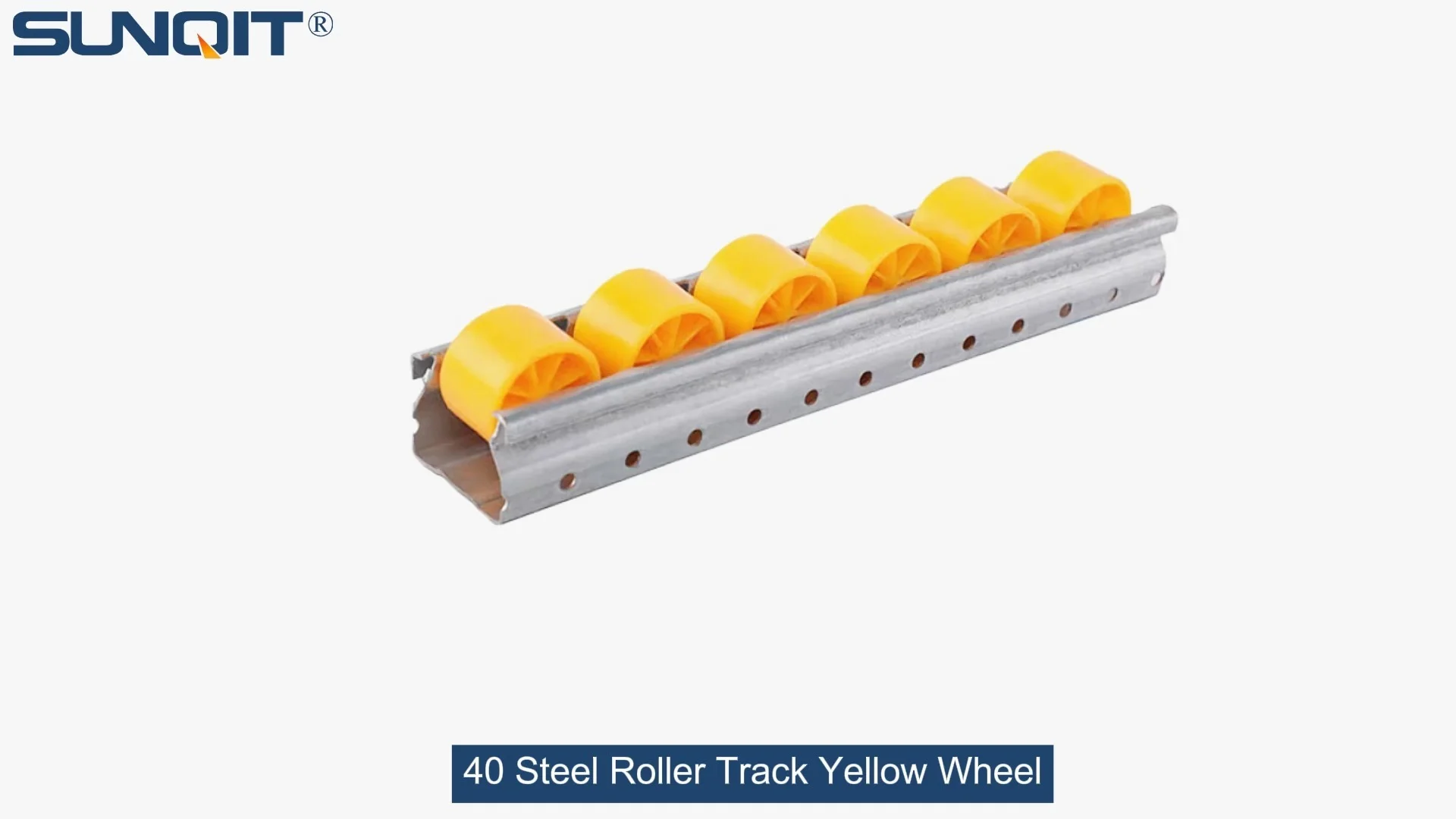
40 Steel Roller Track Yellow Wheel
The roller track can be installed with multiple accessories to create different slopes and configurations of flow racks.All steel conveyor 40 roller track accessories are engineered to perfectly fit the sliding rail.
Let's Talk About Keeping Your Production Line Rolling Smoothly
Picture this: You walk into a manufacturing plant early in the morning. The lights are on, machines are humming, and there's a steady flow of materials gliding along bright yellow roller tracks—40 Steel Roller Track Yellow Wheel, to be exact. Workers are loading components, assembling parts, and everything feels like a well-choreographed dance. That's the dream, right? A lean system where every piece of equipment works in harmony, making production efficient and hassle-free.
But here's the reality we've seen too often: After installing new roller tracks, teams hit a wall. Materials get stuck. Wheels start squeaking. Tracks wobble under load. And suddenly, that "lean solution" feels more like a productivity roadblock. The culprit? Small, avoidable mistakes during installation that snowball into big problems.
We've been in the lean manufacturing game for years—helping factories set up roller tracks, flow racks, conveyors, and full lean systems. Over time, we've noticed patterns in the installation mishaps that trip people up. Today, we're pulling back the curtain to share the 5 most common mistakes we see with 40 Steel Roller Track Yellow Wheel installations. Whether you're a seasoned plant manager or a new technician, these insights could save you hours of frustration (and a few gray hairs).
Mistake #1: Choosing the Wrong Accessories—It's Not "One Size Fits All"
Let's start with the basics: accessories. You'd think picking parts for a roller track would be straightforward, but we can't tell you how many times we've walked into a facility and thought, "Whoa, that's not going to work." Take the case of a 3C electronics factory in Guangdong last year. They ordered top-quality 40 Steel Roller Track Yellow Wheel but paired it with cheap plastic brackets meant for lightweight aluminum profiles. Within a month, the brackets warped under the weight of circuit board trays, and the tracks started sagging in the middle.
Here's the thing: 40 Steel Roller Track Yellow Wheel is built for durability, but it's only as strong as its weakest link—usually the aluminum pipe accessories that hold it all together. These accessories include roller track connectors, support brackets, and end stops, and they're designed to handle specific loads and environments. For example, if you're using the track in a warehouse where forklifts pass nearby, you need heavy-duty steel brackets, not the standard aluminum ones. If your line deals with oily or corrosive materials, stainless steel connectors are a must to prevent rust.
How to Avoid This:
- 1. Check the load rating of your roller track first. 40 Steel models typically handle 150-300kg per linear meter—match your accessories to at least 120% of that rating (better safe than sorry!).
- 2. List your environment factors: temperature, humidity, exposure to chemicals, or physical impact (like accidental bumps from carts).
- 3. Use a supplier's accessory guide. Most reputable lean system suppliers (including us!) provide free charts that pair tracks with compatible connectors, brackets, and fasteners. When in doubt, ask: "If I'm using 40 Steel Roller Track Yellow Wheel for daily 200kg loads in a humid warehouse, what accessories do you recommend?"
Mistake #2: Skipping Pre-Installation Alignment—"Eyeballing It" Costs You Later
"It looks straight enough, right?" Famous last words. We once worked with a medical device manufacturer that rushed through installing their roller tracks to meet a production deadline. They didn't bother leveling the tracks or aligning them with the adjacent flow rack—they just bolted them to the floor and called it a day. The result? Materials would slow down or get stuck halfway through the track, forcing workers to stop and push them manually. What should've been a time-saver turned into a bottleneck.
Flow rack and roller track systems rely on gravity and precision alignment to move materials smoothly. Even a tiny 1-degree misalignment over a 3-meter track can create a "speed bump" that disrupts the flow. Think of it like setting up a bowling alley—if the lane isn't flat, the ball veers off course. The same logic applies here: your 40 Steel Roller Track Yellow Wheel needs to be level horizontally and sloped slightly (usually 2-3 degrees) downward to let gravity do the work.
How to Avoid This:
- 1. Start with a clean, flat surface. Sweep the area and check for cracks or unevenness in the floor—fill small gaps with epoxy if needed.
- 2. Use a laser level or a long spirit level (at least 1.5 meters) to mark the track's path. Mark reference lines on the floor with chalk or tape.
- 3. Do a "dry fit" before securing anything. Lay the track sections on the floor, connect them loosely, and roll a test cart or box along the length. If it stops or veers, adjust the alignment until it glides smoothly.
- 4. Secure the track in segments, rechecking levelness after each bolt. Tighten bolts gradually (like tightening a car tire—crosswise) to avoid warping the frame.

Mistake #3: Overloading the Track—Yes, There's Such a Thing as "Too Much"
"But it's steel—it can handle anything!" We get it, steel feels indestructible, but even 40 Steel Roller Track Yellow Wheel has its limits. A furniture manufacturer we with learned this the hard way when they decided to use their roller track to move full pallets of wooden boards, each weighing over 500kg. The tracks held… for about a week. Then the yellow wheels started deforming, and the steel frame began to bend. Repairing it cost three times more than if they'd invested in a heavier-duty conveyor system upfront.
Every roller track has a maximum load capacity, and it's not just about the total weight—it's also about how that weight is distributed. Stacking heavy boxes in the middle of a long track creates more stress than spreading them out evenly. And dynamic loads (materials moving quickly or being dropped onto the track) add extra force. For example, a 100kg box gently placed on the track is different from a 100kg box sliding onto it from a height of 30cm.
This isn't just about breaking equipment—it's about safety. A warped track can cause materials to tip over, risking damage to products or injury to workers. It also throws off your entire lean system by creating bottlenecks; if the track fails, downstream processes (like conveyor lines or assembly stations) grind to a halt.
How to Avoid This:
- 1. Calculate both static load (materials sitting on the track) and dynamic load (materials moving along it). Dynamic load is often 1.5x the static load, so plan accordingly.
- 2. Spread out heavy items. If you're moving large parts, use dividers or partitions to keep weight evenly distributed across the track's width.
- 3. When in doubt, upgrade. If your loads consistently exceed the track's capacity, consider a hybrid system: use the roller track for lighter, frequent items and a conveyor for heavier loads. Many lean solution providers (including us!) can design custom setups that mix and match equipment.

Mistake #4: Ignoring Wheel and Track Maintenance—"Set It and Forget It" Doesn't Work
We once visited a factory where the 40 Steel Roller Track Yellow Wheel looked like it had been through a war. The yellow wheels were caked in grease and dust, some were missing entirely, and the track rails had rust spots. When we asked when it was last maintained, the supervisor shrugged and said, "We installed it two years ago—do we need to maintain it?" Spoiler: Yes, yes you do.
Roller tracks are low-maintenance, but they're not no-maintenance. The yellow wheels are made of polyurethane, which can dry out and crack if not lubricated. Dirt and debris can get stuck between the wheels, causing them to jam. And steel tracks, even with anti-corrosive coatings, can rust if exposed to moisture without proper care. Neglecting maintenance is like never changing the oil in your car—eventually, it's going to break down, and the repair bill will hurt.
Here's the good news: maintaining 40 Steel Roller Track Yellow Wheel is easy. It takes 10-15 minutes per month and can extend the track's lifespan from 3-5 years to 7-10 years. Plus, a well-maintained track runs quieter, smoother, and more efficiently—meaning fewer production stops and happier workers.
How to Avoid This:
- 1. Create a simple maintenance checklist: every week, wipe down the wheels and rails with a dry cloth; every month, lubricate the wheel axles with silicone-based grease (avoid oil-based grease—it attracts dust); every quarter, check for loose bolts or damaged wheels and replace them immediately.
- 2. Train your team to spot issues early. Teach them to listen for unusual noises (squeaking, grinding) or watch for slow-moving materials—these are often the first signs of trouble.
- 3. Keep spare parts on hand. Having extra yellow wheels, roller track connectors, and lubricant in the maintenance closet means you can fix small problems before they become big ones.

Mistake #5: Forgetting About Ergonomics—Your Team's Comfort Matters
Okay, this one might surprise you, but it's just as important as the others. We worked with a consumer electronics plant that had a beautiful new lean system, including 40 Steel Roller Track Yellow Wheel running along their assembly line. But within a month, workers were complaining about back pain and fatigue. Why? The track was installed at waist height for the tallest worker, which meant shorter team members had to bend over to load materials, and taller ones had to hunch. Productivity dropped, and absenteeism went up—all because no one thought about ergonomics during installation.
Ergonomics is about designing workspaces that fit the people using them, and roller tracks are no exception. The height, angle, and accessibility of the track directly affect how easily workers can load and unload materials. If the track is too high, workers strain their shoulders; too low, and they bend their backs. If it's too close to other equipment, they have to reach awkwardly, increasing the risk of accidents.
And here's the kicker: ergonomic issues don't just hurt your team—they hurt your bottom line. Studies show that ergonomic workspaces reduce injury rates by up to 60% and increase productivity by 15-20%. When workers are comfortable, they're faster, more accurate, and less likely to take time off for strain-related injuries.
How to Avoid This:
- 1. Measure your team's heights. The ideal track height is elbow level for the average worker—usually 75-90cm from the floor for loading/unloading stations.
- 2. Leave enough space around the track. Aim for at least 80cm of clearance on all sides so workers can move freely without bumping into other equipment.
- 3. Consider adjustable features. Many aluminum pipe accessories, like height-adjustable support brackets, let you tweak the track's position as your team or processes change. It's a small investment that pays off big in comfort.
Quick Fix Checklist: Avoid These Mistakes in 5 Minutes
| Mistake | Common Consequence | 30-Second Check |
|---|---|---|
| Wrong Accessories | Track wobbles, connectors break | Check if accessories have the same load rating as the track (look for stamps like "200kg" on brackets). |
| Poor Alignment | Materials get stuck, uneven wear | Roll a test box along the track—if it stops, adjust the alignment until it glides smoothly. |
| Overloading | Bent frame, damaged wheels | Weigh your heaviest material and compare it to the track's max load label (usually on the end of the track). |
| Neglecting Maintenance | Jammed wheels, rust, noise | Spin a few wheels—they should turn freely without grinding. Wipe a wheel; if dust comes off, it's time to clean. |
| Bad Ergonomics | Worker strain, low productivity | Ask a team member to load/unload—if they bend or stretch awkwardly, adjust the track height. |
Wrapping Up: Your Roller Track Deserves the Best Installation
Installing 40 Steel Roller Track Yellow Wheel might seem like a simple task, but as we've seen, the small mistakes can have big consequences. From choosing the right aluminum pipe accessories to remembering to lubricate the wheels, every step matters. But here's the good news: with a little planning, attention to detail, and the right knowledge, you can avoid these pitfalls and set up a track that runs smoothly for years.
At the end of the day, a well-installed roller track is more than just a piece of equipment—it's the backbone of your lean system. It keeps materials moving, workers productive, and your operation efficient. So take the time to do it right. Measure twice, install once. And if you're ever unsure, don't hesitate to reach out to a lean solution provider who can guide you through the process.
After all, your production line deserves to roll as smoothly as possible—and so do you.