- Company Articles
- Products and Technology
- Installation And Maintenance
- 40 Steel Roller Track Yellow Wheel Replacement Guide: Signs It's Time to Upgrade

40 Steel Roller Track Yellow Wheel Replacement Guide: Signs It's Time to Upgrade
Related Product
40 Steel Roller Track Yellow Wheel
The roller track can be installed with multiple accessories to create different slopes and configurations of flow racks.All steel conveyor 40 roller track accessories are engineered to perfectly fit the sliding rail.
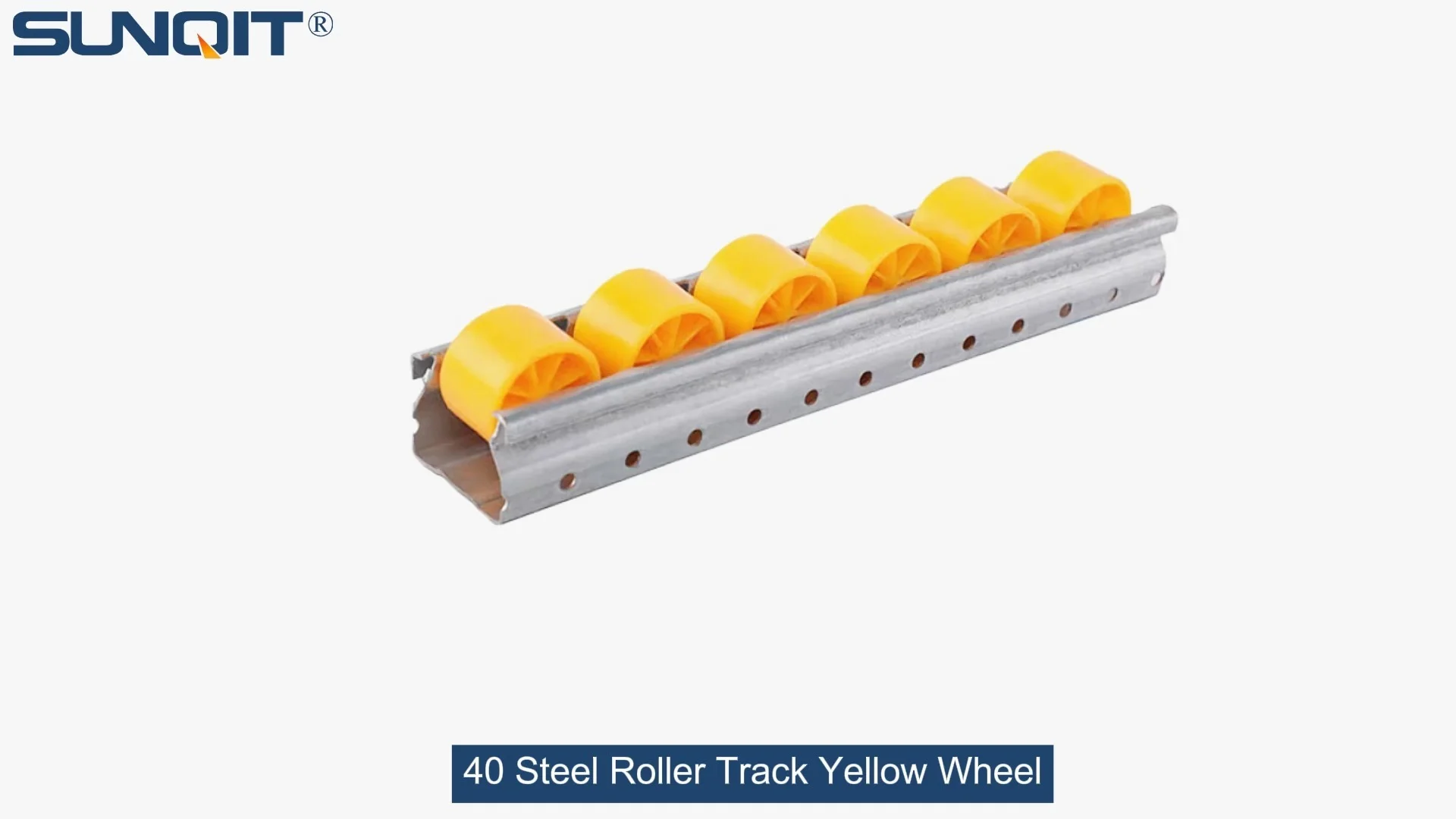
Imagine a busy electronics assembly line on a Monday morning. PCBs glide smoothly along the flow rack , workers pick components without pausing, and the production target for the first shift is already halfway done. Now, picture the opposite: a cuts through the hum of machinery, a circuit board jams between two rollers, and the line grinds to a halt. The culprit? A worn-out 40 Steel Roller Track Yellow Wheel that's been silently failing for weeks.
In the world of lean manufacturing, every component matters—but few are as critical (and often overlooked) as the small wheels that keep your production line moving. Whether you're running a 3C assembly plant or a medical device workshop, the roller track system is the backbone of your lean pipe setup. And when those yellow steel wheels start to fail, the consequences go beyond annoying noises—they hit your bottom line hard.
This guide isn't just about replacing a wheel. It's about understanding when your equipment is crying out for help, how to fix it right the first time, and why choosing the right replacement could mean the difference between a seamless workflow and a day full of frustrating delays. Let's dive in.
Why Your Roller Wheels Matter More Than You Think
Before we talk about when to replace them, let's get one thing straight: those little yellow wheels on your 40 Steel Roller Track aren't just "parts." They're the unsung heroes of your lean system . Here's why:
1. They keep production flowing (literally). A single stuck wheel can disrupt an entire conveyor line. In a high-speed 3C factory, even a 5-minute pause can cost thousands in lost output. When wheels roll smoothly, work-in-progress moves at the pace your team needs—no bottlenecks, no backups, no missed deadlines.
2. They protect your products. Jagged or misaligned wheels don't just slow things down—they can scratch delicate surfaces. Imagine a batch of smartphone screens getting marred by a rusted roller edge, or a medical device casing picking up burrs during transport. Quality control nightmares start here.
3. They save your team's energy (and sanity). When wheels glide easily, workers don't have to push, pull, or adjust heavy loads manually. Repetitive strain injuries? Reduced. Frustration levels? Lower. A smooth-rolling track turns a tiring, physically demanding job into one where your team can focus on precision, not brute force.
4. They're the "lean" in your lean system. Lean manufacturing is all about eliminating waste—including the waste of time, effort, and materials caused by faulty equipment. A well-maintained roller track with fresh wheels ensures every movement adds value, not waste.
The Telltale Signs: When Your Yellow Steel Wheels Need to Go
Most wheel failures don't happen overnight. They send warning signs weeks (or even months) in advance—if you know what to look for. Here are the critical red flags to watch for:
1. Unusual Noises: The "Squeal of Doom"
Your production line has a normal sound—a steady hum of machines, chatter of workers, and the soft whoosh of materials moving. When that changes, listen up. A 40 Steel Roller Track Yellow Wheel that's about to fail might start with a faint squeak, then escalate to a loud, high-pitched squeal or a grinding noise. This usually means:
- The wheel bearings are worn out and need lubrication (or replacement).
- Dirt or debris is trapped between the wheel and the track, causing friction.
- The wheel axle is bent, making the wheel wobble as it turns.
Case in point: A car parts manufacturer in Guangdong ignored a faint squeak from their flow rack wheels for three weeks. By the time they checked, the bearing had seized completely, and the wheel had ground a groove into the aluminum track—costing them not just a new wheel, but an entire section of track replacement.
2. Movement Issues: From "Glide" to "Grind"
Remember when your roller track felt like it had ball bearings? If materials now require a hard push to move, or they stop halfway, your wheels are telling you something. Common movement problems include:
Sign: Jerky, uneven movement
Your PCB boards used to slide smoothly from one workstation to the next. Now, they lurch forward, stop, then lurch again. This often happens when wheel treads wear unevenly—one side is smooth, the other is rough, creating a "speed bump" effect.
Sign: Sticking or jamming
A box gets stuck between two wheels, and you have to wiggle it free. This could mean the wheel is misaligned (common after heavy impacts) or the wheel hub is cracked, causing it to tilt and catch on the track.
3. Visible Damage: When "Looks" Matter
Sometimes, the problem is right in front of your eyes—you just need to check. Grab a flashlight and inspect your 40 Steel Roller Track Yellow Wheels for these visible red flags:
| Visible Damage | What It Means | Urgency |
|---|---|---|
| Flat spots or cracks on the wheel surface | The wheel has been overloaded or exposed to extreme temperatures | High—replace immediately to avoid jams |
| Rust or corrosion (especially on steel wheels) | Moisture or chemical exposure has weakened the metal | Medium—rust can spread quickly to bearings |
| Loose or wobbly wheels (move when you shake them) | The axle nut is loose or stripped, or the wheel hub is worn | High—wobbly wheels cause misalignment and product damage |
| Yellow color fading or chipping (on ESD wheels) | The ESD coating is wearing off, risking static damage to electronics | Critical for 3C/medical—replace within 48 hours |
4. Load Capacity drop: When "Heavy Duty" Becomes "Heavy Dud"
Your 40 Steel Roller Track Yellow Wheels are rated for a specific weight—say, 50kg per wheel. If you notice wheels bending under loads they used to handle easily, or the track itself starts sagging, it's time to act. Overloaded wheels often show:
- A visible bend in the wheel rim
- Axles that feel "soft" when pressed
- Track supports that start to crack (from uneven weight distribution)
A warehouse in Jiangsu learned this the hard way when they started using their flow rack to store heavier batteries. The wheels didn't fail immediately, but over six months, they slowly bent—until one day, an entire shelf collapsed, damaging $20,000 worth of inventory.
5. ESD Failure: The Silent Killer for Electronics
If you work with sensitive electronics (like semiconductors or medical sensors), your 40 Steel Roller Track Yellow Wheels might have ESD (electrostatic discharge) properties. When these fail, you can't see the damage—but it's there. Signs of ESD failure include:
• Random product defects that can't be traced to manufacturing errors
• Components failing quality tests for no apparent reason
• Static shocks when workers touch the track (a sure sign the ESD coating is gone)
Pro Tip: Use an ESD tester to check wheels monthly. A reading above 10^9 ohms means the wheel is no longer dissipating static safely—replace it before it ruins your next batch of PCBs.

Step-by-Step: How to replace Your 40 Steel Roller Track Yellow Wheel
Okay, you've identified the problem—now what? Replacing a roller wheel isn't rocket science, but doing it wrong can lead to more issues down the line. Follow these steps for a smooth swap:
Step 1: Gather Your Tools (and Safety Gear!)
Don't start rummaging through your toolbox mid-job. Here's what you'll need:
- A replacement 40 Steel Roller Track Yellow Wheel (make sure it's the exact model—check the size, bearing type, and load rating!)
- A socket wrench or screwdriver (depending on how your wheel is attached)
- A pair of pliers (for stubborn nuts or pins)
- A level (to ensure the new wheel is aligned)
- Clean cloth and degreaser (to clean the track before installing the new wheel)
- Safety gloves and goggles (metal edges can be sharp!)
Pro move: Take a photo of the old wheel before removing it—this helps if you need to reference the orientation later.
Step 2: Remove the Old Wheel
Step 2.1: Clear the area
Empty the flow rack or roller track section of all materials. You don't want parts falling or getting damaged during replacement.
Step 2.2: Loosen the fasteners
Most 40 Steel Roller Track Yellow Wheels are attached with a nut on the axle. Use your socket wrench to loosen it—if it's stuck, spray a little penetrating oil and let it sit for 5 minutes. Avoid using excessive force—you don't want to strip the threads.
Step 2.3: Pull out the old wheel
Once the nut is off, slide the wheel off the axle. If it's rusted on, gently tap the axle with a rubber mallet to loosen it. Inspect the axle and track for damage—if the axle is bent or the track is cracked, you'll need to fix those first.
Step 3: Prep for the New Wheel
Don't just slap the new wheel on—take a minute to clean and inspect. Wipe the axle with a degreaser to remove dirt and old lubricant. Check the track rails for dents or debris—even a small chip can cause the new wheel to jam. If you find damage, file it smooth or replace the track section.
Step 4: Install the New Wheel
Slide the new 40 Steel Roller Track Yellow Wheel onto the axle. Tighten the nut until it's snug—but don't over-tighten! You want the wheel to spin freely, not bind. Once it's on, give it a spin with your hand—it should turn smoothly, with no wobbling or resistance.
Use your level to check alignment. The wheel should sit flush with the track—no tilting to one side. If it's off, loosen the nut and adjust the wheel position before retightening.
Step 5: Test It Out
Now, the moment of truth. Place a test item (like a box or PCB) on the track and give it a gentle push. It should glide smoothly from one end to the other, with no sticking or noise. If it works, great! If not, double-check the alignment and tightness of the nut.

Why Choose 40 Steel Roller Track Yellow Wheels? (And When to Upgrade)
Not all roller wheels are created equal. When it's time to replace, you might be tempted to grab the cheapest option—but that's a mistake. Here's why the 40 Steel Roller Track Yellow Wheel is a staple in lean manufacturing, and when you should consider upgrading to a better model:
The Benefits of Yellow Steel Wheels
Yellow steel wheels are popular for a reason:
- Durability: Steel can handle heavy loads (up to 80kg per wheel in some models) without bending or cracking—perfect for automotive parts or metal components.
- Low friction: Smooth steel surfaces reduce resistance, so materials move with minimal effort.
- Visibility: The bright yellow color makes it easy to spot dirt, debris, or damage during inspections.
- Cost-effective: They're affordable compared to specialty wheels (like ESD or high-temperature options), making them ideal for non-sensitive, high-traffic areas.
When to Upgrade to a Better Wheel
Sometimes, sticking with the same old wheel isn't the best move. Consider upgrading if:
You're handling ESD-sensitive products: Switch to black ESD-coated steel wheels. These dissipate static electricity, protecting semiconductors and circuit boards from damage.
Your environment is harsh: If your facility has high moisture (like a food processing plant) or chemicals, upgrade to stainless steel wheels to prevent rust.
You need quieter operation: For noise-sensitive areas (like medical device assembly), consider plastic or rubber-coated steel wheels—they reduce noise by up to 50%.

Pro Maintenance Tips to Extend Wheel Life
Replacing a wheel is a quick fix—but keeping them in top shape long-term is where the real savings are. Here's how to make your 40 Steel Roller Track Yellow Wheels last:
1. Clean Regularly
Dust, oil, and debris are the enemy of roller wheels. Wipe down your roller track and wheels with a dry cloth every shift. For stubborn grime, use a mild degreaser—avoid harsh chemicals that can damage ESD coatings.
2. Lubricate Smartly
Most roller wheels have sealed bearings, but they still need occasional lubrication. Use a light machine oil (like 3-in-1) and apply a drop to the axle where the wheel meets the track. Do this every 2–3 months, or more often if you're in a dusty environment.
3. Train Your Team to Spot Issues
Your frontline workers see the roller track every day—teach them to report problems early. Create a simple checklist: "If you hear a squeak, see a crack, or feel a jam, tell the maintenance team immediately." A quick report can prevent a costly breakdown.
4. Schedule Preventive Inspections
Set a calendar reminder to inspect all roller wheels monthly. Look for the signs we covered: noise, movement issues, visible damage. Catching a problem early can turn a $5 wheel replacement into a $500 repair.
Final Thoughts: Your Wheels, Your Workflow, Your Success
At the end of the day, a 40 Steel Roller Track Yellow Wheel might seem like a small part of your big manufacturing puzzle. But in lean production, small parts add up to big results. A smooth-rolling track means happier workers, fewer delays, and products that reach customers faster.
So, the next time you hear a squeak or feel a jam, don't ignore it. Your wheels are trying to tell you something—and listening could save you time, money, and a whole lot of stress. And when it's time to replace, remember: quality matters. Invest in a reliable wheel, install it right, and keep it maintained. Your production line (and your profit margin) will thank you.
Ready to upgrade? Look for a trusted lean pipe supplier that offers genuine 40 Steel Roller Track Yellow Wheels—ones that meet load ratings, have smooth bearings, and are built to last. Your lean system deserves nothing less.