- Company Articles
- Products and Technology
- Procurement Guidelines
- 40 Steel Roller Track Yellow Wheel Supplier Guide: What to Look For

40 Steel Roller Track Yellow Wheel Supplier Guide: What to Look For
Related Product
40 Steel Roller Track Yellow Wheel
The roller track can be installed with multiple accessories to create different slopes and configurations of flow racks.All steel conveyor 40 roller track accessories are engineered to perfectly fit the sliding rail.
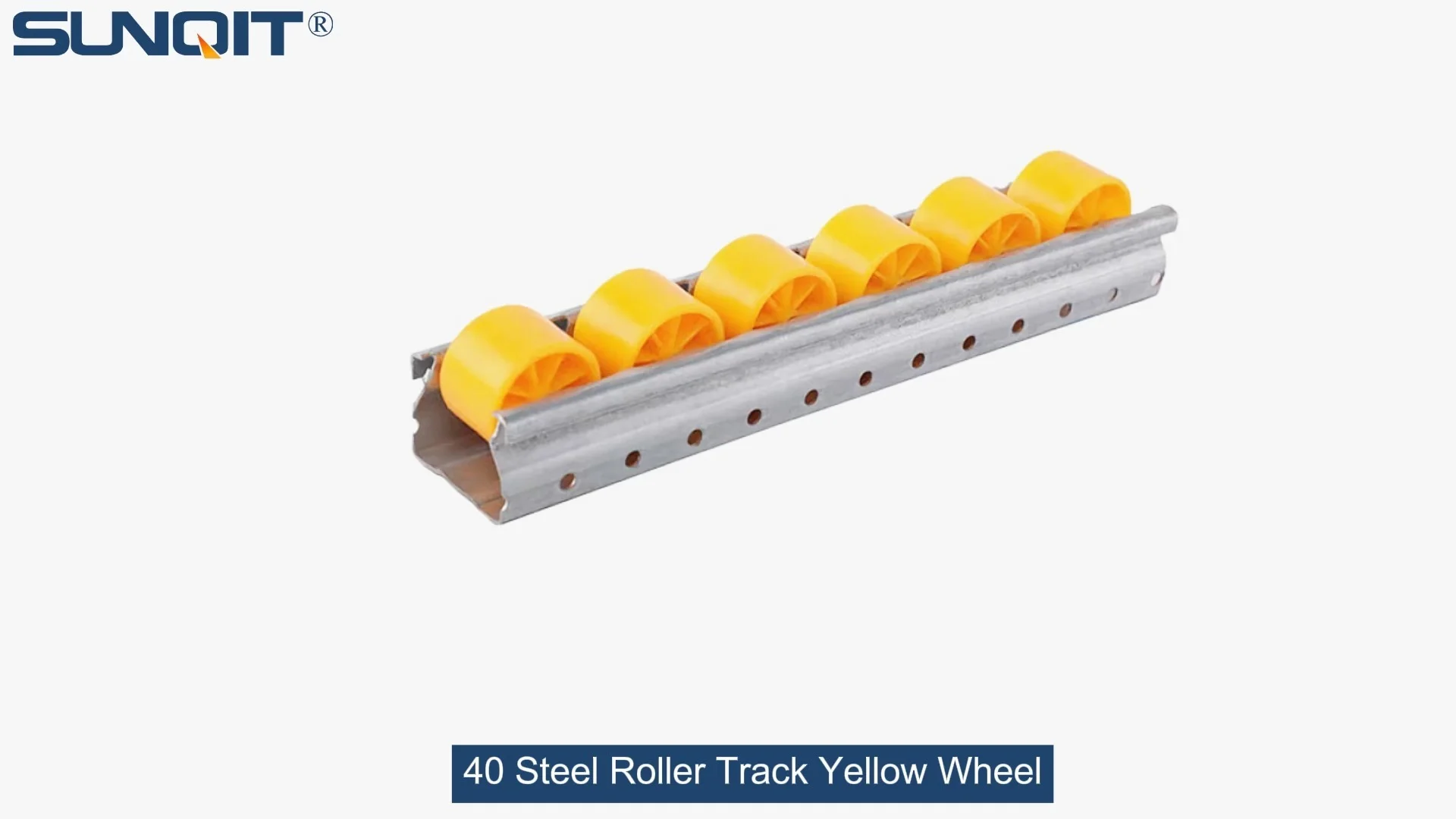
Navigating the world of lean manufacturing equipment can feel overwhelming, especially when every component plays a critical role in your production line's efficiency. If you're in the market for reliable material handling solutions, chances are the 40 steel roller track yellow wheel has crossed your radar. These unassuming yet vital tools keep parts flowing smoothly from station to station—whether in automotive assembly plants, 3C electronics workshops, or warehousing facilities. But with so many suppliers out there, how do you pick one that aligns with your needs? This guide breaks down the key factors to consider, so you can partner with a supplier that doesn't just sell products, but strengthens your entire lean system.
Why the Right Supplier Matters More Than You Think
Let's start with the basics: A 40 steel roller track yellow wheel isn't just a "track with wheels." It's the backbone of seamless material flow. Imagine a consumer electronics factory where tiny circuit boards need to glide from soldering stations to testing areas—even a minor jam or misalignment could delay an entire production run. Or picture a medical device plant, where sterile components must move without friction to avoid contamination. In these scenarios, your roller track supplier isn't just a vendor; they're a silent partner in your operational success.
Picking the wrong supplier, though, can lead to hidden costs: frequent replacements due to poor durability, compatibility issues with your existing lean pipe system , or delayed deliveries that throw off your production timeline. That's why choosing wisely isn't just about comparing prices—it's about finding a partner who understands your industry, prioritizes quality, and grows with your needs.
5 Key Factors to Evaluate in a Supplier
1. Product Quality: It's All in the Details
When it comes to steel roller tracks, "quality" isn't a buzzword—it's measurable. Start by examining the materials. A reputable supplier will use high-grade steel (look for Q235 or Q345) for the track frame, ensuring it can handle heavy loads without bending. The yellow wheels, often made of polyurethane or nylon, should have a smooth surface to reduce friction and resist wear. Ask: What's the wheel's Shore hardness? How many cycles can it withstand before needing replacement?
Don't overlook finishing touches, either. A good track will have deburred edges to prevent damage to products or worker injuries, and the yellow coating should be UV-resistant to avoid fading in factory lighting. If your operation requires ESD protection (common in 3C assembly), check if the supplier offers anti-static wheel options that meet ANSI/ESD S20.20 standards.
2. Customization Capabilities: One Size Rarely Fits All
Your production line is unique—your roller track should be too. A top-tier supplier won't just offer off-the-shelf 40mm tracks; they'll work with you to tailor solutions. Maybe you need a curved track to navigate around a workstation, or adjustable height brackets to align with existing flow racks . Perhaps your facility uses non-standard floor spacing, requiring custom-length tracks.
Ask for examples of past custom projects. A supplier with experience in your industry (say, automotive or medical) will better understand your pain points. For instance, in warehousing, they might suggest adding side guides to prevent packages from slipping off, while in food packaging, they'd prioritize easy-to-clean designs with sealed bearings to avoid contamination.
3. Industry Expertise: They Should Speak Your Language
There's a big difference between a supplier who sells roller tracks and one who understands lean manufacturing principles. A knowledgeable team will ask about your production goals: Are you aiming to reduce changeover time? Improve material flow velocity? Minimize downtime? They might even suggest complementary equipment, like integrating your roller track with a conveyor system for end-to-end automation.
Check their client list. Do they work with companies in your sector? A supplier that's partnered with automotive OEMs will know the strict tolerance requirements for engine part, while one with 3C experience will understand the need for precision in handling small, delicate components like smartphone screens.
4. Sustainability & Lean Principles: Beyond "Good Enough"
Modern manufacturing isn't just about efficiency—it's about responsibility. A forward-thinking supplier will align with your lean and sustainability goals. Look for signs like reusable packaging for shipments, recycling programs for old tracks, or a commitment to using recycled steel in production.
Lean compatibility is key too. The best roller tracks integrate seamlessly with other lean tools: think quick-connect joints that allow for easy reconfiguration (no welding required!), or modular designs that let you add/remove sections as your line evolves. This flexibility ensures your investment grows with your business, reducing waste from frequent replacements.
5. Service & Support: The Partnership Doesn't End at Delivery
A great product is only as good as the support behind it. What happens if a wheel wears out unexpectedly? A reliable supplier should offer responsive after-sales service, with spare parts available for next-day shipping. Ask about their warranty—do they cover manufacturing defects for a year? Five years? Will they send a technician to assist with installation if needed?
Training is another bonus. Some suppliers provide guides or videos on track maintenance (like lubrication schedules for bearings) to help you extend the lifespan of your equipment. A supplier that invests in your team's knowledge is invested in your long-term success.

How to Vet a Supplier: A Practical Checklist
| Checklist Item | Why It Matters | How to Verify |
|---|---|---|
| Quality Certifications | Ensures compliance with industry standards | Ask for ISO 9001, CE, or UL certifications; request test reports for load capacity/wear resistance |
| Lead Times | Avoids production delays | Inquire about standard vs. rush order timelines; ask how they handle supply chain disruptions |
| Customer Reviews | Reveals real-world performance | Check Google Reviews, industry forums, or ask for references from similar-sized companies |
| Sample Availability | Tests fit and function before bulk orders | Request a small sample track to install and run trials with your actual products |
| Sustainability Practices | Aligns with green manufacturing goals | Ask about recycled material usage, energy-efficient production, or take-back programs for old equipment |

FAQ: Common Questions About 40 Steel Roller Track Suppliers
Q: Why are yellow wheels so common for these tracks?
A: Yellow is a high-visibility color, making it easier for workers to spot the track edges and avoid tripping or product misalignment. It also often indicates "general use" in industrial color-coding systems, distinguishing it from specialized tracks (like red for ESD or blue for food-grade).
Q: How do I calculate the right load capacity for my track?
A: Start by determining the maximum weight of the heaviest product that will travel on the track, plus a 20% safety margin. Then, consider how many products will be on the track at once. A supplier can help you choose between standard (50kg/m) and heavy-duty (150kg/m+) options based on this data.
Q: Can I mix and match components from different suppliers?
A: It's possible, but risky. Track widths, hole spacing, and connector sizes can vary between manufacturers, leading to compatibility issues. Sticking with one supplier for your roller track, flow racks, and conveyors ensures a seamless fit and simplifies maintenance.

Final Thoughts: Your Roller Track, Your Success
Choosing a 40 steel roller track yellow wheel supplier isn't just about buying equipment—it's about investing in your production line's efficiency, safety, and scalability. By prioritizing quality, customization, industry expertise, and support, you'll find a partner that helps you build a leaner, more resilient operation.
Remember, the best suppliers don't just sell products—they solve problems. So take your time, ask tough questions, and don't settle for "good enough." Your team, your products, and your bottom line will thank you.