- Company Articles
- Products and Technology
- Product knowledge
- 40 Steel Roller Track Yellow Wheel vs. Nylon: Friction & Wear Resistance Comparison

40 Steel Roller Track Yellow Wheel vs. Nylon: Friction & Wear Resistance Comparison
Related Product
40 Steel Roller Track Yellow Wheel
The roller track can be installed with multiple accessories to create different slopes and configurations of flow racks.All steel conveyor 40 roller track accessories are engineered to perfectly fit the sliding rail.
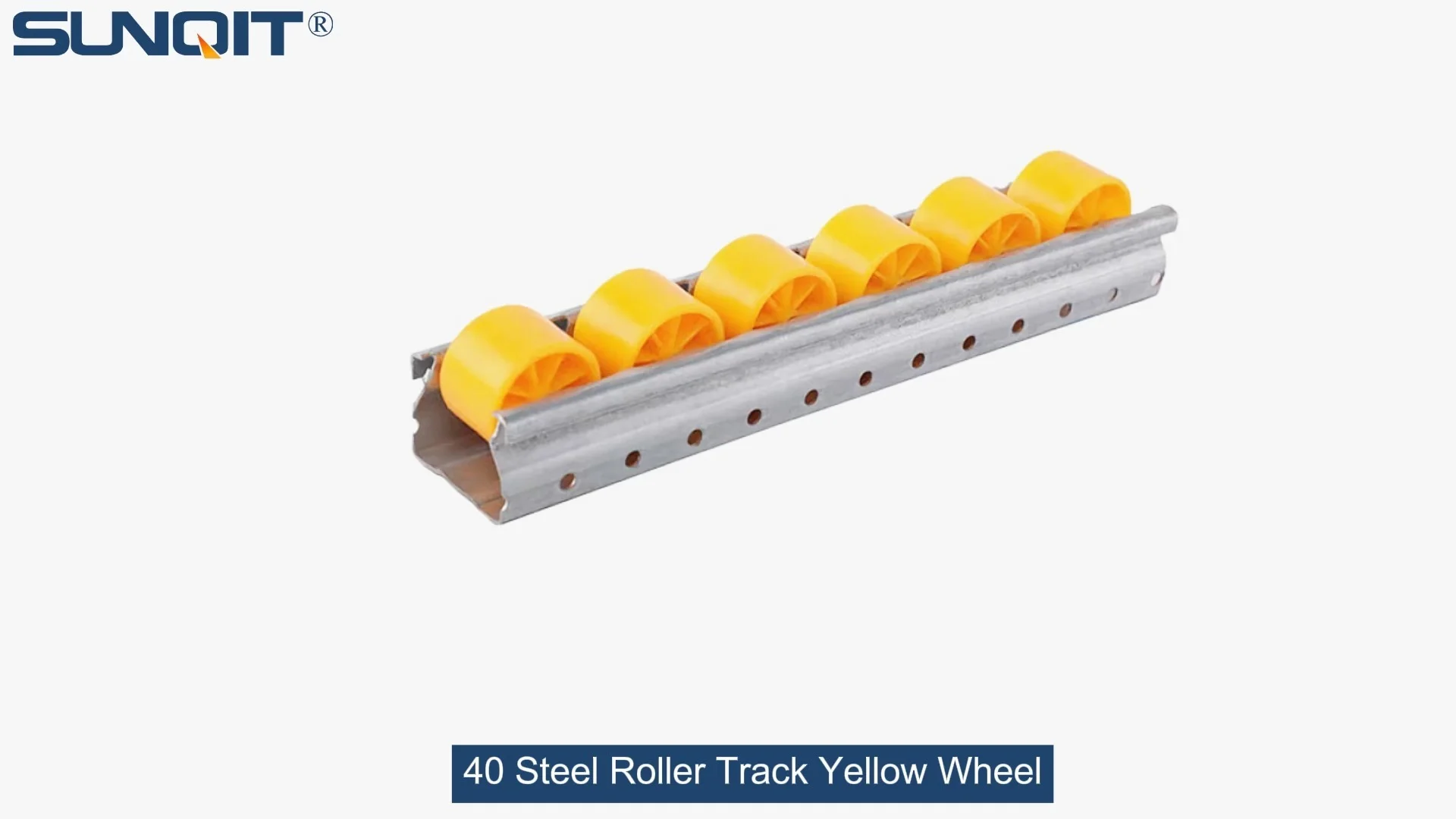
In the fast-paced world of manufacturing, where every second counts and efficiency is the backbone of productivity, the smallest components often play the biggest roles. Take roller tracks, for example—those unassuming systems that quietly move parts, products, and materials across assembly lines, warehouses, and workbenches. At the heart of these systems? The wheels. Today, we're diving deep into two heavyweights in the roller track game: the 40 Steel Roller Track Yellow Wheel and its nylon counterpart. We'll break down how they stack up in friction and wear resistance, because when your production line relies on smooth, consistent movement, choosing the right wheel isn't just a detail—it's the difference between seamless operations and costly delays.
Why Roller Track Wheels Matter in Lean Production
Before we jump into the specifics of steel and nylon, let's talk about why this comparison even matters. In lean manufacturing, every component is designed to eliminate waste—whether it's time, effort, or resources. Roller tracks are a cornerstone of this philosophy, used in everything from flow racks that keep materials at workers' fingertips to conveyors that link assembly stations in a rhythmic dance of productivity. A worn-out wheel that sticks or slows down? That's downtime waiting to happen. A wheel with high friction? That's extra energy consumption and strained machinery. So, when we compare steel and nylon wheels, we're really talking about which one helps you stay true to the "lean" in lean pipe systems—maximizing efficiency, minimizing waste, and keeping your operations running like a well-oiled machine.
Think about a typical workbench on a 3C assembly line. The roller track beneath it is moving delicate circuit boards from one station to the next. If the wheels have inconsistent friction, those boards might jostle, leading to defects. Or consider a busy warehouse flow rack storing automotive parts—if the wheels wear down quickly, you're looking at frequent replacements, which means pausing the entire picking process. That's why understanding friction and wear resistance isn't just technical—it's practical. It's about keeping your team focused on building, not fixing.
Meet the Contenders: What Makes Steel and Nylon Wheels Different?
First, let's get to know our two competitors. The 40 Steel Roller Track Yellow Wheel is exactly what it sounds like: a wheel made from high-grade steel, often coated with a yellow finish for visibility and corrosion resistance. Steel is known for its strength—think of it as the heavyweight champion of materials, built to handle tough conditions. On the other side, nylon wheels are made from polyamide, a synthetic plastic celebrated for its versatility and resilience. Nylon is lighter, quieter, and often chosen for applications where reducing noise or protecting delicate surfaces is key.
But here's the thing: neither is "better" outright. It all depends on what your production line needs. Steel might be the go-to for heavy loads, but nylon could save you from constant maintenance in a low-noise environment. Let's break down their performance in the two critical areas: friction and wear resistance.

Friction: The Silent Player in Smooth Movement
Friction is the force that either helps wheels grip (so materials don't slide) or hinders movement (making it harder to push or pull). Too much friction, and your conveyor has to work overtime, burning energy and wearing out motors. Too little, and parts might slide off the track, causing jams or damage. So, how do steel and nylon stack up here?
Static vs. Dynamic Friction: What You Need to Know
Static friction is what keeps a stationary object from moving—like a box sitting on a roller track. Dynamic friction is what slows it down once it's moving. For roller tracks, we want low dynamic friction (to keep things moving smoothly) and just enough static friction to prevent unintended sliding.
| Material | Static Friction Coefficient (vs. Steel Track) | Dynamic Friction Coefficient (vs. Steel Track) | Key Trait |
|---|---|---|---|
| 40 Steel Wheel (Yellow Coated) | 0.65–0.75 | 0.50–0.60 | Higher grip; consistent across temperatures |
| Nylon Wheel | 0.40–0.50 | 0.30–0.40 | Lower resistance; smoother start-stop motion |
Steel wheels have higher friction coefficients, which means they grip the track more firmly. This is great for heavy loads—if you're moving engine blocks on a conveyor, you don't want them sliding around. But that extra grip comes with a trade-off: more energy is needed to get them moving, and they might create more heat during operation. Nylon wheels, with their lower friction, glide more easily. This is a boon for lighter loads or applications where speed and precision matter, like moving circuit boards on an ESD workbench. Imagine a 3C assembly line where tiny components are zipping along—nylon wheels would keep that flow steady without jolts.
Environmental Factors: When Temperature and Moisture Play a Role
Friction isn't static (pun intended)—it changes with the environment. Steel wheels handle extreme temperatures better. In a foundry or automotive paint shop, where temperatures can spike, steel won't soften or deform. Nylon, on the other hand, can become more flexible in high heat, which might lower its friction coefficient even further—good for smooth movement, but risky if the load is heavy. In cold environments, nylon can get stiffer, increasing friction slightly, while steel remains consistent.
Moisture is another factor. Steel wheels, especially with that yellow coating, resist rust, but wet conditions can still make them slightly more slippery. Nylon is naturally water-resistant, so its friction stays steady even in humid warehouses or cleanrooms where moisture control is key. For example, in a medical device production line—where cleanliness and humidity levels are tightly regulated—nylon wheels might offer more predictable performance day in and day out.

Wear Resistance: How Long Will They Last?
Wear resistance is all about longevity. A wheel that wears down quickly means more downtime for replacements, higher maintenance costs, and inconsistent performance as it degrades. Let's see how steel and nylon hold up over time.
Abrasion: The Battle Against Scratches and Scuffs
Every time a wheel rolls over a track, tiny bits of material are worn away. Steel is inherently tough—its hardness (often measured on the Rockwell scale) is much higher than nylon. A typical steel wheel might have a Rockwell hardness of 60–65 HRC, while nylon is around 80–90 Shore D (a different scale, but roughly comparable to lower hardness). This means steel wheels can handle rough, debris-filled environments better. If your conveyor runs through a factory floor where metal shavings or grit are common, steel wheels will shrug off those abrasions, while nylon might start to show nicks and grooves over time.
Fatigue Wear: When Repetition Takes Its Toll
Fatigue wear happens when a material weakens from repeated stress—like a wheel flexing slightly under load millions of times. Steel is rigid, so it doesn't flex much, which means less fatigue. Nylon, being more elastic, can bend under heavy loads, which might sound good, but over time, that flexing can lead to cracks or "flat spots" on the wheel. Imagine a flow rack in a busy distribution center, where boxes are constantly being loaded and unloaded. A nylon wheel might start to wear unevenly after a year of heavy use, causing the track to vibrate, while a steel wheel would stay round and true much longer.
Real-World Lifespan: What the Data Says
In controlled tests, steel wheels often outlast nylon wheels in high-load, high-cycle applications. For example, in an automotive assembly line conveyor carrying 50kg parts 24/7, steel wheels might last 3–5 years, while nylon wheels might need replacement after 1–2 years. But in lighter applications—like a lean pipe workbench moving 5kg circuit boards—nylon wheels could last just as long, with the added benefit of quieter operation. It's all about matching the wheel to the workload.

Real-World Applications: When to Choose Steel, When to Choose Nylon
Let's put this all together with some real scenarios. Which wheel is right for your operation?
Choose 40 Steel Roller Track Yellow Wheels When...
- You're handling heavy loads: Think automotive parts, industrial machinery, or metal components weighing 20kg or more. Steel's high load capacity and abrasion resistance will keep your conveyor or flow rack running without wear.
- Your environment is tough: Factories with high temperatures, debris, or chemical exposure (like oil or coolants) need the durability of steel. The yellow coating adds an extra layer of protection against rust and corrosion.
- Consistency is critical: In precision manufacturing, where even small variations in speed can affect quality, steel wheels' stable friction and minimal flexing ensure parts move at a steady pace.
Choose Nylon Wheels When...
- Noise reduction is a priority: Nylon wheels are much quieter than steel—important in electronics assembly lines or offices adjacent to production areas. Imagine a 3C factory where workers are assembling smartphones; loud steel wheels could disrupt communication and focus.
- You're moving delicate items: Glass parts, medical devices, or finished consumer electronics need gentle handling. Nylon's lower friction and softer surface reduce the risk of scratches or dents.
- Maintenance access is limited: If your roller track is hard to reach (like overhead conveyors), nylon's lighter weight makes replacements quicker and easier. Plus, in low-load scenarios, they'll still last long enough to avoid frequent downtime.
Beyond the Wheel: How This Fits Into Your Lean Solution
At the end of the day, choosing a roller track wheel is about more than just friction and wear—it's about building a lean system that works for your unique needs. Lean manufacturing is all about adaptability, efficiency, and continuous improvement. That's why we don't just sell components; we offer custom lean solutions that integrate the right tools, from lean pipe systems to flow racks, conveyors, and workbenches.
For example, if you're running a 3C assembly line with both heavy metal chassis and delicate screens, we might design a hybrid system: steel wheels for the chassis conveyor and nylon wheels for the screen flow rack. Or if your warehouse needs to switch between seasonal products (heavy in winter, light in summer), we can create adjustable lean pipe workbenches with interchangeable wheel sets, so you're never stuck with a one-size-fits-all solution.
Remember, the goal of lean is to eliminate waste—and that includes waste from choosing the wrong components. A steel wheel that lasts 5 years but costs more upfront might save you money in the long run, while a nylon wheel that reduces noise and improves worker satisfaction could boost productivity in ways that show up on your bottom line. It's all about balance, and that's where a tailored lean solution comes in.
Final Thoughts: The Wheel That Moves Your Business Forward
When it comes to 40 Steel Roller Track Yellow Wheels vs. Nylon Wheels, there's no clear winner—only the right choice for your operation. Steel is the workhorse, built for heavy loads and tough conditions. Nylon is the smooth operator, ideal for light loads, quiet environments, and delicate materials. The key is to look at your specific needs: What's your typical load? How often does the system run? What's more important—longevity or noise reduction? What's your maintenance schedule like?
At the end of the day, both wheels are part of a bigger picture: creating a production line that's efficient, reliable, and ready to adapt. Whether you're setting up a new lean pipe system, upgrading your flow racks, or optimizing your conveyor network, the right wheels will keep things moving—literally and figuratively. And if you're not sure where to start? That's what we're here for. Our team specializes in turning these details into lean solutions that grow with your business. After all, in manufacturing, the smallest components often drive the biggest successes.