- Company Articles
- Products and Technology
- Product knowledge
- 40 Steel Roller Track Yellow Wheel vs. Plastic: Cost-Efficiency Analysis

40 Steel Roller Track Yellow Wheel vs. Plastic: Cost-Efficiency Analysis
Related Product
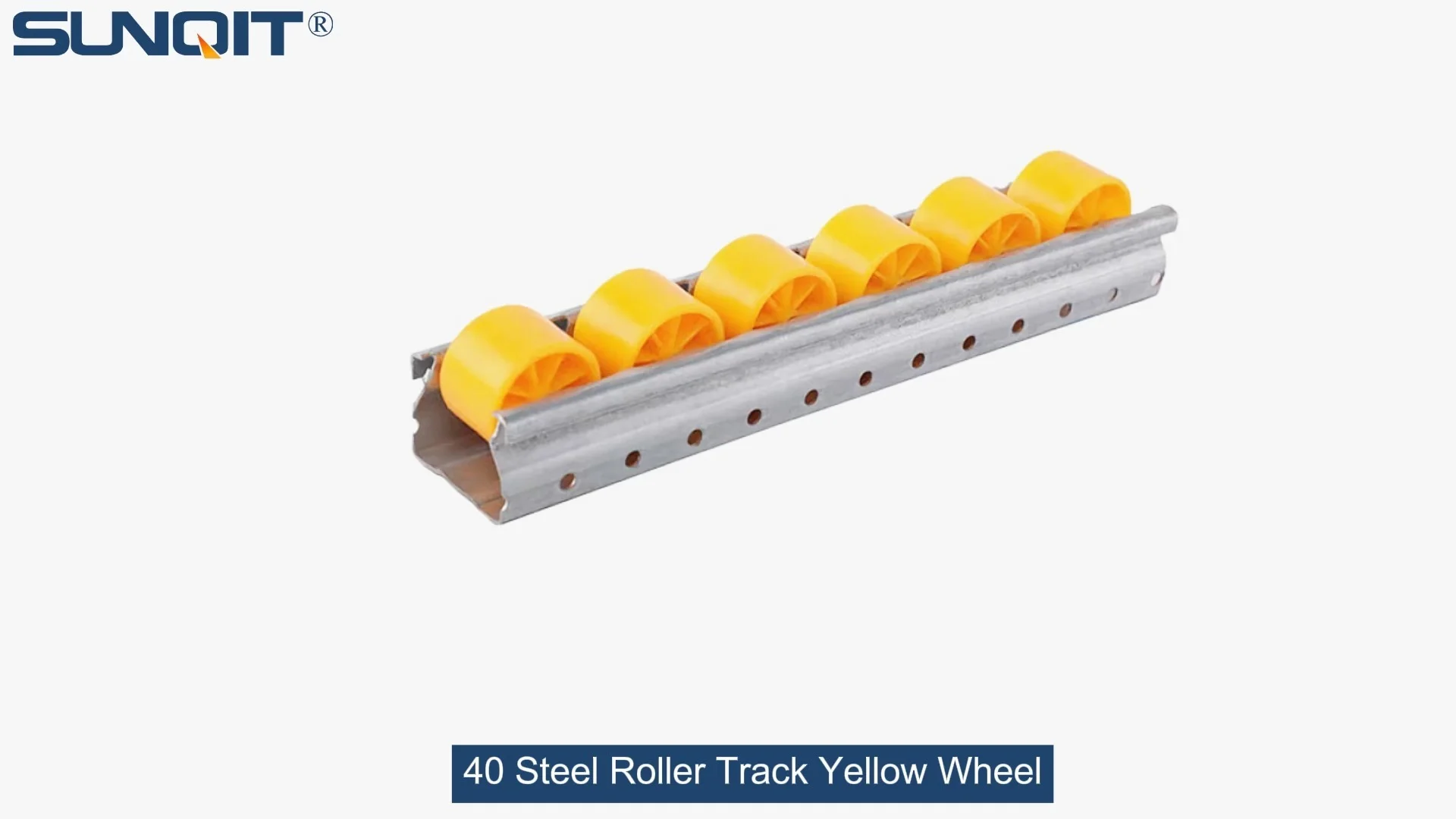
40 Steel Roller Track Yellow Wheel
The roller track can be installed with multiple accessories to create different slopes and configurations of flow racks.All steel conveyor 40 roller track accessories are engineered to perfectly fit the sliding rail.
In the fast-paced world of manufacturing, every component in your production line plays a silent but critical role in keeping operations running smoothly. When it comes to material handling—whether moving circuit boards in a 3C assembly plant or transporting medical devices in a warehouse—roller tracks are the unsung heroes that reduce manual labor, minimize errors, and speed up workflows. But with options like the 40 steel roller track (yellow wheel) and plastic roller track flooding the market, how do you decide which one delivers the best bang for your buck? Let's dive into a no-nonsense cost-efficiency breakdown that goes beyond sticker prices, looking at durability, maintenance, and real-world performance in manufacturing settings like 3C assembly, automotive parts handling, and warehouse logistics.
Understanding the Contenders: What Are We Comparing?
First, let's get clear on what we're dealing with. The 40 steel roller track yellow wheel is a heavy-duty option built with a steel frame and yellow polyurethane wheels—designed for high-impact, repetitive use. On the other side, plastic roller track guide rails (often made from ABS or polypropylene) are lightweight, corrosion-resistant, and frequently chosen for lighter loads and quieter operations. Both are staples in flow racks, conveyors, and lean production lines, but their strengths and weaknesses shine in different scenarios.
At the heart of this comparison is the "lean solution" mindset—maximizing value while minimizing waste. That means we're not just looking at upfront costs; we're calculating total cost of ownership (TCO) over time, including installation, maintenance, replacement parts, and even downtime. After all, a cheap plastic track that cracks after 6 months in a busy automotive plant will end up costing far more than a pricier steel option that lasts 5+ years.
Cost Showdown: Initial Investment vs. Long-Term Savings
Let's start with the number that jumps off the quote sheet: initial cost. Plastic roller tracks typically come with a lower price tag—sometimes 30-40% cheaper than their steel counterparts. For small businesses or startups with tight budgets, this can be tempting. But here's the catch: steel roller tracks, like the 40 steel yellow wheel model, are built to outlast plastic in almost every metric that matters for high-volume manufacturing.
Breaking Down the Numbers
| Cost Category | 40 Steel Roller Track (Yellow Wheel) | Plastic Roller Track |
|---|---|---|
| Upfront Cost (per meter) | Higher ($$$) | Lower ($$) |
| Installation Complexity | Slightly higher (heavier, may need extra support) | Lower (lightweight, easy to cut/modify) |
| Average Lifespan | 5-7 years (with proper maintenance) | 1-3 years (in high-use environments) |
| Annual Maintenance Cost | Low (greasing wheels, occasional wheel replacement) | Medium-High (cracked rails, frequent wheel wear) |
| Total Cost Over 5 Years (Estimated) | Higher upfront, but 20-30% lower TCO | Lower upfront, but 15-25% higher TCO |
Take a typical 3C assembly line running 3 shifts a day. A plastic track might start to show stress cracks within 18 months, requiring partial replacements. Each replacement means shutting down part of the line, ordering new sections, and paying for labor—costs that add up fast. The 40 steel roller track, with its sturdy steel frame and wear-resistant yellow polyurethane wheels, handles the constant friction and weight of PCBs, phone casings, and small electronic components without breaking a sweat. Over 5 years, the steel track's TCO drops significantly because you're not replacing sections every year.

Performance Matters: When Steel Pulls Ahead
Cost isn't everything—performance directly impacts productivity. Let's talk about how these two tracks hold up in real manufacturing scenarios, from production assemble lines to warehouse flow racks.
1. Load Capacity: Can It Handle the Weight?
Steel roller tracks are workhorses. The 40 steel yellow wheel model, for example, can comfortably handle loads up to 50kg per linear meter, making it ideal for heavy components like automotive parts or medical device housings. Plastic tracks, on the other hand, often max out at 20-25kg per meter. Exceed that, and you risk warping the rail or snapping the plastic frame—disaster in a busy production environment where downtime costs $$$ per minute.
2. Durability: Fighting Wear, Heat, and Chemicals
Manufacturing floors are tough places. Oils, coolants, cleaning chemicals, and temperature fluctuations can wreak havoc on plastic. A plastic track in a medical device plant might degrade faster if exposed to disinfectants, while a steel track with a corrosion-resistant coating (common in stainless steel variants) will stand strong. Even in dry environments like 3C assembly, the constant impact of components sliding over plastic wheels leads to faster wear—meaning you'll be replacing wheels every 6-12 months instead of every 2-3 years with steel.
3. Noise and Speed: The Quiet Advantage of Plastic
Plastic isn't without its perks. Its lighter weight and softer wheel material make it significantly quieter than steel—up to 15-20 decibels lower. In settings where noise pollution is a concern, like electronics assembly lines where workers are stationed nearby for hours, this can boost morale and reduce fatigue. Additionally, plastic tracks often have smoother rolling action for lightweight items, which can slightly increase throughput for small parts like circuit boards or phone chargers.

Fit for the Job: Which Track Belongs in Your Facility?
The "better" option depends entirely on your specific needs. Let's map out scenarios where steel or plastic makes the most sense:
Choose 40 Steel Roller Track (Yellow Wheel) If…
- You're handling heavy loads (25kg+ per meter) or large components (e.g., automotive seats, appliance parts).
- Your facility operates 24/7 or has high production volumes (more cycles = faster plastic wear).
- You need long-term reliability (5+ years) and minimal downtime (critical for lean production schedules).
- Your environment involves exposure to chemicals, extreme temperatures, or moisture (e.g., food processing, medical device sterilization areas).
Choose Plastic Roller Track If…
- You're working with lightweight items (under 20kg per meter), like small electronics or cosmetic packaging.
- Noise reduction is a top priority (e.g., office-adjacent warehouses or small assembly cells).
- You need temporary or modular setups (e.g., seasonal production lines that change frequently—plastic is easier to cut and reconfigure).
- Upfront cost is the primary constraint, and you don't expect high-volume use for more than 1-2 years.

Real-World Case: How a 3C Manufacturer Saved 28% with Steel Tracks
Let's put this into perspective with a real example. A mid-sized 3C assembly plant in Shenzhen was using plastic roller tracks on their flow racks for smartphone assembly. After 18 months, they noticed frequent cracks in the plastic rails, especially where heavier battery packs slid down the line. Each crack caused 1-2 hours of downtime to replace the section, and they were spending $2,000/month on replacement parts.
They switched to 40 steel roller tracks with yellow polyurethane wheels. The upfront cost was $15,000 (vs. $9,000 for plastic), but maintenance costs dropped to $300/month, and downtime was eliminated. Within 2 years, they'd recouped the extra $6,000 investment—and by year 5, they'd saved over $80,000 in TCO. That's the power of leaning into long-term durability for high-impact operations.
Final Verdict: Steel Wins for Most Manufacturing Lean Solutions
When it comes to cost-efficiency in production assemble, warehouse logistics, and heavy-duty manufacturing, the 40 steel roller track with yellow wheels is the clear winner for most businesses. While plastic has its niche in lightweight, low-volume, or noise-sensitive settings, steel's durability, load capacity, and long lifespan make it the smarter investment for companies focused on sustainable, lean operations.
Remember, the best lean solution isn't just about cutting costs—it's about choosing tools that grow with your business. A steel roller track that lasts 5+ years can be reconfigured, extended, or repurposed as your production needs change, aligning perfectly with the "reusable, continuously improved" philosophy that drives modern manufacturing. So before you opt for the cheaper plastic track, ask yourself: Can my bottom line afford the hidden costs of frequent replacements and downtime?